Disclaimer: The information in this article is for educational and informational purposes only. It does not constitute professional advice of any kind. Hyperbaric oxygen is not an established treatment for hair loss. Consult a qualified professional before making any decisions about your personal wellness routine.
You already know the basic pitch: breathe pure oxygen under pressure, and good things happen. The question is whether those good things extend to the scalp. Specifically, to follicles that have slowed down, gone quiet, or started producing wispy strands where thick ones used to grow.
The short answer is maybe. The longer answer is complicated enough to be worth your time.
Why Oxygen Matters to Your Follicles (More Than You’d Think)
Hair follicles are not passive structures. They rank among the most metabolically demanding mini-organs in the human body. During the active growth phase—anagen—cells in the hair bulb divide at a pace that rivals bone marrow. That kind of cellular hustle requires enormous amounts of energy. And energy production depends on oxygen.
Here’s something that rarely gets mentioned: oxygen delivery and blood flow do appear to differ in some thinning scalp regions. In people with male pattern baldness, studies have reported lower transcutaneous oxygen pressure in bald frontal scalp and lower subcutaneous blood flow in affected areas than in healthy controls. That does not mean common hair thinning is simply a disorder of low oxygen—especially because androgenetic alopecia is still understood as a multifactorial condition involving genetics, androgen sensitivity, and progressive follicle miniaturization. But it does make scalp oxygenation a plausible part of the conversation.
Reduced blood supply does three things to hair follicles in animal models:
- Slows the rate of shaft elongation
- Reduces the diameter of new shafts
- Decreases follicle density per square centimeter
Sound familiar? Those are some of the hallmarks of progressive thinning.
What a Hyperbaric Chamber Actually Does
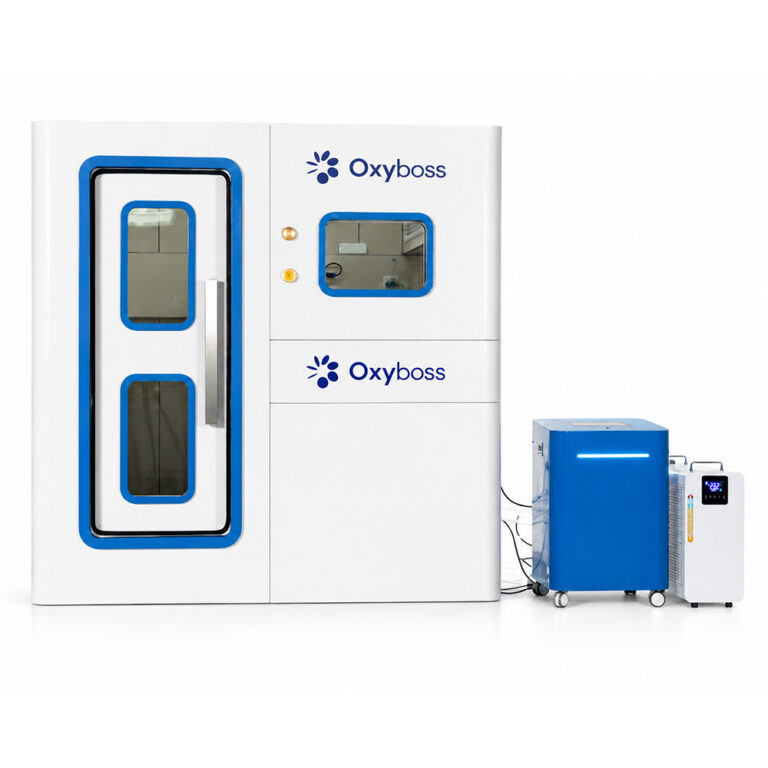
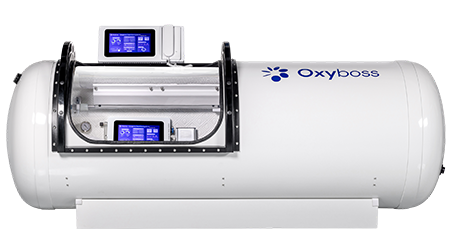
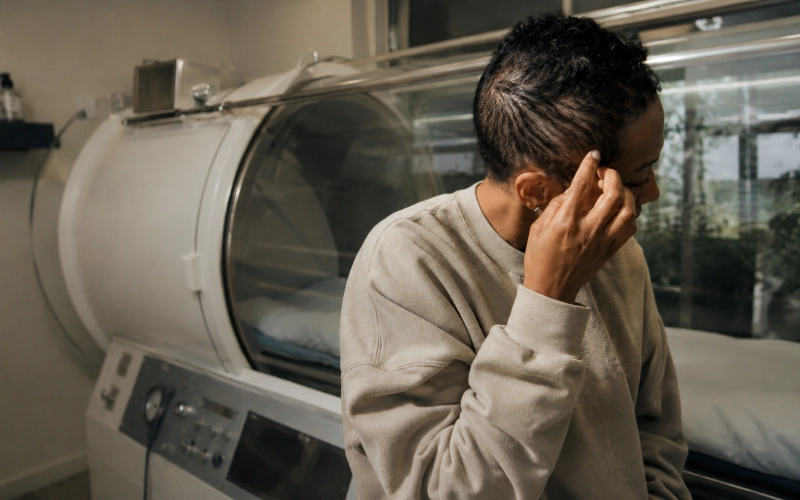
Inside a pressurized chamber, you breathe pure oxygen at pressures commonly used in clinical hyperbaric settings. Under these conditions, oxygen doesn’t just hitch a ride on red blood cells—it also dissolves directly into plasma. That plasma can then help deliver oxygen to tissues with compromised microcirculation.
For the scalp, the idea is that increased oxygen availability may improve the perifollicular environment—the microenvironment immediately surrounding each follicle—especially when local oxygen delivery is suboptimal.
A standard session often runs 60 to 90 minutes. The pressure ramps up, holds steady, then slowly returns to normal. Most protocols in the published hair-related literature involve repeated sessions over multiple days, weeks, or months.
What the Data Actually Shows
Let’s look at what exists. The evidence base is thin but directional. And the direction is interesting.
Standalone Observations in Healthy Adults
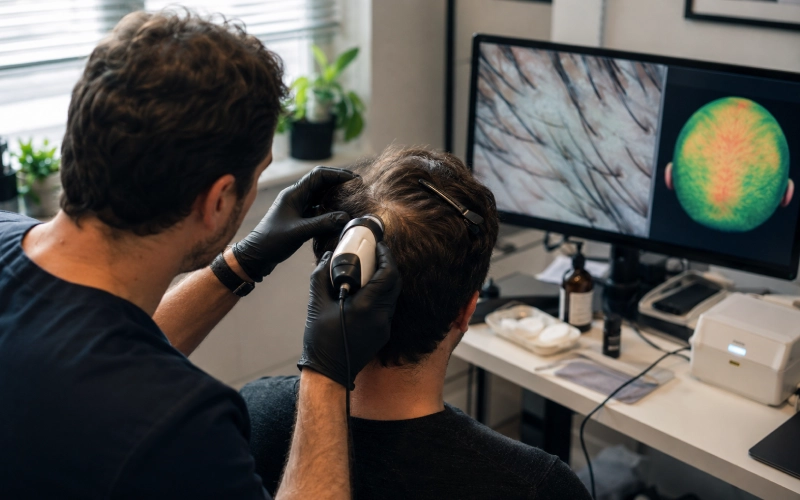
A 2026 prospective observational study examined nine healthy volunteers who completed 50 chamber sessions over three months at 2.0 ATA. Objective scalp imaging tracked follicle density, hairs per follicle, volume coverage, and shaft thickness.
| Parameter | Before | After | Reached Statistical Significance? |
| Follicle density (counts/cm²) | 61.3 | 66.8 | No (p=0.216, Cohen’s d=0.447) |
| Hairs per follicle | 1.24 | 1.33 | No (p=0.099, Cohen’s d=0.620) |
| Hair volume (%) | 24.9 | 27.7 | No (p=0.097, Cohen’s d=0.627) |
| Shaft thickness (mm) | 0.18 | 0.10 | Yes (p=0.011, Cohen’s d=1.093) |
Source for table values: the 2026 preliminary study in healthy adults.
Three objective metrics trended upward. Shaft thickness, however, decreased significantly. That means the results were not uniformly positive on their face. The study authors offered one possible interpretation: when dormant follicles reactivate and begin producing new strands, those early hairs can be finer, so thinner shafts alongside increased density and volume might hint at early-stage regrowth rather than damage. But they also acknowledged other possible explanations, including measurement variability and hair-cycle effects. With n = 9 and no control group, you can’t lock in a definitive explanation.
Subjective reports were unanimously positive. All participants noted visible improvement across scalp appearance, shedding, thickness, and growth speed. The gap between subjective enthusiasm and modest objective numbers is worth noting—expectancy effects are real—but most of the imaging trends did move in the same general direction.
Post-Procedure Recovery
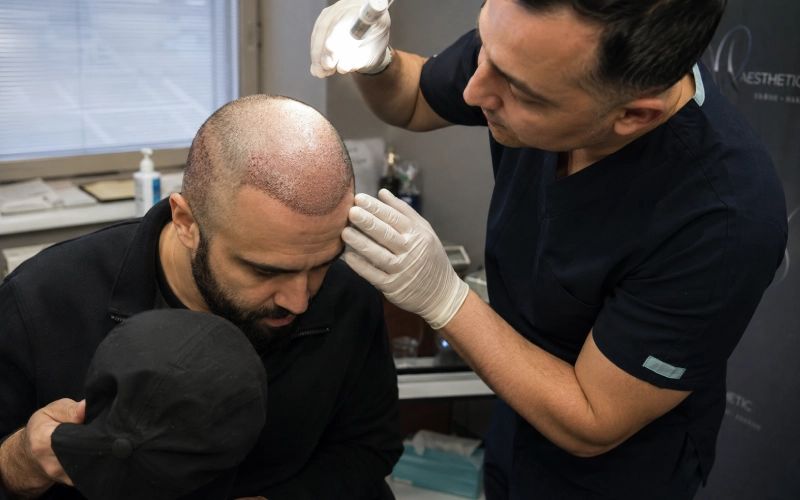
The strongest existing evidence sits in the post-procedure recovery space. A randomized study of 34 individuals undergoing follicular unit extraction split them into a standard recovery group and a group receiving daily 60-minute sessions at 2.0 ATA for seven days.
Results from the pressurized-oxygen group:
- Shedding rate dropped to 27.6% vs. 69.1% in the control group
- Itching and folliculitis fell to 11.8% vs. 35.3%
- Early satisfaction: 88.2% vs. 52.9%
Long-term survival rates converged (96.9% vs. 93.8%), but the recovery experience differed substantially. Those are meaningful differences for anyone navigating a grueling first few weeks.
A separate 2025 case series of five individuals undergoing the same procedure type found that daily sessions at 2.4 ATA eliminated scab formation within three to five days, with graft integration rates between 97% and 99%. That is encouraging, but it is still only a five-person case series.
Animal and Lab Evidence
This is where the biological rationale gets stronger—but also where the evidence becomes more indirect. The key preclinical paper in this area used organ-cultured human scalp follicles and normobaric hyperoxygenation (NBO) in mice, not clinical HBOT in humans. So these findings help support mechanism, but they do not prove that a hyperbaric chamber will regrow hair in people.
Key findings from published work:
- Organ-cultured human scalp follicles grew 2.1 mm under 20% O2 vs. 0.7 mm under 1% O2 over seven days
- Systemic normobaric hyperoxygenation (60% O2) boosted hair matrix cell proliferation by roughly 15 percentage points in early anagen
- Mid-anagen hair shaft length was 7.7 mm in the hyperoxygenated group vs. 6.9 mm in controls
- Hyperoxygenation delayed catagen onset—meaning follicles stayed in growth mode longer
That last point is underappreciated. Most people fixate on “starting” new growth. But keeping existing growth going—extending the active phase—matters just as much. Maybe more.
One critical nuance: hyperoxygenation did not trigger the telogen-to-anagen transition in non-ischemic skin. Oxygen helped follicles that were already active. It didn’t wake up healthy resting follicles on its own. This suggests that oxygen-based interventions may be most relevant when impaired perfusion or local hypoxia is part of the picture—but that should not be overstated into a claim that common hair thinning is simply a circulation problem.
The Biological Mechanisms at Work
Several overlapping processes may help explain why pressurized oxygen could influence follicle behavior. It’s unlikely any single pathway operates in isolation.
Angiogenesis. In broader HBOT literature, pressurized oxygen exposure has been associated with increased angiogenic signaling and blood vessel formation. In practical terms, that could mean a better support network for metabolically active follicles.
Mitochondrial activation. Hair follicle stem cells in the resting phase rely heavily on anaerobic glycolysis. When they differentiate into active matrix cells, their metabolism shifts toward oxidative phosphorylation. Oxygen availability is part of that transition, and animal work suggests reduced oxygen can delay regrowth dynamics.
Inflammation modulation. Chronic low-grade inflammation around follicles contributes to miniaturization. HBOT has documented anti-inflammatory effects in other tissues, which may be relevant to scalp biology, though hair-specific human confirmation is still lacking.
Stem cell mobilization. Early HBOT literature has suggested a stem-cell mobilization effect in some regenerative contexts. Whether that translates into meaningful scalp-specific benefit remains speculative.
Limitations You Should Understand
This section matters more than the optimistic parts.
- Sample sizes are tiny. The standalone human observation had nine people. No control group. No placebo arm. The researchers themselves explicitly framed the findings as preliminary rather than confirmatory.
- No long-term follow-up. We don’t know if the observed trends persist, stabilize, or reverse after sessions stop.
- Cost is significant. Repeated chamber sessions can be expensive, especially when protocols involve 20 to 50 visits.
- Not standardized for hair applications. Existing protocols were borrowed from wound-healing and postoperative contexts. Nobody has optimized pressure, duration, or frequency specifically for scalp response.
- Won’t resurrect destroyed follicles. If a follicle has been permanently destroyed by scarring or is completely miniaturized beyond recovery, oxygen delivery is unlikely to reverse that structural loss.
- The telogen limitation. In animal models, extra oxygen didn’t kick healthy resting follicles into growth on its own.
- Subjective-objective divergence. In the human study, people felt big improvements while the objective numbers moved modestly and unevenly. Without a sham-controlled trial, you can’t separate real biological change from expectancy effects.
Where the Existing Evidence Is Strongest
Based on the available data and biological reasoning, the evidence base is most developed in these areas:
- Post-procedure recovery — The data from randomized and case-series observations is the most robust. Reduced shedding, faster healing, better graft integration.
- Situations where oxygen delivery may be compromised — If poor scalp perfusion or post-procedure tissue stress is contributing to the situation, addressing oxygen availability has biological logic behind it.
- Combined approaches — Pressurized oxygen isn’t competing with topical or oral approaches. It operates on a different axis entirely. Adding it to an existing regimen may compound benefits, though no controlled data confirms this yet.
- Early-to-moderate stages — The evidence favors intervention when follicles are still alive but underperforming. Waiting until they’re gone misses the window.
Parameters Observed in Published Studies
The following table summarizes the ranges researchers have used in published observations. This is not a protocol or recommendation—it is a summary of what has appeared in the academic literature.
| Study Context | Sessions/Week (Reported) | Duration (Reported) | Total Sessions (Reported) | Primary Observation |
| Healthy adult hair study (2026) | ~4 | 90 min at 2.0 ATA | 50 over 3 months | Directional trends in density and volume; significant shaft thickness decrease |
| Post-procedure recovery (2021) | 7 (daily) | 60 min at 2.0 ATA | 7 | Reduced shedding rate (27.6% vs. 69.1%) |
| Post-procedure case series (2025) | 6 (daily) | 90 min at 2.4 ATA | 6 | Scab elimination in 3–5 days; 97–99% graft integration |
| Mouse hair cycle study (2020) | Continuous exposure | 60% O2 normobaric | Ongoing during anagen | Extended anagen phase; increased shaft length |
Sources for the study parameters summarized above.
If you’re tracking your own situation, document with photos under identical lighting every 30 days. Subjective impressions are unreliable trackers. Numbers and images tell you what’s real.
FAQ
Does pressurized oxygen regrow hair on completely smooth areas? Unlikely. Once follicles have been permanently destroyed or scarred over, increased oxygen delivery cannot regenerate the structure. The potential benefit lies in supporting follicles that are still biologically present but underperforming. Early to moderate thinning is the relevant window.
How does this compare to topical or oral approaches? They work through different mechanisms. Topical vasodilators aim to improve local blood flow. Oral agents can modulate hormonal pathways. Pressurized oxygen addresses tissue-level oxygenation systemically. They’re not interchangeable—they’re theoretically complementary. Some people layer all three, though controlled data on combination approaches is lacking.
Are there side effects? Ear pressure changes are common and usually mild—similar to flying. Sinus discomfort can occur. More significant but less common risks include middle-ear injury, temporary vision changes, oxygen-toxicity seizures, and lung-related complications. Serious events are rare, but they are real. People with certain lung conditions or an untreated pneumothorax may not be candidates. A qualified clinician should screen for contraindications before treatment.
How soon would I notice anything? Most published protocols span weeks to months before researchers assess outcomes. Some people report scalp-level changes (less irritation, reduced shedding) earlier in self-reports. Hair grows slowly, so patience is non-negotiable.
Can women use this approach? Yes. The biological mechanisms—oxygenation, capillary support, inflammation modulation—are not sex-specific. Hormonal thinning patterns differ between men and women, but the oxygen-delivery logic can apply to both. In the 2026 observational study, five of the nine participants were female.
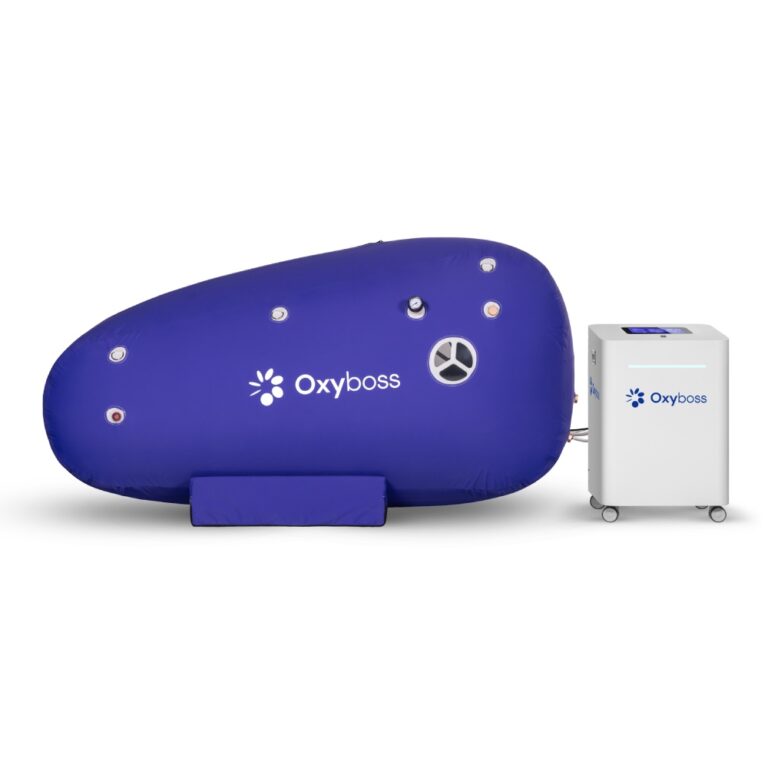
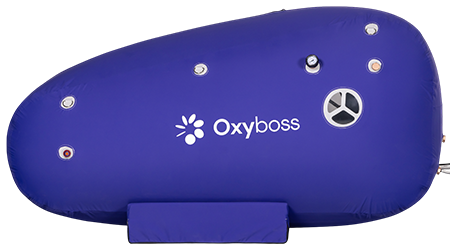
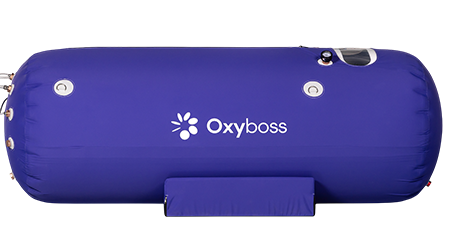
Is this the same as those soft-sided portable chambers? No. Soft-sided units typically operate at lower pressures and often do not replicate the oxygen and pressure conditions used in the evidence discussed here. The distinction matters because the published hair-related studies used clinical-style hyperbaric conditions, not consumer wellness setups.
Do I need to keep going indefinitely? Unknown. No long-term maintenance data exists for hair-related applications specifically. Whether periodic booster sessions sustain any initial results is anecdotal, not proven.
Is this backed by strong evidence? Honestly, no—not yet. The biological rationale is sound. The animal data is encouraging. The human data is very early, very small, and lacks adequate controls. The 2026 study had nine people and no placebo group. The post-procedure studies are more informative but answer a different question: recovery support, not proven standalone treatment for alopecia.
The Bottom Line
The relationship between oxygen and hair follicle behavior is real and documented at the biological level. Reduced oxygen delivery can impair follicle performance in preclinical settings. Oxygen-based interventions can extend anagen and accelerate shaft production in lab and animal work. The cellular machinery is there.
What’s missing is the definitive human study—large sample, randomized, controlled, long-term—that converts “biologically plausible and directionally encouraging” into “proven.” That study hasn’t happened yet.
So where does that leave you? If you’re in post-procedure recovery, the case is reasonably strong. If you’re dealing with progressive thinning and have budget flexibility, the risk profile may be acceptable and the biological rationale is worth understanding—but the outcome is uncertain. If you’re looking for a guaranteed standalone solution, this isn’t it. Not yet.
The follicle doesn’t care about hype cycles or marketing. It cares about oxygen, nutrients, and signals. Pressurized oxygen addresses one of those variables directly. That alone is worth paying attention to—with your eyes open about what we still don’t know.
This article is for informational purposes only and does not constitute advice from a licensed professional. Hyperbaric oxygen use for hair-related applications is still an early, non-established area of study. Individual circumstances vary. Consult a qualified professional before making decisions about your wellness routine.