The relationship between hyperbaric chambers and testosterone is appearing more frequently in wellness, fitness, and men’s health conversations — and there is a straightforward reason for that.
Men who actively manage their health tend to think in systems. They understand that testosterone doesn’t operate in a vacuum. It responds to how well the body recovers, how efficiently it manages inflammation, how deeply it sleeps, and how effectively it delivers oxygen and nutrients to the tissues that need them.
Hyperbaric chambers, by design, interact with several of these same systems. That overlap is what drives the conversation. This article explores the mechanisms behind it — not as medical advice, but as an honest look at why oxygen availability, recovery quality, and hormonal wellness are so often discussed together.
What Testosterone Actually Responds To
Most discussions about testosterone focus on the hormone itself — levels, ranges, supplementation. But testosterone production is downstream of many other processes in the body. It is influenced by:
- Sleep depth and duration — the majority of daily testosterone release occurs during deep sleep phases
- Stress and cortisol regulation — chronic elevation of cortisol is widely understood to suppress testosterone output
- Systemic inflammation — persistent low-grade inflammation can interfere with the signalling pathways involved in hormone synthesis
- Circulatory and metabolic health — the endocrine glands responsible for testosterone production are highly vascular and oxygen-dependent
- Overall recovery status — a body that is chronically under-recovered tends to prioritise survival functions over optimisation, including hormonal optimisation
This is important context. It explains why recovery quality, stress management, sleep, and circulation are often discussed alongside testosterone. These factors do not act as direct hormonal treatments, but they help shape the broader physiological environment in which healthy testosterone regulation takes place.
This is the lens through which hyperbaric environments become relevant to the testosterone and recovery conversation — not as a direct hormonal intervention, but as a recovery-focused environment that engages with the upstream systems testosterone depends on.
The Role of Oxygen in Recovery and Tissue Health
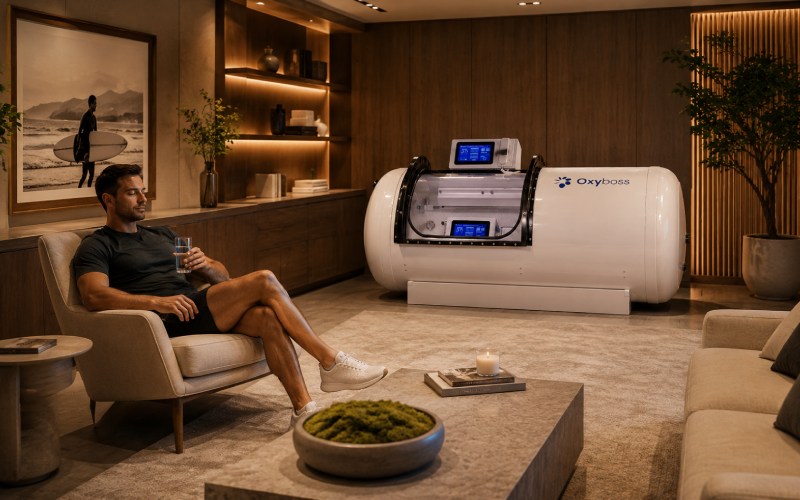
The foundational principle behind any hyperbaric chamber is straightforward: when the body is exposed to increased atmospheric pressure, oxygen dissolves more readily into blood plasma. This allows oxygen to reach tissues at higher concentrations than normal breathing permits — including areas where circulation may be limited or under strain.
This enhanced oxygen availability is closely connected to several processes central to recovery:
- Cellular energy production — oxygen is the primary input for mitochondrial ATP synthesis, the energy currency that powers virtually every repair and maintenance process in the body
- Tissue repair signalling — researchers in the field of hyperbaric medicine have explored how elevated oxygen levels may influence growth factor activity and support the body’s natural repair mechanisms
- Microcirculation support — studies have discussed how pressurised oxygen environments may influence the function of small blood vessels, supporting nutrient delivery and waste removal at the tissue level
None of these mechanisms are testosterone-specific. But they are recovery-specific — and among the most widely discussed hyperbaric chamber benefits for recovery in both clinical and wellness settings. Recovery quality, as outlined above, is one of the foundational inputs that helps determine the broader hormonal environment in which healthy testosterone regulation occurs.
Inflammation, Oxidative Stress, and Hormonal Signalling
Chronic, low-grade systemic inflammation is increasingly recognised as a disruptor of healthy hormonal function. Inflammatory signalling molecules can interfere with the hormonal feedback loop responsible for regulating testosterone production — creating an environment where the body’s endocrine system operates under constant background noise.
This is well-established physiology, not specific to hyperbaric chambers. But it provides essential context for why oxygen-pressure environments and male wellness are part of the same conversation.
Research in hyperbaric medicine has explored how controlled exposure to elevated oxygen under pressure may support the body’s ability to modulate its inflammatory response. The proposed mechanism involves a balance between transient oxidative signalling — which activates the body’s endogenous antioxidant defences — and changes in inflammatory signalling over time. Scientists have described this as a form of hormetic stress: a brief, controlled challenge that stimulates a stronger adaptive response.
When systemic inflammation is better managed, the signalling environment for hormone production may function with less interference. This is not the same as claiming that a hyperbaric chamber treats inflammation or raises testosterone directly. It is an observation about how deeply interconnected these systems are — and why improving one upstream factor can have relevant downstream effects on others.
Stress, Sleep, and the Cortisol–Testosterone Relationship
If there is one factor that bridges recovery and testosterone most directly, it is the relationship between stress, sleep, and cortisol.
Research published in JAMA demonstrated that even one week of restricted sleep in healthy young men resulted in significant reductions in daytime testosterone levels — decreases on the order of ten to fifteen percent. This finding illustrates how sensitive testosterone production is to recovery quality, and specifically to sleep.
Cortisol plays a central role in this dynamic. When the body remains in a sympathetic-dominant state — characterised by elevated stress hormones, shallow recovery, and inadequate rest — testosterone production is physiologically deprioritised. The body, in effect, allocates resources toward managing perceived threats rather than toward repair, growth, and hormonal optimisation.
Some users of hyperbaric chambers describe feeling calmer or more rested after sessions, although individual experiences can vary. While this area warrants further study, these reports align with the broader understanding that enhanced oxygenation and time spent in a controlled, restful environment may support the parasympathetic conditions under which deep recovery and healthy physiological regulation are better supported.
For men exploring the connection between oxygen and testosterone from a lifestyle perspective, this stress-sleep-hormone relationship may be one of the most practically relevant pathways to understand.
Circulation and the Endocrine System
The glands involved in testosterone production — particularly the testes — are among the most vascular structures in the male body. They depend on consistent, high-quality blood flow for both the delivery of precursor molecules and the transport of finished hormones to target tissues throughout the body.
Hyperbaric environments are frequently discussed in relation to vascular health. Researchers have investigated how intermittent exposure to pressurised oxygen may support endothelial function — the health of blood vessel linings — and contribute to microvascular activity in tissues that may be under-perfused.
For men interested in long-term hormonal wellness, circulatory health is a foundational but often overlooked variable. Supporting the vascular system through consistent recovery practices — of which a hyperbaric chamber for men’s wellness may be one component — contributes to a broader strategy rather than a targeted hormonal treatment.
Putting This in Perspective
The direct relationship between non-medical hyperbaric chamber use and testosterone levels in healthy men is an area where research is still developing. The conversation is active and physiologically grounded, but not yet conclusive.
What does exist, however, is a well-supported understanding that testosterone production depends on recovery quality, inflammatory balance, circulatory health, sleep depth, and stress management — and that hyperbaric oxygen and recovery environments engage with each of these systems in meaningful ways.
This is why many men who are already investing in recovery, sleep, fitness, and long-term vitality may view hyperbaric chamber use as one part of a broader wellness routine. Not as a hormone treatment, but as an environment that supports the conditions under which the body’s own regulatory systems — including hormonal balance — can function with fewer unnecessary limitations.
Where OxyBoss Fits Into This Conversation
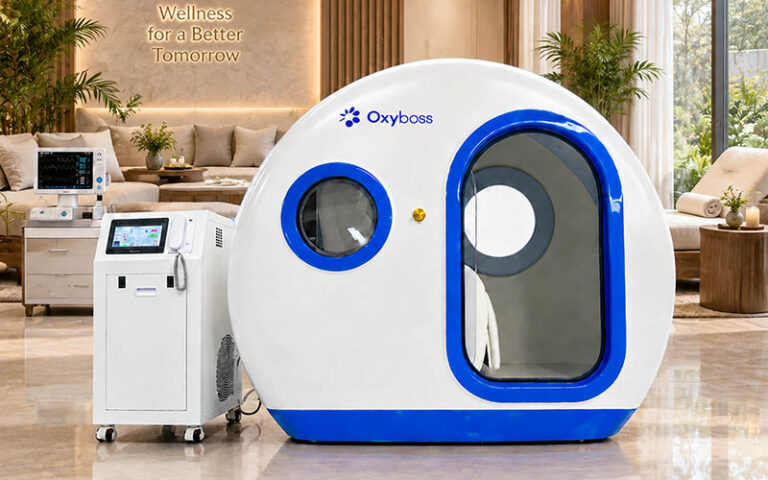
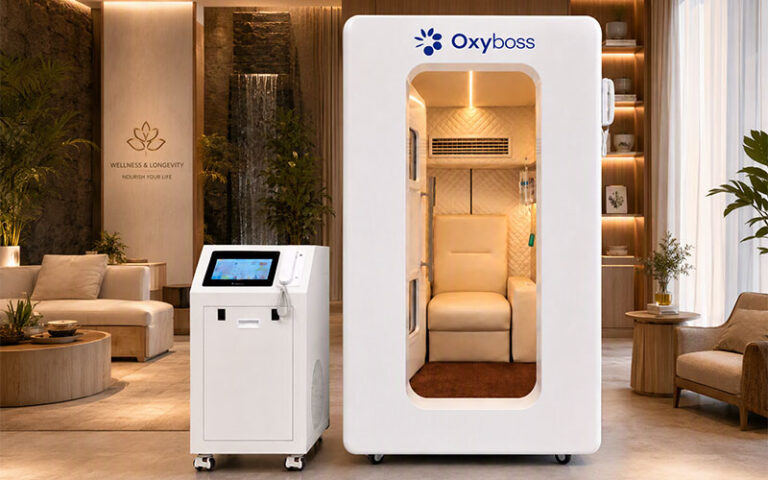
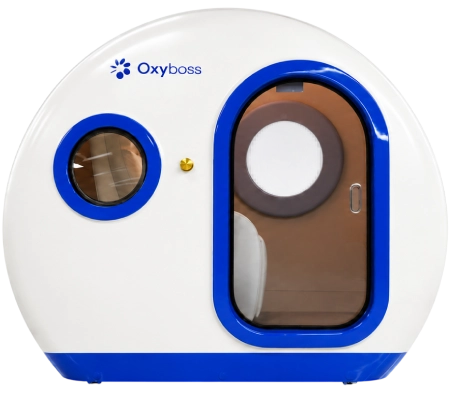
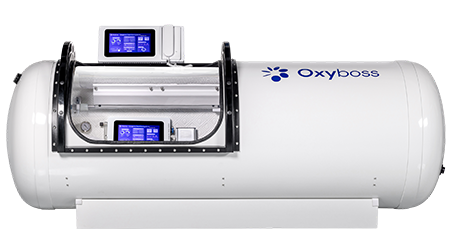
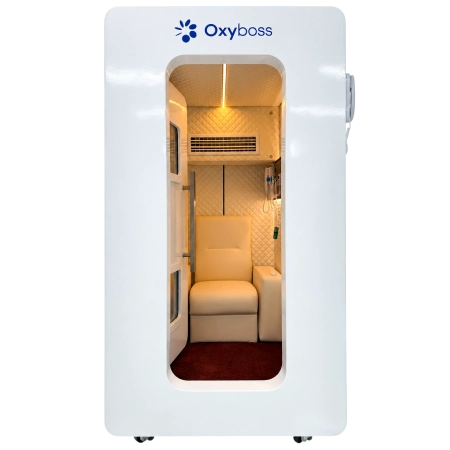
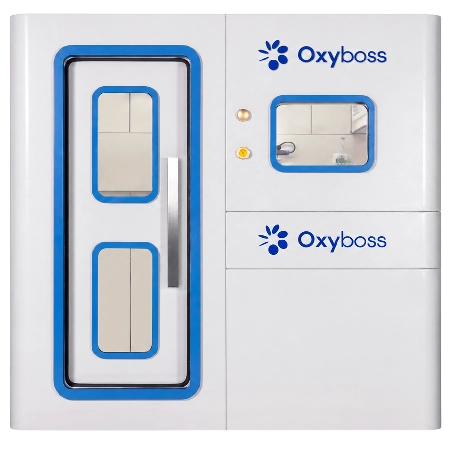
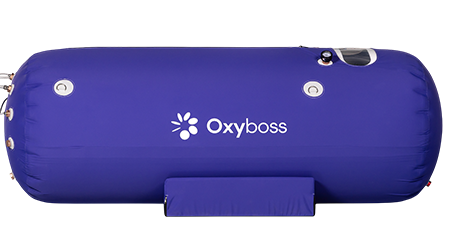
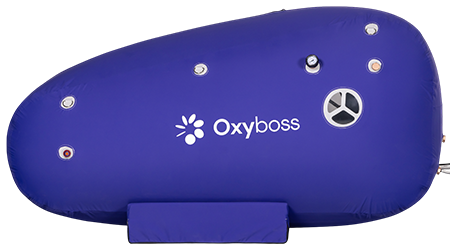
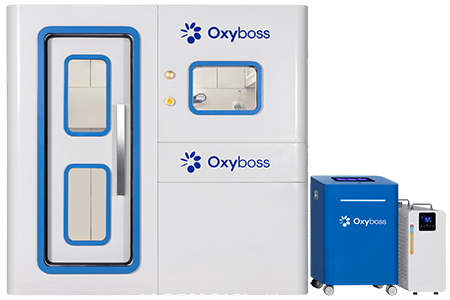
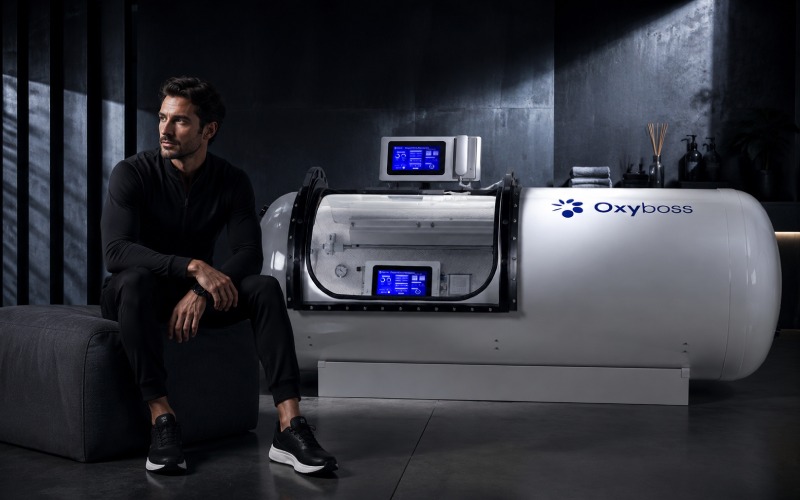
OxyBoss designs non-medical hyperbaric chambers for wellness studios, recovery facilities, private residences, and professional environments where users seek a premium oxygen-pressure experience as part of a consistent recovery routine.
The focus at OxyBoss is on chamber quality, user comfort, pressure consistency, safety engineering, oxygen system integration, cooling and ventilation design, and modern aesthetics that integrate naturally into contemporary wellness spaces. Whether used by athletes, executives, wellness practitioners, or men building recovery-focused habits for long-term vitality, OxyBoss chambers are built to support comfortable, repeatable sessions in a carefully controlled environment.
OxyBoss does not position its chambers as medical devices or hormonal treatments. The goal is simpler and more honest: to provide access to a well-engineered recovery environment that works with the body’s own systems, session after session.
A Note on Responsibility
OxyBoss hyperbaric chambers are designed for wellness and recovery environments and are not intended to diagnose, treat, cure, or prevent any disease or hormonal condition. Anyone with concerns about testosterone levels, hormonal balance, or reproductive health should consult a qualified healthcare professional for appropriate evaluation and guidance.
Explore OxyBoss
If you’re interested in learning more about how hyperbaric chamber design, pressure specifications, oxygen system integration, and comfort engineering can support a recovery-focused wellness environment, the OxyBoss team is available to help. Whether you’re a studio operator, distributor, fitness professional, or individual exploring hyperbaric technology for personal use, we invite you to explore our chamber range and discover what a modern recovery environment looks like.