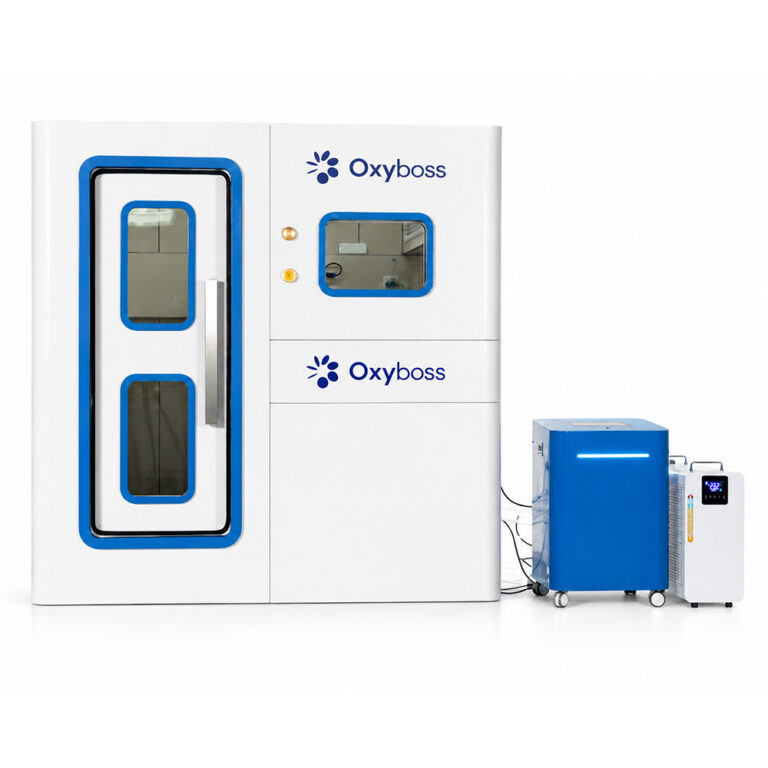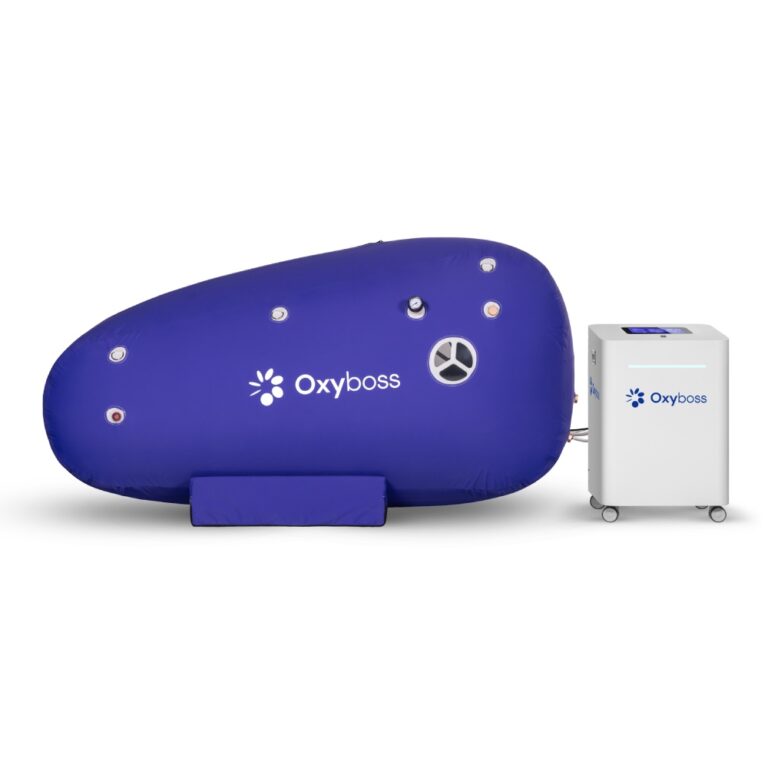
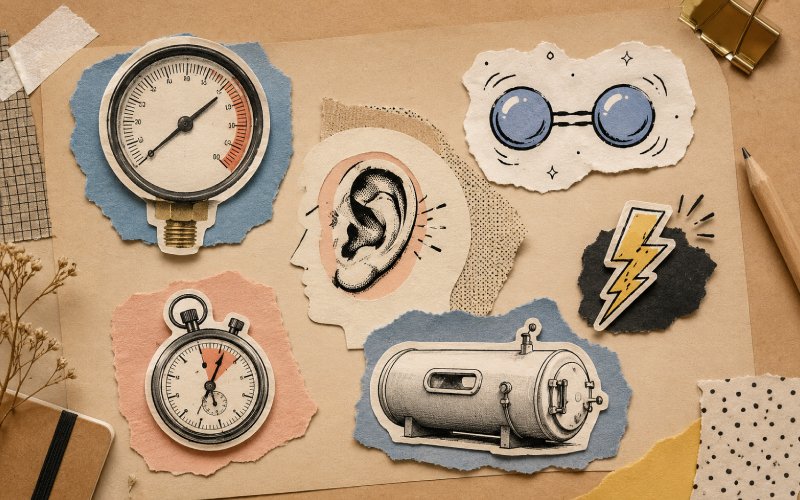
Hyperbaric chamber side effects do not come from one thing.
Some come from pressure changes. Some come from the amount of oxygen in the chamber. Some come from the chamber environment itself: enclosed space, clothing, static, heat, electronics, session length, the speed of pressurization. People often bundle all of that into one vague idea of “the chamber.” Not very helpful. A mild-pressure chamber and a full-pressure chamber are not the same exposure. In published safety references, full-pressure chamber use usually starts at 1.4 ATA with 100% oxygen, while mild setups often stay around 1.3 ATA and may use room air or a modest oxygen boost instead.
That difference changes the whole experience. Lower pressure usually means less strain on the ears and other air-filled spaces. Lower oxygen concentration usually means a lighter oxygen load. Not zero load. Just lighter. And that is why mild chambers are often described as the gentler option for everyday use, especially when the goal is a lower-pressure, lower-intensity session rather than a full-pressure setup.
Why hyperbaric chamber side effects happen
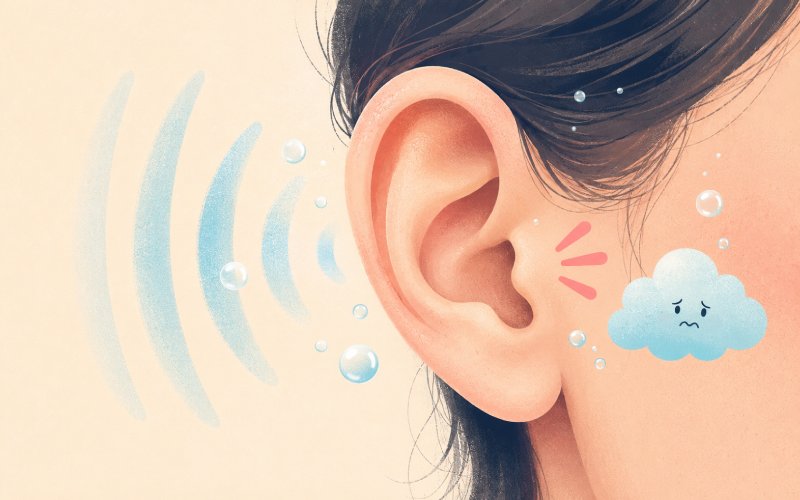
Pressure is the obvious part. As the chamber rises above normal air pressure, the ears have to equalize. If that does not happen smoothly, discomfort shows up fast. Usually as fullness, pressure, or pain. The same basic issue can affect the sinus area too. Ear pressure problems are consistently reported as the most common side issue in hyperbaric chamber use.
Oxygen level is the second part. Stronger oxygen exposure, especially across repeated sessions, can bring its own set of issues. One of the more familiar ones is temporary vision change, often a short-term shift toward blur or nearsightedness after repeated high-oxygen sessions. Stronger setups also carry a higher chance of oxygen-related problems overall, and a 2023 systematic review found side issues were more likely when chamber pressure went above 2.0 ATA.
Then there is the chamber itself. Closed-space stress is real for some people, even in clear chambers. And when oxygen concentration rises, the fire and static picture changes too. Official device safety guidance stresses compatible clothing, control of ignition sources, grounding, maintenance, cleaning, and close adherence to operating instructions because oxygen-rich environments leave less room for careless mistakes.
The side issues people notice first
1) Ear pressure trouble
This is the big one. Not because it is dramatic every time, but because it is common and immediate. The issue usually begins during compression, when the chamber is moving upward in pressure and the ears are trying to catch up. If the session pace is too fast, or equalizing is difficult that day, the chamber stops feeling “mild” pretty quickly.
2) Sinus and face pressure
Less talked about, but familiar. If the small air spaces around the nose and cheeks do not adjust comfortably, the session can bring pressure across the face or forehead. It is the same basic physics as the ears, just in a different place.
3) Temporary vision shifts
Repeated high-oxygen sessions can cause a short-term refractive shift. The plain version: vision may feel a little “off” for a while. This is more associated with stronger oxygen exposure and longer runs than with modest chamber use. Still, it belongs on the list because people often do not expect it.
4) Headache, lightheadedness, or a “too much” feeling
Not everyone gets this, but it shows up often enough in safety writeups. Sometimes the cause is the pressure change. Sometimes it is the oxygen load. Sometimes it is just the session being a little longer or stronger than the person expected. The point is not to guess. The point is to notice that chamber comfort is not only about pressure.
5) Closed-space stress
Some people are fine until the zipper closes or the door seals. Then the chamber feels smaller than it looked from the outside. This is one reason chamber layout, visibility, communication, and supervision matter more than glossy product photos suggest.
Why mild chambers usually feel gentler
The simplest way to see the difference is side by side. The example conditions below reflect published descriptions of full-pressure chamber use and recent mild-pressure examples at 1.3 ATA with room air, 24% oxygen, and 35% oxygen. The oxygen-pressure values are straightforward pressure × oxygen-fraction math based on those examples.
| Setup | Chamber pressure | Oxygen mix | Approx. oxygen pressure | What usually changes |
| Normal room air | 1.0 ATA | 21% | 0.21 ATA | Baseline |
| Mild chamber with room air | 1.3 ATA | 21% | 0.273 ATA | Small increase, usually easier on the ears than stronger setups |
| Mild chamber with modest oxygen boost | 1.3 ATA | 24% | 0.312 ATA | Noticeably more oxygen than room air, still far below full-pressure examples |
| Mild chamber with stronger enrichment | 1.3 ATA | 35% | 0.455 ATA | Higher oxygen exposure, but still moderate beside 100% oxygen examples |
| Full-pressure example | 2.0 ATA | 100% | 2.0 ATA | Much stronger oxygen load and a bigger pressure step |
That table explains a lot. Lower pressure means a smaller mechanical jump for the ears and sinuses. Lower oxygen concentration means a lighter oxygen load. Put those together and the chamber usually feels easier to tolerate. Not always. Some people still dislike the enclosure, or still struggle with ear equalization. But lower input tends to mean lower friction. That is not marketing language. It is just the setup being less aggressive.
There is a catch, though. A mild chamber is only gentler when the operating habits are gentler too. Poor supervision, fast pressurization, random electronics, unsuitable fabrics, weak maintenance, or sloppy item control can erase the whole advantage. A lower-pressure chamber does not excuse loose safety habits. It makes them easier to ignore, which is not the same thing.
What to check before a session
A lot of confusion disappears when you ask simple, mechanical questions.
Know the exact pressure
“Hyperbaric” is too broad by itself. Ask for the actual chamber pressure in ATA. The difference between 1.3 ATA and 2.0 ATA is not small. It changes the feel of the session and the oxygen exposure too.
Know the oxygen mix
Pressure alone does not tell the full story. A 1.3 ATA chamber using room air is one thing. A 1.3 ATA chamber using enriched oxygen is another. Ask what is being used during the session, not just what the chamber can do in theory.
Ask how fast the chamber goes up and comes down
A chamber can be mild on paper and still feel rough if the pressure change is rushed. Ear pressure issues are closely tied to equalization during compression, so the session pace matters. Quite a bit.
Check clothing and item rules
This part gets dismissed until it matters. Official safety guidance notes that some fabrics, especially wool and synthetics, may create more static, while chamber-compatible materials such as cotton are often preferred. The same guidance also warns against bringing in unapproved items that can spark, heat up, or otherwise behave badly in an oxygen-rich space.
Ask about grounding, cleaning, and maintenance
These sound like boring details. They are not. Oxygen-rich spaces demand steady maintenance, cleaning, and grounding practices. Good chambers are not only about pressure level or zipper quality; they are about disciplined operation, every session, every time.
Make sure someone is actually paying attention
A chamber session should not feel like “get in, zip up, see you later.” Clear communication, supervision, and a straightforward shut-down process matter. Especially when the chamber is enclosed and oxygen concentration is above normal room air.
Mild chambers are not risk-free. They are lower-exposure.
That is the cleaner way to say it.
Mild chambers usually make sense for people who want a lower-pressure session with a wider comfort margin. They do not make pressure disappear. They do not make oxygen irrelevant. They just reduce the intensity compared with full-pressure, full-oxygen setups described in most safety literature. Lower pressure. Lower oxygen load. Fewer hard swings. Usually easier.
And no, higher ATA is not automatically better. That idea sticks around because bigger numbers look persuasive. But higher pressure and higher oxygen also change the side-effect profile, and published reviews have already pointed out that issues are more likely above 2.0 ATA. Sometimes the smarter setup is the one asking less from the chamber, the operator, and the person inside it.
FAQ
What is the most common hyperbaric chamber side issue?
Ear pressure trouble is the most common one. It often begins during compression, when the chamber pressure rises and the ears need to equalize.
Does a 1.3 ATA chamber still change oxygen exposure?
Yes. Even with room air, 1.3 ATA raises oxygen exposure above normal sea-level breathing. If the setup also uses oxygen enrichment, the increase is larger.
Why do mild chambers usually feel easier than full-pressure setups?
Because the pressure step is smaller and the oxygen load is usually lower. That tends to reduce ear strain and lowers the overall exposure intensity.
Can repeated sessions affect vision?
They can, especially when oxygen exposure is strong and sessions are repeated over time. Temporary blur or a short-term shift toward nearsightedness has been described in the literature.
Why is clothing part of chamber safety?
Because oxygen-rich environments require tighter control of static and ignition risk. Official guidance notes that some fabrics can generate more static, and chamber-compatible materials such as cotton are often preferred.
Are mild chambers risk-free?
No. They are lower-exposure, not risk-free. Ear pressure issues, enclosure discomfort, and setup-related safety problems can still happen if the chamber is poorly operated or the session is a bad fit for the day.
Is higher pressure always better?
No. Higher pressure increases exposure, but it can also increase the chance of side issues. Published reviews found those issues were more likely when chamber pressure went above 2.0 ATA.