Most mild hyperbaric chamber sessions last 60 to 90 minutes at target pressure, with total time inside the chamber running 75 to 105 minutes once you account for pressurization and depressurization cycles. The exact number depends on your operating pressure, your chamber type, and whether you are using the unit at home or in a commercial wellness setting.
This guide covers session timing for chambers operating in the 1.3–1.5 ATA range commonly found in home and commercial wellness settings. It is written from an equipment, scheduling, and operations perspective. It does not describe hospital treatment protocols or provide medical guidance.
What “Session Length” Actually Means: Three Phases, Not One
When a chamber is described as supporting a 90-minute session, that does not necessarily mean 90 minutes at peak pressure. Every session has three distinct phases, and mixing them together can lead to unclear scheduling and unrealistic expectations.
Phase 1: Pressurization
The chamber climbs from ambient atmospheric pressure (1.0 ATA) to your target setting. Depending on the target pressure and compressor output rate, this usually takes 5 to 12 minutes.
For 1.3 ATA chambers, pressurization is often set at approximately 0.3–0.5 PSI per minute. Faster ramp rates may be mechanically possible, but a more gradual climb is often more comfortable for routine use. Many units include an adjustable ramp rate for this reason.
Phase 2: Soak Time
This is the period at stable target pressure. It is the main session window you should track when comparing formats, unless a page specifically says the posted time includes the full door-to-door block.
Phase 3: Depressurization
The chamber returns to ambient pressure. This usually takes 3 to 8 minutes, depending on the valve setup and target pressure differential. A controlled descent is standard for comfort and repeatable operation.
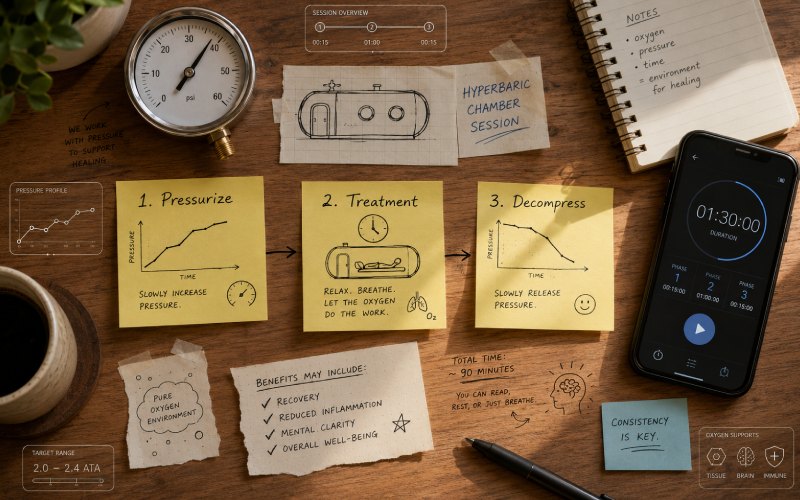
The practical takeaway
A “60-minute session” usually occupies roughly 72–80 minutes of real time. A “90-minute session” usually occupies 100–110 minutes.
That matters if you are planning around work, family schedules, or back-to-back appointments.
| Phase | Duration Range | What Determines It |
| Pressurization | 5–12 min | Target pressure, compressor output, user comfort |
| Soak (at target pressure) | 60–90 min | Pressure class, use case, session format |
| Depressurization | 3–8 min | Valve calibration, target pressure differential |
| Total time inside chamber | 68–110 min | Sum of all three phases |
Session Duration by Pressure Class
Pressure level is one of the main factors that shapes how session timing is typically presented. A practical reference for mild chambers is below.
| Chamber Pressure | Common Soak Time | Total Time (incl. ramp) | Typical Use Context |
| 1.3 ATA | 60–90 min | 75–105 min | Home wellness chambers, daily personal use |
| 1.4 ATA | 60–90 min | 78–108 min | Home and light commercial use |
| 1.5 ATA | 60–75 min | 78–95 min | Commercial wellness centers and similar non-hospital settings |
Why do session windows often get shorter as pressure rises?
In this equipment category, higher pressure classes are commonly paired with shorter hold times, while lower pressure classes are often paired with longer hold times. The practical point is simple: compare session timing within the same pressure class rather than assuming every “90-minute session” means the same thing across different chamber types.
At 1.3 ATA, longer hold windows such as up to 90 minutes are commonly presented. At 1.5 ATA, session formats are more often shown in a shorter range. When comparing models or published schedules, pressure class and timing should be read together.
Home Chamber Sessions: What Duration Works in Practice
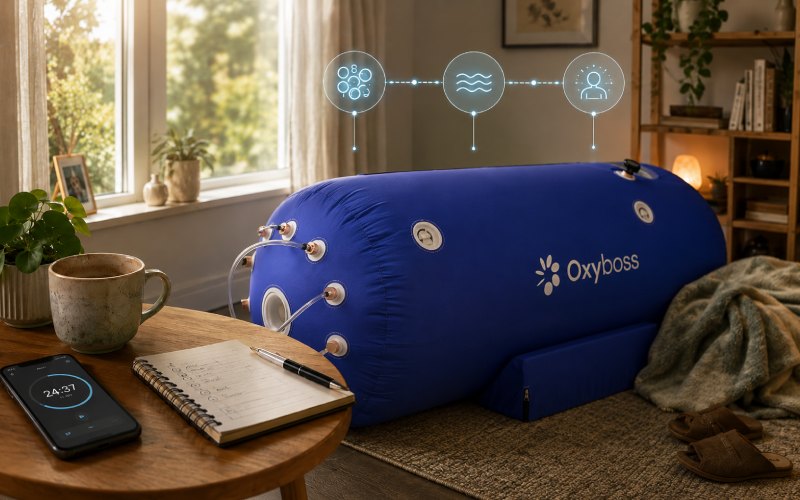
If you are using or comparing a home unit—typically operating at 1.3 or 1.4 ATA—the clearest way to think about timing is through routine and scheduling.
Starting out
For first-time home use, a 60-minute soak session is often the easiest format to schedule. Not because longer sessions are necessarily inappropriate at this pressure class, but because the first few sessions are usually about learning the routine: entry and exit timing, pressure changes, enclosure comfort, temperature, and how much time the full session takes from start to finish.
After the first phase of use
Among home users, two common scheduling patterns are:
- 60 minutes, 5 days per week — the most common steady routine
- 90 minutes, 3–4 days per week — a longer session format on fewer days
The total weekly chamber time often ends up in a similar range either way. In practice, the more useful format is usually the one that fits the calendar consistently.
A hardware note worth checking
If your chamber uses an external oxygen concentrator, check its rated continuous duty cycle. That figure should match or exceed the longest session format the product is intended to support.
Running a 90-minute session on a concentrator rated for 60 minutes of continuous output can reduce performance in the latter part of the session and add unnecessary heat and wear to the concentrator. For this reason, chambers built around longer session formats are typically paired with concentrators rated for longer continuous operation. This information should be available in product documentation.
Commercial Wellness Operations: Session Length as a Business Variable
If you are running a wellness center, gym recovery room, spa, or similar non-hospital space with hyperbaric services, session duration is also a scheduling and capacity question.
The core trade-off
Shorter sessions can allow more bookings per day and higher throughput. Longer sessions can reduce turnover pressure but require larger appointment blocks.
In many commercial settings, 60 minutes of soak time works as a practical balance point. That usually translates to a 75–85 minute booking slot once you include pressurization, depressurization, client entry/exit, and basic changeover.
Throughput by chamber configuration
| Setup | Soak Time | Booking Slot | Changeover | Sessions per 10-hr Day |
| Single monoplace chamber | 60 min | 80 min | 10 min (sanitize + prep) | 6–7 |
| Single monoplace chamber | 90 min | 110 min | 10 min | 5 |
| Multi-person chamber (4 seats) | 60 min | 80 min | 15 min (more surface area) | 6 |
| Multi-person chamber (4 seats) | 90 min | 110 min | 15 min | 4–5 |
| Two monoplace units, staggered | 60 min | 80 min | 10 min each | 12–13 (combined) |
A four-seat multi-person chamber running 60-minute soak sessions at 6 rounds per day can deliver 24 completed sessions through a single unit. That makes session timing an important operational choice, not just a posted number on a page.
Operational durability at commercial volume
Commercial chambers usually see more pressurization cycles, more seal wear, more zipper use, and more compressor hours than home units.
For commercial planning, the numbers that matter most are:
- rated pressurization cycle count on seals and zippers
- compressor duty cycle at planned daily hours
- recommended maintenance interval at commercial load
- expected concentrator sieve bed replacement schedule at higher-volume use
Those figures do more to define long-term operating cost than headline pricing alone.
Session Frequency and Duration: How They Interact
A common planning question is whether it makes more sense to schedule longer sessions less often or shorter sessions more often.
The answer usually depends on calendar fit, chamber availability, and how much time you want to reserve for each session block.
| Pattern | Weekly Soak Time | Practical Notes |
| 60 min × 5 days | 300 min | Common steady routine for home users |
| 75 min × 4 days | 300 min | Middle-ground scheduling format |
| 90 min × 3 days | 270 min | Useful when weekday availability is limited |
| 60 min × 7 days | 420 min | Requires more calendar time and equipment availability |
There is no single “correct” pattern. From an equipment and scheduling standpoint, the better format is usually the one that fits the week without turning the chamber into a planning problem.
One format some users consider is two shorter sessions in a single day, spaced several hours apart, rather than one very long session. From a scheduling perspective, that can work well in some routines, although it also means two separate entry, pressure-change, and exit cycles.
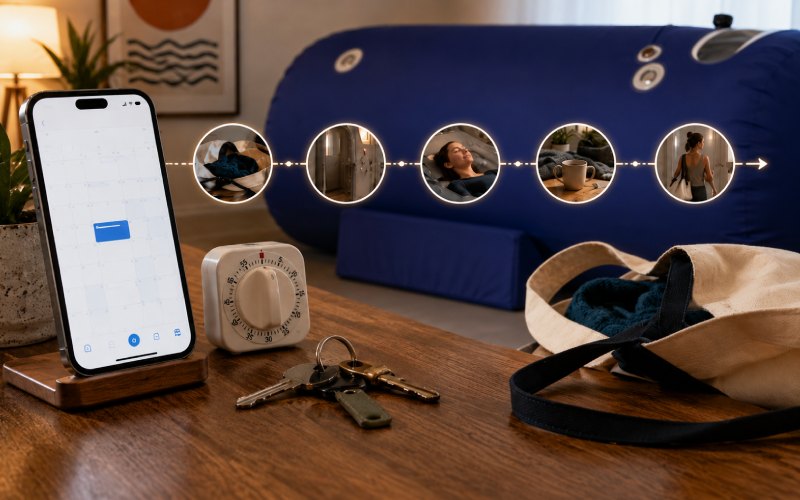
When Longer Sessions Stop Making Sense
From a pure equipment standpoint, a properly rated chamber may be able to maintain stable pressure for long periods within its operating window.
But “the hardware can hold pressure” is not the same thing as “longer is always the most practical format.”
Past about 90 minutes of soak time at 1.3 ATA, or about 75 minutes at 1.5 ATA, many users and operators find that calendar fit, comfort, and session efficiency become the limiting factors. If a standard session window does not fit your routine, changing the session format—or comparing a different pressure class, if supported—is usually more practical than simply extending the hold indefinitely.
Soft Shell vs. Hard Shell: Does Chamber Type Affect Session Length?
Not directly, but the downstream effects can matter.
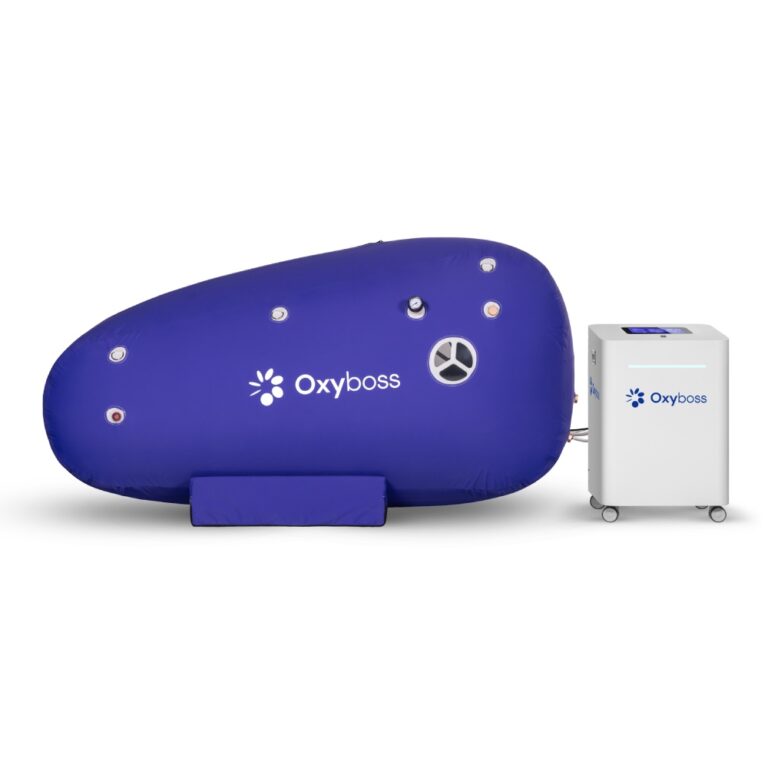
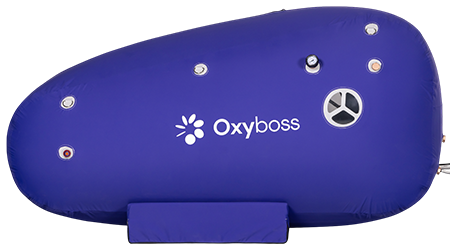
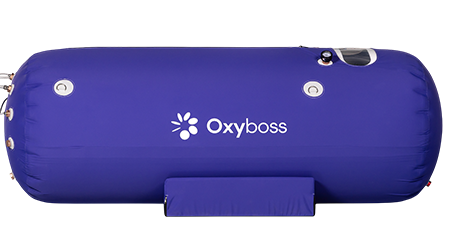
Soft shell chambers—the type most common in home settings—typically max out at 1.3 ATA. That naturally places many sessions in the 60–90 minute soak range.
Where chamber type affects experience most is thermal management. Soft shell units often rely on passive airflow and compressor intake air for ventilation. At the 60-minute mark, internal temperature in a soft shell chamber can rise 3–5°F above ambient room temperature, depending on room conditions and the user’s heat output.
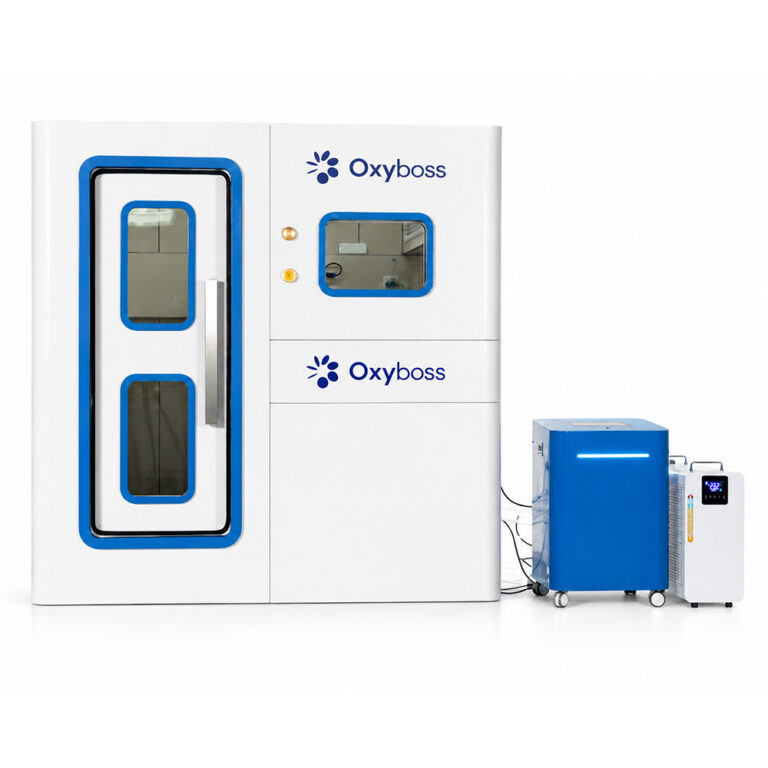
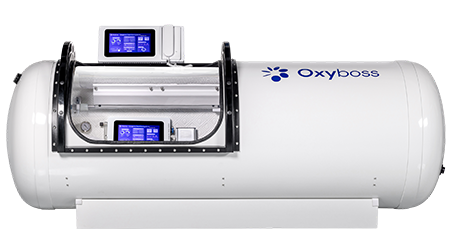
Hard shell chambers generally offer more options for active ventilation and climate control. That can help maintain a more stable interior temperature over longer session blocks. Hard shell units also tend to offer higher maximum pressures (1.5 ATA and above), which often changes the session range commonly presented for that equipment class.
If you expect to run sessions longer than 60 minutes regularly, thermal management is worth checking closely. A chamber that becomes noticeably warm partway through the session can make the practical session window feel shorter than the posted timer suggests.
Key Takeaways
- Standard soak time is typically 60–90 minutes for chambers in the 1.3–1.5 ATA range
- Total time inside the chamber usually runs 75–110 minutes including pressurization and depressurization
- Higher pressure classes are commonly paired with shorter soak times
- For commercial operations, a 60-minute soak / 80-minute booking slot often balances throughput and scheduling efficiency
- Weekly consistency and calendar fit usually matter more than choosing the largest single session number
- Check your concentrator’s continuous duty cycle so it matches or exceeds the intended session duration
- Thermal management can limit practical session time more than many buyers expect, especially in soft shell units
Choosing a Chamber for Real-World Use
When comparing mild hyperbaric chambers, session length is only part of the picture. It also helps to look at how the full session fits into real use: pressure-change timing, interior comfort over a 60–90 minute block, airflow, ease of entry and exit, and how smoothly the setup works day to day. A chamber that supports a clear, repeatable session routine is often a better long-term fit than one that simply posts a larger headline number.
FAQ
How long should my very first session be?
For mild chambers used outside hospital settings, 60 minutes of soak time is a common starting format in consumer-facing materials. It leaves enough room to learn entry and exit timing, pressure changes, enclosure comfort, and the total time block.
Can I fall asleep during a session?
Some people do. If your chamber includes a built-in session timer, use it so the depressurization cycle starts on schedule. Pressure changes often make the end of the session more noticeable.
Is a 30-minute session worth doing?
After pressurization and depressurization, the time at target pressure may be quite short. If you are comparing formats, 60 minutes is usually a more efficient benchmark for mild chamber scheduling.
How many sessions per week is typical?
In home-use materials, three to five sessions per week is a common published range. Commercial wellness clients often book two to three sessions per week. Actual scheduling depends on the user, the facility, and the session format being offered.
Does the session length change over time?
Some users stay at 60 minutes long-term. Others move to 75 or 90 minutes based on schedule, chamber type, and comfort. There is no requirement to increase the session length over time.
What happens if I accidentally go over my planned session time?
Within the chamber’s rated operating window, going somewhat over a planned session time is generally more of a scheduling issue than a hardware issue. If it happens regularly, it may make sense to choose a different standard session format.
Should I take breaks during a long session?
For the mild chamber category discussed here, breaks during a standard 60–90 minute session are not usually part of the basic format. Higher-pressure or clinical systems follow different protocols and are outside the scope of this guide.
How do I know if a session format is long enough?
The simplest way is to look at the full schedule: posted session time, pressure-up and pressure-down phases, comfort, and how the full block fits into the day. A clear format that fits real use is usually more useful than a larger headline number on its own.