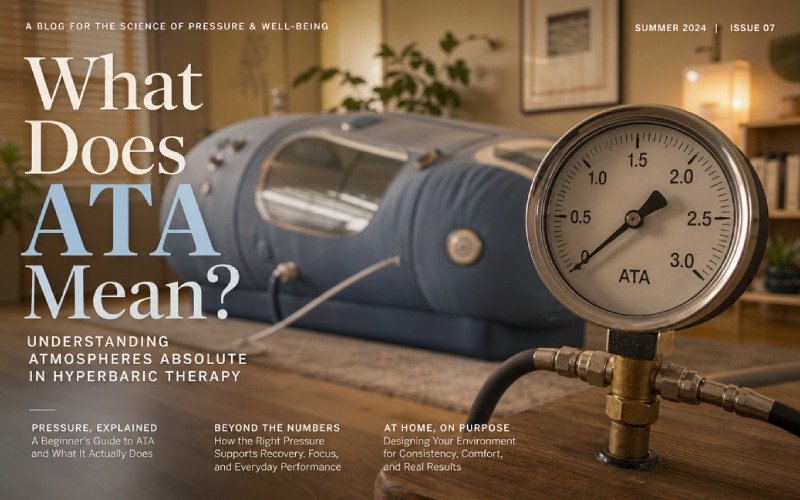
You may be reading a pressure gauge that says “1.5 ATA.” Or comparing spec sheets where one model is listed at 1.3 and another at 2.0. The key question is not only what ATA means, but what that number changes about chamber pressure, oxygen partial pressure, user comfort, equipment requirements, and installation needs.
For non-medical hyperbaric chambers, ATA is one of the most important specifications. It affects how the chamber is built, how it operates, and what kind of user experience it provides.
ATA: The Short Definition
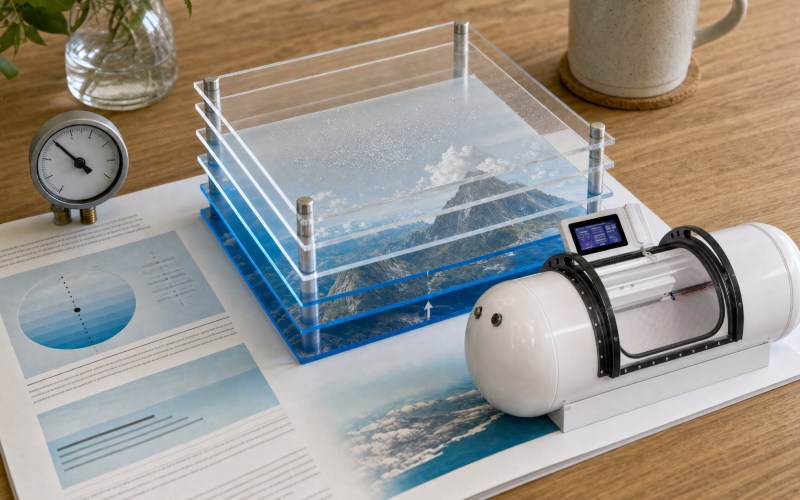
ATA stands for Atmospheres Absolute. It measures the total pressure acting on you — the pressure of the atmosphere you are already in, plus whatever additional pressure the chamber creates.
At or near sea level, normal atmospheric pressure is 1.0 ATA. That is 14.7 PSI or 101.3 kPa. Different units, same physical reality.
When a chamber is pressurized to 1.5 ATA, it is operating at 50% more total pressure than normal atmospheric pressure. At 2.0 ATA, total pressure is doubled.
Why “absolute”? Because many industrial gauges display gauge pressure, meaning pressure above atmospheric pressure. A reading of 0 PSI on a gauge means normal ambient air, not vacuum. ATA removes that ambiguity. A chamber set to 1.5 ATA represents the same internal absolute pressure regardless of local elevation, even though the gauge PSI may vary by location.
Information note: This article provides general information about pressure terminology and equipment selection for non-medical hyperbaric chambers. It is not medical advice and does not make claims to diagnose, treat, cure, or prevent any disease. Users should follow the manufacturer’s instructions, applicable local requirements, and seek qualified professional advice for personal health questions.
The Gas Physics Behind the Number
Two gas laws explain most of what matters here: Henry’s Law and Boyle’s Law.
Henry’s Law
The quantity of gas that dissolves into a liquid is directly proportional to the partial pressure of that gas above the liquid.
In chamber terms, raising pressure changes oxygen partial pressure and can increase the amount of oxygen physically dissolved in plasma. How much this changes in practice depends on two variables: total chamber pressure and the oxygen fraction being breathed.
This is described by oxygen partial pressure (ppO₂):
ppO₂ = FiO₂ × P(ATA)
Where:
- FiO₂ = fraction of inspired oxygen
- P(ATA) = total chamber pressure
Examples of Oxygen Partial Pressure
| Breathing Condition | FiO₂ | Pressure (ATA) | Resulting ppO₂ (ATA) | Approximate Equivalent at Sea Level |
| Room air at sea level | 0.21 | 1.0 | 0.21 | 21% baseline |
| 93% O₂ mask at sea level | 0.93 | 1.0 | 0.93 | 93% |
| Room air at 1.5 ATA (no mask) | 0.21 | 1.5 | 0.32 | ~32% equivalent |
| 60% O₂ blend at 1.5 ATA | 0.60 | 1.5 | 0.90 | ~90% equivalent |
| 93% O₂ mask at 1.5 ATA | 0.93 | 1.5 | 1.40 | ~140% equivalent |
| 100% O₂ at 2.0 ATA | 1.00 | 2.0 | 2.00 | ~200% equivalent |
The practical takeaway is simple: pressure multiplies oxygen partial pressure. It does not merely add oxygen concentration.
Boyle’s Law
Volume and pressure are inversely proportional at constant temperature. Raise the pressure, and gas volume decreases.
This matters inside a chamber for two main reasons:
Ear equalization. As pressure rises, the air space in the middle ear compresses. Users typically equalize by swallowing, yawning, or moving the jaw, similar to airplane descent or diving.
Gas density. At higher ATA, each breath contains more gas molecules in the same volume. That means the compressor and airflow system must be sized appropriately to maintain fresh-air exchange at the target pressure.
The Pressure Tiers — What Each ATA Range Typically Means
Each ATA range brings a different equipment profile, different operating requirements, and different site considerations.
| ATA Range | Equivalent Water Depth | Typical Chamber Type | Typical Session Duration* | Typical System Power Draw | Noise Level (typical) | Typical Use Context |
| 1.0 ATA | Surface | N/A | N/A | N/A | N/A | Normal ambient pressure |
| 1.3 ATA | ~10 ft / 3 m | Soft shell (TPU/PET) | 60–90 min | 200–520 W | 45–55 dB | Entry-level home use |
| 1.5 ATA | ~16 ft / 5 m | Reinforced soft shell | 60–90 min | 520–800 W | 50–60 dB | Higher-pressure soft-shell use |
| 2.0 ATA | ~33 ft / 10 m | Hard shell (steel/aluminum) | 45–60 min | 1.5–4.0 kW | 55–65 dB (with silencing) | Hard-shell commercial or dedicated-room installations |
| 2.4 ATA | ~46 ft / 14 m | Hard shell (steel/aluminum, higher-duty build) | 40–50 min | 2.5–5.0+ kW | 60–72 dB | Specialized higher-pressure installations |
*Actual session duration depends on the manufacturer’s instructions, operating protocol, and user conditions.
A few things are worth noticing:
Session times often shorten as ATA rises. Higher-pressure systems are commonly paired with shorter manufacturer operating protocols.
Power draw rises quickly above 1.5 ATA. A soft-shell unit may consume less power than many home appliances, while a 2.0 ATA hard-shell system can require several kilowatts once the compressor, oxygen source, cooling, and controls are included.
Noise becomes a real installation factor. Higher-pressure systems usually require larger compressors, and that often means more sound control planning.
The Units Table — ATA vs. PSI vs. Bar vs. kPa
Here is the basic conversion chart:
| ATA | Gauge PSI (above atmospheric) | Bar (absolute) | kPa (absolute) | Equivalent Depth (seawater) |
| 1.0 | 0 | 1.01 | 101.3 | Surface |
| 1.3 | ~4.4 | 1.32 | 131.7 | ~10 ft / 3 m |
| 1.5 | ~7.4 | 1.52 | 151.9 | ~16.5 ft / 5 m |
| 2.0 | ~14.7 | 2.03 | 202.6 | ~33 ft / 10 m |
| 2.4 | ~20.6 | 2.43 | 243.2 | ~46 ft / 14 m |
| 3.0 | ~29.4 | 3.04 | 303.9 | ~66 ft / 20 m |
Quick conversion:
1 ATA = 14.7 PSI = 1.013 bar = 101.3 kPa
If a spec sheet says “operating pressure: 4.4 PSI,” that is usually gauge pressure. Add atmospheric pressure to convert it to absolute pressure, which is about 1.3 ATA.
Why “Higher ATA” Is Not Automatically “Better”
This is one of the most important practical points.
Higher ATA does not simply mean “more of the same.” As pressure rises, several things change at once:
- user comfort and ear equalization demands
- chamber construction requirements
- compressor size and airflow needs
- noise and power consumption
- maintenance complexity
- site and installation requirements
The right ATA is not automatically the highest one. It is the one that fits the intended non-medical use case, available space, operating budget, and comfort requirements.
Soft Shell vs. Hard Shell — The ATA Boundary
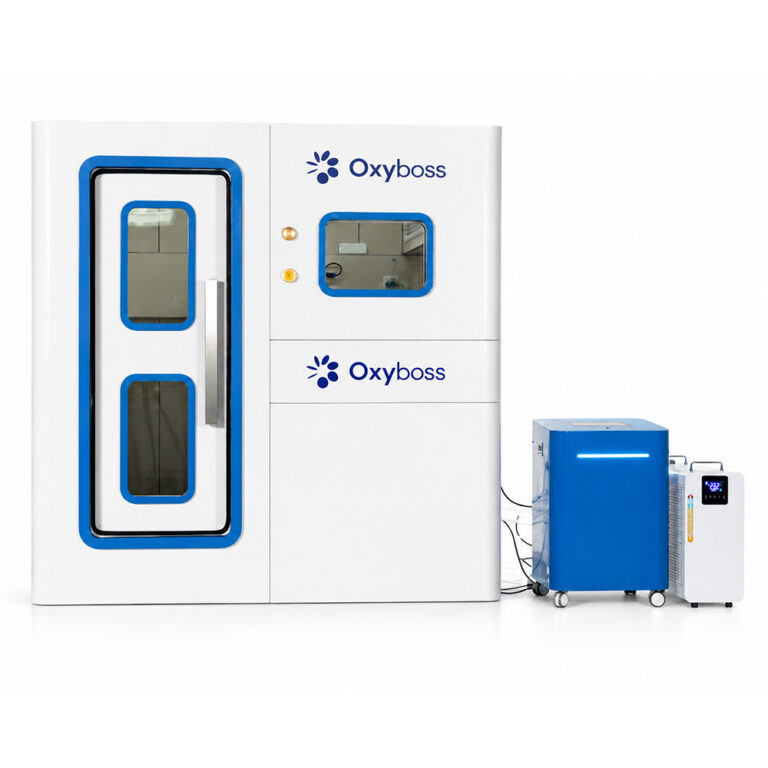
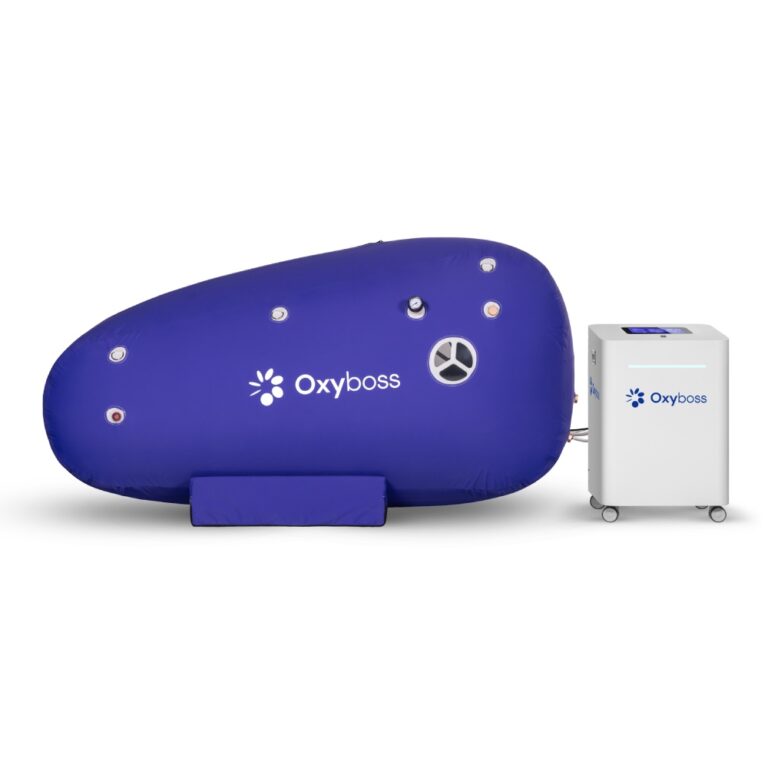
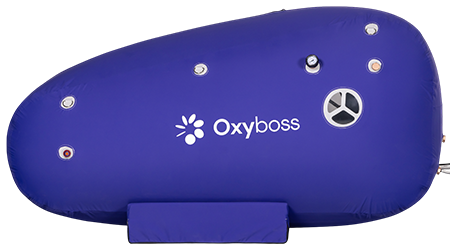
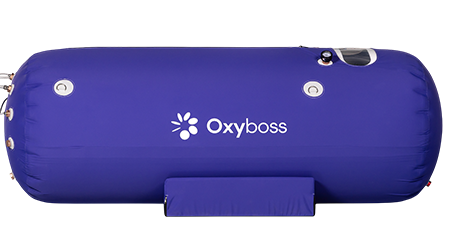
Soft-shell chambers are commonly built from layered TPU/PET polyester with welded seams and reinforced closures. They typically operate in the 1.3 to 1.5 ATA range, with some designs extending slightly beyond that. In these systems, the fabric shell itself acts as the pressure vessel.
Key engineering parameters for soft-shell chambers
- Compressor type: oil-free rocking piston or diaphragm
- Airflow under pressure: typically 100–130+ LPM at target ATA
- Duty cycle: often 80–100%
- Pressurization time: roughly 8–15 minutes
- Setup: often manageable in residential settings
- Weight: approximately 25–80 kg depending on model
- Maintenance: routine filter changes, seal checks, and periodic leak testing
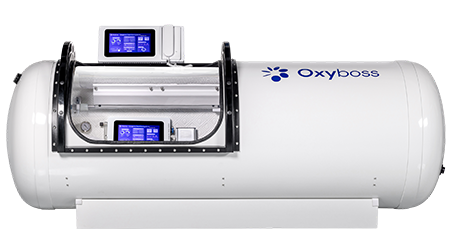
Hard-shell chambers use a rigid steel or aluminum pressure vessel, usually with an acrylic door or viewport and a more integrated compressor, oxygen, and cooling system. These systems commonly operate from 1.5 ATA upward, including 2.0 ATA and beyond.
Key engineering parameters for hard-shell chambers
- Compressor: industrial oil-free systems, often 4+ HP
- Air cooling: commonly required above 1.5 ATA to manage compression heat
- CO₂ management: dedicated scrubbing or higher ventilation flow rates
- Emergency depressurization: designed according to applicable equipment and safety standards
- Controls: programmable pressure profiles, automatic ramp rates, and safety interlocks
- Maintenance: scheduled professional inspection, gasket replacement, viewport inspection, and compressor servicing
The underlying structural point is simple: fabric stretches under pressure; rigid vessels do not. As operating pressure rises, rigid construction becomes the practical design solution.
What Happens During a Session — The Basic Sequence
A typical chamber session follows four steps:
- Seal and pre-check. The chamber is closed and basic operating checks are completed. In more advanced systems, this may include seal status, compressor readiness, oxygen source status, ventilation, and internal temperature.
- Compression phase (5–15 min). The chamber rises to the target pressure at a controlled rate. Users may feel mild ear fullness and usually equalize by swallowing or gently moving the jaw.
- Hold phase (40–90 min depending on system). Once target ATA is reached, pressure remains stable. If supplemental oxygen is used, this is when the selected pressure and oxygen fraction are maintained together. Ventilation and temperature management continue throughout the session.
- Decompression phase (5–15 min). Pressure returns gradually to ambient conditions. Users may notice a slight change in ear pressure as the chamber returns to normal atmospheric pressure.
From a comfort standpoint, the sensation is often compared to a slow and controlled airplane descent.
Choosing Your ATA: A Practical Decision Framework
For personal home use
1.3 ATA A common entry point. Portable, relatively quiet, and easier to place in a normal room. Often chosen where simplicity, lower power draw, and residential use are priorities.
1.5 ATA A middle ground for users who want more pressure while remaining in the soft-shell category. Compressor size, noise, and airflow demands are typically higher than 1.3 ATA.
1.8–2.0 ATA This generally moves into hard-shell territory. Systems are heavier, louder, and more demanding in terms of space, power, and installation planning.
For commercial or facility use
1.5 ATA soft-shell Often simpler for staff training, easier to place, and lower in maintenance overhead than hard-shell systems.
2.0 ATA hard-shell A more infrastructure-heavy option that may require site review for floor loading, door clearance, electrical capacity, cooling, and sound management.
Multiplace hard-shell Used when higher throughput is needed in a dedicated facility setting, but operational complexity also increases.
Common Misunderstandings
“PSI and ATA are different things.” They are different units for the same physical quantity: pressure.
“The highest ATA is always the best choice.” Not necessarily. Higher ATA also means higher equipment demands, more site constraints, and usually more operating complexity.
“A soft-shell chamber and a hard-shell chamber are basically the same.” No. Pressure range, structure, airflow, power requirements, weight, and installation needs are all different.
“The chamber fills with pure oxygen.” In many soft-shell non-medical systems, the chamber is pressurized with filtered ambient air. If supplemental oxygen is used, it is typically delivered separately by mask or cannula. The internal chamber environment is not the same as a 100% oxygen environment.
“More low-pressure sessions equal one high-pressure session.” Pressure exposures are not directly interchangeable. Pressure level, oxygen fraction, session duration, and operating conditions all matter.
FAQ
What does ATA stand for? Atmospheres Absolute — the total pressure relative to a vacuum, including normal atmospheric pressure plus any additional chamber pressure.
How do I convert PSI to ATA? Take the gauge PSI, divide by 14.7, then add 1. Example: 7.35 PSI gauge = 1.5 ATA
Is 1.5 ATA a common operating pressure? Yes. It is a common pressure tier in reinforced soft-shell systems and is often used as a practical midpoint between lower-pressure portable systems and hard-shell chambers.
What ATA does a hard-shell chamber reach? That depends on the model. Hard-shell chambers commonly begin around 1.5 ATA and extend to 2.0 ATA or higher, depending on design and applicable standards.
Can I feel the pressure change? Usually yes, mildly. It commonly feels similar to ear pressure during airplane descent.
What’s the difference between ATA and bar? For chamber purposes, the difference is small. 1 ATA ≈ 1.013 bar.
Does altitude affect the ATA inside the chamber? ATA is an absolute measure, so a chamber set to a given ATA target is referencing internal absolute pressure. Local elevation can affect compressor workload, but not the meaning of the ATA setpoint itself.
What’s the difference between mild hyperbaric chambers and higher-pressure clinical systems? They operate at different pressure tiers, use different chamber designs, and may fall under different operating, regulatory, and safety frameworks depending on the product and jurisdiction.
How do I know which ATA is right for my space? Start with your available space, electrical capacity, noise tolerance, desired chamber type, and maintenance expectations. ATA is only one part of the selection decision.