Redefining Recovery: An Active Cellular Process
Most people think of recovery as the absence of effort — lying on a couch, sleeping an extra hour, or simply waiting. But at the cellular level, recovery is anything but passive. It is one of the most metabolically demanding states your body enters.
Every time you push your physiology — whether through athletic performance, cognitive exertion, or the accumulated micro-stresses of daily life — your body initiates a complex cascade of repair, adaptation, and restoration. Satellite cells may become involved in addressing micro-stressed muscle fibers. Mitochondria support energy production needed for reconstruction. Your lymphatic system participates in clearing metabolic byproducts. Neuronal pathways consolidate and reorganize.
Many of these processes share a common, non-negotiable requirement: oxygen.
Not merely as a passive background element in the air you breathe, but as a critical input for energy production, tissue maintenance, and normal physiological recovery processes. After intense physical or neurological exertion, oxygen demand may increase — and the efficiency of oxygen delivery becomes one of the factors that can influence how recovery systems operate.
This is one of the key reasons hyperbaric environments have become an area of interest in recovery science. They are engineered to create a pressurized environment in which oxygen availability can be increased beyond normal atmospheric conditions.
The Core Mechanism: Henry’s Law and the Physics of Pressure
The Limitation of Normal Oxygen Transport
Under standard sea-level conditions, or 1 ATA, we breathe air composed of approximately 21% oxygen. At this pressure, your hemoglobin — the oxygen-carrying protein within red blood cells — is already highly saturated, commonly around 97-99%. There is very little room for meaningful improvement in hemoglobin binding alone.
Here’s the critical insight: under normal conditions, plasma oxygen levels are relatively low — approximately 3 mL per liter of blood. Your oxygen delivery system is largely dependent on red blood cells navigating through capillaries to reach tissues. When capillary beds are constricted, congested, or stressed after exertion, oxygen delivery may become less efficient in certain areas.
This is where the physics of pressure can change the equation.
Henry’s Law: Dissolving Oxygen Directly Into Plasma
Henry’s Law states that the amount of gas dissolved in a liquid is directly proportional to the partial pressure of that gas above the liquid. In simpler terms: increase pressure, and more gas can physically dissolve into solution.
This principle operates on a linear scale. In clinical settings — such as rigid medical chambers operating at 3 ATA with 100% oxygen — plasma oxygen levels can rise significantly, sometimes reaching levels used for acute medical interventions (¹).
But here’s what makes this principle relevant for wellness and recovery discussions: Henry’s Law does not require extreme pressures to produce measurable changes in dissolved oxygen. At mild hyperbaric pressures, such as 1.3 to 2.0 ATA, especially when combined with concentrated oxygen, studies and hyperbaric physiology models indicate that plasma oxygen levels can increase beyond what normal breathing at sea level can achieve (²).
This dissolved oxygen is not bound to hemoglobin. It is oxygen dissolved directly in blood plasma, and potentially present in other body fluids such as lymphatic fluid and cerebrospinal fluid — liquids that move through physiological spaces where red blood cell delivery may be more limited.
Why Mild Pressure Is Relevant for Routine Recovery
The distinction matters. Higher pressures, such as 2.0-3.0 ATA, are typically associated with medical hyperbaric oxygen therapy and require appropriate clinical protocols, rigid chambers, professional supervision, and careful risk management. Mild hyperbaric pressures, such as 1.3-2.0 ATA, occupy a different category:
- Designed for routine wellness use when operated according to instructions — supporting consistent recovery-oriented protocols rather than acute clinical interventions
- Capable of increasing dissolved plasma oxygen beyond the hemoglobin-bound oxygen pathway
- Lower than typical clinical HBOT pressure ranges, while still requiring responsible operation, proper protocols, and attention to safety
Research in sports physiology and hyperbaric science has explored this approach. Some studies on athletes and physically active populations using mild hyperbaric environments have evaluated recovery-related markers, perceived fatigue, and readiness for subsequent performance — within pressure ranges that may be more practical for integration into wellness and recovery routines (³).
Expanding the Oxygen Delivery Pathway
The elegance of this mechanism is that dissolved plasma oxygen may support oxygen availability beyond the hemoglobin pathway. In a hyperbaric environment, oxygen dissolved in plasma may:
- Contribute to oxygen availability in tissues beyond hemoglobin-bound delivery alone
- Reach areas where microcirculation is less efficient under certain physiological conditions
- Increase oxygen presence in cerebrospinal fluid, which is relevant to neurological recovery research
- Support oxygen transport through body fluids, including plasma and interstitial spaces
Physiological Responses: Three Recovery-Relevant Pathways
1. Mitochondrial ATP Production: Supporting Cellular Energy
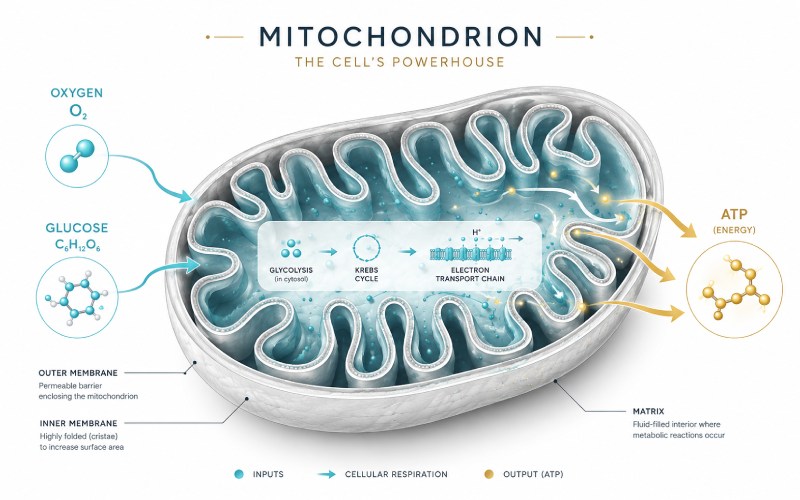
Mitochondria are your cells’ power plants. They convert oxygen and glucose into adenosine triphosphate (ATP) — the universal energy currency that fuels many recovery-related processes in your body: protein synthesis, cellular maintenance, ion transport, and enzymatic reactions.
The final step of cellular respiration — the electron transport chain — is oxygen-dependent. When oxygen supply is limited, ATP production may downregulate, and cells may shift toward less efficient anaerobic pathways that produce metabolic byproducts and generate significantly less energy per glucose molecule.
In practical terms: when oxygen availability is limited, cells may have fewer resources available for the energy-intensive work of rebuilding, adapting, and restoring balance after exertion.
Research has explored how hyperbaric environments may influence mitochondrial function, ATP production, and cellular resilience through oxygen-related signaling pathways (³).
Key implications for recovery science:
- Support for oxygen-dependent cellular energy production following exertion
- Potential support for normal muscle repair processes after exercise-induced stress
- A role in energy availability for glycogen restoration and cellular maintenance
- Relevance to neuronal energy supply, especially in discussions of cognitive fatigue and mental performance recovery
2. Microcirculation Support: Assisting Metabolic Clearance
Intense physical exertion generates a cascade of metabolic byproducts: lactate, hydrogen ions, carbon dioxide, ammonia, and reactive metabolites. Under normal conditions, your microcirculation — the network of arterioles, capillaries, and venules — helps clear these compounds. But when microcirculation is affected by post-exertion swelling, congestion, or localized stress, waste clearance may become less efficient.
Pressurized oxygen environments may influence microcirculation through a sophisticated dual mechanism:
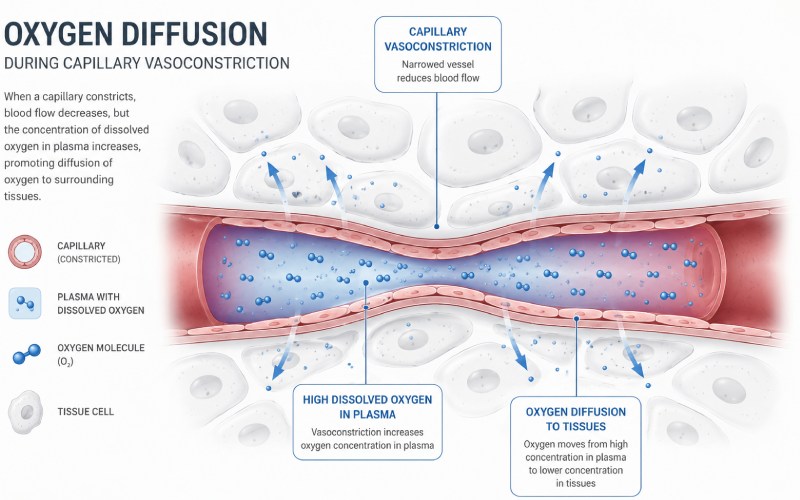
Hyperoxic Vasoconstriction: Elevated oxygen levels can produce controlled vasoconstriction, which may help reduce excess fluid accumulation in stressed tissues. Importantly, even with reduced blood flow, tissue oxygen availability may remain supported because of the higher oxygen content carried in plasma under hyperoxic conditions (¹).
Lymphatic and Interstitial Fluid Dynamics: With oxygen dissolved directly in plasma and other body fluids, oxygen availability may support energy-dependent cellular pumps and normal fluid balance processes. Reduced tissue swelling, when present, may also support more efficient lymphatic movement.
Translation — what users are often looking for: A better sense of post-exertion comfort, reduced feelings of heaviness, and a more structured recovery experience as part of a broader routine.
Potential recovery-relevant effects under study include:
- Support for the clearance of exercise-related metabolic byproducts
- Support for normal fluid balance after physical stress
- Support for return-to-baseline comfort and readiness
- Potential influence on the perception of post-exertion soreness and fatigue
3. Modulation of the Natural Inflammatory Response
After intense exertion, your body initiates a controlled inflammatory response. This is not pathological — it is a necessary signaling cascade that recruits repair cells, increases local blood flow, and initiates tissue remodeling. However, when this response becomes prolonged or disproportionate, it may extend recovery timelines and amplify fatigue.
Research in hyperbaric science has explored how pressurized oxygen conditions may influence inflammatory signaling. Studies have examined changes in pro-inflammatory markers, including TNF-α and IL-6 — two chemical messengers involved in the body’s post-stress response (³).
In practical terms: this area of research suggests that oxygen pressure environments may play a role in how the body transitions from the stress-response phase toward restoration and rebuilding.
Additionally, the controlled generation of reactive oxygen species (ROS) under certain hyperbaric conditions may serve as a cellular signaling mechanism — activating endogenous antioxidant defense systems, including glutathione and thioredoxin pathways. This is an important distinction: under appropriate conditions, controlled oxidative signals may function as biological signals rather than purely as damaging stressors (⁴).
Key physiological areas of interest:
- Influence on inflammatory signaling timelines — supporting research into how the body moves from stress response toward rebuilding
- Growth factor signaling, including VEGF, which is relevant to microvascular adaptation research
- Activation of endogenous antioxidant systems — the body’s own internal defense and cleanup pathways
The Neurological Dimension: Recovery Beyond Muscle
Recovery is not exclusively musculoskeletal. Cognitive fatigue, disrupted sleep patterns, and neurological stress can represent significant recovery demands — particularly for executives, tactical professionals, and athletes operating under high cognitive loads.
Studies in hyperbaric science have explored how pressurized oxygen environments may influence neurogenesis — the formation of new neurons — and synaptogenesis — the formation of new synaptic connections — through activation of neural growth signaling pathways (³).
Translation: The “brain fog” that may follow intense executive decision-making, repeated high-volume training, or sustained stress is one reason many performance-focused users are interested in oxygen and pressure environments. Rather than masking fatigue with stimulants, the goal of a recovery-oriented protocol is to create conditions that support rest, energy balance, and normal neurological recovery processes.
Research has further shown that hyperoxia can affect cerebral blood flow and oxygen delivery dynamics, sometimes reducing cerebral blood flow through vasoconstriction while maintaining or increasing oxygen availability to brain tissue under certain conditions (¹). This creates an area of ongoing interest in neurological efficiency, cognitive recovery, and brain oxygenation research.
The implications for cognitive recovery discussions include:
- Support for structured mental recovery routines after prolonged cognitive exertion
- Potential relevance to sleep and rest quality, through oxygen-dependent neuronal energy balance
- Interest in focus and mental clarity as part of broader wellness and performance routines
OxyBoss: An Engineered Environment for Daily Recovery
The science of pressurized oxygen environments suggests several mechanisms that may support the body’s natural recovery systems. The practical question is how to make this environment accessible, consistent, comfortable, and responsibly integrated into a wellness routine.
Why OxyBoss Exists
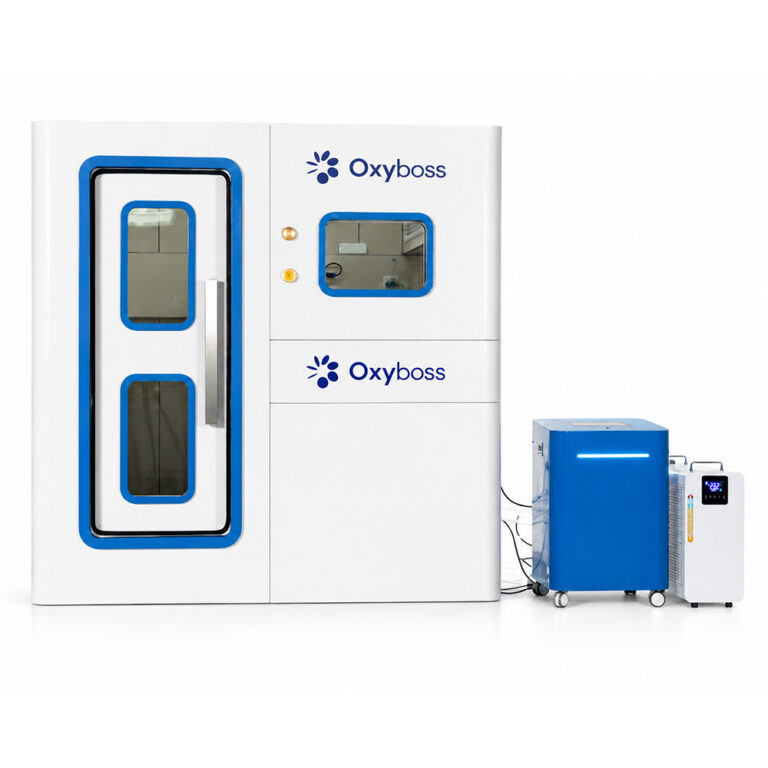
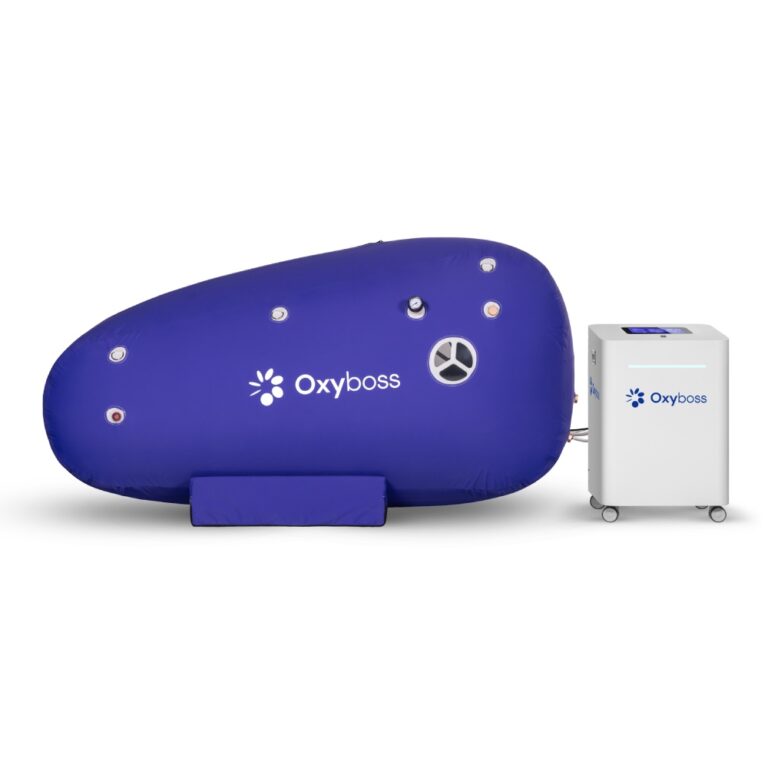
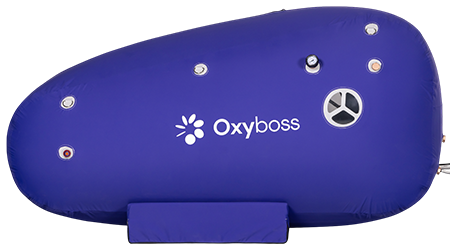
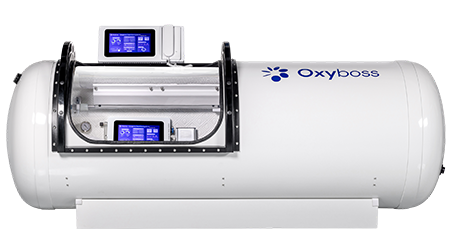
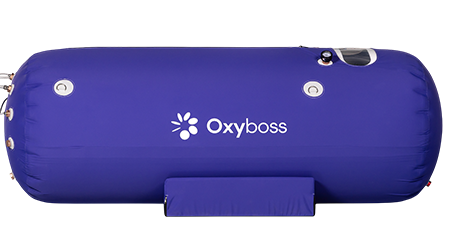
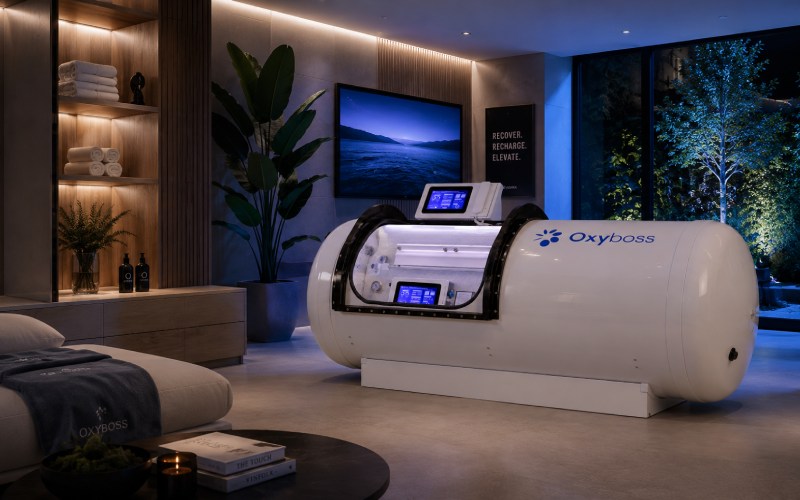
OxyBoss was engineered for a singular purpose: to deliver a premium, consistent mild hyperbaric environment designed for recovery-oriented wellness protocols — accessible in your home, training facility, or performance center.
OxyBoss is not a medical device. It is a precision-engineered wellness environment — a system designed to provide targeted mild pressure and oxygen support for users who want to make recovery a more intentional part of their routine.
The OxyBoss Difference
- Engineered for the Mild Pressure Zone: Calibrated within the 1.3-2.0 ATA mild pressure range — a range where Henry’s Law supports increased dissolved oxygen while remaining distinct from higher-pressure clinical HBOT environments
- Premium Build Quality: Designed for routine use by performance-focused users who demand reliability, safety, and aesthetic integration into high-end spaces
- Accessibility: Bringing a pressurized oxygen environment out of specialized settings and into wellness routines — making recovery more intentional, repeatable, and structured
- Systems-Level Design: Every component is developed around pressure control, oxygen support, comfort, usability, and safety — because the science informs the engineering
Who OxyBoss Serves
OxyBoss is built for individuals and organizations who understand that recovery is not the absence of performance — it is the foundation of it:
- Elite and professional athletes seeking to support structured recovery routines and maintain readiness
- Executives and cognitive performers managing the accumulated stress of high-output lifestyles
- Wellness professionals integrating pressure-and-oxygen protocols into broader recovery programs
- Biohackers and longevity-focused individuals interested in optimizing recovery environments and physiological resilience
The Philosophy
You would not limit your training to once per week. You would not hydrate only occasionally. The same logic applies to recovery environments. OxyBoss provides a tool that helps transform recovery from a sporadic luxury into a daily, systematized protocol — grounded in the physics of Henry’s Law and the biology of oxygen availability under pressure.
Disclaimer
OxyBoss chambers are non-medical wellness devices designed to provide mild hyperbaric environments for general wellness and recovery support. OxyBoss products are not FDA-cleared medical devices and are not intended to diagnose, treat, cure, or prevent any medical condition or disease. The scientific research referenced in this article pertains to general hyperbaric science and physiology across various pressure ranges; specific outcomes depend on individual factors, protocol parameters, oxygen concentration, and pressure settings. The data cited from clinical hyperbaric research, including higher-pressure studies, reflects conditions distinct from mild hyperbaric wellness environments and is presented for educational context only. Individual results may vary. Always follow the product manual and safety instructions. Consult with a qualified healthcare professional before beginning any new wellness protocol, particularly if you have pre-existing health conditions.