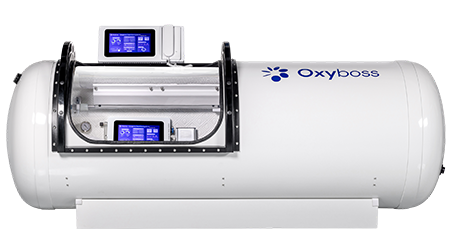
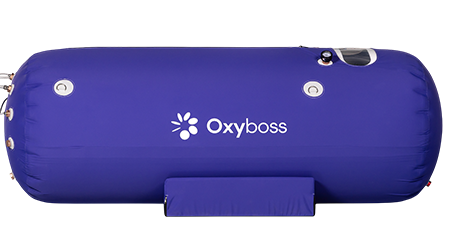
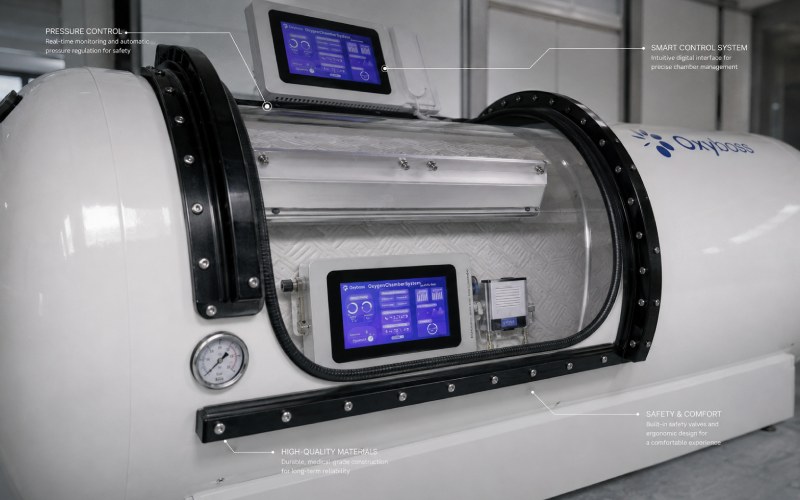
Quick answer: A properly engineered hyperbaric chamber should not fail in a movie-style blast. The main risk is not random shell rupture. It is ignition inside an oxygen-rich, pressurized space, followed by heat and rapid pressure rise if the chamber design, materials, or control layers are weak.
Scope note: This page discusses chamber engineering at the product-design level. It does not replace product-specific instructions, site procedures, or local safety requirements.
Can a Hyperbaric Chamber Explode?
Yes, a chamber can be involved in a violent event. That is the honest answer.
But the phrase “explode” usually points people in the wrong direction.
In a well-built chamber, the shell is not supposed to become the first failure point. The design logic is the opposite: contain pressure, control pressure, then relieve pressure before the vessel is pushed into a failure condition.
So when buyers ask, “Can a hyperbaric chamber explode?”, the real engineering question is different:
What event starts first, and what protection layer stops it before the shell is at risk?
That is the useful question. Not the dramatic one.
The real issue is not “pressure is scary”
Pressure matters. Of course it does. But pressure alone is not the whole story.
The more serious pattern is this:
- oxygen-rich atmosphere
- ignition source
- combustible material
- poor compatibility control
- weak pressure-relief strategy
That stack creates trouble faster than people expect.
A chamber does not need to “mysteriously burst” to become dangerous. A much more credible path is simpler than that: something inside the occupied space ignites, the heat release accelerates, pressure rises fast, then the protection system either performs correctly or it does not.
That is where chamber quality shows up. Not in sales language. In sequencing.
What a serious chamber is designed to prevent
We do not treat safety as one feature. We treat it as layers.
A reliable chamber is built around four priorities:
- Prevent ignition
- Limit fuel contribution
- Control abnormal pressure rise
- Keep the pressure boundary as the last line, not the first gamble
That order matters.
If a chamber depends mainly on “thick shell, strong door, big hinges,” the design story is incomplete. Strength helps. It does not replace compatibility, relief strategy, sealing behavior, grounding, or disciplined component selection.
Where risk actually concentrates
The shell gets attention because it is visible. The real risk points are usually smaller.
Risk tends to collect around:
- internal materials with poor oxygen compatibility
- accessories that add heat, spark, or unknown failure modes
- contaminated gas-path components
- seals that behave differently under abnormal heat
- poor grounding or static control
- relief devices that are undersized, drifting, or treated as afterthoughts
This is why two chambers can look similar from the outside and behave very differently when something goes off-normal.
One is engineered as a controlled system. The other is assembled as a pressure product.
The difference is not cosmetic.
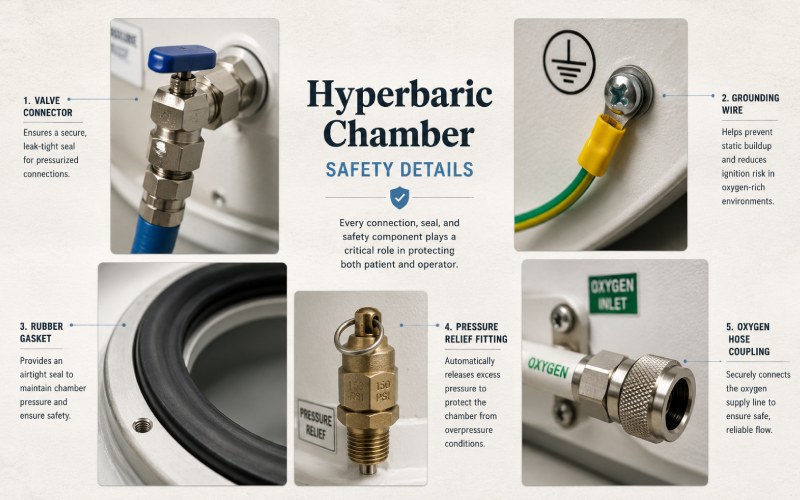
Engineering response matrix
| Risk condition | What usually starts it | Primary engineering response | Safety objective |
| Routine overpressure drift | Gas input or control overshoot | Stable control logic plus correctly sized primary relief | Keep operating pressure below the chamber limit |
| Fast internal heat release | Ignition meets oxygen-rich atmosphere and fuel | Secondary relief path, predictable venting, conservative shell margin | Prevent abnormal pressure rise from becoming vessel damage |
| Static-related ignition | Poor grounding, wrong material selection, uncontrolled accessory use | Grounding design, anti-static material policy, controlled interfaces | Reduce ignition probability inside the chamber |
| Contaminated oxygen service | Residue, incompatible lubricants, dirty fittings, poor assembly discipline | Clean assembly practice, material verification, service separation | Prevent localized ignition and component damage |
| Seal distress under abnormal conditions | Heat exposure, aging, compression drift, incompatible compounds | Verified seal design, inspection intervals, controlled replacement schedule | Preserve pressure integrity long enough for protection layers to work |
| Maintenance drift | Relief valve deviation, sensor error, hose wear, unnoticed damage | Scheduled inspection, documented functional checks, component replacement planning | Keep protective systems reliable over time |
This is the framework buyers should care about.
Not whether the shell looks heavy. Whether the failure sequence has been engineered before the product ships.
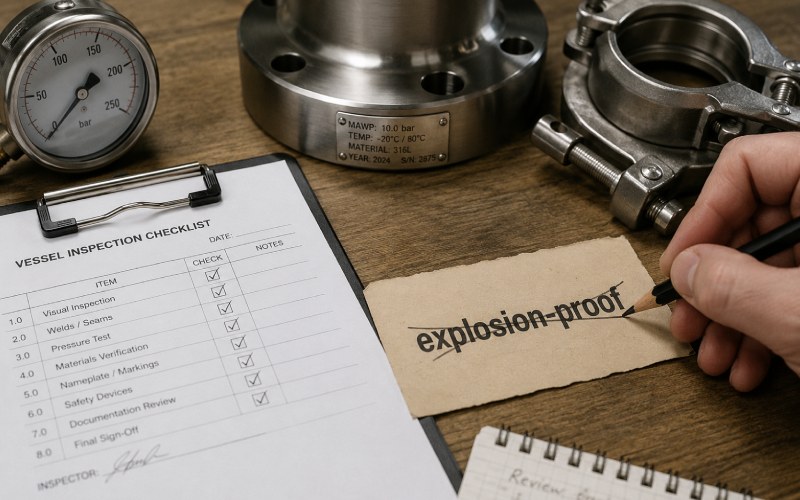
Why “explosion-proof” is the wrong promise
We do not like that phrase. It says too little and too much at the same time.
Too little, because it hides the real controls that matter: ignition prevention, compatibility discipline, pressure relief, seal behavior, and controlled exhaust paths.
Too much, because it sounds absolute. Engineering should not sound absolute. It should sound specific.
A better statement is this:
A properly engineered chamber is designed so that abnormal conditions are intercepted by layered controls before the pressure boundary is pushed into a catastrophic failure state.
That is plain. It is also testable.
The shell is only one layer
Buyers often focus on vessel thickness first. Reasonable. Still incomplete.
A chamber should be judged as a system with interacting parts:
- pressure boundary design
- pressure-relief architecture
- door and seal behavior under pressure cycling
- oxygen-compatible material selection
- electrical isolation strategy
- grounding continuity
- exhaust and vent-path stability
- sensor accuracy and alarm logic
- accessibility for inspection and service
If one of those layers is weak, the chamber does not become “partly safe.” It becomes harder to predict.
Prediction is the whole point.
What separates a serious chamber from a risky one
A serious chamber usually has a clear answer to these questions:
1. How is abnormal pressure managed?
Not just nominal pressure. Abnormal pressure.
There should be a defined path from control error to relief action to safe pressure limitation.
2. What materials were selected for the occupied space and gas path?
This is where many weak products become vague. They talk about comfort, appearance, or convenience. They say very little about compatibility and failure behavior.
That silence is not reassuring.
3. How are accessories controlled?
Every added interface changes the risk picture. Penetrations, fittings, electronics, power components, pass-throughs, cushions, adhesives, fabrics. Small additions. Large consequences.
4. What is the service plan for protective components?
Protection devices that are never checked are decoration. A buyer should know the inspection logic, not just the sales specification.
What buyers should evaluate before requesting a quote
The right conversation is not:
“Can this unit hold pressure?”
That is too basic.
The better questions are:
- What is the chamber’s protection sequence during an abnormal pressure event?
- Which components are treated as ignition-sensitive or compatibility-critical?
- How is the relief architecture separated between routine pressure control and off-normal pressure rise?
- Which consumable or aging parts are expected to be replaced on schedule?
- How is service access designed so inspection does not become optional in real use?
- Which chamber features are built for controlled repeatability rather than showroom appearance?
Those questions do two things at once. They expose weak engineering. They also expose vague sales claims.
Useful either way.
Our factory view
A chamber should not rely on one heroic feature.
Not the shell. Not the door. Not a single relief valve. Not software by itself.
A good chamber is calm because the design is layered:
- the chamber structure provides margin
- the pressure-control system keeps routine operation stable
- the relief system handles off-normal conditions
- the material set reduces ignition opportunity
- the assembly discipline protects oxygen service integrity
- the service plan keeps all of the above from drifting out of tolerance
That is what buyers are really paying for. Not a cylinder. Not a catalog photo.
A chamber is trustworthy when its behavior stays predictable after cycles, maintenance intervals, part aging, and ordinary human use around it.
That is a better standard than “looks robust.”
FAQ
Can a hyperbaric chamber explode from pressure alone?
A properly engineered chamber should not be allowed to reach a pressure condition where the shell becomes the first line of failure. Pressure control and relief architecture exist to intercept that path early.
What is the more realistic danger path?
The more credible path is ignition in an oxygen-rich, pressurized environment, followed by fast heat release and abnormal pressure rise. That is why material compatibility and ignition control matter so much.
Is shell thickness the main indicator of safety?
No. Shell strength matters, but it is only one layer. Relief design, sealing behavior, compatibility discipline, grounding, and serviceability are just as important.
Why do accessories matter so much?
Because each added item can introduce heat, spark, static, contamination, or an unknown failure mode. Chamber risk often grows through add-ons, not through the basic shell itself.
Can a chamber look well-built and still be poorly protected?
Yes. Exterior finish and vessel appearance do not reveal relief sizing, compatibility discipline, seal performance, or inspection logic. Those details decide how a chamber behaves off-normal.
What should a buyer ask a manufacturer first?
Ask how the chamber handles abnormal conditions: pressure overshoot, internal ignition risk, seal degradation, relief response, and protective-component maintenance. A serious manufacturer should answer without drifting into slogans.
Is the main goal to make the chamber “indestructible”?
No. The goal is controlled behavior. Prevent the initiating event where possible, contain it if it starts, relieve pressure if required, and keep the vessel boundary from becoming the first thing that is tested.
Final point
So, can a hyperbaric chamber explode?
A poorly designed or poorly controlled system can be involved in a violent event. A properly engineered chamber is designed so that this is not how the story unfolds.
That is the difference buyers should inspect.
Not whether the product sounds powerful. Whether the protection logic is visible in the design.
Product boundary note: This page is an engineering overview for buyers evaluating chamber design quality. Product use, inspection, maintenance, and site controls should always follow the device-specific instructions and applicable local requirements.