A Practical Prep Guide for Home Owners & Wellness Operators
You bought the chamber. Or you’re about to. Or maybe you run a wellness center and your first unit arrives next week. Either way, the session itself is the easy part—what happens in the 24 hours before you seal the door is where most people stumble.
Across home and commercial chamber setups, one of the biggest variables in whether someone has a smooth first session or a rough one isn’t the equipment itself. It’s the prep.
Why Preparation Affects More Than Comfort
A hyperbaric chamber raises atmospheric pressure above normal levels. That changes how your body experiences pressure, how materials behave inside the chamber environment, and how comfortable your session feels from start to finish.
Skip the prep and you may end up with ear discomfort within minutes. Wear the wrong shirt and you’ve introduced unnecessary static risk into a controlled environment. Show up dehydrated and you may come out feeling worse than you did going in.
None of this is complicated. But it is specific.
Personal Preparation: The 24-Hour Countdown
Most guides hand you a checklist. We think timelines work better because they match how people actually plan their day.
The Night Before
Hydrate early. Not during the session—before it. Good hydration helps with general comfort, and many users find ear equalization easier when they are not dehydrated. Two to three extra glasses of water the evening before is a reasonable starting point for many people.
Hair dye check. If you’ve colored your hair recently, follow the timing in your chamber’s operating instructions or your facility’s prep policy before scheduling a session. Some operators require a waiting period after dye application because residues and hair products may not be appropriate in a pressurized chamber environment.
Dental awareness. Temporary caps, loose fillings, or very recent dental work can be pressure-sensitive. Pressure changes can aggravate trapped air or sensitivity around recent dental work. If you have recent or ongoing dental treatment, check with your dentist before scheduling a session.
The Morning Of
Shower, then stop. Clean skin, clean hair, nothing else. Many operators and manufacturers require users to arrive with no deodorant, lotion, perfume, sunscreen, hair spray, mousse, or gel. These products may contain petroleum, alcohol, oils, or other residues that are not appropriate inside a chamber environment. Follow your unit’s operating manual and posted prep rules.
Eat a light meal, protein-forward. Empty stomach means some people feel lightheaded. But a heavy, greasy meal can leave you uncomfortable. A couple of eggs and toast. Oatmeal with nuts. Something in that range.
Check nails and nail products. If your unit or facility restricts nail polish, gel products, or nail glue, remove them in advance and follow the timing in the operating manual or prep instructions.
30 Minutes Before
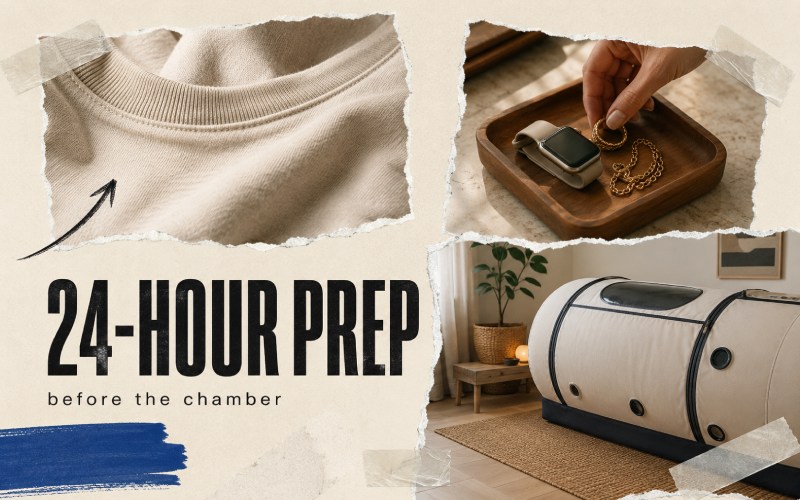
Put on your chamber clothes. 100% cotton everything. (Why cotton? See below.)
Remove all jewelry, piercings, watches, metal accessories, and other non-approved wearable items.
Remove contact lenses if required by your unit or operator. Hard lenses are more likely to be uncomfortable during pressure changes, but follow your chamber’s specific rules.
Remove dentures and removable oral appliances if your operator or manual requires it.
Practice your ear equalization technique. Even a few minutes of practice makes a noticeable difference on your first session.
What to Wear: The Cotton Rule and the Reason Behind It
You’ll see “wear cotton” in almost every prep guide. Few explain why. Knowing the reason makes it easier to follow when it’s inconvenient.
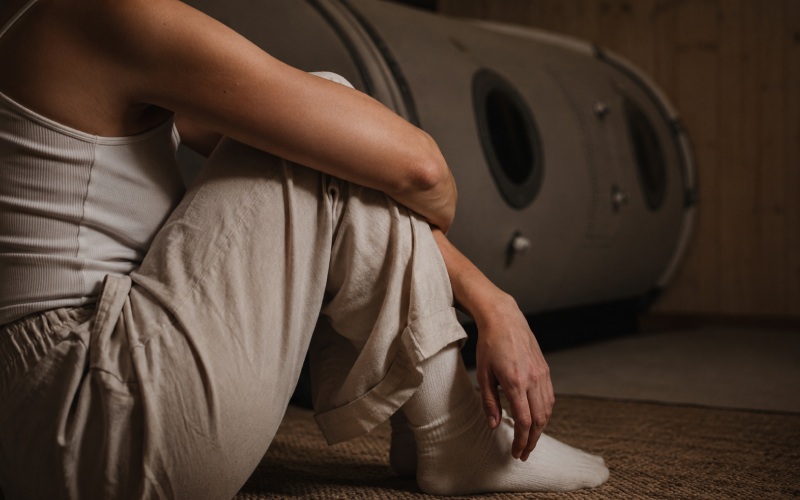
Pressurized, oxygen-supported chamber environments require tighter control over what goes inside. Synthetic fabrics—polyester, nylon, spandex—can generate more static electricity through friction than natural fibers. Cotton is typically preferred because it produces less static and behaves more predictably in chamber-use protocols.
Clothing Guide
| Clothing Item | Acceptable | Not Acceptable |
| T-shirt | 100% cotton, freshly laundered | Polyester blend, “dri-fit” workout fabric |
| Pants / shorts | Cotton sweats, cotton scrubs | Yoga pants (nylon/spandex), jeans with synthetic stretch |
| Undergarments | Cotton bra, cotton underwear | Underwire bras, synthetic sports bras |
| Socks | Cotton socks | Nylon dress socks, synthetic compression socks |
| Head covering | Cotton bandana or wrap | Silk scarf, polyester headband |
| Footwear | Non-slip cotton socks or barefoot if allowed | Shoes with metal components, synthetic slippers |
Home users: Buy a dedicated set of cotton clothes for chamber sessions only. Store them separately. Avoid fabric softener unless your manufacturer specifically allows it.
Ear Equalization: The Skill Nobody Teaches Well Enough
Ear discomfort is the number one reason people cut a session short. It’s usually preventable with good technique.
During the compression phase, air in your middle ear needs to match the rising external pressure. Your Eustachian tubes—small passages connecting the middle ear to the throat—act as pressure valves. If they stay shut, the feeling goes from fullness to discomfort and, if ignored, possibly minor barotrauma.
Five Methods, Ranked by Effectiveness
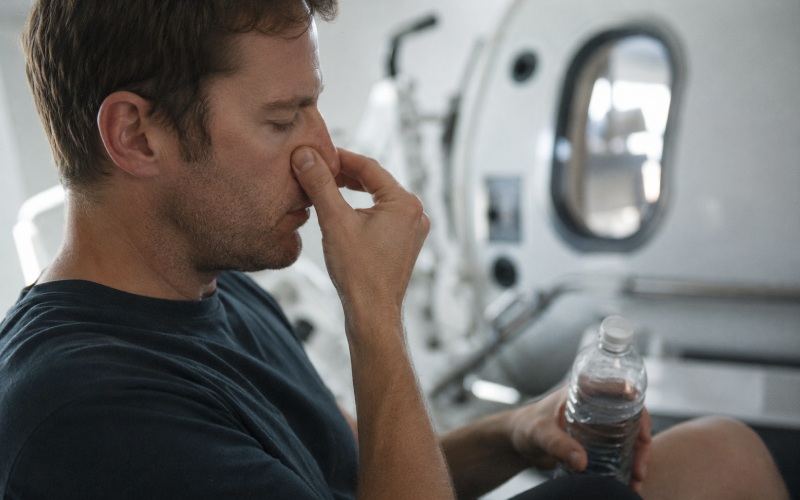
Valsalva Maneuver — Pinch your nose shut, close your mouth, gently blow. You should feel a soft “pop.” Don’t blow hard; excessive force can do more harm than good.
Toynbee Maneuver — Pinch your nose and swallow at the same time. Works well for people who find the Valsalva too forceful.
Frenzel Maneuver — Close your nostrils, close your mouth, and make a “K” sound at the back of your throat. Scuba divers rely on this. It takes practice but can become the most reliable method once learned.
Yawning — Real or exaggerated. This stretches the muscles around the Eustachian tubes. Good as a supplement, rarely enough on its own.
Swallowing — Sipping water or swallowing saliva activates the throat muscles that help pull the Eustachian tubes open. Some operators allow a plastic water bottle inside the chamber for this purpose, if the model permits it.
Start equalizing early. Don’t wait until pressure builds and your ears hurt. Begin as soon as compression starts. Equalize every 15–30 seconds during descent. Once the chamber reaches target pressure and stabilizes, the sensation usually stops.
If you cannot equalize—especially during a head cold, sinus congestion, or an allergy flare-up—do not enter the chamber. Reschedule. If congestion is a recurring issue for you, talk with a qualified medical professional before booking sessions.
Items That Stay Outside the Chamber
This is a firm boundary. Chamber interiors are designed for clean, controlled conditions. Bringing in prohibited items adds variables you do not want.
| Item | Why It Stays Outside |
| Cell phones & electronics | Unless specifically approved for your model, they add heat, battery, and static-related risk |
| Lighters, matches, vapes | Ignition source + chamber environment — no exceptions |
| Makeup, lipstick, cosmetics | May contain petroleum, alcohol, oils, or other residues not allowed by chamber prep rules |
| Lotions, creams, petroleum jelly | Often restricted under chamber-use protocols |
| Hearing aids | Battery-powered and pressure-sensitive |
| Hard contact lenses | May become uncomfortable during pressure changes |
| Metal jewelry, watches, belt buckles | Often prohibited under operating rules |
| Wigs or synthetic hair extensions | Synthetic fibers may not meet chamber clothing requirements |
| Paper products (books, newspapers) | Often restricted unless specifically approved by the manufacturer |
What You May Be Able to Bring (Model-Dependent)
- A plastic water bottle, if permitted
- A cotton blanket if you run cold
- In some soft-shell home units: your phone on airplane mode, placed outside the chamber shell within reach upon exit, if your setup instructions allow it
When in doubt, follow the operating manual for your specific model.
Preparing Your Chamber Room
The room matters more than most people realize.
Ventilation. A hyperbaric chamber exhausts air during operation. If you’re running a soft-shell unit with an oxygen concentrator in a small bedroom—door closed, windows sealed—pay attention to airflow in the room itself. Crack a window. Run an exhaust fan if appropriate. For dedicated commercial suites, follow installer guidance for room ventilation and HVAC.
Temperature. During compression, the chamber interior usually warms slightly. During decompression, it cools. Room temperature around 68–72°F (20–22°C) keeps the swing comfortable.
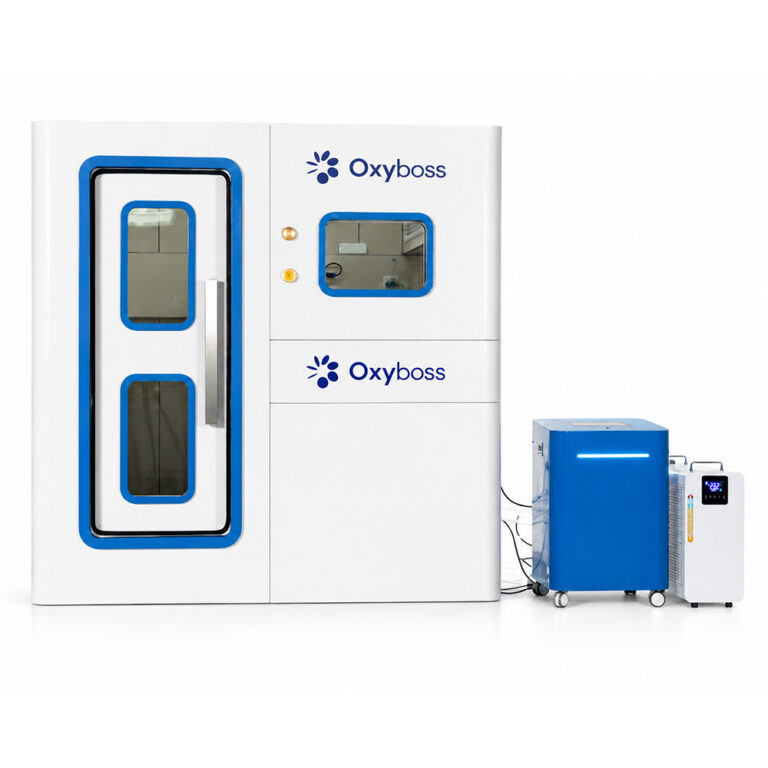
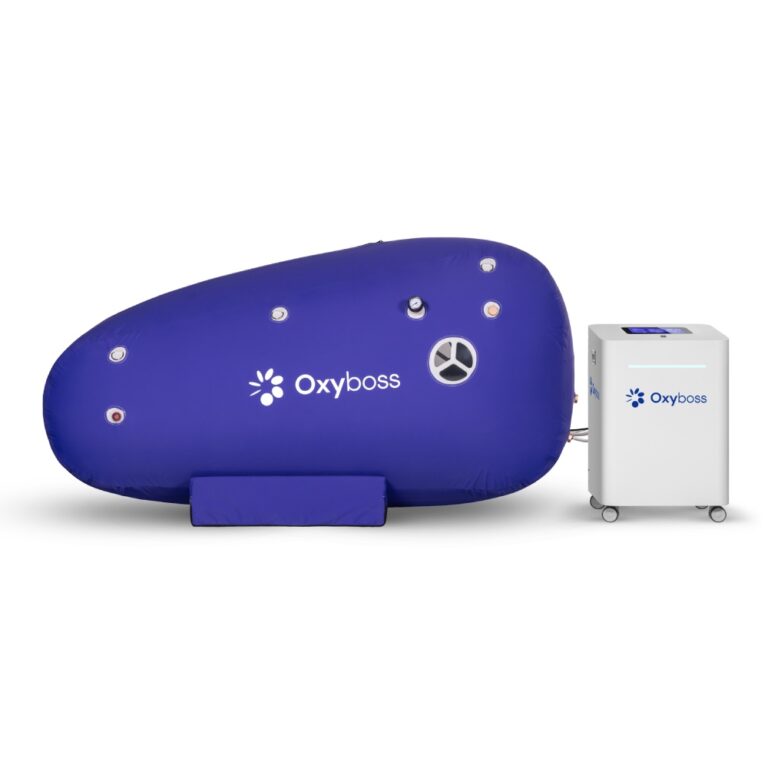
Flooring. Level and stable. Hard-shell chambers are heavy—confirm your floor is appropriate for the load. Soft-shell chambers are lighter but still need a flat surface so pressure distributes evenly. Carpet can work for soft-shell units. Tile or concrete can work for hard-shell units. A thin foam mat between a soft-shell chamber and rough concrete can help protect the shell material.
Clearance. Leave at least three feet of open space on all sides. You need access to zippers, valves, the compressor, and the oxygen concentrator.
For Commercial Operators Running Multiple Daily Sessions
When you’re running back-to-back bookings, prep becomes a throughput issue as much as a safety one.
- Pre-stage cotton gowns in sizes S through XXL. Running out by mid-afternoon because morning sessions used them all is a solvable problem you shouldn’t have.
- Post-session interior wipe-down. Use a chamber-approved, non-alcohol-based cleaner. Between every session. Non-negotiable for hygiene and for preventing buildup on interior surfaces.
- Dedicated client prep area. A changing room with a locker for personal items. A mirror for final jewelry and product checks. A posted checklist on the wall. This alone can cut pre-session prep time from 15 minutes to 5.
- First-session prep acknowledgment. Before a user’s first session, have them review and acknowledge your prep requirements, disclose any implanted devices or recent ear, sinus, lung, or dental issues when relevant, and confirm they understand when outside medical clearance may be needed under your operating manual. This is a practical safety step for both your staff and your clients.
- Multi-chamber layout planning. In rooms with multiple units, make sure a technician can reach any chamber’s emergency pressure release valve within two steps from any position. Intercom panels, interior speakers, and viewing windows help reduce the temptation for users to bring personal devices inside.
After the Session
You’re not fully done when the door opens.
Sit for a minute. Some people feel briefly lightheaded after decompression. It usually passes. Standing up fast is how people stumble.
Drink water. Many users feel better when they rehydrate after a session.
Ease back into activity. Your body just spent 60–90 minutes under increased pressure. Give yourself a little time before intense physical exertion if that tends to leave you feeling off.
Track how you feel. Keep a simple log: energy level, sleep quality that night, any ear soreness, any headaches, general comfort. Over 10–20 sessions you’ll spot patterns that help fine-tune your prep. Some people discover they do better with a slightly bigger pre-session meal. Others find that seasonal allergies affect their ear equalization and adjust scheduling accordingly.
FAQ
Q: Can I use a hyperbaric chamber if I have a cold? We strongly recommend rescheduling. Congestion can block your Eustachian tubes and make equalization painful or impossible. If you feel unwell for any reason, check with a qualified medical professional before proceeding.
Q: How much water should I drink before a session? No exact number works for everyone. A reasonable starting point: two to three extra glasses the evening before, and another glass 30 minutes prior. Pale yellow urine is a common sign that you’re reasonably hydrated.
Q: Can I sleep inside the chamber? Some people get drowsy during the stable-pressure phase. Stay awake during compression and decompression so you can actively equalize your ears and follow instructions.
Q: Do I need to fast? No. Fasting is usually counterproductive. Eat a light, protein-containing meal one to two hours beforehand. Avoid heavy or greasy food. Avoid carbonated drinks if they tend to make you uncomfortable.
Q: Can I wear my wedding ring? We recommend removing all jewelry without exception. A plain band may seem harmless, but the safest practice is to leave everything outside.
Q: I have a pacemaker or other implanted electronic device. Can I use a hyperbaric chamber? Do not assume all implanted devices are automatically compatible. This requires device-specific review and, where appropriate, written clearance from the physician managing your care. Follow your chamber manufacturer’s instructions and do not proceed without proper confirmation.
Q: What if I feel pain during pressurization and can’t equalize? Signal your operator—or control decompression yourself in a home unit—to slow down or pause the pressure increase. Never push through ear pain. If equalization fails entirely, abort the session. No single session is worth barotrauma.
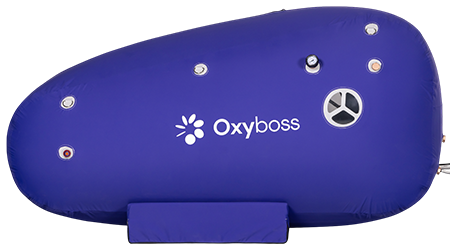
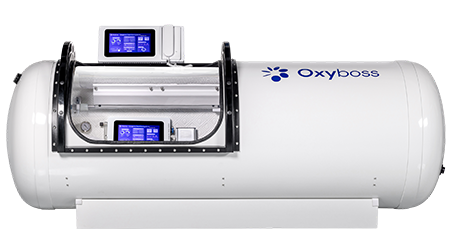
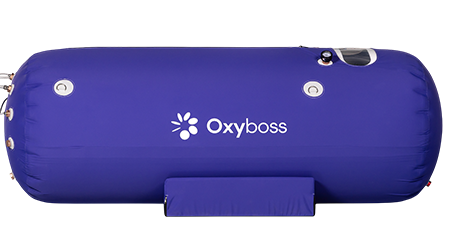
Q: Is preparation different for soft-shell vs. hard-shell chambers? Personal prep—cotton clothes, clean skin, hydration, ear equalization—is generally the same. Room setup differs. Soft-shell units at lower pressures usually have lighter infrastructure requirements. Hard-shell units at higher pressures may need more robust ventilation, higher floor load capacity, and dedicated electrical circuits for the compressor and concentrator.
Q: How often should I clean the chamber interior? After every session is the standard for commercial use. For home use, we recommend the same cadence when practical. At minimum, wipe the interior regularly with a cleaner approved in your chamber’s operating manual and inspect seals and zippers for wear.
Q: What’s the most common setup mistake you see from new wellness studio operators? Underestimating the prep workflow. The chamber may run fine. But operators who skip a dedicated changing area, don’t stock enough gowns, and don’t train front-desk staff on the prohibited-items list end up with sessions running 20 minutes behind by noon. Build the prep system before you build the session schedule.
If you have questions about chamber selection, room setup, or operating procedures, consult your unit’s operating manual and the manufacturer or installer for model-specific guidance.