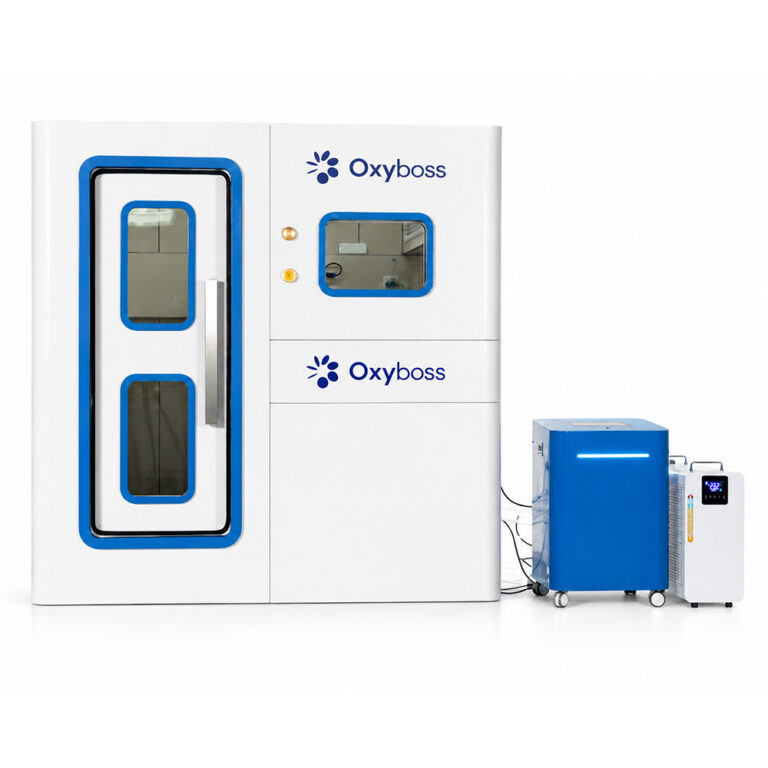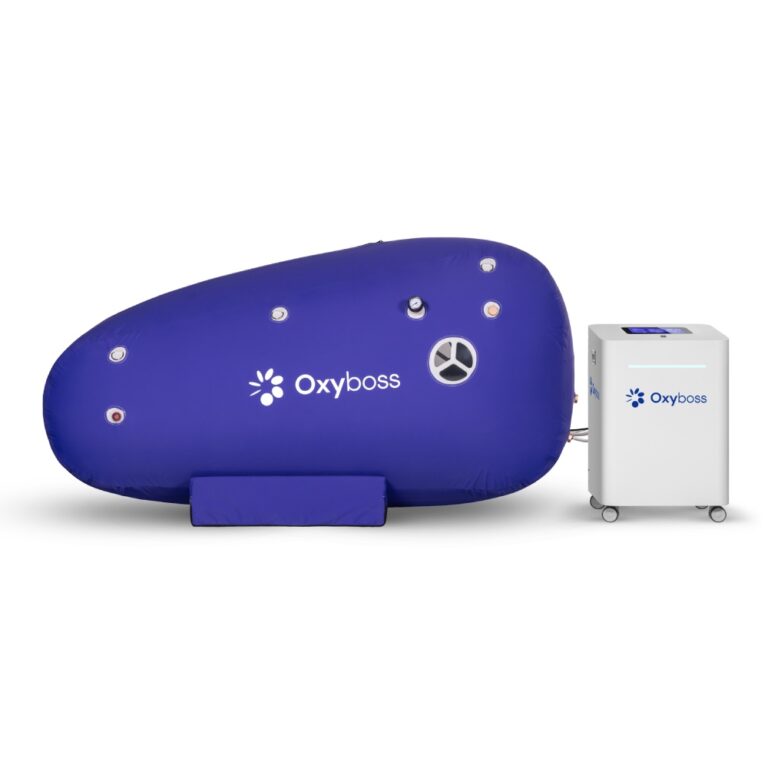
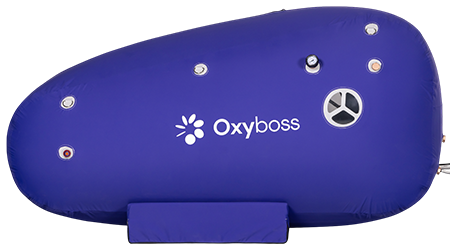
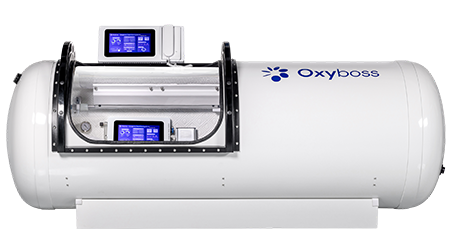
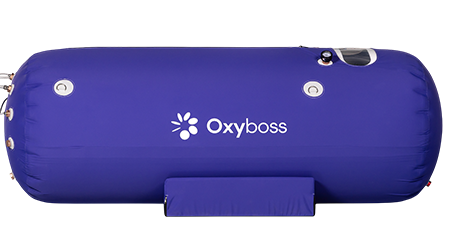
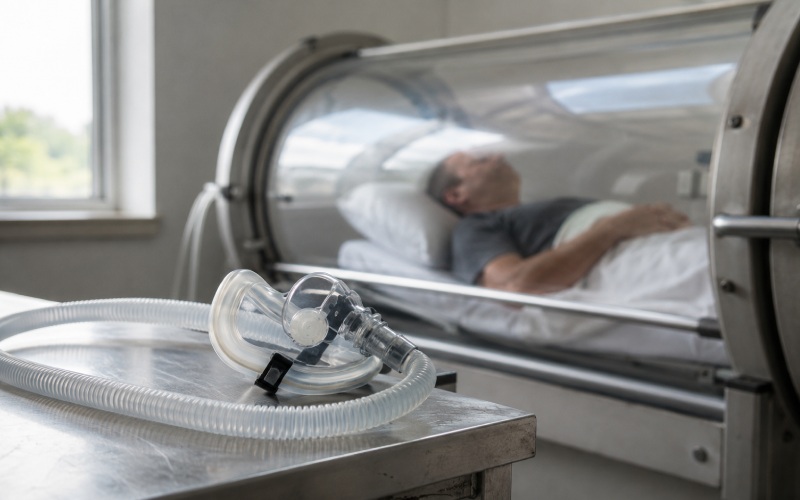
No. Not every chamber needs a mask.
A mask is only necessary when the chamber atmosphere and the breathing gas are not the same thing. In an oxygen-filled single-place chamber, the vessel itself is the breathing environment, so a separate mask is usually unnecessary during the main oxygen phase. In an air-pressurized multiplace chamber, and in any air-pressurized single-place design using local oxygen delivery, the occupant needs a mask, hood, or similar interface because the chamber is providing pressure, not direct oxygen breathing by itself.
That is the whole issue, really. Not mask versus no mask. Gas boundary versus no gas boundary. On our engineering side, that is where we start. Once the oxygen boundary is fixed, the rest starts lining up: piping, regulators, venting, atmosphere monitoring, consumables, service routine, operator workload. Not neatly. But it lines up.
The short engineering answer
| Chamber architecture | Chamber atmosphere | Oxygen delivery path | Separate mask or hood needed? | What that usually means in practice |
| Oxygen-filled single-place chamber | Oxygen-rich vessel atmosphere | Directly from chamber atmosphere | Usually no | Fewer face-seal variables, but stricter vessel-level oxygen management |
| Air-pressurized single-place chamber | Compressed air | Local breathing interface | Usually yes | The chamber gives pressure; the interface gives oxygen |
| Air-pressurized multiplace chamber | Compressed air | Local breathing interface for each occupant | Yes | Mask or hood becomes part of the gas-delivery system |
| Oxygen-filled single-place chamber with temporary air interval | Oxygen-rich vessel atmosphere for main phase, air supplied separately for interval | Temporary air-breathing assembly | Sometimes, during the air interval only | “No-mask chamber” does not always mean “no interface at all” |
Table basis: current chamber descriptions, facility design guidance, and monoplace operating guidance all point to the same split between oxygen-filled single-place systems and air-pressurized systems that require local interfaces.
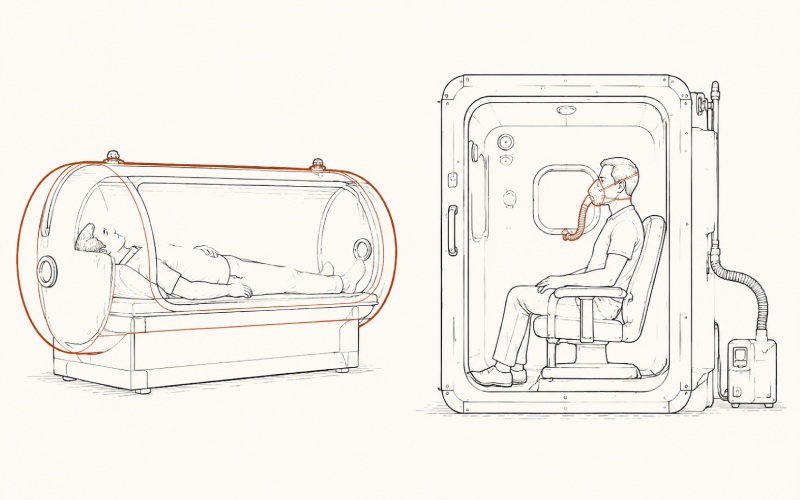
Why some hyperbaric chambers run without a mask
In an oxygen-filled single-place build, adding a face interface for the main oxygen phase often solves nothing. It adds another seal. Another hose set. Another point of user variability. We usually avoid that unless the operating profile gives us a reason not to.
That does not make the chamber “simpler.” It moves the burden. The burden shifts to oxygen-compatible materials, atmosphere control, ignition-risk discipline, cleaning standard, and tighter control of everything that lives inside the vessel envelope. Remove one problem, inherit another. That is normal engineering.
There is one detail buyers miss all the time: an oxygen-filled single-place chamber may still use a breathing interface for a temporary air interval. So when somebody says, “this chamber has no mask,” check the full operating sequence. The main oxygen phase may be mask-free, while a separate air-breathing assembly is still required for another segment of the run.
Why many chambers do need a mask, hood, or canopy
In an air-pressurized chamber, pressure and oxygen delivery are two different subsystems. That is the part that gets blurred in weak product copy. The vessel provides pressure. The interface provides oxygen. Different jobs. Different hardware. So yes, in that architecture, a mask or hood is not optional decoration. It is core process equipment.
This matters even more in multiplace layouts. The chamber atmosphere is compressed air, while each occupant receives oxygen through a local interface. If that interface leaks too much, or if exhaust handling is sloppy, oxygen accumulates in the room atmosphere instead of staying where it belongs. Guidance for air chambers calls for continuous oxygen monitoring and treats oxygen above 23.5% as a dangerous condition. That one number alone changes the whole design conversation.
So the mask question is also an atmosphere-control question. And a venting question. And a fire-strategy question. Small item on a brochure. Large item in real plant design.
Mask vs hood: the wrong comparison
We do not compare mask versus hood as if the choice starts with comfort. It starts with failure mode.
A mask asks for seal discipline. A hood asks for flow discipline.
A demand-style mask can reduce gas use because flow is tied to inhalation, but it depends on fit and valve behavior. Poor fit introduces leak paths and makes delivery less predictable. A hood is less dependent on a tight facial seal, but it usually needs continuous flow, which pushes more gas through supply and exhaust hardware. So the interface choice changes regulator sizing, manifold loading, dump logic, monitoring, and operating cost. Not just what touches the face.
That is why a hood is not “no mask.” It is still a local breathing interface. Different geometry. Same system role.
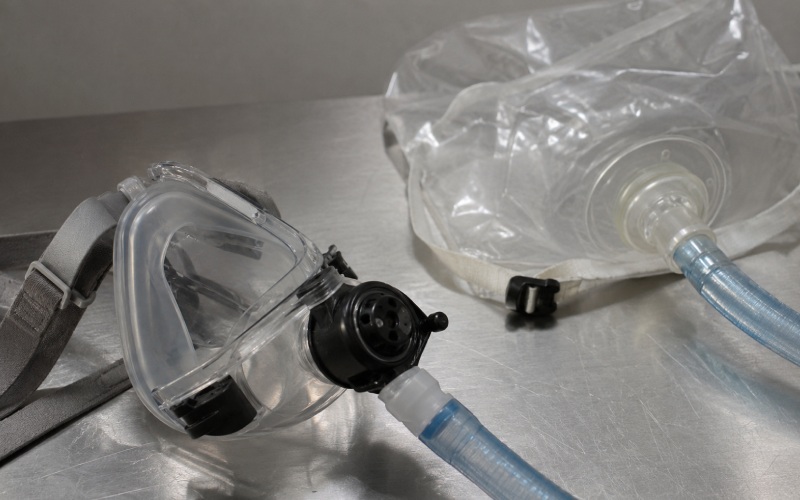
What we decide before choosing “mask” or “no mask”
We do not start with the accessory list. We start with five harder questions.
1. Is the vessel atmosphere oxygen-rich or air-based?
That answer decides whether the chamber wall is the oxygen boundary, or whether the boundary moves inward to the occupant interface.
2. Is the design single-place or multiplace?
Once multiple occupants share one air-pressurized volume, local oxygen delivery becomes the normal architecture.
3. Where does exhaled gas go?
Back into the vessel, or out through a managed exhaust path. This affects atmosphere control immediately.
4. Does the operating profile include temporary air intervals?
If yes, even a chamber that is mask-free for its main oxygen phase may still require a separate air-breathing assembly.
5. Do you want to manage complexity at the vessel level or the interface level?
A no-mask oxygen-filled chamber reduces face-fit variables. An interface-based air chamber keeps oxygen localized to the user but adds regulator, fit, and consumable management. Neither is automatically “better.” One is simply better aligned with the build.
The buying mistake we see most often
The mistake is assuming that a chamber without a mask is inherently more advanced.
It is not. Sometimes it is the cleanest architecture. Sometimes it is the wrong one. A no-mask single-place chamber and a masked multiplace chamber are solving different engineering problems. Put the wrong logic on the wrong vessel and you get a system that looks fine in marketing photos and becomes awkward in operation. That happens more than people admit.
FAQ
Is a mask required in every hyperbaric chamber?
No. Oxygen-filled single-place chambers usually do not need a separate mask during the main oxygen phase. Air-pressurized single-place and multiplace chambers usually do, because oxygen is being delivered locally rather than through the full chamber atmosphere.
Why do multiplace hyperbaric chambers usually use masks or hoods?
Because the chamber is typically pressurized with air, not with oxygen as the full breathing atmosphere. The pressure is shared by the room, but oxygen still has to be delivered to each occupant through an interface.
Can a single-place chamber still use a mask?
Yes. An air-pressurized single-place chamber may use a mask or hood for oxygen delivery. An oxygen-filled single-place chamber may also use a separate interface during a temporary air interval.
Is a hood basically the same as having no mask?
No. A hood is still a local breathing interface. It changes fit behavior and flow behavior, but it is not the same as using the chamber atmosphere itself as the breathing environment.
Which setup is easier to maintain?
That depends on where you want the system complexity to live. Oxygen-filled mask-free chambers reduce face-interface handling but demand tighter vessel-level oxygen housekeeping. Interface-based air chambers add masks, hoods, regulators, and exhaust management, but they keep oxygen delivery localized. Maintenance gets traded, not eliminated.
Final answer
If the chamber atmosphere itself is the oxygen breathing environment, you usually do not need a mask. If the chamber atmosphere is compressed air and oxygen is supplied separately, you do need a mask, hood, or equivalent interface.
So the honest answer is not “yes” or “no.”
It is this: you do not need a mask in every chamber. You need the right oxygen boundary for the chamber you actually built.