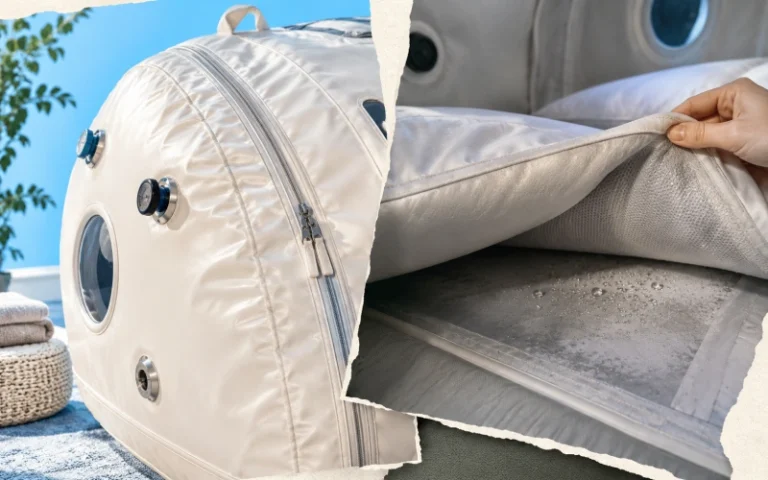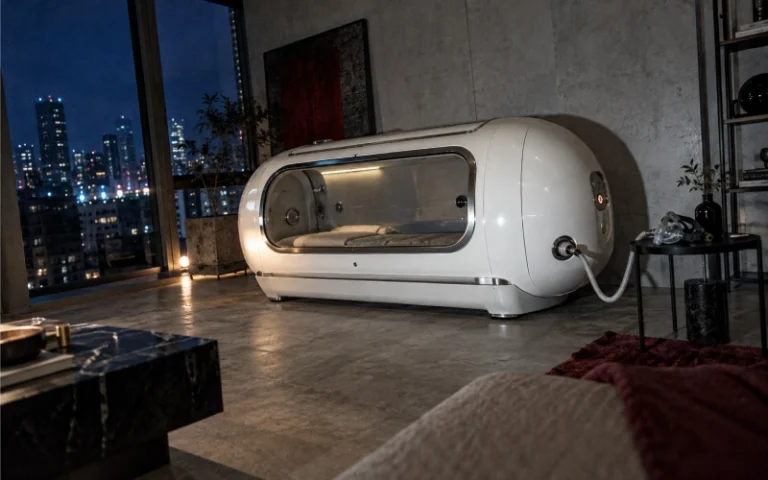
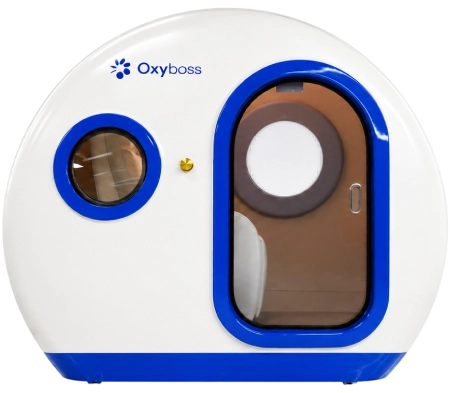
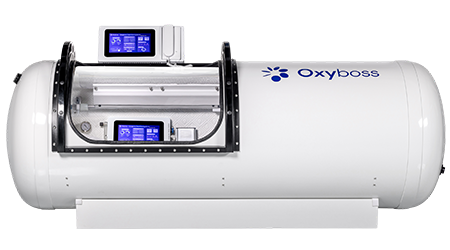
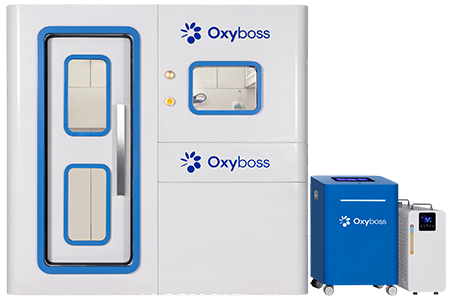

If you’re using a hyperbaric chamber as part of your wellness routine, you’ve probably wondered: do I put on my skincare before or after the session? Should I wait between steps? What about retinol, vitamin C, or that new serum everyone’s talking about?
Most advice out there talks about wound care and medical recovery. That’s useful if you’re post-surgery. But if you’re here because you own or regularly use a chamber and you just want to know where it fits into your morning or evening skincare flow, the rules change.
Here’s what actually matters.
The short version
Go in clean. Come out, wait a bit, then do your routine.
That’s it. But let’s unpack why that works for both home chamber owners and people who visit a facility.
Before the session: clean and dry
Whether you’re at home or heading to a facility, the chamber prefers you show up with nothing on your skin. No moisturizer, no sunscreen, no makeup, no fragrance, no hair product, no deodorant.
Why? Two reasons.
First, safety. Chambers run on pressurized oxygen—often 1.4 to 2.4 ATA with near-100% oxygen for 60 to 90 minutes. That’s not a facial mist; it’s a controlled environment where oxygen concentration and ignition risks matter. Facilities following UHMS or NFPA guidelines prohibit petroleum-based products, oils, alcohol-based lotions, and most cosmetics inside the chamber. One 2006 study on product compatibility found that ignition risk can’t be predicted just by reading an ingredient list—some petroleum-free silicone products scored better than expected, while others didn’t. The standard response is to avoid all leave-on products unless your facility has specifically approved them.
Second, practical comfort. Pressure, temperature, and humidity inside a chamber can vary. Some people’s skin gets warmer or feels dry afterward. If you go in with layers of product on, you can’t tell what’s chamber-related and what’s just your moisturizer sitting funny under pressure. Clean skin gives you a neutral baseline.
If you’re doing a morning session: shower or cleanse before you leave the house. Pat dry. Don’t put anything on. If it’s a commute to a facility, bring your skincare in a bag and do the routine after.
If you’re doing an evening session: same idea. Cleanse, dry, go. Save the actives and moisturizer for after.
After the session: let your skin settle
Right when you step out of a chamber, your skin might still be warm, slightly pink, or just feel different than usual. That’s normal—your body’s been under pressure breathing high-concentration oxygen. Don’t rush into your seven-step routine immediately.
Wait 10 to 30 minutes. This isn’t a hard physiological rule; it’s a comfort guideline. Give your skin time to cool, stop sweating if you were warm, and return to room-temperature baseline. If your face feels hot, tight, dry, itchy, or stinging, that tells you to go gentler than usual. If it feels totally normal after 10 minutes, go ahead.
Once you’ve waited and your skin feels fine, apply your routine in the usual order:
- Toner or essence (if you use one)—hydrating types work well here.
1) Serum—gentle, non-irritating formulas first. Niacinamide and vitamin C are generally fine if they’re part of your normal routine.
- Targeted treatment—like a peptide serum or a hydrating ampoule.
1) Moisturizer—whatever you normally use.
- Occlusive (if you use one)—like a balm or sleeping pack at night.
1) Sunscreen (morning only, obviously).
If your skin feels off—hot, reactive, uncomfortable—skip the strong stuff (retinoids, acids, high-strength vitamin C, exfoliants) and stick to a bland, fragrance-free moisturizer until your next routine when everything feels normal again.
What about retinol, acids, and exfoliants?
Here’s where the advice gets thin. There’s no published study that says “stop retinol five days before hyperbaric oxygen” or “wait 24 hours after a session before using glycolic acid.” But there are clues.
Microneedling protocols often recommend stopping retinoids and AHAs for 5 to 7 days before the procedure and resuming cautiously a few days after, because those ingredients thin the stratum corneum and can increase sensitivity. Hyperbaric oxygen doesn’t puncture your skin like microneedling does, but it does create an environment where your skin might be more reactive if it’s already compromised.
A reasonable approach: if you’re using retinoids, strong acids (AHA, BHA), or daily exfoliants, just time them for the evening after your session, not the morning before. If you’re doing intensive chamber protocols—say, daily or multiple times per day for a specific goal—and your skin starts feeling dry, tight, or irritated, scale back the actives until your routine schedule stabilizes. Your skin will tell you.
For occasional users (once or twice a week), this probably isn’t an issue. For daily users, pay attention and adjust.
Multiple sessions in one day
If you’re doing more than one session in a single day, put your full skincare routine after the final session. Between sessions, don’t apply leave-on products. If you need to rinse or wipe your face between sessions because you’re sweating or uncomfortable, that’s fine—just make sure you’re dry and product-free before the next one.
Why? Because layering products between sessions means each new pressurization cycle starts with residue on your skin, and you lose the ability to track whether any irritation is from the chamber, the product, or the combination. Keep it simple: sessions first, skincare last.
Devices: LED masks, rollers, microneedling
Facial devices like LED masks, rollers, and microneedling tools are timing-sensitive, but not because of the chamber—because of the device itself.
LED masks and rollers: use them after your session, as part of your evening routine. They don’t interfere with chamber safety, but there’s no benefit to doing them before. Save them for when your skin is settled and you’re layering your products.
Microneedling: this is a different category. Microneedling creates micro-injuries to the skin. Clinical recommendations typically say to avoid it for at least a week before and after intensive procedures, because your skin’s barrier is temporarily compromised. If you’re microneedling at home, give yourself a few days of buffer on either side of a chamber session. If you’re doing professional microneedling, talk to your provider about timing—they’ll often give you a specific protocol that accounts for chamber use.
The stuff nobody writes about (but should)
Humidity and temperature
Chambers vary. Some run warm, some run cool. Some have higher humidity, some feel dry. A small 2024 study on monoplace chambers measured internal conditions at different pressures and found that temperature and humidity can shift depending on whether you’re at 2.0 versus 3.0 ATA. These are chamber-specific variables, not universal constants.
What does that mean for your skin? If your chamber runs dry, you might notice more transepidermal water loss (TEWL)—the measure of how much water evaporates through your skin. Environmental skin research shows that higher temperatures can increase TEWL, while higher humidity can reduce it, but the net effect depends on airflow, duration, and your individual chamber setup. If you consistently feel dry after sessions, adjust your post-session moisturizer—go heavier or add an occlusive layer at night.
Barrier function and sebum
There’s no strong evidence that routine hyperbaric oxygen sessions improve sebum production or make your skin tolerate retinoids better. One small study on aging men found increased collagen density after repeated HBOT, but that’s a biopsy-level finding in a specific population, not a day-to-day skincare benefit you can count on. Don’t expect the chamber to fix your skin barrier or make actives more tolerable. If your skin is sensitive, it’s still sensitive.
Home chambers vs. facility chambers
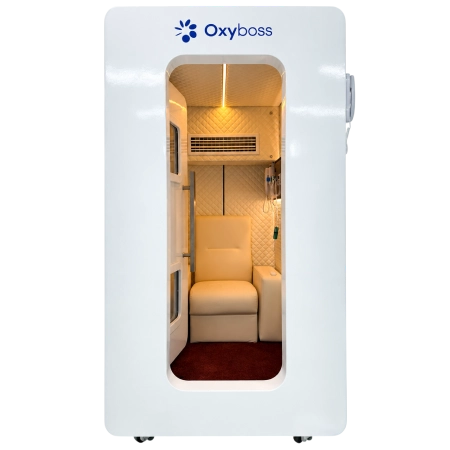
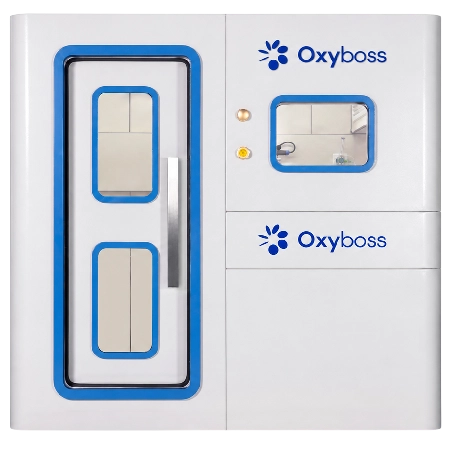
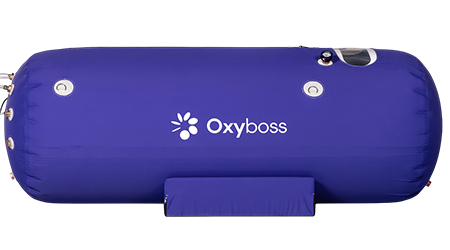
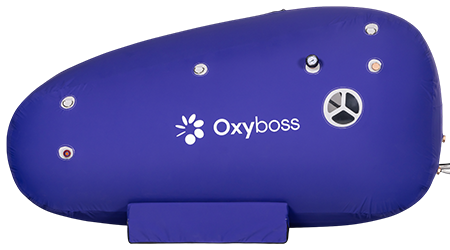
Home chambers typically run at lower pressures than clinical facilities and may use ambient air or oxygen concentrators rather than pure medical-grade oxygen. Clinical facility chambers often operate at 2.0 to 2.4 ATA with near-100% oxygen. The product restrictions are stricter at facilities because of the higher oxygen concentration. At home, you have more flexibility, but the principle stays the same: clean skin in, full routine after.
If you own a home chamber, you also have the luxury of timing. You can do a session right after your morning cleanse, step out, wait 15 minutes while you make coffee, then do your full routine before work. Or do it at night after cleansing, step out, do your routine, go to bed. The commute variable disappears, so the order becomes trivially easy.
The “12-hour rule”
Some facilities tell you not to use lotions or oils for 12 hours before a session. This is a facility policy, not a universal biological rule. The logic is that some products take time to fully absorb or evaporate, and residue might still be present even if your skin looks clean. It’s a conservative safety margin. If your facility says 12 hours, follow it. If you’re at home and running a lower-pressure chamber, clean and dry is usually enough.
What about makeup?
Don’t wear it into the chamber. Ever. Makeup sits on the skin surface, contains oils, pigments, waxes, and preservatives, and creates an unpredictable variable in a pressurized oxygen environment. If you need to be out in public after a morning session, bring your makeup and do it after you’ve finished your post-session skincare. If you’re doing a session at night, you’re cleansing beforehand anyway, so it’s a non-issue.
The order that works
Morning session
- Wake up, cleanse (or shower).
1) Pat dry. Do not apply anything.
- Do your chamber session.
1) Step out, wait 10–30 minutes until skin feels normal.
- Apply: toner → serum → treatment → moisturizer → sunscreen.
1) Makeup (if you wear it).
Evening session
- Cleanse to remove makeup, sunscreen, and the day’s buildup.
1) Pat dry. Do not apply anything.
- Do your chamber session.
1) Step out, wait 10–30 minutes.
- Apply: toner → serum → treatment (retinol, if tolerated) → moisturizer → occlusive (optional).
Multiple sessions in one day
- Cleanse once in the morning.
1) Do all sessions product-free.
- After the final session, wait 10–30 minutes.
1) Do your full routine.
If your skin feels off after a session
Skip the actives. Use a plain, fragrance-free moisturizer. Resume your normal routine the next day if everything feels fine.