Key Takeaways (TL;DR)
- Noise: Oxyboss hard-shell units operate below 50 dB during compression — quieter than a normal conversation.
- Ears: Sensation similar to airplane descent; 6 equalization methods detailed below with a comparison table.
- Temperature: Expect a 3–5°F rise during compression (per Boyle’s Law gas heating); stabilized by active airflow exchange once at pressure.
- Duration: A full session runs 90–120 minutes including compression and decompression phases.
- Sensation at pressure: Unremarkable. Most users read, rest, or sleep. About 30% report mild peripheral tingling.
- The primary difference between a hard-shell and soft-shell hyperbaric chamber in terms of sensation is that hard-shell units offer higher pressure (1.5–2.0+ ATA), quieter interiors, and more stable thermal control, while soft-shell units feel more enclosed but are easier to install in residential settings.
The First 30 Seconds: It’s Quieter Than You Think
Most people expect something dramatic. A loud hiss. A rush. The reality is closer to sitting in a parked car with the windows up on a still afternoon.
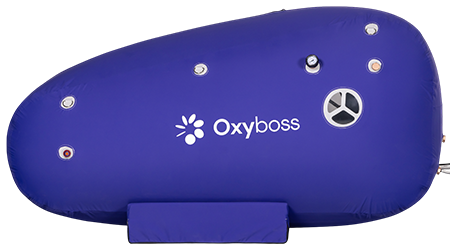
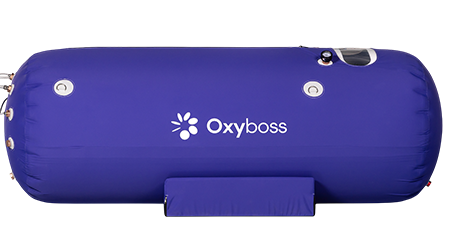
When the door seals, there’s a beat of nothing. Then comes a faint hiss — compressed air entering the vessel. It’s steady, not sharp. In Oxyboss’ hard-shell monoplace units, we engineer the inlet valve geometry specifically to diffuse airflow noise below 50 dB during compression. That’s quieter than a normal conversation. Soft-shell chambers tend to be a touch noisier because the flexible membrane vibrates slightly under pressurization, but we mitigate that with reinforced multi-layer TPU composite walls (aerospace-grade thermoplastic polyurethane, heat-welded seams rated to withstand 300+ kPa) and optimized compressor matching.
💡 For Commercial Operators: Noise floor matters when you’re running back-to-back sessions in a shared space. Ask us about our acoustic isolation compressor enclosures designed for multi-unit installations — they drop ambient noise outside the chamber room to below 45 dB.
Ear Pressure — The One Thing Everyone Asks About
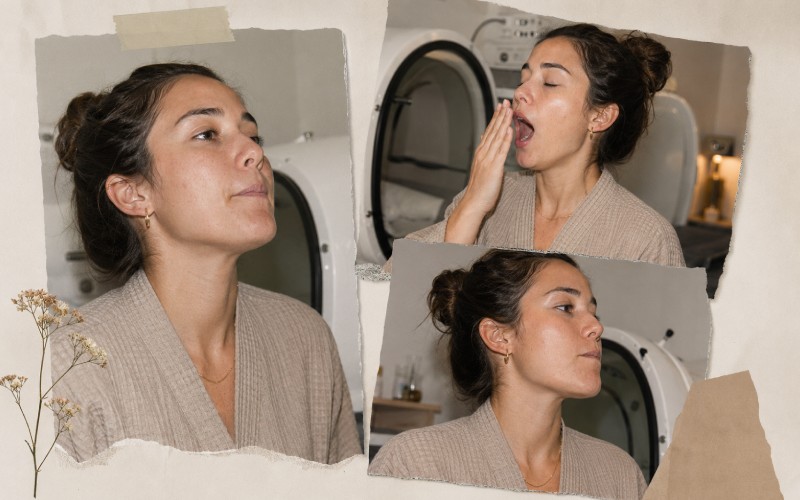
Here’s the deal. Your ears will notice the pressure change. Not painfully, not aggressively, but they’ll notice.
The physics is straightforward — as ambient pressure increases, the air trapped in your middle ear needs to equalize through the Eustachian tubes. This is the same principle described by Boyle’s Law: as pressure rises, gas volume in a closed space decreases, creating a pressure differential across your eardrum. The sensation is nearly identical to the descent phase of a commercial flight — that fullness, that slight muffling. It starts within the first minute or two of compression and lasts through the entire pressurization phase, which typically runs 8–15 minutes depending on your target depth.
The trick is to stay ahead of it. Don’t wait for discomfort. Start equalizing early and often.
Equalization Methods That Actually Work
| Method | How It Works | Best For |
| Swallowing | Opens the Eustachian tubes via throat muscle contraction | Mild pressure changes, beginners |
| Yawning (real or fake) | Stretches jaw and throat muscles to open the tubes wider | Gradual pressurization, relaxed sessions |
| Valsalva Maneuver | Pinch nose, close mouth, gently blow — forces air into the middle ear | Faster compression, experienced users |
| Toynbee Maneuver | Pinch nose and swallow simultaneously | People who find Valsalva too forceful |
| Frenzel Maneuver | Pinch nose, make a “K” sound with mouth closed | Scuba divers, advanced users |
| Jaw movement / chewing | Activates muscles around the Eustachian tubes | Continuous low-effort equalization |
A note from our engineering side: Oxyboss chambers feature variable-rate pressurization control systems. That means if you need to slow down the descent, the system responds smoothly. No jarring stops. No sudden re-starts. The chamber holds at whatever intermediate pressure you need while your ears catch up, then resumes at a rate you control.
If you have active sinus congestion, postpone your session. Swollen Eustachian tubes don’t equalize well under any circumstances, and pushing through that is how minor discomfort becomes actual ear barotrauma. It’s not worth it.
Temperature: The Part Nobody Warns You About
Physics doesn’t care about your comfort preferences. When gas compresses, it heats up — a direct consequence of Boyle’s Law and the ideal gas relationship. During the first few minutes of pressurization, the air inside the chamber will feel noticeably warmer — sometimes 3–5°F (1.7–2.8°C) above the ambient start point. It’s not uncomfortable exactly. More like stepping from an air-conditioned room into a sunlit hallway.
Once target pressure is reached and the compressor cycles down, the temperature stabilizes. In Oxyboss’ hard-shell units, we integrate active airflow exchange systems that vent warm air and circulate cooled, filtered air continuously. The result: stable internal temperature throughout the session, typically within ±2°F (±1.1°C) of your set point.
Soft-shell chambers are a different thermal story. The flexible walls don’t insulate as aggressively, so external room temperature influences the interior more directly. We compensate for this with optimized air exchange rates (typically 120–160 liters per minute), but here’s practical advice: keep the room your soft-shell sits in at a comfortable baseline — ideally 68–72°F (20–22°C) — before starting.
💡 For Commercial Operators: If you’re managing a multi-room facility, your chamber’s thermal environment starts with your building’s HVAC. We provide installation planning guides that include recommended room temperature ranges, ventilation specs, and compressor heat load calculations for multi-unit setups.
At Pressure: What 60–90 Minutes Actually Feels Like
Once compression finishes and the chamber reaches its working pressure — typically 1.3 to 1.5 ATA in a soft-shell, or 1.5 to 2.0+ ATA in a hard-shell — the active sensations mostly stop.
The ear fullness fades. The temperature settles. The hiss drops to a low background murmur. And then you’re just… there. Lying down. Breathing.
That’s the strange part, honestly. After all the buildup and anticipation, the actual session is remarkably uneventful. You breathe normally. The air has no unusual taste or smell. At higher pressures, oxygen dissolves into blood plasma at a significantly increased rate — this is Henry’s Law at work, where gas solubility increases proportionally with ambient pressure. Some people describe a faint sense of “heaviness” in the limbs during the first few sessions at higher pressures — not unpleasant, more like the gravity-weighted feeling you get lying in a very warm bath.
Others notice nothing beyond mild relaxation. Quite a few fall asleep.
What People Typically Do During a Session
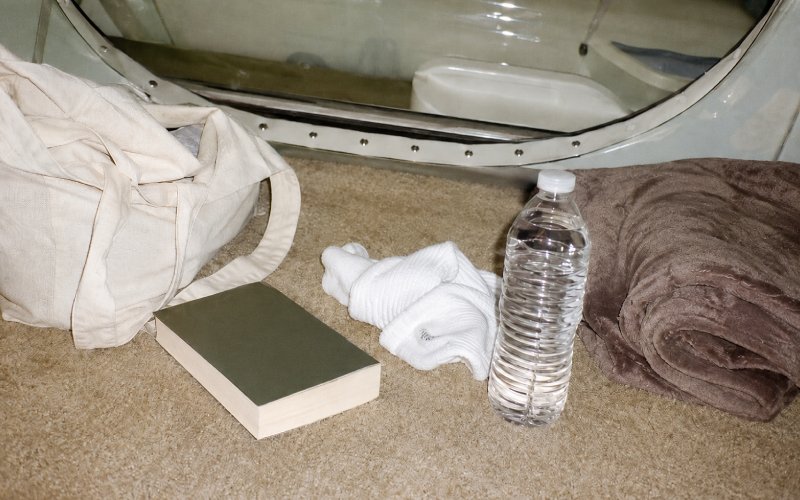
- Read (physical books — no electronics in oxygen-rich hard-shell environments)
- Listen to music or podcasts (where chamber design permits audio systems)
- Nap
- Just lie still and do nothing, which turns out to be its own kind of luxury
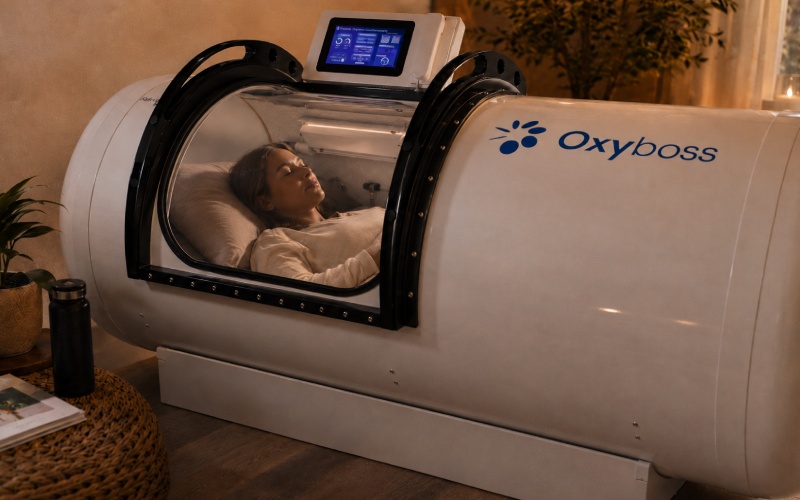
For home users, this is often the appeal that surprises them most. It’s enforced downtime. No phone. No screen. Just 60–90 minutes where you can’t do anything productive even if you wanted to. A lot of people come to look forward to that.
Tingling, Warmth, and the Subtle Stuff
We hear this from about 30% of first-time users: a mild tingling in the fingertips, toes, or lips during the session. It’s not painful, not alarming — more like the earliest stage of a limb “waking up.” This is a normal physiological response to elevated dissolved oxygen reaching peripheral tissue under increased partial pressure.
Some users report a subtle warmth in their extremities. Others describe a very mild lightheadedness during the first couple of minutes at full pressure that resolves quickly. None of these sensations require action.
We mention these because you should know they can happen so you’re not caught off guard. That’s it.
Decompression: Coming Back Up
The session ends with a gradual depressurization phase — typically 10–15 minutes. Your ears will pop again, sometimes more noticeably than during compression. Swallowing and jaw movement handle it. The temperature may dip slightly as the gas expands and cools (again, Boyle’s Law — pressure drop means gas expansion means temperature drop).
One thing we engineer carefully in every Oxyboss chamber: decompression rate limiting. The system won’t depressurize faster than a safe, comfortable rate regardless of operator input. This is a non-negotiable safety feature. Whether the unit sits in a busy recovery center processing eight sessions a day or in your spare bedroom, the decompression profile protects you the same way.
When the pressure returns to ambient and the door opens, the transition is anticlimactic. You step out. That’s it.
After You Step Out
There’s no recovery period. No mandatory observation window. You can drive, exercise, eat, work — whatever you’d normally do.
What most people notice in the first hour after:
- A sense of being “lighter” or clearer — hard to pin down, not dramatic, just a background shift
- Mild energy boost — not jittery, more like the way you feel after a genuinely restful nap
- Occasional slight hunger — your body has been in an oxygen-rich environment for over an hour
Some people feel mildly tired after their first session. This is common and tends to resolve by the second or third session as your body acclimates. A few users report noticeably better sleep the night following a session, though that’s anecdotal and varies widely.
The real benefits of consistent chamber use for general wellness and athletic recovery tend to accumulate over a series of sessions rather than announcing themselves after session one.
Hard-Shell vs. Soft-Shell: Does the Experience Feel Different?
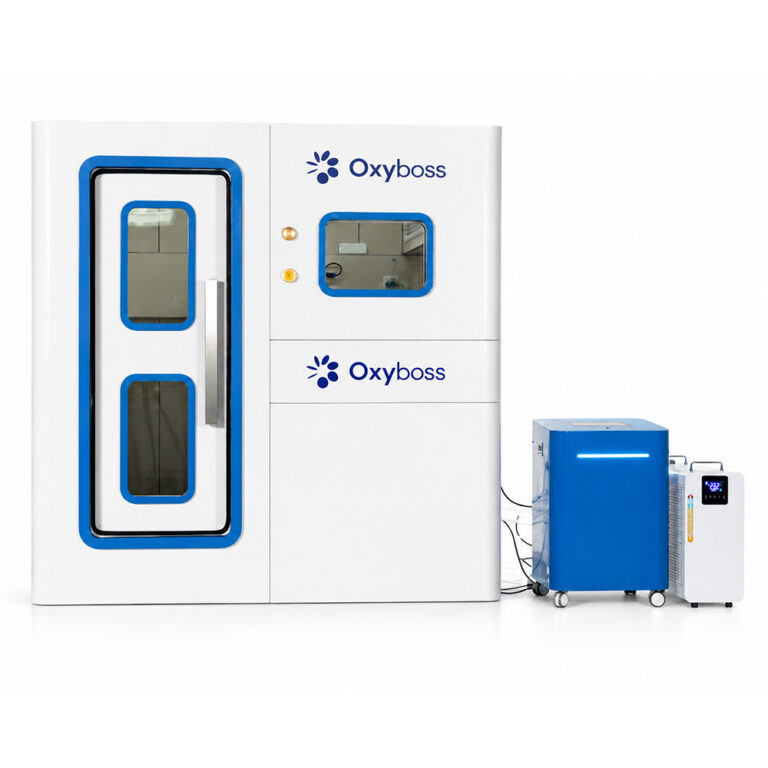
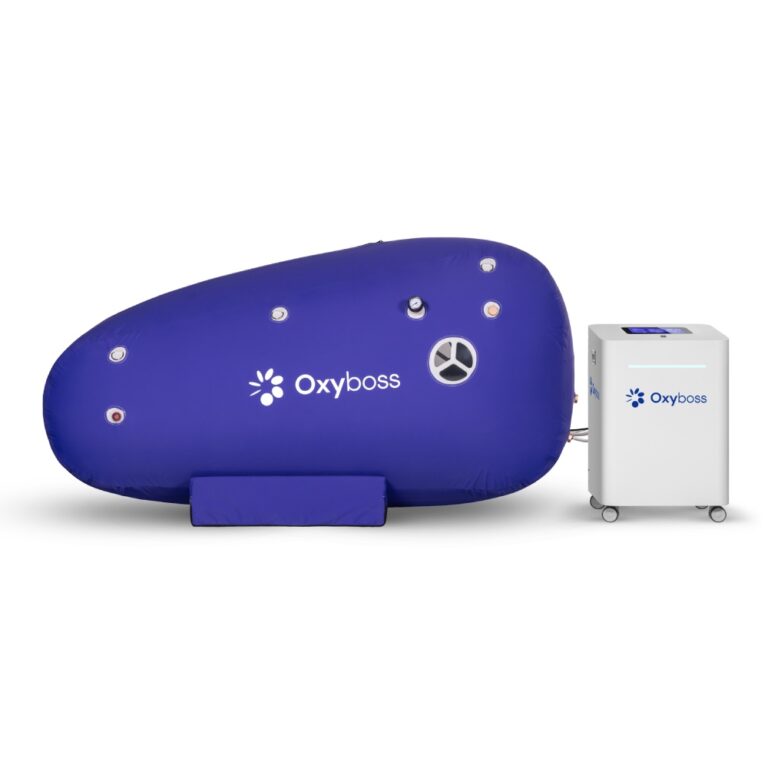
Yes. Not dramatically, but noticeably. The primary difference between a hard-shell and soft-shell hyperbaric chamber in terms of user sensation comes down to pressure intensity, interior feel, and thermal stability.
| Aspect | Soft-Shell Chamber | Hard-Shell Chamber |
| Max operating pressure | 1.3–1.5 ATA | 1.5–2.0+ ATA |
| Ear pressure intensity | Milder, slower onset | More noticeable, requires active equalization |
| Noise during session | Low hum from compressor, slight membrane vibration | Quieter interior once at pressure |
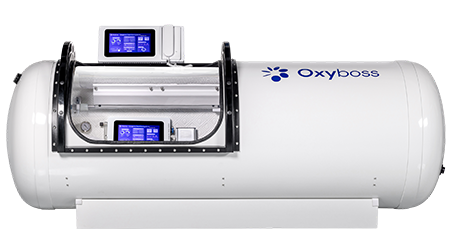
| Interior space feel | Enclosed, fabric walls — cozy or confining depending on your preference | Rigid walls, often transparent acrylic — more open feel |
| Temperature stability | More influenced by room conditions | Better internal climate control (±2°F) |
| Typical session duration | 60–90 minutes | 60 minutes typical |
| Electronics inside | Often permitted (ambient air pressurization) | Restricted in oxygen-enriched environments |
| Wall construction | Aerospace-grade TPU composite, heat-welded seams | Medical-grade acrylic + steel frame |
| Best suited for | Home wellness, individual recovery routines | High-volume commercial facilities, higher-pressure protocols |
If you’re buying for personal use at home, Oxyboss’ soft-shell units at 1.3–1.5 ATA give you a genuinely effective session in a unit that fits through a standard doorway, sets up in a spare room, and doesn’t require structural reinforcement. We build our soft-shell units with reinforced TPU composite fabric and heat-welded seams rated for years of daily use — because “home use” doesn’t mean “light use.”
💡 For Commercial Operators: The hard-shell gives you more operational consistency and a more professional impression in the room. Rigid acrylic construction holds up to daily multi-session use without material fatigue. Oxyboss hard-shell units are rated for 10,000+ compression cycles before scheduled maintenance. Ask us about our commercial lease and bulk pricing programs.
Claustrophobia: The Honest Answer
It comes up. A lot. And the honest answer is: it depends on the person and the chamber.
Oxyboss’ hard-shell monoplace units use transparent acrylic construction. You can see out in every direction. You can see the room, the door, whoever’s nearby. That visual openness makes a real difference for people who feel uneasy in enclosed spaces. We also integrate two-way communication systems — you can talk to someone outside the chamber at any point during the session.
Soft-shell chambers have a more enclosed feel. The fabric walls, the zipper entry — it’s more like being inside a tent. We add observation windows and ensure adequate interior dimensions (minimum 28″ / 71 cm interior diameter in our residential line) so you’re not pressed against the walls, but there’s no pretending it feels the same as a transparent hard-shell.
If you know you have significant claustrophobia, talk to us before buying. We can walk you through specific interior dimensions, window configurations, and even arrange a brief unpressurized sit-inside to see how it feels before you commit.
What a Session Does NOT Feel Like
Since misconceptions are half the battle:
- It does not feel like an MRI. You can move freely. You’re not pinned in a tube listening to jackhammer sounds.
- It does not feel like diving underwater. There’s no water. No wetsuit. No breathing apparatus. You breathe normally through your nose and mouth.
- It is not painful. If it hurts — especially your ears — something needs to be adjusted. Pressure should be slowed or paused. Discomfort is a signal, not an expectation.
- It does not feel “clinical.” Especially in a home or studio setting. It’s closer to lying in a quiet, comfortable space with nothing to do.
Practical Prep: Before Your First Session
Quick-reference list. No fluff.
- Wear cotton clothing. No synthetics, no lotions, no perfumes, no hairspray. This matters in oxygen-enriched environments.
- Eat a light meal beforehand. Not empty stomach, not stuffed. Something moderate 30–60 minutes before.
- Skip carbonated drinks. Gas expands under pressure (Boyle’s Law again). Bloating in a sealed chamber is not fun.
- Use the restroom. You’ll be in there 60–90 minutes. Plan accordingly.
- Bring something to read (physical book, magazine) or plan to rest.
- Clear your sinuses. If you’re congested, reschedule. Seriously.
- Remove jewelry, watches, and electronic devices before entering.
FAQ
How long does a full session take, start to finish? Budget about 90–120 minutes total. That includes prep, 8–15 minutes of compression, 60–90 minutes at pressure, 10–15 minutes of decompression, and a couple minutes to exit and reorient.
Will my ears hurt? They shouldn’t. You’ll feel pressure — like airplane descent — but with proper equalization technique and controlled compression speed, it stays well within the range of mild and manageable. If it hurts, the pressurization rate needs to slow down.
Can I fall asleep in there? Yes. Many people do. The environment is quiet, warm, and unstimulating. Falling asleep is safe and normal.
How often should I use a hyperbaric chamber for general wellness? Most users settle into a rhythm of 2–5 sessions per week. Consistency matters more than intensity. We can help you plan a schedule that fits your goals and your available time.
Is it safe to use a hyperbaric chamber at home without a dedicated operator? Oxyboss’ home units are designed for self-operation with built-in safety controls — automatic pressure limiting, emergency relief valves, and controlled decompression rates. We train every buyer on proper operation before their first session. That said, you should always have someone else in the house aware that you’re in the chamber.
What if I feel anxious or want to stop mid-session? You can stop any session at any time. Oxyboss chambers feature internal pressure release controls and two-way communication systems. You’re never locked in, and the system depressurizes in a controlled manner whenever you initiate it.
Do I need to do anything special after a session? Nothing required. Drink water. Go about your day. Some people feel a mild energy lift; others feel a pleasant tiredness, especially early on. Both are normal.
Is there anyone who should NOT use a hyperbaric chamber? People with certain untreated lung conditions, recent ear or sinus surgery, or active upper respiratory congestion should consult a qualified professional before using a chamber. We always recommend discussing with your healthcare provider if you have specific concerns.
What is the difference between ATA and PSI in chamber specifications? ATA (Atmospheres Absolute) measures total pressure relative to sea-level atmospheric pressure (1 ATA = 14.7 PSI). A chamber operating at 1.5 ATA means the internal pressure is 1.5 times normal atmospheric pressure, or approximately 22 PSI absolute. We use ATA as the standard unit because it’s the global industry convention for hyperbaric pressure specifications.
Ready to Take the Next Step?
| 🏠 Exploring a Chamber for Home Use? Browse Oxyboss’ residential soft-shell and compact hard-shell series — designed for standard doorways, quiet operation, and daily self-use. → Explore the Home Wellness Series | 🏢 Outfitting a Wellness Facility? Download our commercial specification guide — includes chamber dimensions, power requirements, installation footprints, session throughput calculations, and ROI modeling. → Download the Commercial Spec & ROI Guide |
⚠️ Disclaimer
The information provided in this article is for general educational and informational purposes only. It does not constitute medical advice, diagnosis, or any form of clinical recommendation. Oxyboss’ hyperbaric chambers for home and commercial wellness use are designed for general well-being, relaxation, and athletic recovery purposes. They are not marketed or sold as medical devices for the diagnosis, treatment, cure, or prevention of any disease or medical condition. Always consult with a qualified healthcare professional before beginning any new wellness routine, especially if you have pre-existing health conditions. Individual experiences may vary.