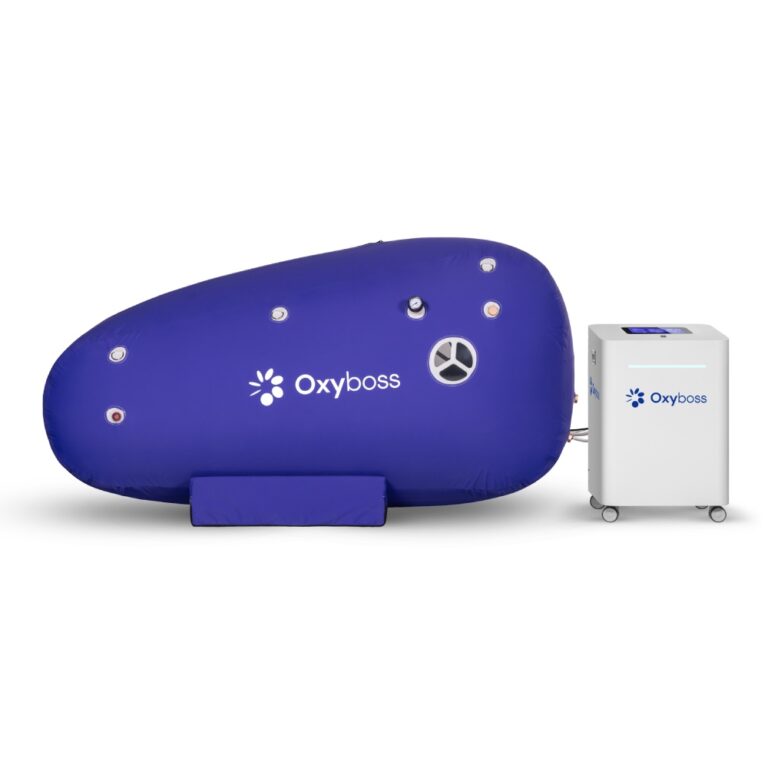
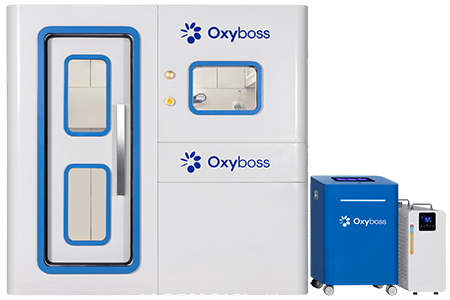
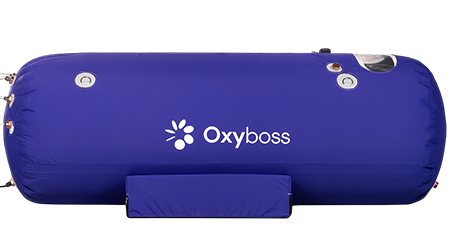
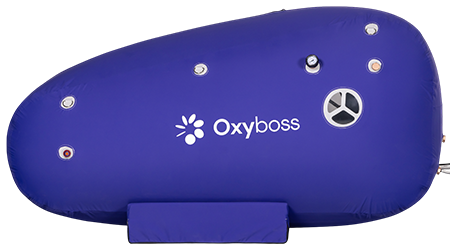
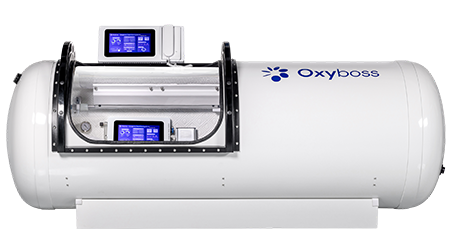
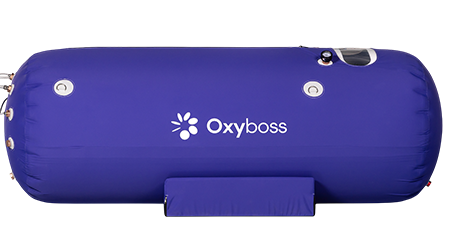

Most recovery tools get judged by the wrong clock. One session, one night, one jump test the next morning, and people rush to a verdict. Hyperbaric chamber work rarely proves itself that way. Its value usually shows up later, inside dense training blocks, travel-heavy schedules, and weeks where performance does not collapse all at once but starts thinning at the edges.
The Science of Oxygen Transport: Hemoglobin vs. Blood Plasma
At normal pressure, oxygen delivery is still mostly a hemoglobin story. That system works well until recovery demand rises faster than the window available to handle it. Under harder schedules, the problem is not whether oxygen is present. The problem is how efficiently it moves, how much is still usable, and how much time gets lost before the body catches up.
Pressure changes that equation. At baseline conditions, only a small amount of oxygen is dissolved directly in plasma, roughly 0.3 mL per 100 mL of blood. Under higher-pressure oxygen-rich chamber protocols, that dissolved portion can rise several-fold, moving into a range where plasma is no longer a minor side route but a meaningful part of transport during the session. That is the part many articles flatten into a slogan. “More oxygen” is not the real point. The real shift is in how oxygen is carried while the chamber is at depth.
That is the science. Not the headline claim.
Why this matters for athletes
Athletes rarely lose output in one dramatic drop. It leaks. The second hard session of the week feels flatter than it should. Travel starts costing more. Repeated efforts stop recovering cleanly between demands. In that kind of schedule, the chamber makes more sense as a way to protect recovery bandwidth than as a shortcut to instant performance.
That distinction matters because it resets the expectation. A chamber is usually better at helping the next block hold together than it is at manufacturing a miracle by tomorrow morning.
What the chamber can do, and what it cannot
A lot of disappointment in this category comes from asking the chamber to do the wrong job. One-off use is where the hype tends to outrun the signal. Short, isolated sessions can feel substantial without moving much in objective output the next day. The better use case is repeated load: congested competition, stacked training, travel cycles, and periods where the body is being asked to recover before it has fully cleared the last demand.
That does not mean all chamber exposure should be treated the same. It should not. A mild-pressure unit is not the same conversation as a higher-pressure system, and a brief exposure is not automatically interchangeable with a longer hold. In practical terms, 1.3 ATA, 1.5 ATA, and 2.0 ATA+ are not cosmetic differences. They change dose, transport behavior, session feel, and the level of engineering discipline required to keep the environment stable.
Why ATA (Pressure) Is Only Part of a Hyperbaric Chamber’s Value
Pressure gets treated like the headline spec because it is easy to print and easy to compare. But a chamber can reach target pressure and still deliver a weak session if the internal environment drifts during the hold phase. Heat buildup, flat air, moisture accumulation, unstable circulation, and sloppy ramp control can quietly degrade the session while the gauge still looks correct.
That is why serious buyers stop asking only how high a chamber goes. They ask how well it behaves once it gets there.
What actually changes session quality
| Variable | Why it matters | What poor design feels like | What serious engineering aims for |
| Pressure stability | Keeps dose consistent across the hold phase | Strong start, weak middle, uneven release | Stable hold across the full session |
| Ramp curve | Affects tolerance and repeat use | Rushed pressurization, unpleasant release | Controlled compression and decompression |
| Air circulation | Keeps the chamber atmosphere usable | Stale, heavy, flat-feeling air | Measured airflow with a deliberate exhaust path |
| Thermal control | Prevents the session from turning hot and distracting | Sweating, restlessness, shortened sessions | Managed compressor heat and stable internal temperature |
| Humidity handling | Keeps the environment predictable | Fogging, damp surfaces, sticky chamber feel | Balanced moisture control over the full duration |
| Structural consistency | Protects repeatability over time | Stretch, seal fatigue, drift in feel | Reinforced seams, controlled creep, cycle durability |
| Safety discipline | Determines whether the system stays trustworthy | Static risk, prohibited-item problems, avoidable downtime | Grounding, cleaning rules, inspection points, maintenance routine |
That table matters more than most surface-level claims because pressure alone does not rescue a sloppy chamber.

Airflow deserves more respect
Buyers tend to stare at pressure numbers and ignore circulation. That is usually a mistake. Inside a pressurized chamber, airflow volume is only part of the story. Distribution matters. Exhaust routing matters. Dead zones matter. A system can advertise “fresh air” and still feel tired forty or fifty minutes into the session if the atmosphere inside is not moving cleanly enough.
The same goes for heat and moisture. Compression generates heat. Long holds can magnify it. A chamber that starts clean and ends warm, damp, and stale is not doing enough environmental control. That becomes even more important as protocols get longer, because longer sessions increase the cost of every small drift inside the vessel.
Stable pressure matters. Stable geometry matters too.
A chamber that changes shape too freely under repeated load introduces another layer of inconsistency. Rigid shells and flexible structures do not age the same way, do not respond the same way, and should not be engineered as if they do. Flexible systems in particular need tighter control over stretch, seam fatigue, and long-cycle dimensional drift. If the shell keeps moving, the internal environment keeps moving with it.
Not enough to ruin every session. Enough to make the chamber less exact over time.
That is where factory tolerances stop being a manufacturing detail and become part of the recovery experience.
Where athletes usually notice the difference
Not always in a sprint test the next day. More often in the second session after travel, the back half of a tournament, or the week where training density usually strips sharpness first. This is why serious performance environments do not judge chamber work by asking only, “Did this make me better tomorrow?” They ask a harder question: “Did this keep the week from falling apart?”
That is a better filter. It also leads to better buying decisions.
What serious buyers should ask before they buy
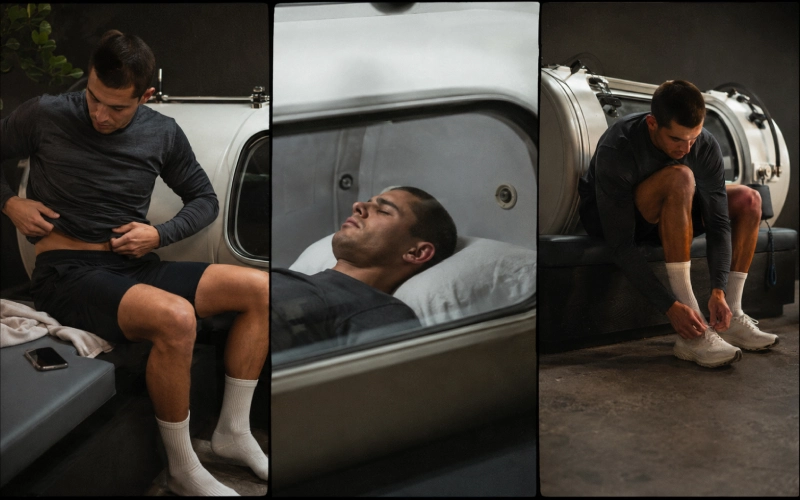
Ask what operating pressure is actually held during the full session, not just reached briefly. Ask how oxygen is delivered, how the internal atmosphere is circulated, and where exhaust really goes. Ask what happens to internal temperature after forty to sixty minutes of continuous operation. Ask how humidity is managed. Ask how seams, seals, shell materials, and structural tolerances behave after repeated pressure cycles. Ask what wears first. Ask what the operator has to control manually and what the system controls cleanly on its own.
Those answers usually tell you more than the headline promise ever will.
The real role of the chamber
The chamber is not there to replace sleep, cover for weak programming, or decorate a facility. Its role is simpler than that. It gives recovery a more controlled environment when the calendar stops being forgiving.
That is usually where the value is found. Not in drama. In repeatability.
FAQ
Do hyperbaric chambers directly make athletes faster?
Not in the simplistic way the category often suggests. The stronger case is recovery support across repeated efforts, not instant speed or power from one isolated session.
Why does pressure matter so much?
Because pressure changes transport, not just availability. At baseline, plasma carries only a very small dissolved oxygen load. Under chamber pressure, that dissolved portion rises enough to become a more meaningful delivery route during the session.
Is higher ATA always better?
No. Higher pressure with poor environmental control is just a worse chamber at a bigger number. Session quality still depends on pressure stability, ramp behavior, airflow, heat control, moisture handling, and structural consistency.
Are mild chambers and higher-pressure systems basically the same?
No. They should not be discussed as if they deliver the same dose. Pressure band changes transport behavior, session design, and the level of engineering required to hold the environment properly.
Why do some athletes say they felt better even when hard performance numbers barely moved?
Because subjective recovery and next-day measurable output are not the same thing. A session can improve how recovery feels without creating an immediate visible jump in sprint speed, jump height, or repeated-power output.
What is the most overlooked design factor?
Usually the internal atmosphere during the hold phase. Not just pressure. Air circulation, heat drift, moisture buildup, and overall chamber stability decide whether the session stays usable past the first few minutes.
Who gets the most value from chamber work?
Usually teams, training groups, and facilities managing repeated high load, dense schedules, or travel-heavy performance cycles. The chamber becomes more useful when recovery quality has to stay consistent across an entire week, not just one event.