
The short answer
As of 2026, hyperbaric oxygen therapy (HBOT) is not FDA-approved or FDA-cleared for fibromyalgia, and no U.S. insurer covers it for that diagnosis. A handful of small randomized trials have reported improvements in pain, fatigue and quality of life — but the evidence is low quality, drawn mostly from women with trauma-triggered symptoms, and generated in clinical chambers at 2.0 ATA or higher. None of it was generated in a home or wellness chamber, and the major clinical guidelines have not endorsed HBOT for fibromyalgia because the data aren’t strong enough.
That’s the whole story in one paragraph. Everything below is the longer version, with sources you can check.
What fibromyalgia actually is, and why so many people end up searching for hyperbaric therapy
Fibromyalgia is a chronic condition marked by four things that tend to travel together:
- Widespread pain that moves around and doesn’t show up on scans
- Deep fatigue that sleep doesn’t fully fix
- Unrefreshing sleep and stiffness in the morning
- Cognitive symptoms patients call “fibro fog” — trouble finding words, focusing, and remembering
It’s estimated to affect 2%–4% of the population, and more than 90% of those diagnosed are women (Wolfe et al., 2016, Pain 157(8):1769–1778). It often shows up after a trigger — a traumatic brain injury, an infection, prolonged stress, or sometimes nothing obvious at all.
There’s no cure. That’s the whole reason people keep looking for new options, and why hyperbaric therapy shows up in so many searches.
But here’s the thing most search results skip: the “hyperbaric chamber” someone is talking about online is rarely the same machine. And that single distinction is where most of the confusion starts.

Three different things are called “hyperbaric therapy”
This is the single most useful table in this article. Pin it.
| Clinical HBOT | Low-pressure HBOT | Home / wellness chamber | |
|---|---|---|---|
| Pressure | 2.0–3.0 ATA | 1.45 ATA | 1.0–1.5 ATA |
| Oxygen | 100% medical oxygen by mask or hood | 100% medical oxygen by mask | Compressed air (most units); some support an oxygen concentrator |
| Setting | Hospital or accredited clinic | Research protocol | Home, gym, wellness center |
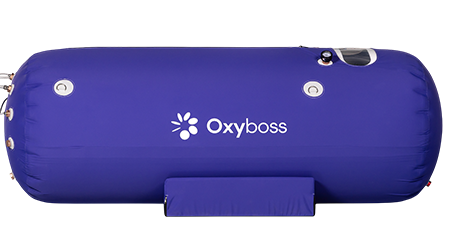
| FDA status (U.S.) | Class II device, 14 cleared indications | Research only | Some soft chambers are 510(k)-cleared for acute mountain sickness only |
| Fibromyalgia evidence | A handful of small RCTs | One 3-arm trial (vs. exercise) | None |
| Typical cost per session | $250–$450 | (trial setting) | $0 (ownership) after buying the device |
A few things to notice:
- Every published fibromyalgia study was run in a clinical chamber or under clinical-protocol conditions — not in a home unit. We’ll come back to this in a moment.
- “Low-pressure” is not the same as “soft chamber” or “home chamber.” Low-pressure HBOT in research still used a clinical chamber and 100% medical oxygen. It just used less of both.
- The FDA’s own consumer update is explicit: soft-sided zippered bag chambers are cleared for acute mountain sickness only, and have not been cleared for use with oxygen tanks or concentrators (FDA, “Hyperbaric Oxygen Therapy: Get the Facts”). That’s a meaningful one. It means a home chamber running at 1.3 ATA on compressed air is delivering a fundamentally different thing than clinical HBOT.
If you’ve been reading reviews that say “1.3 ATA works for fibromyalgia” or “home chambers help with fibro,” they’re collapsing three different interventions into one. That’s most of the misinformation in this space.
What the research actually shows (and what it doesn’t)
Let’s lay the studies out honestly.
The landmark study everyone cites
The 2015 study by Efrati and colleagues at Tel Aviv University is the anchor point for nearly every claim about HBOT and fibromyalgia (Efrati et al., 2015, PLOS ONE 10(5):e0127012).
- 60 women diagnosed with fibromyalgia (mostly trauma-triggered), at least two years post-diagnosis
- 48 completed the protocol
- 40 sessions, 90 minutes each, five days a week, for eight weeks
- 100% oxygen at 2.0 ATA in a clinical chamber
Results: brain imaging showed changes in pain-processing regions, and participants reported reduced pain and reduced reliance on pain medication. It was not blinded, not sham-controlled, and the sample was small. That doesn’t make it wrong — it makes it a hypothesis-confirming study that has not been independently replicated at scale.
The 2024 RCT — the one with a real control arm
The most rigorous fibromyalgia HBOT trial to date came out of the Assaf Harofeh Medical Center in 2024 (Scientific Reports 14, article 62161).
- 48 women, randomized
- 2.0 ATA, 100% oxygen, clinical chamber
- Compared against standard pharmacological therapy
Results: the HBOT group showed greater improvement in fibromyalgia impact and quality of life. But — and this is important — only 7 of 24 women (29%) in the HBOT group no longer met fibromyalgia diagnostic criteria at the end of the trial. That’s not the “70% cured” number you’ll see quoted elsewhere. That number was about a specific subgroup whose symptoms correlated with abnormal pain-processing brain regions, not the overall response rate.
The 2020 low-pressure trial — the only one that compares against exercise
This is the most interesting study for our purposes, because it used 1.45 ATA instead of 2.0, and it had three arms (Izquierdo-Alventosa et al., 2020, Ther Adv Musculoskelet Dis 12:1759720X20930493 — also indexed as PMID 32636943).
- 49 women, randomized into three groups: supervised exercise, low-pressure HBOT, and control
- 40 sessions × 90 minutes × 5 days/week × 8 weeks
- 1.45 ATA, 100% oxygen by mask, clinical chamber
Results: the HBOT group improved on self-reported pain and exercise-induced fatigue. The exercise group improved on pressure-pain threshold, endurance, and functional capacity. Only the HBOT group improved on subjective pain. Control did not improve on either.
A follow-up from the same team in 2024 looked at psychological variables — pain catastrophizing, pain acceptance, psychological flexibility, quality of life — and again found significant improvements in the HBOT group (Izquierdo-Alventosa et al., 2024, Med Clin (Barc) — PMID 38383268).
What you need to take away from this trial:
- It’s the only fibromyalgia HBOT study that compares against exercise — which happens to be the only “strong for” recommendation in the major clinical guidelines.
- It’s the only study at low pressure.
- It still used a clinical chamber and 100% medical oxygen. “Low pressure” is not “home chamber.” That distinction matters.
A 2023 meta-analysis — the part most articles skip
A pooled analysis of four randomized controlled trials (163 patients total) found statistically significant improvements in fibromyalgia impact questionnaire scores (FIQ, SMD −1.57) and tender point count (SMD −2.50) — but no statistically significant effect on pain (SMD −1.68, 95% CI −4.47 to 1.11), and a 24-fold increase in adverse events (RR 24.97, 95% CI 3.75–166.47).
Read that last part again. Side effects went up significantly. Not catastrophically — but real.
The summary table
| Study | Pressure | Sessions | Comparator | Sample | Reported pain improvement |
|---|---|---|---|---|---|
| Efrati 2015 | 2.0 ATA | 40 | None | 48 women | Yes (no sham) |
| Scientific Reports 2024 | 2.0 ATA | (standard) | Drug therapy | 48 women | Yes; 29% no longer met FM criteria |
| Izquierdo-Alventosa 2020 | 1.45 ATA | 40 | Exercise + control | 49 women | Yes (only in HBOT arm) |
| Meta-analysis 2023 | Mixed | Mixed | Various | 163 | No statistically significant effect on pain |
The three questions nobody answers — answered honestly
If you’ve searched this topic, you’ve probably noticed that most pages either skip these questions or answer them with a marketing line. Here are the actual answers.
Question 1: How much does hyperbaric chamber therapy for fibromyalgia cost?
A clinical course at a U.S. center runs 450 per session. A standard protocol is 40 sessions, so the out-of-pocket total for a clinical course is roughly 18,000 before any travel or time costs.
A home or wellness chamber is bought once — entry-level soft chambers run 15,000 for the device itself, with operating costs (electricity, occasional maintenance) on top.
Question 2: Is it FDA-approved for fibromyalgia?
No. HBOT is not approved or cleared for fibromyalgia by the U.S. FDA. The agency has cleared clinical hyperbaric chambers for 14 specific indications — things like decompression sickness, carbon monoxide poisoning, diabetic foot wounds, radiation tissue damage — and fibromyalgia is not on that list (FDA-cleared HBOT indications, 21 CFR 868.5470).
The FDA has sent warning letters to companies promoting hyperbaric chambers for cancer, Lyme disease, autism, Alzheimer’s, and other conditions it has not cleared. Fibromyalgia is not on that warning-letter list specifically, but the same principle applies: promoting an unapproved device for a specific condition is not allowed, regardless of which condition.
Question 3: Is it covered by insurance?
No, not for fibromyalgia. The Centers for Medicare & Medicaid Services covers HBOT only for the 14 FDA-cleared indications (CMS National Coverage Determination 20.29). Private insurers follow the same list.
This is one of the most-skipped points in the entire fibromyalgia-HBOT conversation, because most pages that sell or promote hyperbaric therapy don’t want to lead with “you’ll be paying out of pocket.”

What the evidence does not show
This is the part most articles skip. If you’ve gotten this far, you deserve it.
- No sham-controlled blinded trial. The fibromyalgia HBOT studies to date have not used a proper sham chamber (a sham is a chamber that mimics the experience but doesn’t deliver the actual intervention). That’s a real problem, because fibromyalgia outcomes are known to respond strongly to placebo effects.
- Small samples. The biggest single trial had 60 enrolled participants. The 2023 meta-analysis pooled 163 patients across four studies. That’s not enough to draw firm conclusions.
- Skewed population. Nearly every study was done in women, mostly with trauma-triggered symptoms, mostly in Israel. The evidence base for men, older patients, non-trauma-triggered fibromyalgia, and non-Western populations is essentially zero.
- Head-to-head against optimized exercise or CBT: only one trial has done this — the 2020 Izquierdo-Alventosa trial — and even that used a relatively short exercise protocol. We don’t yet know how HBOT compares against the kind of long-term, graded, supervised exercise programs that guidelines recommend.
- Durability is unclear. Most trials measured outcomes right after the treatment course. Few followed participants for 6 or 12 months. The data don’t tell us whether any improvement persists.
- No dose-response curve. We don’t know whether 30 is enough, whether 60 is meaningfully better than 40, or whether maintenance sessions help. The protocols are all over the map.
There’s also the issue of publication bias. Small positive trials tend to get published; small negative trials tend to sit in a file drawer. Given how many positive fibromyalgia trials exist despite methodological weaknesses, it’s worth being skeptical about whether the published picture is the whole picture.
What the clinical guidelines actually recommend
The European League Against Rheumatism (EULAR) updated its fibromyalgia management recommendations in 2017 (Macfarlane et al., 2017, Ann Rheum Dis 76(2):318–328). The takeaway:
- Exercise is the only intervention given a “strong for” recommendation (****). Not drugs. Not oxygen therapy.
- Cognitive behavioral therapy has a “weak for” recommendation.
- Pharmacological options (duloxetine, pregabalin, tramadol) are “weak for.”
- HBOT is not mentioned. Not because it was rejected — because the evidence wasn’t strong enough to support a recommendation in either direction.
If you’re trying to decide what to invest your time and money in, the guideline-based answer is: start with exercise, ideally graded and supervised. Talk to a clinician about whether HBOT is worth adding on top, especially if your fibromyalgia is trauma-triggered.
How HBOT is thought to work (and why we’re honest about it being a hypothesis)
The proposed mechanisms for why hyperbaric therapy might help fibromyalgia are mostly borrowed from research on other conditions. Here’s the picture researchers have sketched:
- Neuroplasticity. HBOT appears to encourage the brain to form new neural connections, which is part of why it’s being studied for traumatic brain injury and stroke (Hadanny & Efrati, 2020, Biomolecules 10(9):1327).
- Reduction of neuroinflammation. Hyperoxic exposure seems to dampen some inflammatory signaling in the nervous system.
- Mitochondrial function. Some evidence suggests improvements in cellular energy production, which may be relevant given the mitochondrial dysfunction that’s been observed in fibromyalgia patients.
- The hyperoxic-hypoxic paradox. Intermittent high-oxygen exposure is thought to activate hypoxia-inducible factors (HIFs), the same molecular pathway triggered by altitude training, leading to downstream effects on growth factors like BDNF, vascular remodeling, and stem cell mobilization. This is a hypothesis, not a confirmed mechanism in fibromyalgia.
Important note: none of this has been confirmed in fibromyalgia patients. It’s a biologically plausible story, not a proven one. If you read a page that presents these as established facts, that’s a red flag about the rest of the page.
Risks, side effects, and who shouldn’t use a chamber
Who should not use a hyperbaric chamber
This is the section that most wellness-chamber pages leave out entirely.
Absolute contraindications (don’t do it):
- Untreated pneumothorax (collapsed lung)
- Certain types of lung disease (check with a clinician)
- Recent middle-ear surgery or active ear infection
Relative contraindications (talk to a clinician first):
- Pregnancy (insufficient data on early pregnancy)
- Severe claustrophobia
- Certain heart conditions
- Seizure disorders
- Active cancer (theoretical concern about promoting tumor growth, though evidence is mixed)
- Recent eye surgery
Common side effects
- Ear barotrauma is by far the most common — that “popping” feeling when pressure changes, sometimes leading to ear pain or, rarely, a perforated eardrum. A 2023 study of 175 patients at 1.45 ATA found a 7.1% per-session adverse event rate, with zero cases of eardrum damage (Monge et al., 2023).
- Sinus discomfort during pressure changes
- Temporary fatigue or headache after sessions
- Claustrophobia, especially in enclosed chambers
- Vision changes (usually temporary; long-term myopic shifts have been reported at high pressures)
- Oxygen toxicity — rare, but serious. Seizures can occur at high pressures.
- Fire risk. This is the big one. Hyperbaric chambers contain concentrated oxygen, and oxygen-enriched environments ignite easily. The UHMS has issued a formal consumer warning about soft-sided chambers and notes that even clinical chamber fires, while rare, are well-documented (UHMS position statements).
The 2023 meta-analysis found a 24-fold increase in adverse events in the HBOT groups versus control (RR 24.97, 95% CI 3.75–166.47). That doesn’t mean HBOT is dangerous in absolute terms — many of these events were mild ear barotrauma — but it does mean “no side effects” is not an honest claim.
If you’re considering a home or wellness chamber
This is the part where we have to be careful with our language, because we’re a manufacturer of home and wellness chambers. So here’s the honest framing.
What a home chamber can and can’t do
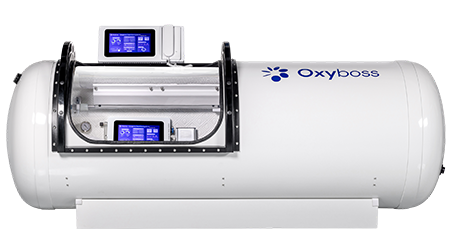
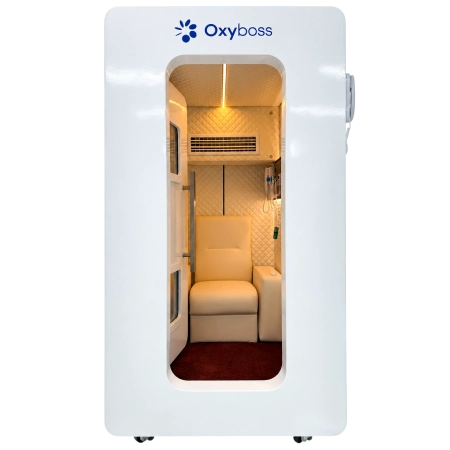
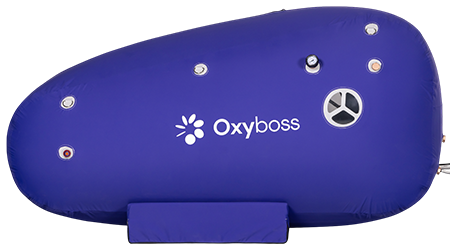
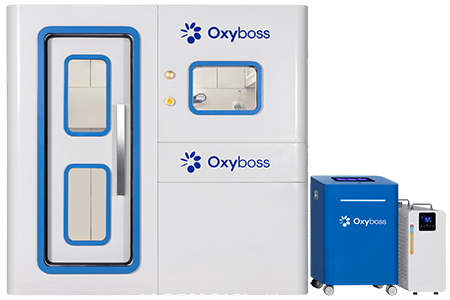
A modern home or wellness chamber operating at up to 2.0 ATA is a real piece of equipment, not a toy. It’s capable of producing measurable physiological effects at the pressure level used in some research. Some units also support an oxygen concentrator, which raises the oxygen fraction inside the chamber above the 21% of normal air.
What’s important to be clear about:
- It is not the same as the clinical chamber in the Efrati 2015 study or the Izquierdo-Alventosa 2020 trial. Those were clinical-grade multiplace or monoplace chambers run by trained operators under medical protocols. A home chamber is an unattended, lower-cost device operated by the user or a family member. The physiology overlaps in some ways, but it’s a different intervention.
- There are no published studies showing that home or wellness chambers improve fibromyalgia symptoms. The clinical evidence base comes from clinical chambers, run by clinicians, in research settings.
- Some FDA-cleared soft chambers are cleared for acute mountain sickness only, and have not been cleared for use with oxygen tanks or concentrators (FDA consumer update). This is a real regulatory line. If you’re buying one, it’s worth understanding what your specific unit is cleared for.
Questions to ask before buying any chamber
This is the single most useful thing we can offer people who land on this page. Print this out, take it to a retailer, take it to a clinic.
- What pressure does it actually reach, in ATA? Not “what’s the maximum on the gauge” — what has it been measured to do, in independent testing?
- What oxygen delivery system does it use? Compressed air only, or does it support an oxygen concentrator? What’s the flow rate?
- What is the chamber cleared for, by which regulatory body? If it’s FDA-cleared, for what indication? If it’s CE-marked, under which class?
- What safety features does it have? Pressure relief valve, internal emergency release, internal and external pressure gauges, anti-suffocation valve if the compressor fails, reinforced seams.
- What is the warranty, and who services it? A chamber is a pressure vessel. Maintenance matters.
- What’s the total cost of ownership, not just the purchase price? Electricity, consumables (concentrator filters, oxygen if used), maintenance, replacement parts over five years.
- Will the company give you a written statement of what their chamber is cleared for and what claims they support? If they won’t, walk away.
What we will not claim
This page will not tell you that our chambers treat, cure, or heal fibromyalgia. That’s because the published evidence doesn’t support that claim, and because making it would put us on the wrong side of FDA and FTC rules on health claims. We think that’s a good thing, even though it makes for less exciting marketing.
What we will tell you:
- What pressure and oxygen levels our chambers actually deliver
- What published research exists on hyperbaric therapy and fibromyalgia, with sources
- What the evidence does and doesn’t show, in plain language
- How to evaluate any chamber, ours included, against an honest checklist
Common claims that don’t hold up
Because this page is more useful if it protects you from bad information, here’s a quick scan of claims that show up frequently online — and what the evidence actually says.
- “70% of patients showed significant improvement.” This number comes from a quote in the Tel Aviv University press release about the 2015 study (TAU press release). It refers to the subgroup whose symptoms correlated with abnormal pain-processing brain regions, not the overall response rate. The 2024 RCT measured 29% no longer meeting diagnostic criteria; an earlier TBI-related fibromyalgia study measured 37.9%.
- “Efrati 2015 used 60 sessions.” It used 40 sessions, 90 minutes each, five days a week, for eight weeks.
- “Ablin 2019 proved HBOT beats medication.” The randomized trial comparing HBOT to standard drugs is actually Ablin et al., 2023, PLOS ONE 18(3):e0282406 — and it’s limited to trauma-triggered fibromyalgia, not all-comers.
- “Trauma-triggered fibromyalgia patients can expect complete resolution with no follow-up treatment needed.” This is a paraphrase of one quote from a researcher, repeated through media outlets. It is not a finding of any peer-reviewed paper, and no maintenance protocol has been validated.
- “Other patients need periodic maintenance sessions.” No published study has tested or validated a maintenance protocol for HBOT in fibromyalgia.
- “HBOT heals brain lesions in most fibromyalgia patients.” There is no published evidence that most fibromyalgia patients have identifiable brain “lesions” to begin with. Brain imaging changes in the studies reflect functional differences, not structural damage.
We say this without naming names. If a page is making these claims without sourcing them, treat the rest of the page with caution.
FAQ
Can a hyperbaric chamber cure fibromyalgia?
No. There is no cure for fibromyalgia, and hyperbaric oxygen therapy is not approved to treat it. Some trials show symptom improvement in subsets of patients, but “improvement” is not the same as cure, and durability is not established.
Is hyperbaric chamber therapy FDA-approved for fibromyalgia?
No. Clinical hyperbaric chambers are FDA-cleared for 14 specific indications, and fibromyalgia is not on that list (21 CFR 868.5470).
Does insurance cover hyperbaric chamber therapy for fibromyalgia?
No. CMS and most private insurers cover HBOT only for the FDA-cleared indications (CMS NCD 20.29). Fibromyalgia is not a covered indication.
How many sessions does it take to see results in the studies?
The clinical trials that reported improvement typically ran 20 to 40 sessions, with 40 being the most common protocol. Improvement was measured during and immediately after the course.
What’s the difference between 1.3 ATA and 2.0 ATA?
The research on fibromyalgia has been done at both 2.0 ATA (most studies) and 1.45 ATA (one study, in a clinical chamber). At 2.0 ATA with 100% medical oxygen, plasma oxygen levels rise roughly five- to seven-fold above normal. At 1.45 ATA with compressed air, the rise is much smaller. Most home and wellness chambers operate between 1.0 and 1.5 ATA.
Can a home chamber produce the same results as the clinical studies?
There are no published studies showing that home or wellness chambers produce the same results as clinical-grade chambers. The published evidence base is from clinical chambers. This doesn’t mean home chambers don’t do anything — it means no one has published the kind of evidence that would let you compare them.
Is a home chamber safe?
Mild hyperbaric chambers at lower pressures are generally well-tolerated. The most common side effect is ear discomfort during pressure changes. Serious complications are rare but real, and the FDA has issued consumer warnings about marketing claims for unapproved uses. The UHMS has also issued a formal warning about soft-sided chambers.
What about the 1.45 ATA study everyone is talking about?
You’re probably referring to the Izquierdo-Alventosa trial from 2020. It’s well-designed, it compared against exercise and control, and it’s the only fibromyalgia HBOT study to do so. It also used a clinical chamber and 100% medical oxygen, not a home or wellness unit. It’s the most useful single piece of evidence for thinking about whether low-pressure HBOT might help, but it doesn’t tell us anything about home chambers.
Should I try a home chamber before trying prescription medication?
That’s a decision for you and your clinician, not a website. We can tell you that prescription medications for fibromyalgia (duloxetine, pregabalin) have larger evidence bases and are FDA-approved for the condition. Whether to add HBOT to a treatment plan is a conversation to have with someone who knows your medical history.
What if I can’t afford a clinical course?
That’s a fair question. A clinical course of 40 sessions at $250–$450 is genuinely expensive. If cost is the barrier, talk to a clinician about whether the lower-cost options (exercise programs, cognitive behavioral therapy, generic medications) might work for you first — and whether a home or wellness chamber, with all the caveats above, might be a reasonable adjunct later.
The bottom line
Hyperbaric therapy is a real medical intervention with a long history in specific conditions. For fibromyalgia, the evidence is real but thin. Most of it comes from a small number of clinical trials, mostly in women, mostly in Israel, all in clinical chambers. The published data suggest some patients see meaningful improvement — but not most, and not durably.
If you have fibromyalgia and you’re considering a chamber, the most useful things you can do are:
- Talk to a clinician you trust. Especially one familiar with your particular symptom pattern.
- Start with what the guidelines actually recommend. That’s exercise, ideally supervised and graded. CBT if it’s available.
- If you decide to try HBOT, understand what kind of chamber you’re getting, what claims the manufacturer is and isn’t supporting, and what it will cost you out of pocket.
- Be skeptical of any page that promises a cure, an “80% success rate,” or “heals brain lesions.” Those claims aren’t supported by the published evidence.
We make home and wellness hyperbaric chambers. We hope you’ll consider ours. But we’d rather you make that decision with accurate information than without it.
References
- Wolfe F, et al. 2016 revisions to the 2010/2011 fibromyalgia diagnostic criteria. Semin Arthritis Rheum 2016;46(3):319–329. https://doi.org/10.1016/j.semarthrit.2016.08.012
- Efrati S, et al. Hyperbaric oxygen therapy can diminish fibromyalgia syndrome – prospective clinical trial. PLOS ONE 2015;10(5):e0127012. https://doi.org/10.1371/journal.pone.0127012
- Ablin JN, et al. Hyperbaric oxygen therapy compared to pharmacological intervention in fibromyalgia syndrome following traumatic brain injury. PLOS ONE 2023;18(3):e0282406. https://doi.org/10.1371/journal.pone.0282406
- Hadanny A, Efrati S. The hyperoxic-hypoxic paradox: a mechanistic model for hyperbaric oxygen therapy. Biomolecules 2020;10(9):1327. https://doi.org/10.3390/biom10091327
- Izquierdo-Alventosa R, et al. Comparative study of the effectiveness of a low-pressure hyperbaric oxygen treatment and physical exercise in women with fibromyalgia: randomized clinical trial. Ther Adv Musculoskeletal Dis 2020;12:1759720X20930493. https://doi.org/10.1177/1759720X20930493 (PMID 32636943)
- Izquierdo-Alventosa R, et al. Effects of a low-pressure hyperbaric oxygen therapy on psychological constructs related to pain and quality of life in women with fibromyalgia: a randomized clinical trial. Med Clin (Barc) 2024. PMID 38383268
- Scientific Reports 2024. Hyperbaric oxygen therapy compared to pharmacological therapy in fibromyalgia. https://doi.org/10.1038/s41598-024-62161-5
- Effectiveness of Hyperbaric Oxygen for Fibromyalgia: A Meta-Analysis of Randomized Controlled Trials. Clin Pract 2023;13(3):53. https://doi.org/10.3390/clinpract13030053
- Macfarlane GJ, et al. EULAR revised recommendations for the management of fibromyalgia. Ann Rheum Dis 2017;76(2):318–328. https://doi.org/10.1136/annrheumdis-2016-209724
- Monge M, et al. Adverse events in low-pressure hyperbaric oxygen therapy. 2023. (175-patient cohort at 1.45 ATA; 7.1% AE rate, zero eardrum damage)
- FDA. Hyperbaric Oxygen Therapy: Get the Facts. https://www.fda.gov/consumers/consumer-updates/hyperbaric-oxygen-therapy-get-facts
- 21 CFR 868.5470 — Hyperbaric chamber classification. https://www.ecfr.gov/current/title-21/chapter-I/subchapter-H/part-868/subpart-F/section-868.5470
- CMS National Coverage Determination 20.29 — Hyperbaric Oxygen Therapy. https://www.cms.gov/medicare-coverage-database/view/ncd.aspx?NCDId=36
- UHMS Position Statements. https://www.uhms.org/resources/position-statements.html
Disclaimer: This article is for general information only and is not medical advice. Home and wellness hyperbaric chambers are not intended to diagnose, treat, cure or prevent any disease. The research described above was conducted with clinical-grade equipment under medical protocols, and is not equivalent to using a home or wellness chamber. Talk to a qualified clinician before changing any treatment plan.