
Parkinson’s disease affects millions of people worldwide, and interest in complementary approaches continues to grow. Among them, hyperbaric oxygen therapy (HBOT) has drawn increasing attention from researchers exploring its potential role in neurological health. In this article, we take a balanced look at what the science currently tells us about the relationship between hyperbaric oxygen and Parkinson’s disease.
What Is Parkinson’s Disease?
Parkinson’s disease (PD) is a progressive neurodegenerative condition caused by the gradual loss of dopamine-producing neurons in a brain region called the substantia nigra. Dopamine plays a central role in coordinating movement, which is why PD is most commonly associated with motor symptoms such as tremor, rigidity, slowness of movement (bradykinesia), and impaired balance [1].
Beyond movement, PD also affects sleep, mood, cognition, and autonomic function — symptoms that can significantly impact quality of life but are often underrecognized [2].
Current standard treatments focus on dopaminergic medications (most notably levodopa), physical therapy, exercise, and management of individual non-motor symptoms.
How Hyperbaric Oxygen Therapy Works
Hyperbaric oxygen therapy involves breathing oxygen in a pressurized environment. Under increased atmospheric pressure, significantly more oxygen dissolves into the bloodstream and reaches tissues throughout the body, including the brain [3].
Researchers have identified several mechanisms through which HBOT may influence neurological function:
- Enhanced cerebral oxygenation — increasing oxygen delivery to brain tissue that may be oxygen-deprived [4]
- Anti-inflammatory effects — reducing neuroinflammation, a recognized contributor to neurodegenerative processes [5]
- Antioxidant activity — helping counteract oxidative stress, which damages neurons over time [5]
- Mitochondrial support — promoting mitochondrial biogenesis through the SIRT-1/PGC-1α pathway, potentially supporting cellular energy production [6]
- Angiogenesis — stimulating the growth of new blood vessels to nourish damaged or oxygen-starved brain areas [3]
- Neuroprotection — some preclinical data suggest HBOT may help protect dopaminergic neurons from further damage [6]
These mechanisms have generated substantial scientific interest, particularly in the context of neurodegenerative conditions where oxygen metabolism and inflammation play important roles.

What Does the Research Say About HBOT and Parkinson’s?
A growing body of clinical research has examined HBOT as an adjunctive approach alongside standard Parkinson’s medication. Here is what the major reviews have found.
Motor symptoms
A 2025 meta-analysis pooling 13 studies and 958 participants reported that adding HBOT to conventional medication was associated with improved motor function scores (UPDRS-III), with a mean reduction of approximately 2.96 points, along with modest improvements in disease severity staging [7]. A separate 2025 systematic review covering 16 studies and 1,324 participants similarly reported improvements in motor scores, while noting substantial variation across treatment protocols [8].
Sleep and daytime function
Sleep disturbance is one of the most consistent areas of reported benefit. A focused meta-analysis of 7 randomized controlled trials (461 participants) found that HBOT, used alongside standard treatment, was associated with improvements in sleep efficiency, total sleep time, REM and slow-wave sleep duration, as well as reductions in excessive daytime sleepiness [9].
Cognition and mood
Multiple studies have reported improvements in cognitive screening scores (MoCA, MMSE) and reductions in depression and anxiety measures when HBOT was added to standard care [7][8]. Approximately 40–60% of Parkinson’s patients experience mood disorders, making this a meaningful area of investigation [10].
Where the evidence stands
While these findings are encouraging, it is important to understand the current state of the evidence in context:
- Most studies have been exploratory in nature, with relatively small sample sizes.
- Treatment protocols (pressure levels, session duration, number of treatments) vary considerably across studies, making direct comparisons difficult.
- The research is still in its early stages, and larger, well-designed randomized controlled trials are needed to draw definitive conclusions.
- Current findings suggest HBOT may serve as a complementary approach alongside established treatments, rather than a standalone therapy.
The scientific community continues to investigate, with several ongoing trials expected to provide further clarity in the coming years.
Understanding Different Types of Hyperbaric Chambers
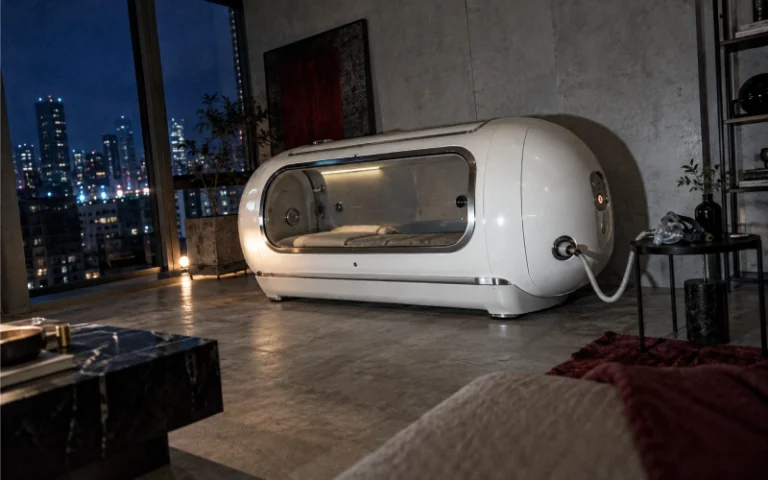
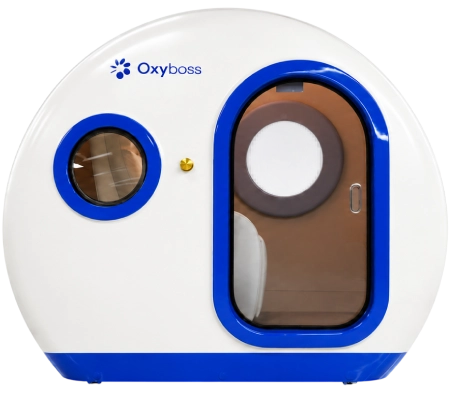
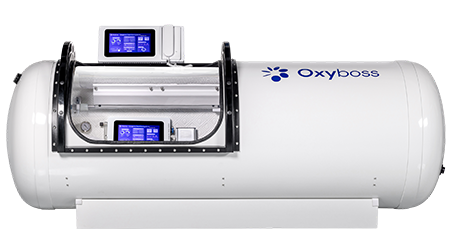
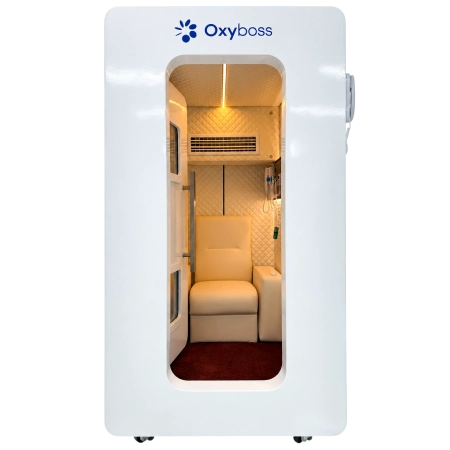
Not all hyperbaric chambers are the same. Understanding the differences is important for anyone researching this topic.
| Medical-Grade HBOT | Non-Medical / Home Chambers | |
|---|---|---|
| Pressure range | Typically 1.5–3.0 ATA | Usually below 1.5 ATA |
| Breathing gas | 100% medical-grade oxygen | Filtered ambient air or concentrated oxygen |
| Setting | Clinical facility with trained medical staff | Home or wellness setting |
| Regulatory status | FDA-cleared for specific medical indications | Positioned for general wellness use |
| Primary use | Treatment of approved medical conditions | Daily wellness, relaxation, and recovery |
The clinical studies on Parkinson’s disease referenced above were conducted using medical-grade HBOT protocols, typically at pressures of 1.5 ATA or higher with 100% oxygen, under medical supervision [7][9].
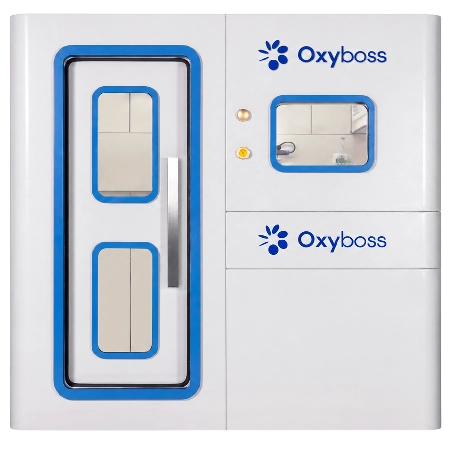
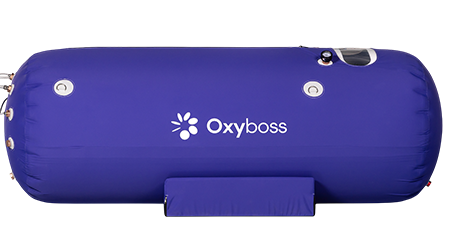
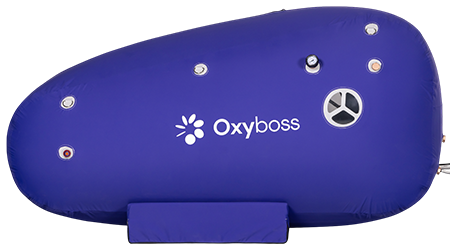
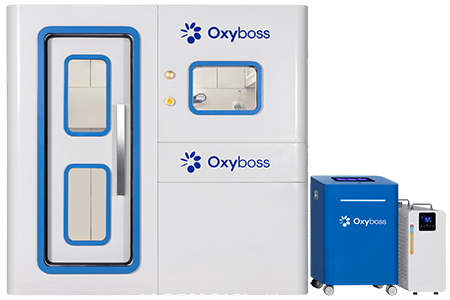
Non-medical home chambers operate at lower pressures and are designed for a different purpose — general wellness and recovery support. They are not medical devices and are not intended for the treatment of any specific medical condition.
For anyone considering hyperbaric oxygen specifically for Parkinson’s symptoms, consulting with a healthcare provider about medical-grade options is an important step.
The Broader Picture: Hyperbaric Oxygen and Neurological Wellness
Beyond Parkinson’s-specific research, hyperbaric oxygen has attracted broader interest in the field of neurological health. Researchers are studying its potential role in areas including:
- Post-stroke recovery and rehabilitation [3]
- Traumatic brain injury [3]
- Age-related cognitive changes
- General neuroprotection and brain health optimization
This expanding body of research reflects a growing recognition that oxygen metabolism, inflammation, and mitochondrial function are central to brain health — and that interventions targeting these pathways deserve continued scientific exploration.

Frequently Asked Questions
Is hyperbaric oxygen therapy a promising area of research for Parkinson’s?
Early clinical studies have reported improvements in several symptom domains, particularly sleep quality and certain motor and cognitive measures. However, the research is still in its exploratory phase, and more high-quality trials are needed before definitive conclusions can be drawn.
What is the difference between medical-grade and home hyperbaric chambers?
Medical-grade chambers operate at higher pressures (1.5–3.0 ATA) with 100% oxygen under clinical supervision and are cleared for specific medical indications. Home chambers operate at lower pressures, use ambient air or concentrated oxygen, and are designed for general wellness purposes.
Should someone with Parkinson’s try hyperbaric oxygen therapy?
Anyone considering HBOT in the context of Parkinson’s disease should consult with their neurologist or healthcare provider. The clinical research has been conducted under medical-grade protocols, and professional guidance is essential for making informed decisions about any complementary approach.
Is hyperbaric oxygen safe?
HBOT has a well-documented safety profile when used according to established guidelines. Potential side effects may include temporary ear discomfort from pressure changes, transient vision changes, or claustrophobia. More serious complications are rare but possible, particularly at higher pressures. It is always advisable to consult a healthcare professional before beginning any hyperbaric protocol, especially for individuals with pre-existing health conditions [11].
References
- National Institute on Aging. Parkinson’s Disease: Causes, Symptoms, and Treatments. https://www.nia.nih.gov/health/parkinsons-disease
2. Chaudhuri, K.R., & Schapira, A.H. (2009). Non-motor symptoms of Parkinson’s disease. The Lancet Neurology, 8(5), 464–474. https://pubmed.ncbi.nlm.nih.gov/19375664/
3. Undersea and Hyperbaric Medical Society (UHMS). Hyperbaric Oxygen Therapy Indications. https://www.uhms.org/resources/hbo-indications.html
4. Parkinson’s Resource Organization. Parkinson’s and Hyperbaric Oxygen Therapy. https://www.parkinsonsresource.org/news/articles/parkinsons-and-hyperbaric-oxygen-therapy/
5. Chen, J., et al. (2022). Hyperbaric Oxygen Therapy Improves Parkinson’s Disease by Promoting Mitochondrial Biogenesis via the SIRT-1/PGC-1α Pathway. Biomolecules, 12(5), 661. https://pmc.ncbi.nlm.nih.gov/articles/PMC9138219/
6. Chen, J., et al. (2022). [Same as above — mechanism detail on SIRT-1/PGC-1α pathway]. https://pubmed.ncbi.nlm.nih.gov/35625589/
7. Zhang, Y., et al. (2025). Hyperbaric Oxygen Therapy Improves Motor Symptoms, Sleep, and Cognitive Dysfunctions in Parkinson’s Disease. Dementia and Geriatric Cognitive Disorders, 54(3), 187–200. https://karger.com/dem/article/54/3/187/916434/Hyperbaric-Oxygen-Therapy-Improves-Motor-Symptoms
8. Rinaldi, C., et al. (2025). Effects of Hyperbaric Oxygen Therapy on Non-Motor Symptoms in Parkinson’s Disease: A Systematic Review. https://pubmed.ncbi.nlm.nih.gov/39571556/
9. Li, X., et al. (2024). Efficacy of hyperbaric oxygen therapy as an adjunct therapy for treating sleep disorders in Parkinson’s disease: A systematic review and meta-analysis. Frontiers in Neurology. https://www.frontiersin.org/journals/neurology/articles/10.3389/fneur.2024.1328911/full
10. Baromedical Associates. Hyperbaric Oxygen Therapy for Parkinson’s Patients. https://www.baromedicalhbo.com/blog/hyperbaric-oxygen-therapy-for-parkinsons/
11. U.S. Food and Drug Administration. Hyperbaric Oxygen Therapy: Get the Facts. https://www.fda.gov/consumers/consumer-updates/hyperbaric-oxygen-therapy-get-facts
Disclaimer: This article is for informational and educational purposes only. It is not medical advice and should not be used to diagnose, treat, or manage any health condition. Hyperbaric chambers referenced in the context of home or non-medical use are general wellness products, not medical devices, and are not cleared by the FDA to treat any disease. Always consult a qualified healthcare professional before making decisions about your health.