
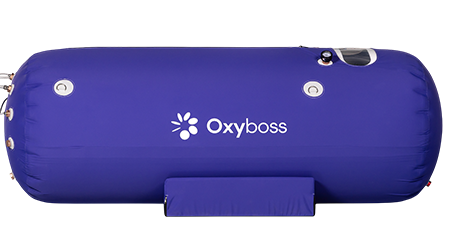

Step into a modern hyperbaric chamber factory and the equipment looks current enough: rolled steel, machined flanges, acrylic viewports, controlled compression, clean gas routing. No part of it seems old until you strip away the finish and look at the problems underneath.
Those problems are old.
Long before modern fabrication shops had precision machining, repeatable sealing systems, or stable compressor packages, French builders and pressure researchers were already dealing with the same core issues we still manage now: holding pressure inside a closed shell, moving people and materials across that boundary, controlling heat and moisture, and bringing pressure down in a disciplined way instead of simply letting it fall.
That is why France matters in hyperbaric chamber history. Not as a side note. As the point where hyperbaric chamber design starts to look like real engineering.
The useful history begins when pressure, structure, and operation meet
Early pressure chambers existed before the French period. But the part that still speaks to manufacturers today arrives later, once chamber construction, compressed-air work, and pressure science begin feeding each other.
In the 1830s, Victor Théodore Junod was already working with pressurized chamber designs at a time when sealing itself was still a serious limitation. Materials could be formed. Closures could be assembled. Keeping pressure where it belonged was another matter.
That remains familiar to any factory that builds chambers now.
A vessel is never just a shell. It is a shell, a seal, a closure system, a pressure path, a heat event, an exhaust event, and a decompression event. Weakness in any one of those points eventually shows up somewhere else. Early French chamber work makes that plain almost immediately.
Junod pushed the first problem into the open: geometry is not enough
Junod’s period is often reduced to a historical milestone. It is more useful than that.
A pressurized copper vessel made sense for its time. Curved geometry distributes internal load more cleanly than flat surfaces, and copper could be worked into rounded forms more readily than many alternatives available to nineteenth-century fabricators. But shape alone does not make a reliable hyperbaric chamber. Under pressure, the vessel moves. The seam tells the truth.
That part has not changed.
When we machine flange faces and sealing lands in a modern factory, we are solving the same basic problem Junod was confronting with far fewer tools: the pressure inside the vessel is always searching for the smallest weakness in the boundary. If the closure is inconsistent, if the sealing surface is poor, if the joint quality drifts, the chamber tells on itself.
There was also the thermal side of compression. Air enters under pressure. Temperature rises. Early builders had limited control over what happened next. The vessel material absorbed part of that load, the surrounding environment absorbed the rest, and the chamber interior lived with the consequences. Modern factories handle it differently because we can. Cooling, drying, filtration, and regulated gas delivery are not refinements added after the fact. They belong to the pressure event itself.
France became even more important when pressure left the workshop and entered industrial work
This is where hyperbaric chamber history usually gets flattened into a timeline. It should not.
Compressed-air work in the French line forced pressure systems into practical operating conditions. Once pressure had to support excavation, resist water intrusion, and move crews in and out through locks, the engineering burden changed. Entry became a design question. Timing became a design question. Controlled return to ambient became a design question.
That shift still sits inside modern hyperbaric chamber manufacturing.
A vessel that reaches target pressure but handles the rest of the cycle poorly is not well resolved. Pressurization alone proves very little. The full sequence is what matters: loading, sealing, compression, monitoring, transfer, exhaust control, and decompression. French compressed-air work helped make that broader view unavoidable.
Fontaine changed the chamber from a vessel into a usable system
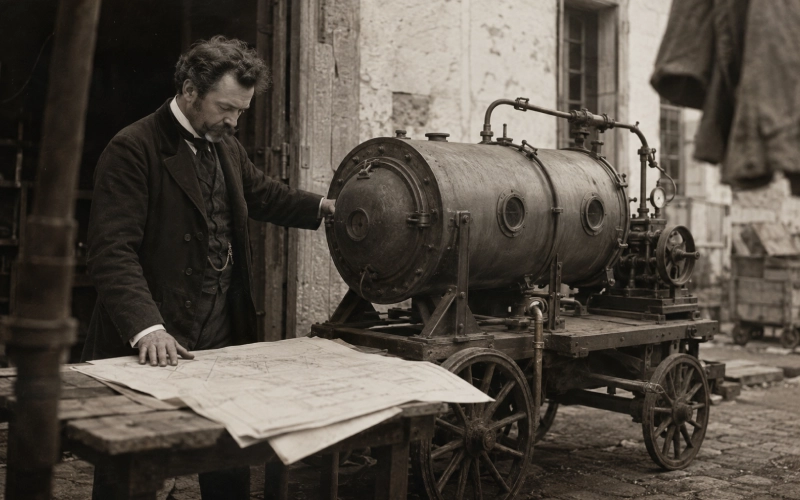
By the later nineteenth century, chamber design was no longer confined to compact enclosed forms. Jean-Albert Fontaine matters because his work points toward a more practical chamber logic: visibility, access, transfer, and repeatability.
A mobile pressurized chamber was not a novelty move. It was a systems move.
The moment a chamber has to function as a working unit rather than a static object, the design questions multiply. Weight distribution matters. Support structure matters. Mounting points matter. Openings matter. Observation matters. Service access matters. Suddenly the vessel is not just something that holds pressure. It has to operate inside a workflow.
Factories still live in that reality.
We do not look at early chambers as crude versions of modern machines. We look at them and recognize familiar priorities in rough form: keep the occupied space observable, separate control functions from the main volume where possible, manage transfer without collapsing the whole cycle, and build the shell as part of a system rather than as an isolated object.
The French physicist connection becomes decisive when pressure science catches up with hardware
When people use that phrase, they are usually pointing to the pressure science associated with Paul Bert.
And this is where chamber history stops being mainly about structure and starts becoming disciplined about behavior.
Before pressure science is taken seriously, design conversations tend to fixate on one number: how high the chamber can go. That question is incomplete. Pressure level matters, of course. Pressure transition matters just as much. Sometimes more. The chamber that reaches pressure aggressively but cannot manage a controlled return is not demonstrating sophistication. It is exposing a gap.
From a manufacturing standpoint, that affects more than one component. It shapes how we think about valve sizing, exhaust routing, ramp control, hold stability, chamber volume, and gas turnover across the full operating cycle. Once that framework enters the field, the chamber stops being a sealed room with compressed air inside it. It becomes a controlled environment with rules.
French history is central because all of these strands begin to lock together there. Junod exposes the fabrication problem. Compressed-air work exposes the operational problem. Fontaine advances layout and usability. Bert helps give the field pressure discipline. The line is clear.

What survived into modern chamber manufacturing
The hardware changed. The underlying demands did not.
We still build around load paths that distribute force cleanly. We still obsess over sealing surfaces and closure geometry because the pressure boundary has no patience for improvisation. We still design transfer points and access systems as core functions rather than optional extras. We still manage heat, moisture, and exhaust because pressure cycles generate all three whether the sales page mentions them or not. We still treat decompression control as part of the machine, not merely part of the operator’s routine.
That continuity is the reason this history still matters.
Not because it is old. Because it is unfinished.
French chamber history and modern factory practice
| Historical pressure problem | What the French period clarified | How we address it in a modern factory |
| Holding pressure inside a formed shell | Vessel shape helps, but seams and closures decide whether pressure is actually retained | Machined flanges, controlled sealing surfaces, verified pressure boundaries |
| Managing structural load | Material choice and fabrication quality set the real limit of the shell | Engineered steel structures, qualified weld procedures, dimensional inspection |
| Handling heat created by compression | Pressurization is also a thermal event | Regulated gas delivery, drying, cooling, and controlled intake routing |
| Moving across the pressure boundary | Access cannot be improvised once pressure becomes operational | Main entries, transfer locks, and closure systems designed into the chamber from the start |
| Controlling the return to ambient | Pressure change can be as important as peak pressure | Managed ramp profiles, calibrated exhaust paths, stable decompression control |
| Turning a vessel into a working unit | Layout, visibility, and repeatability matter as much as raw pressure capability | Integrated controls, observation windows, serviceable components, repeatable assembly |
What buyers should take from this history now
This part is simple.
If a supplier speaks only about wall thickness and maximum pressure rating, the conversation is incomplete. Those numbers matter, but they are not the whole machine.
A serious chamber build should show discipline in the less visible areas too: closure geometry, seal consistency, gas routing, exhaust control, visibility, transfer design, moisture handling, and repeatability across pressure cycles. That is where weak manufacturing usually starts to show. Not on the brochure. In the details that keep the chamber stable every time it runs.
The French chapter in chamber history still matters because it exposed those details early. Not neatly. Not all at once. But clearly enough that modern buyers can still use the lesson.
A chamber may look substantial from the outside. The better question is whether the factory behind it understands what the pressure event is actually asking the machine to do.
FAQ
Why is France so important in the history of hyperbaric chambers?
Because France played a major role in the stage where chamber design moved beyond novelty and into practical construction, compressed-air operation, and pressure science. That combination gave the field a more complete engineering direction.
Why does Junod still matter to manufacturers today?
Because his period brings the basic vessel problem into view very clearly: geometry helps, but sealing, closure quality, and structural honesty decide whether the chamber performs as intended.
Why is industrial compressed-air work part of chamber history?
Because it forced pressure systems to function in real operating conditions. Entry, exit, locks, timing, and controlled return to ambient became unavoidable design issues rather than secondary considerations.
What made Fontaine important?
Fontaine’s significance lies in chamber usability. His work points toward visibility, access, service practicality, and system-level thinking rather than treating the vessel as a standalone object.
What is the French physicist connection really about?
It points to the moment pressure science begins shaping chamber design more directly. Once gas behavior under changing pressure is understood more rigorously, the design conversation shifts from raw pressure capability to full-cycle control.
What is the biggest lesson for chamber buyers today?
Do not judge a chamber by appearance or peak rating alone. Look at how the factory handles the full pressure cycle: structure, sealing, gas routing, exhaust control, access, observation, and decompression discipline.