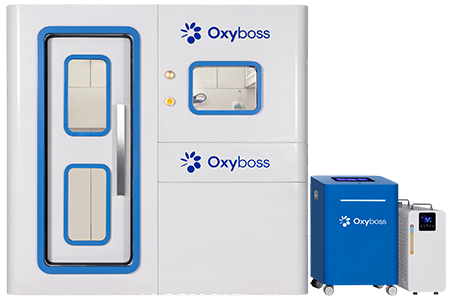

You finished a session twenty minutes ago. You’re standing in the kitchen and the floor feels about half a second behind you. Nothing hurts. Your stomach’s a little unsettled. You just don’t feel like yourself.
Most of the time, this isn’t a warning sign. It’s also not nothing. The difference is usually time — and what you did in the hour before you got in the chamber.
This page is a way to read what your body is telling you after a session, so you know when to shrug it off, when to sit down with a glass of water, and when to pick up the phone.
Who this is for
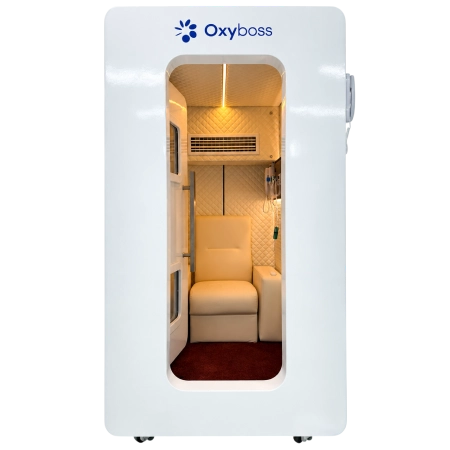
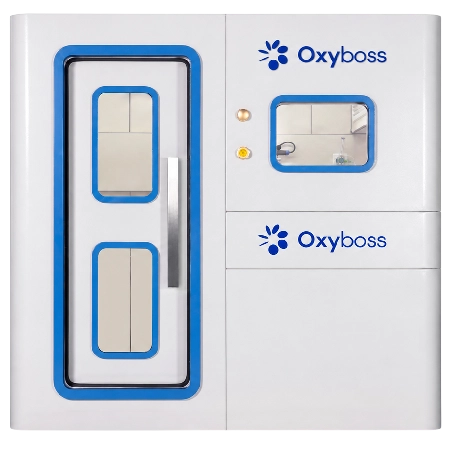
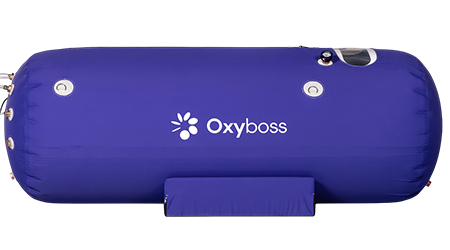
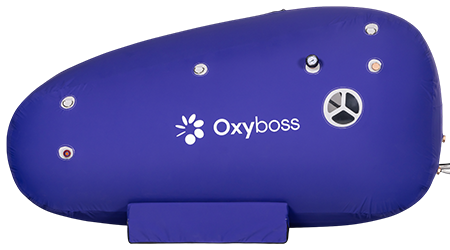
We write for people using home and studio hyperbaric chambers, usually 1.3 to 1.5 ATA. That’s about the pressure you’d feel at the bottom of a 10-foot swimming pool. Not nothing, but not a lot.
If you’re in a clinical program at 2.0 to 2.5 ATA under a prescribing provider, their instructions override everything on this page. Call them first. The physiology at higher pressures is different enough that the rules change, and your care team already knows your history.
Everything below is calibrated to the lower pressure range.
What “off” actually means
“Off” is the word people use when nothing is dramatic enough to call anything else. Not dizzy, not nauseous, not shaky — just a sense that your body is running a half-step behind.
Use whichever word fits you. Lightheaded. Queasy. Fuzzy. Spacey. Floaty. A pull toward a nap. The label isn’t the point. The point is noticing it, writing it down somewhere, and watching what happens in the next few minutes.
Which brings us to the rule to lean on.
The one-minute rule
How a feeling behaves over the first minute tells you more than what the feeling is called.
- Settles. It eases within about 60 seconds of sitting down with a glass of water. You feel normal within the hour. This is the common one, and it rarely needs anything beyond a chair and some fluids.
- Lingers. It doesn’t get worse, but it’s still there after 10 minutes of sitting. You feel vaguely off through dinner. Not an emergency, but a note to write down — and a reason to adjust one thing before your next session.
- Escalates. It gets worse while you’re sitting still. New symptoms stack on. Vision blurs. Nausea becomes vomiting. You feel confused, or something in your chest or ears sharpens into pain. This one is not a wait-and-see. Call someone qualified now.
At 1.3 to 1.5 ATA, the first two buckets cover almost everything people run into after a session. The third is uncommon, but it’s the reason the rule exists.

The timeline
Time filters more than any symptom checklist can.
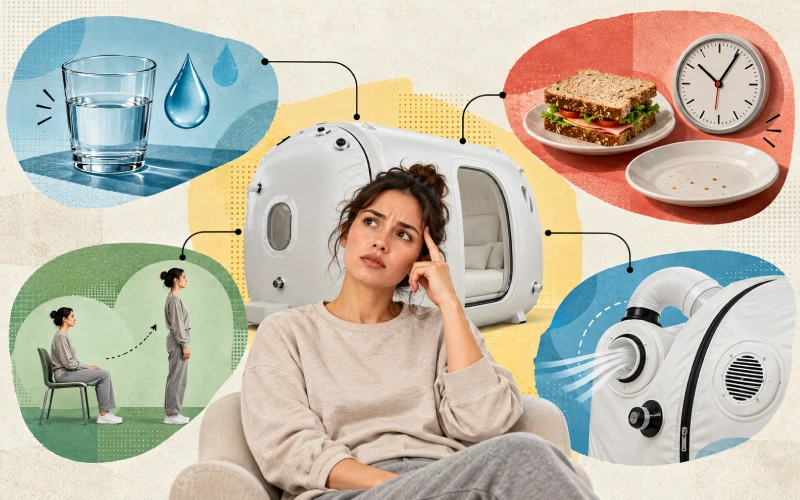
0 to 30 minutes. Light-headed on the way out of the chamber is common. The reason usually isn’t the oxygen itself — it’s standing up. Your blood pressure doesn’t drop while you’re inside. If anything, it ticks up a little, on the order of +7/+4 mmHg during a session. The drop happens in the four seconds after you stand, when your body expects compensation it was briefly spared from giving. Sit for a beat before you rise. Drink. If you’re still fine at 30 minutes, you’re almost certainly past this part.
Ears that feel full or need a yawn are also normal in this window. They should clear within an hour. Pain in an ear is a different story (we’ll get to that).
30 minutes to 6 hours. This is where “I was fine right after” can turn into “but now I feel strange.” The usual suspects: you didn’t eat enough before the session and your blood sugar drifted down; you were a little dehydrated and the warmth of the chamber pushed you further; or you had coffee, no water, and stood up too fast for your plumbing to catch.
A sandwich, a glass of water, and 20 minutes on the couch handle most of this. If you keep a log, this is the window to log.
The next day. You might feel tired. You might feel bright. Both get reported, and neither one tells you much by itself. One thing to be clear about: feeling wiped out the day after is not evidence that the session is doing more. It’s just how some bodies respond to any new stimulus — a workout, a sauna, a long flight. If the fatigue is still there a week in, that’s a different question.
Ears that still feel full the next morning deserve attention. So do any vision changes that didn’t exist before you started. These are rare at this pressure range, but they’re the ones worth naming.
A week or more. If something hasn’t resolved after a week of normal days, it stops being a session reaction and starts being its own thing. See a clinician for it the way you would for anything else that has lasted a week — not because the chamber caused it, but because a week is long.
Why your body does this at 1.3 to 1.5 ATA
Here’s the part that lets you actually read what’s happening instead of guessing.
The pressure change is small. About 0.3 extra atmospheres. For context, that’s the difference between standing on a beach and standing at the bottom of a 10-foot pool. Interesting physiologically, but not large enough to be the main cause of most of the sensations people describe. So what is?
Your blood vessels narrow slightly while you’re in there. Oxygen is a mild vasoconstrictor, and your body also shifts fluid around in response to the pressure. Blood pressure runs a little high during the session (that +7/+4 figure), then re-settles when you come out. The settle is where “stood up fast and the room moved” lives. If you’ve ever gotten up quickly from a hot bath, it’s the same mechanism.
You lose more water than you realize. The chamber is warm. You breathe a little differently. Even an hour-long session can leave you measurably drier than when you started. Dry plus narrower vessels plus standing up fast is the recipe for the kitchen-floor-feels-slow sensation.
Blood sugar shifts. Sessions nudge blood glucose down. In some clinical populations the drop reaches up to 50 mg/dL. In healthy adults it’s usually smaller, but if you went in on an empty stomach or skipped lunch, that smaller drop still lands somewhere you’ll feel it. If you’re already managing glucose with medication, this is a conversation to have with your clinician before you start a program, not after.
Your ears and sinuses are doing a lot of small work. Even gentle pressure change asks the eustachian tube to equalize dozens of times a session. If you’re the slightest bit congested, that work backs up. Ears that feel full for an hour afterward are usually this — a tube that didn’t quite catch up, not damage.
A few people get a brief spinning sensation. It’s called alternobaric vertigo, and it happens when one ear equalizes faster than the other during the descent portion. It usually passes within a minute or two of either side catching up. If this is you, slower descents help.
Air quality inside the chamber matters. A chamber with inadequate ventilation can let exhaled carbon dioxide build over a longer session. CO₂ at even modestly elevated levels causes headache, drowsiness, and the general sense of being “off” — the same word that brings people to pages like this one. We won’t give you a specific CO₂ number, because reliable published numbers for home-chamber drift don’t exist yet. But if the “off” feeling tracks consistently with longer sessions in the same chamber, this is worth looking at and raising with whoever supplied it.
And a little bit of the headspace. Lying in a sealed chamber for an hour is a specific experience. Some people get a residual tight-chested or antsy feeling afterward that isn’t really physical. It usually eases once you’ve moved around for a few minutes. If it builds instead of easing — or if it’s keeping you from using the chamber at all — that’s worth bringing up with someone, because there are reasonable ways to work with it.
What’s rare but worth naming
Not everything on this list is likely at 1.3 to 1.5 ATA. These are included so you don’t have to search for them separately.
- Temporary vision changes. Longer programs at higher pressures have been associated with mild, reversible near-sightedness that resolves on its own over weeks to a few months after programs end. At 1.3 to 1.5 ATA, this is uncommon. If your vision has shifted, note it, mention it at your next eye appointment, and don’t assume anything.
- Ear fullness that doesn’t clear. An hour, fine. The next day, note it. A week, see someone. The eustachian tube is small and particular; it’s worth not ignoring.
- Shortness of breath that’s new. Rare at this pressure range. Not something to wait on if it shows up.
- Chest pain, visual tunneling, confusion, or a twitch at the corner of the mouth during or right after a session. These are higher-pressure concerns and rarely appear in this range, but they’re worth knowing by name so you don’t miss them if they ever do.
Before your next session
Not pre-session rituals. Just a short list of things that make the next session boringly uneventful.
- Eat something with protein and complex carbs about an hour before. Not a big meal. Enough that you aren’t running on fumes.
- Drink water in the two hours before, less in the half-hour before.
- Skip carbonated drinks for a couple of hours either side. The fizz plus pressure change leaves some people unexpectedly bloated.
- No alcohol in the 12 hours before. It dries you out and dulls the signals you’re trying to read.
- If your ears are even slightly congested, consider postponing. Equalizing on a bad day is miserable and the session isn’t going anywhere.
- Keep a short log. Date, how long you were in, how you felt at 15 minutes, at an hour, the next morning. Three sessions in you’ll see your own pattern. Your pattern is more useful than any list.
A few things worth not doing
Don’t drive yourself home from the first few sessions until you know how your body responds. If you feel floaty after, it’s the kind of floaty that makes you a worse driver without feeling dangerous. That’s the dangerous kind.
Don’t try to push through escalating symptoms because the session is paid for or the day is inconvenient to redo. The one-minute rule exists exactly for this case.
Don’t assume feeling wiped out the next day means it’s “working.” It might just mean you were dehydrated. Log it as data, not as a sign.
When to actually call someone
Not us. We make chambers; we don’t make diagnoses. Call a clinician if:
- Symptoms are escalating while you’re sitting still 10 minutes after a session.
- Chest pain, difficulty breathing, confusion, or sudden vision loss appears at any point.
- Ear pain or fullness hasn’t resolved after about a week.
- You’ve been feeling off for more than a few days running, and nothing you’ve tried has changed it.
- You have a condition — diabetes, a heart rhythm issue, an ear condition, a seizure history — and you’re trying to decide whether to continue a program. That decision belongs with your doctor, not a search engine.
If you have a prescribing provider for your chamber, they go first. If you don’t, your primary care clinician is a reasonable place to start.
FAQ
Can I drive home right after a session?
If this is one of your first few sessions, don’t. Have someone with you or wait 30 minutes before you get behind the wheel. The lightheaded feeling that comes with standing up fast can also come with turning your head to check a blind spot. Once you have a few sessions logged and know you don’t react that way, driving is reasonable.
I felt fine coming out, then got dizzy an hour later. Did I do something wrong?
Almost certainly not. Delayed lightheadedness usually tracks to food timing, hydration, or standing up at the wrong moment — not to the chamber itself. The chamber’s small blood-pressure bump is gone by then. What’s catching up is the stuff you did or didn’t do in the hour before.
Should I skip the next session if I felt off this time?
Depends on which bucket. If it settled within an hour, probably not. If it lingered, change one thing — eat more beforehand, drink more water, sit for a minute before standing — and try again. If it escalated, don’t schedule another one until you’ve talked to someone qualified.
Is feeling tired the next day a good sign?
It’s a neutral sign. There is no evidence that post-session fatigue correlates with anything useful. If you’re consistently flattened for a full day after, you’re probably dehydrating in the chamber, running sessions longer than your current baseline, or both.
Each session leaves me a little off. Is my chamber broken?
Probably not broken, but worth looking at. Three things to check: how warm it gets during a session, how long you’re staying in, and whether the ventilation setup is working the way the manual describes. If “a little off” is mild and settles quickly, it’s a comfort issue to tune. If it’s getting worse session over session, stop using it until someone has checked it over.
I take medication for blood sugar. Should I be doing anything differently?
Yes. This is a conversation with your prescribing clinician before you start a program, not after. The blood-sugar effect of a session is real enough to matter if you’re already managing glucose closely.
Does the “off” feeling get smaller with more sessions?
For most people, yes. The body gets used to the pattern — the pressure change, the warmth, the stillness, the quick standing up at the end. If a feeling that was fading suddenly comes back worse, treat it as new information, not as a return to normal.
Sources we lean on
For readers who want to go deeper into the physiology or the safety side:
- Undersea and Hyperbaric Medical Society — the professional body for the field, with publicly available indications and safety summaries. uhms.org
- U.S. Food and Drug Administration — consumer-facing explanation of what hyperbaric oxygen is cleared for and what it isn’t. FDA: Hyperbaric Oxygen Therapy — Get the Facts
- Mayo Clinic — general physiology and risk overview. mayoclinic.org — Hyperbaric oxygen therapy
- Cleveland Clinic — patient-level overview, including common sensations. my.clevelandclinic.org — Hyperbaric Oxygen Therapy
- National Library of Medicine (StatPearls / NCBI Bookshelf) — peer-reviewed reference entries on hyperbaric physiology, middle-ear barotrauma, and central nervous system oxygen effects. ncbi.nlm.nih.gov/books
- Divers Alert Network (DAN) — the clearest public writing on ear equalization and alternobaric vertigo. Written for recreational divers, directly applicable to low-pressure chamber users. dan.org
- Frontiers in Physiology — open-access research on hyperoxia and vascular/hemodynamic response. frontiersin.org/journals/physiology
- PubMed Central (NIH) — the open full-text archive for the primary literature behind most of the numbers quoted above. ncbi.nlm.nih.gov/pmc
If something you read on this page conflicts with something your clinician told you, go with your clinician. They know your body. We know the chamber.