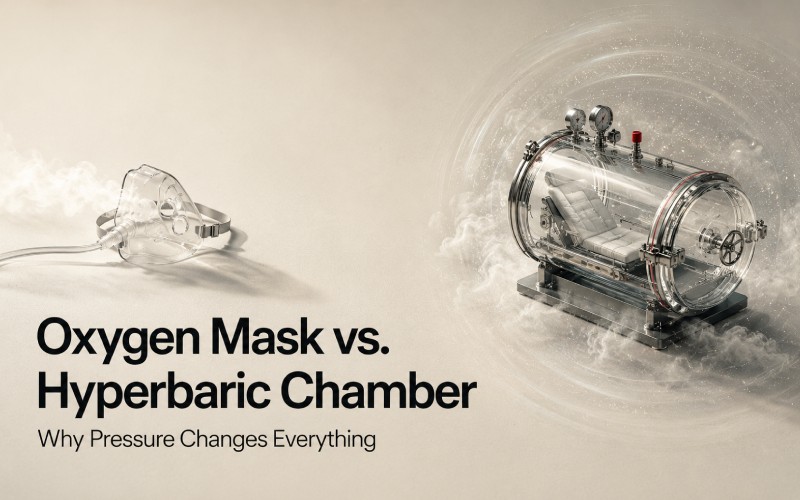
Most people lump these two together. Both involve oxygen. Both involve breathing. And both come up when someone’s looking into recovery, wellness, or performance support. But mechanically, they have almost nothing in common. Comparing them is a bit like comparing a submarine to a snorkel. Same ocean. Entirely different physics.
One important note up front: clinical hyperbaric oxygen therapy (HBOT) and non-medical mild hyperbaric setups are not the same thing, even when they share some underlying physics. Pressure level, oxygen source, supervision, and intended use all matter.
What follows isn’t about what each device is. It’s about why pressure changes everything about oxygen transport — where the math gets real, where each approach actually runs out of road, and what that means for anyone trying to make a decision between them.
How Pressure Changes Oxygen Absorption: The Physics Gap
At sea level, you breathe air at 1 ATA. Roughly 21% of that air is oxygen. Hemoglobin picks up almost all of it — saturation in healthy lungs sits around 97–99%. That number is already nearly maxed out.
So here’s the problem: putting a mask on and raising the oxygen percentage does almost nothing to hemoglobin loading, because hemoglobin is already full. Going from 21% to 100% oxygen at normal pressure nudges hemoglobin from ~97% to ~100%. That’s the ceiling.
The real variable is plasma.
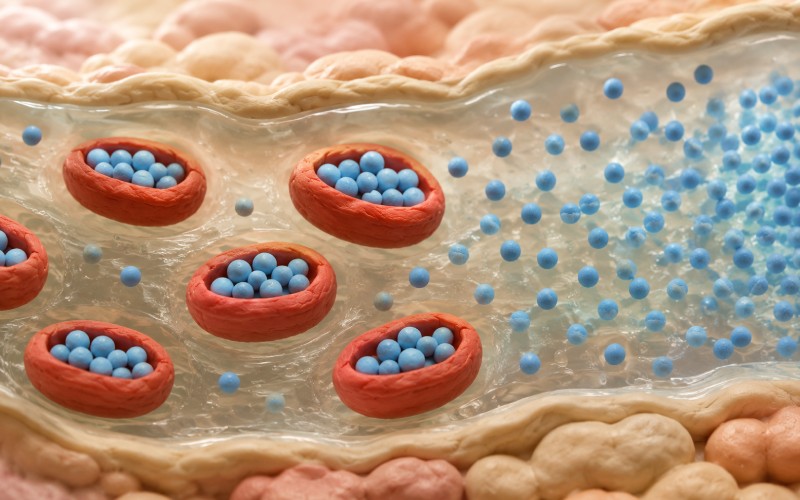
Under normal conditions, plasma carries roughly 0.3 mL of dissolved oxygen per deciliter. Nearly negligible compared to hemoglobin’s ~20 mL/dL capacity. But plasma dissolved oxygen follows Henry’s Law — it scales linearly with partial pressure. Double the pressure, double the dissolved oxygen.
At 3 ATA breathing 100% oxygen, plasma alone carries roughly 6 mL/dL in a clinical hyperbaric setting. At 1 ATA with a mask? About 2 mL/dL at best, even with 100% O2 under ideal conditions. That gap matters. Tissues at rest need approximately 5–6 mL/dL. A pressurized environment can — in theory — supply that entirely through plasma, bypassing red blood cell transport altogether.
Put another way: a mask tops off what’s already nearly full. A chamber opens a second delivery channel that barely exists under normal conditions.
What Each Device Actually Delivers: A Direct Comparison
Forget marketing language. Look at the numbers:
| Parameter | Oxygen Mask (1 ATA) | Hyperbaric Chamber (2 ATA) | Hyperbaric Chamber (3 ATA) |
| Ambient Pressure | 1 ATA (sea level) | 2 ATA | 3 ATA |
| Typical FiO2 Delivered | 24–90% (device-dependent) | Up to 100% | Up to 100% |
| Hemoglobin Saturation | ~97–100% | ~100% | ~100% |
| Plasma Dissolved O2 | 0.3–2.3 mL/dL | ~4.5–4.8 mL/dL | ~5.5–6.0 mL/dL |
| Approximate Tissue PO2 | ~55–100 mmHg | often ~200–400+ mmHg | often ~300–500+ mmHg |
| Oxygen Diffusion Distance | ~64 µm (baseline) | ~2–3x baseline | ~3–4x baseline |
| Session Duration | Minutes to continuous | 60–90 min | 60–120 min |
| Typical Protocol Length | Ongoing / as needed | 20–40 sessions | 20–40 sessions |
| Portability | High | Low to none | None |
| Approximate Cost Per Use | Low | Moderate to high | High |
A nasal cannula at 2 L/min gets you around 28% FiO2. A non-rebreather at 15 L/min reaches maybe 60–90%, depending on fit and flow. Those numbers are real but they’re all happening at 1 ATA. The dissolved plasma oxygen barely moves.
Inside a chamber at 2 ATA with concentrated oxygen, arterial PO2 can rise dramatically — in some setups to around 1,400 mmHg. Normal is around 90 mmHg. That gradient is what drives oxygen into tissues that wouldn’t otherwise see it.
Why Pressure Matters More Than Concentration
This is the part that most comparisons skip over.
Oxygen concentration and oxygen pressure are not the same thing. You can breathe 100% oxygen at sea level and your plasma dissolved oxygen will go up modestly. You can breathe regular air at 1.3 ATA in a soft-shell chamber and the effective oxygen is only equivalent to about 27% at sea level — not radically different from wearing a simple mask.
The crossover point where pressurized delivery starts pulling meaningfully ahead of mask-based delivery? Somewhere above 1.5 ATA with high-purity oxygen. At 2.0 ATA, the math becomes very difficult for any mask-based system to replicate.
A mask operates at atmospheric pressure, so it can only increase the numerator in the partial pressure equation — the fraction of inspired oxygen (FiO2):
PO2 = FiO2 x Patm
A chamber increases both variables simultaneously. And since hemoglobin is already saturated, the only meaningful downstream effect comes from plasma loading, which is pressure-dependent.
What Masks Do Well (and Where They Stop)
Masks aren’t failing at their job. They’re doing exactly what they’re designed to do — raise inhaled oxygen percentage when someone’s lungs aren’t exchanging gas well enough at room air. They work brilliantly in that narrow lane.
A non-rebreather at 15 L/min can bring blood oxygen saturation from below-normal levels back to an acceptable range within minutes. A nasal cannula at 2 L/min can maintain stable oxygen levels at home for years. There’s nothing wrong with either use case.
But a mask cannot:
- Push oxygen into plasma at multiples of normal concentration
- Meaningfully increase the diffusion distance oxygen travels from capillaries into surrounding tissues
- Create the same tissue oxygen gradients seen under higher-pressure oxygen exposure
- Reduce the volume of gas bubbles in fluids through pressure itself (Boyle’s Law)
The reservoir bag on a non-rebreather holds near-100% oxygen. But the moment that gas enters your lungs at 1 ATA, it’s constrained by the same physics as any other breath at sea level. Hemoglobin that was already nearly full gets topped off. The plasma barely notices.
What Chambers Do Well (and What They Cost You)
Pressurized environments play a different game entirely. By increasing ambient pressure, chambers exploit Boyle’s Law (gas volume decreases), Henry’s Law (gas solubility increases), and Dalton’s Law (partial pressures of component gases increase proportionally) simultaneously.
The practical effects:
- Plasma becomes a meaningful oxygen carrier. At 3 ATA, plasma can independently sustain tissue oxygen needs in theory. More broadly, pressure increases dissolved oxygen well beyond what mask-based delivery can achieve at sea level.
- Oxygen diffusion distance extends. Under normal conditions, oxygen diffuses roughly 64 microns from capillary to tissue. Under hyperbaric conditions, this distance can increase substantially — teaching models often describe it as roughly tripling or quadrupling.
- Gas volumes shrink. Direct application of Boyle’s Law. This is one of the clearest examples of why a chamber is not interchangeable with a mask: pressure changes the physical behavior of gases in a way a mask cannot.
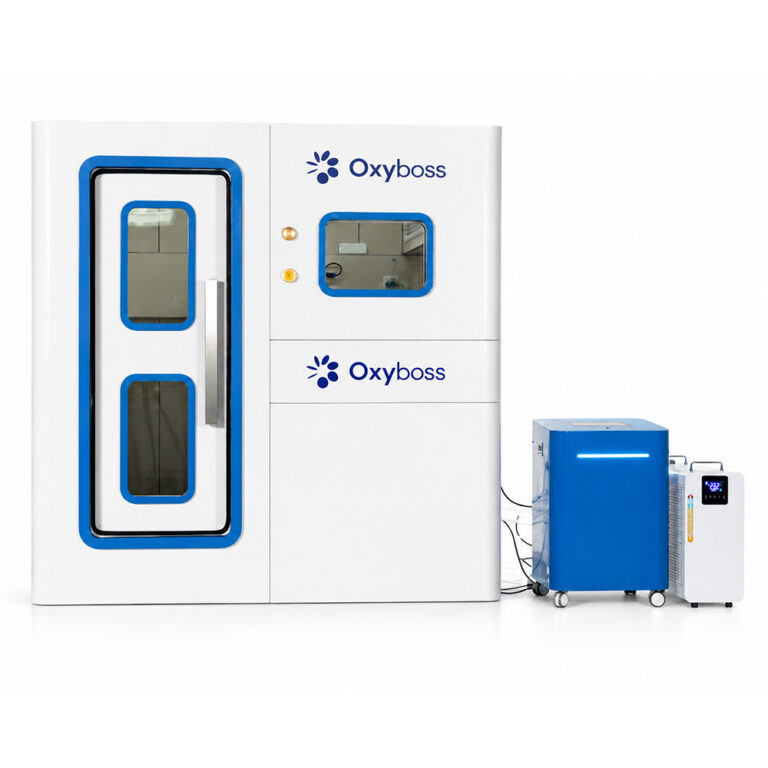
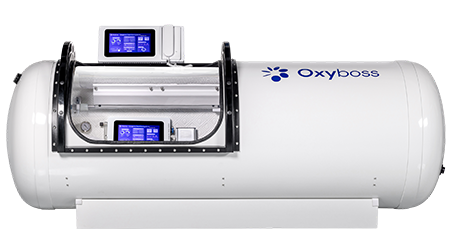
But chambers are not portable. They’re expensive — anywhere from a few hundred to over a thousand dollars per session in a facility, or $8,000 to well over $50,000 for a home unit depending on type. Sessions take 60 to 120 minutes. You usually need 20 to 40 of them. The time commitment is real.
There are also constraints. Ear and sinus discomfort is the most common side effect — the sensation is similar to rapid altitude changes and can be managed with equalization techniques, but it’s uncomfortable. Temporary vision changes happen in extended protocols. Oxygen toxicity (central nervous system type) is a rare but real risk at higher oxygen pressures during prolonged exposure, which is why clinical-style sessions use established protocols and supervision. And anything containing a spark or accelerant becomes a fire risk in a high-oxygen pressurized environment.
The Soft-Shell Question
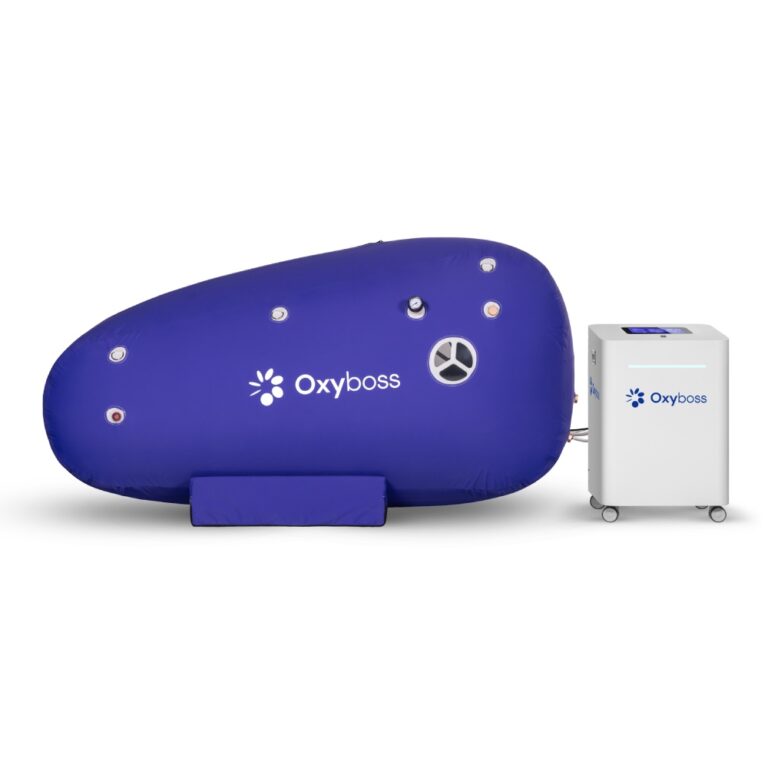
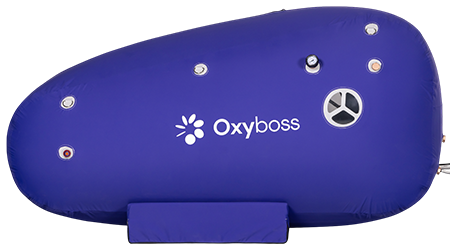
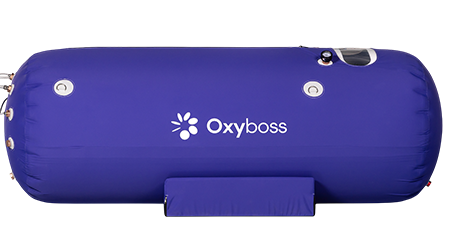
Worth addressing directly: many consumer-facing chambers are soft-shell units rated at 1.3 ATA and pressurized with ambient air. The math on these deserves scrutiny.
At 1.3 ATA breathing room air (21% oxygen):
PO2 = 0.21 x 760 x 1.3 = 208 mmHg
That’s equivalent to breathing about 27% oxygen at sea level. A simple mask at 6 L/min delivers roughly 28–44% FiO2. So the partial pressure gain from a 1.3 ATA air-only chamber is modest — sometimes less than what you’d get from a standard mask.
Add a concentrator delivering 90%+ oxygen inside a 1.3 ATA chamber, and the picture changes considerably:
PO2 = 0.90 x 760 x 1.3 = 889 mmHg
That’s meaningfully higher than anything a mask can achieve at sea level, where even 100% oxygen tops out at 760 mmHg. But it’s still well below the 1,500+ mmHg achievable in a hard-shell 2.0 ATA unit. Whether that intermediate zone produces measurably different outcomes depends on what you’re trying to accomplish and remains an area of active investigation.
The takeaway for anyone evaluating a home setup: the chamber alone at 1.3 ATA with air provides a limited oxygen advantage. The concentrator is what changes the equation. Without one, the physics don’t favor the chamber over a mask for oxygen delivery purposes specifically — though some people report subjective benefits that may relate to pressure-related effects beyond oxygen loading alone, an area of emerging research.
When One Makes Sense Over the Other
This isn’t a “one is always better” situation. It’s a use-case question.
A mask makes sense when:
- Rapid correction of low blood oxygen saturation is the immediate goal
- Ongoing supplementation is needed at home over months or years
- Portability and simplicity matter — you need to move, work, or sleep while receiving oxygen
- The underlying issue is primarily a gas exchange problem in the lungs, not a downstream delivery problem in the tissues
- Budget is constrained and the oxygen demand is routine
A chamber makes sense when:
- The goal is exposure to elevated pressure and higher dissolved oxygen levels than mask-based delivery can provide
- Recovery, performance support, or wellness-oriented protocols exploring higher-than-normal oxygen exposure are the focus, while recognizing evidence and expected outcomes vary by context
- Someone is willing to commit to a structured series of sessions over weeks
- Pressure-specific mechanisms (reduced gas volume, enhanced diffusion distance, plasma loading) are relevant to the rationale
- The distinction between clinical HBOT and non-medical hyperbaric use is understood from the start
They are not interchangeable. A mask cannot do what pressure does. A chamber cannot match the simplicity and accessibility of a mask for everyday oxygen supplementation.

Common Misconceptions, Corrected
“Higher oxygen percentage = better results.” Not past a point. Hemoglobin saturates around 97–100% even on room air in healthy lungs. More oxygen percentage without more pressure mostly goes unused by hemoglobin. The real leverage is in plasma, and plasma responds to pressure, not just concentration.
“A hyperbaric chamber is just an expensive oxygen mask.” No. The delivery mechanism is fundamentally different. A mask increases the fraction of oxygen you inhale. A chamber increases the total pressure your body is immersed in. One modifies your breathing gas. The other modifies your physical environment. They share almost no functional overlap beyond the fact that both involve oxygen.
“Soft-shell chambers at 1.3 ATA with room air provide significant oxygenation benefits.” The math shows this is equivalent to about 27% oxygen at sea level. That’s marginally above normal and achievable with a low-flow nasal cannula. Adding a concentrator inside the chamber changes this calculation substantially, but the chamber alone at 1.3 ATA with air? Limited oxygen advantage. Some people pursue these setups for other pressure-related effects, which is a separate (and less settled) conversation.
“You can replicate chamber results by breathing pure oxygen from a mask.” At 1 ATA, 100% oxygen gives you about 760 mmHg partial pressure and roughly 2.3 mL/dL dissolved plasma oxygen. At 2 ATA, 100% oxygen gives you 1,520 mmHg and roughly 4.7 mL/dL. The diffusion gradient, tissue penetration depth, and plasma loading are all substantially different. A mask at sea level cannot close that gap through any means.
FAQ
Q: Can I use a hyperbaric chamber at home? Yes. Soft-shell units rated at 1.3–1.5 ATA are available for home use. Hard-shell chambers reaching 2.0 ATA and above also exist for home installation but are significantly more expensive, heavier, and require more space and planning. Clinical HBOT and consumer home setups are not the same thing, even when they share some of the same physics. Whether the pressure level and oxygen source in a given home unit produce the effects you’re seeking depends on your goals. Work with someone knowledgeable in hyperbaric protocols before buying.
Q: What types of oxygen masks exist, and how much oxygen do they deliver? Nasal cannulas deliver about 24–44% FiO2 at 1–6 L/min. Simple masks deliver about 28–50% at 5–10 L/min. Non-rebreather masks deliver about 60–90% at 10–15 L/min depending on fit and flow. High-flow nasal cannulas can deliver up to 100% at flows up to 60 L/min. All operate at 1 ATA. None of them increase ambient pressure.
Q: What does ATA mean? Atmospheres Absolute — the total pressure including atmospheric pressure. 1 ATA is normal sea-level pressure (760 mmHg, or 14.7 psi). 2 ATA is equivalent to the pressure at about 33 feet (10 meters) underwater. Every additional ATA increases the partial pressure of all gases proportionally.
Q: How long is a typical session in a chamber? Many sessions run 60 to 90 minutes at pressure, not counting compression and decompression time (which adds 10–15 minutes on each end). Protocols often call for 20 to 40 sessions, depending on the purpose and setting. Higher-pressure protocols (2.0+ ATA) sometimes use shorter sessions of 45–60 minutes.
Q: Are there risks to either approach? Masks at appropriate flow rates carry low risk for most people. The primary concerns are skin irritation, nasal dryness, and — in specific populations — the risk of suppressing respiratory drive with excessive oxygen. Chambers carry risks of ear and sinus barotrauma (the most common side effect), temporary myopia with extended use, and — rarely — oxygen toxicity at higher pressures. Fire risk exists in any high-oxygen pressurized environment, which is why strict protocols around materials and ignition sources are standard.
Q: Is one objectively better than the other? No. They solve different problems. Asking which is better is like asking whether a screwdriver is better than a wrench. The answer depends entirely on whether you’re dealing with a screw or a bolt.
Q: Does insurance cover either option? Mask-based oxygen supplementation is widely covered when prescribed for qualifying conditions. Chamber sessions are covered for a specific list of approved indications, but coverage is far less universal and varies significantly by provider, plan, and country. Off-label or wellness use of chambers is typically out-of-pocket.
Q: What about using a chamber and a mask together? Inside multiplace chambers, occupants often breathe concentrated oxygen through a mask or hood while the chamber itself is pressurized with air. The mask delivers the high FiO2; the chamber provides the elevated ATA. It’s both doing different jobs simultaneously. Monoplace chambers typically pressurize with 100% oxygen directly, eliminating the need for a separate mask inside.
Q: How much does a home hyperbaric chamber cost? Soft-shell chambers (1.3–1.5 ATA) typically range from $8,000 to $20,000. Hard-shell units (1.5–2.0+ ATA) range from $30,000 to well over $100,000 depending on specifications. Add an oxygen concentrator ($800–$2,000) if not included. Running costs are modest — electricity for a soft-shell unit runs roughly $0.50–$1.50 per session.
The information in this article is for general educational purposes about oxygen delivery mechanisms and physics. It does not constitute medical advice or a claim about outcomes in any specific health, recovery, or wellness situation. Clinical HBOT and non-medical hyperbaric use are not the same thing. Hyperbaric chambers operate under pressure and may involve elevated oxygen concentrations; always work with a qualified professional experienced in hyperbaric protocols before purchasing equipment or beginning any oxygen-related program. Consult your own advisors regarding your individual circumstances.