Can a hyperbaric chamber help with healthy aging?
Yes, possibly. But only when the chamber can deliver the same exposure block over and over without drift, shortcuts, or loose operation. Human studies in older adults that are often cited in this area did not use casual, once-in-a-while sessions; they used dense multi-week blocks, commonly around 60 sessions at 2 ATA for about 90 minutes with brief air breaks.
The short answer
A hyperbaric chamber may support healthy aging.
Not because oxygen is automatically useful. Because pressure changes how oxygen moves, and repeated oxygen swings seem to create a more interesting biological signal than flat exposure alone. Under hyperbaric conditions, more oxygen dissolves into the liquid side of circulation, and structured intermittent exposure has been linked in the literature to hypoxia-like signaling, including HIF activity and downstream angiogenesis-related responses.
That is the part people skip. The chamber is not the whole story. The delivered protocol is the story.
Where the useful signal probably comes from
At standard atmospheric conditions, oxygen transport leans heavily on red blood cells. Under pressure, that balance shifts. More oxygen dissolves directly into plasma, which changes diffusion conditions and expands where oxygen can move efficiently. That is basic chamber physics. It is also why two setups that both call themselves “hyperbaric” can behave very differently in practice.
Then there is the second layer.
A steady oxygen exposure is one signal. A structured oxygen exposure with air breaks is another. The body reacts not only to the absolute level, but also to the swing. In current research language, repeated intermittent hyperoxia under pressure can produce some of the same adaptive signaling usually associated with lower-oxygen states. HIF is often part of that discussion. So is angiogenesis. That does not mean any fixed outcome is guaranteed. It does mean session design matters more than most marketing copy admits.
A lot of weak articles stop at “oxygen helps.” That is too thin. The stronger view is that pressure plus controlled fluctuation may be what makes this category relevant to healthy aging at all.
What the research window actually looks like
The stronger healthy-aging data points do not come from novelty use. They come from structured repetition.
In one randomized trial in sedentary older adults, the exposure block used 60 sessions over 12 weeks, breathing 100% oxygen at 2 ATA for 90 minutes with 5-minute air breaks every 20 minutes. That study reported gains in VO2max-related measures and cardiac perfusion. The same research group also points to earlier work in older adults showing improved cerebral blood flow and evidence of angiogenesis in skin biopsies after similar intermittent hyperbaric protocols. Review articles in the area describe the broader field as promising, but still developing rather than settled.
That pattern matters more than the headline.
Healthy aging, in this category, does not look like a one-session event. It looks like repeated exposure with discipline.
Why the chamber matters more than the claim
We build pressure systems. So we tend to trust variables, not adjectives.
When someone says a chamber supports healthy aging, we do not start by asking whether the shell looks premium. We ask:
- Can it reach and hold working pressure cleanly?
- Can it deliver a stable oxygen phase for the full block?
- Are air breaks actually controlled?
- Does cabin heat stay manageable over long sessions?
- Can the system repeat all of that on week eight, not just day one?
Because this category lives or dies on consistency.
A chamber can look expensive and still perform loosely. Pressure creep. Weak seals. Inconsistent timing. Hot cabin. Shortened sessions. Bad logging. Any one of those can turn a serious protocol into a diluted one.
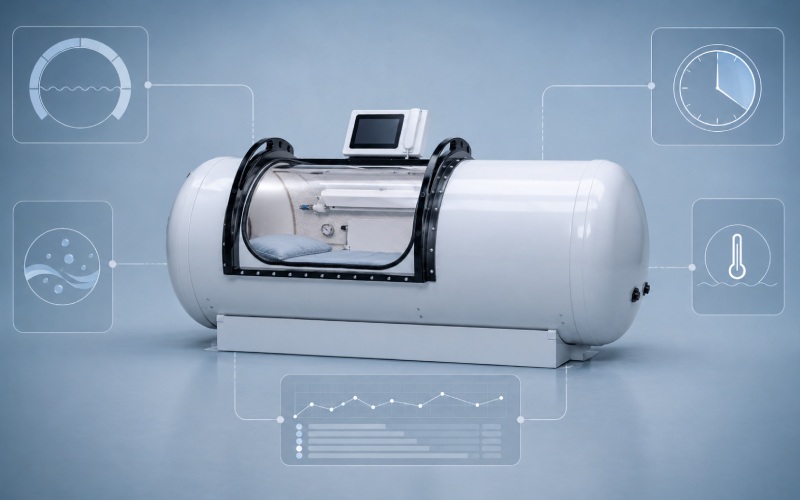
The chamber variables that actually matter
| Variable | What we check in real operation | Why it matters for healthy aging use | What usually goes wrong |
| Working pressure | Whether the chamber reaches and holds the target level without wandering | Pressure changes oxygen solubility and shapes the exposure signal | Claimed pressure is fine; delivered pressure drifts |
| Oxygen phase | Whether oxygen delivery stays clean through the full block | A weak oxygen phase weakens the whole protocol | Leaks, loose fittings, unstable flow |
| Air breaks | Whether timing is fixed and repeatable | Intermittent exposure appears to be part of the mechanism, not decoration | Breaks are skipped or shortened |
| Session length | Whether full-duration sessions are realistic in day-to-day use | Research in this space leans on longer structured blocks | Heat, noise, discomfort, rushed operation |
| Session count | Whether the setup can support frequent weekly repetition | This is a cumulative use case, not a novelty use case | Strong start, weak follow-through |
| Compression profile | Whether pressure ramps are smooth and controlled | Better control usually means better adherence and cleaner repeatability | Abrupt ramps, inconsistent handling |
| Logging | Whether sessions are documented accurately | You cannot verify repeatability if nothing is recorded | No useful records, no way to spot drift |
Simple table. Not a small issue.
What a realistic claim looks like
A realistic claim is not “this reverses aging.”
A more honest line is this:
A well-run hyperbaric chamber program may support healthy aging by creating repeatable pressure-and-oxygen exposure that may improve oxygen delivery patterns, support microvascular adaptation, and align with some of the functional and biological changes reported in current human studies.
Still cautious. Good. That is where this topic belongs.
Why “more pressure” is not the answer by itself
People like simple hierarchies. Higher pressure must be better. Longer must be better. More oxygen must be better.
Not necessarily.
Protocol quality depends on structure: pressure, oxygen percentage, hold time, air breaks, total session count, and the gap between sessions. Push one variable hard and ignore the others, and the signal gets messy.
That is why hyperbaric oxygen therapy for healthy aging is partly a biology question and very much an engineering question. The chamber has to deliver the protocol it claims to deliver. Every time.
What buyers should ask before they take the claim seriously
Before trusting any healthy-aging pitch around a hyperbaric chamber, ask a few questions.
Can the chamber hold target pressure without visible drift?
If the answer is vague, keep going carefully.
How is oxygen delivery verified?
Not promised. Verified.
Are air breaks part of the protocol?
And if they are, how are they controlled?
Can the chamber handle repeated weekly operation for months?
One clean demo session proves very little.
What gets logged?
Pressure, session length, interruptions, oxygen phase, ramp profile. If none of that is tracked, repeatability is mostly guesswork.
What happens to cabin heat over longer sessions?
Compression adds heat. Long blocks expose weak thermal control quickly.
The boundary line people should not ignore
Healthy aging is still a research-driven use case, not a settled approved use category. Regulators and major medical centers continue to distinguish established indications from broader claims that have not been cleared or approved. At the same time, HBOT safety is usually described as good when properly delivered for approved uses, but known risks still include ear and sinus pain, eardrum injury, temporary vision changes, rare lung complications, and fire risk in oxygen-rich environments. That alone is enough reason to care about equipment quality, operator discipline, maintenance, and safety procedures.
That paragraph is not there to be dramatic. It is there because a chamber is a pressure-and-oxygen system. Those systems do not reward sloppy handling.

A factory-floor view of the category
From our side of the industry, the biggest mistake is confusing chamber ownership with protocol quality.
Owning a chamber is not the same as delivering a meaningful exposure. Reaching pressure is not the same as running a good session. Running a session is not the same as running sixty good ones.
Healthy aging support, if it is there, sits on control.
Pressure control. Oxygen control. Timing control. Thermal control. Repeatability.
So yes, this is partly about biology. But the truth of it usually shows up in hardware behavior and operating discipline first.
Final take
Can hyperbaric oxygen therapy help with healthy aging?
It may.
But the better answer is narrower: a well-run hyperbaric chamber program may help. The useful signal seems to depend on pressure, oxygen delivery, intermittent structure, and repetition over time. The field has promising human data, but it is not finished, and it is not a license for broad, careless claims.
So the real question is not:
Does the chamber work?
It is:
Can this chamber deliver the same clean exposure block fifty or sixty times without drift, shortcuts, or breakdown?
That question gets closer to the truth.
FAQ
Is one hyperbaric chamber session enough for healthy aging?
Usually no. The stronger healthy-aging protocols in human studies rely on repeated exposure over multiple weeks, not isolated sessions.
Why do air breaks matter?
Because intermittent exposure appears to generate a different signal than flat oxygen exposure. Research on the hyperoxic-hypoxic paradox links these swings to HIF-related responses and vascular adaptation.
Does higher pressure always mean better results?
No. Pressure matters, but structure matters more. Session length, oxygen phase, air-break timing, and repeat count all shape the final exposure.
What is the biggest mistake buyers make?
They judge the chamber by appearance and claims instead of pressure stability, oxygen consistency, thermal behavior, and repeat-session reliability.
Is healthy aging an established approved use?
Not as a standard approved indication. It is better understood as an active research area rather than a settled use category.
What risks should a buyer keep in mind?
Known risks include ear and sinus pressure problems, eardrum injury, temporary vision changes, rare lung complications, and fire risk in oxygen-rich settings.
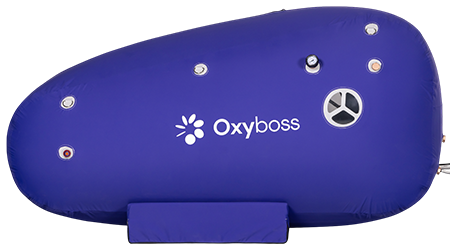
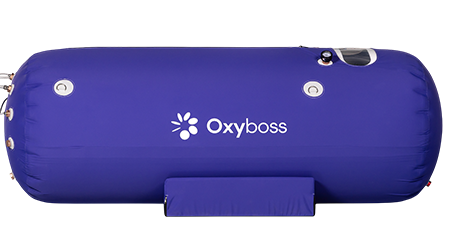
Can a soft chamber and a rigid chamber be treated as the same thing?
Not automatically. The label tells you less than the delivered pressure, oxygen handling, control quality, and long-run consistency.
What should a manufacturer be able to explain clearly?
Working pressure, oxygen-delivery method, session structure, air-break handling, ramp profile, temperature control, safety process, and how repeatability is verified over time.