Disclaimer: The information in this article is for educational and informational purposes only and should not be taken as medical advice. Mild hyperbaric chambers are not intended to diagnose, treat, cure, or prevent any disease. Standard hyperbaric oxygen therapy (HBOT) is a clinical modality that should be administered in an appropriate setting under qualified supervision. Consult a qualified professional before beginning any pressurized oxygen protocol.
Let’s get into what actually separates mild hyperbaric chambers from standard hyperbaric oxygen therapy (HBOT), how the physics work, and — more honestly than you’ll usually find — which one makes sense for your goals and your life.
How Pressure and Oxygen Levels Differ Between Mild Chambers and HBOT
Before splitting hairs over “mild” versus “standard,” it helps to know what both approaches share at the root level.
A hyperbaric chamber is a sealed, pressurized space. You step inside (or lie down, depending on the design), the door or zipper seals shut, and the internal pressure climbs above what you normally experience at sea level.
That’s the common ground. But from there, the two approaches start to separate.
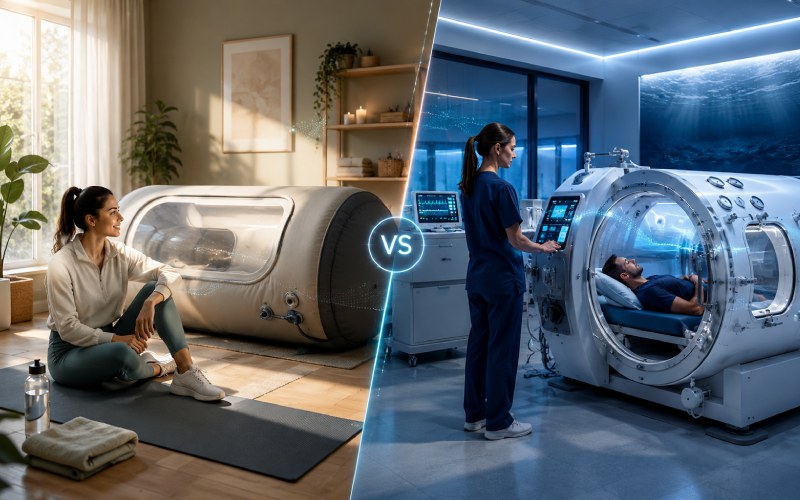
In standard HBOT, the pressure is substantially higher, and the oxygen delivered is typically 100% medical-grade oxygen in a supervised clinical setting. In a mild chamber, the chamber itself is usually pressurized with ambient air, while supplemental oxygen — if used — is delivered separately through a mask or nasal cannula.
At normal sea level, the atmosphere presses on you at roughly 1.0 ATA (Atmospheres Absolute). You’re breathing air that’s about 21% oxygen. Under those conditions, your blood carries oxygen almost entirely on hemoglobin molecules — the red blood cells do the heavy lifting. Only a trace amount of oxygen (about 0.3 mL per deciliter of blood) actually dissolves directly into your plasma.
When you increase the pressure, you change the equation. Henry’s Law tells us that the amount of gas dissolved in a liquid rises in direct proportion to the pressure of that gas above the liquid. So more pressure means more oxygen gets pushed directly into your plasma, your lymph, your cerebrospinal fluid — into places hemoglobin can’t always reach easily.
This is not theory. It’s well-documented physics. At 3.0 ATA breathing pure oxygen, dissolved oxygen in the blood reaches roughly 6 mL/dL — enough to support resting cellular function without any hemoglobin involvement at all. At milder pressures like 1.3 ATA, the numbers are smaller, but the shift is still meaningful compared to baseline.
Both approaches rely on this same principle. They just do it at very different intensities — and mild chamber use is not the same thing as clinical HBOT.
Breaking Down the Two Approaches
Mild Hyperbaric Chambers
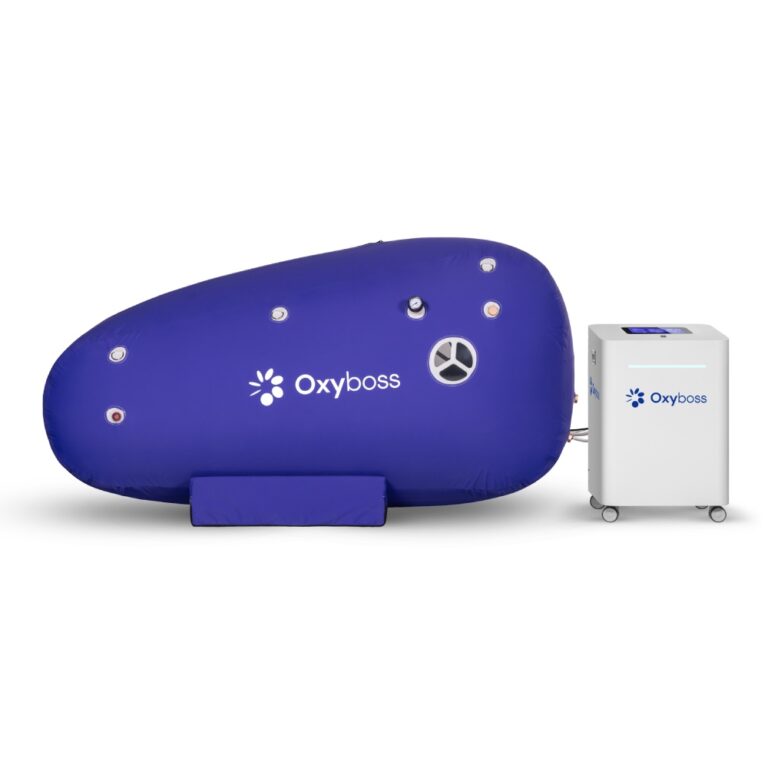
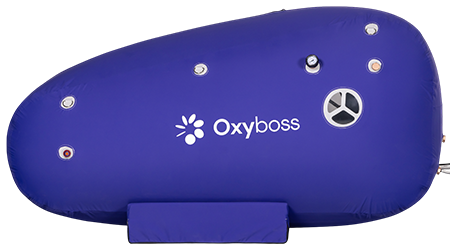
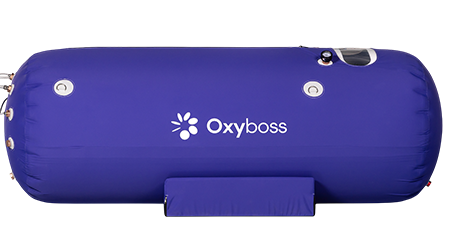
Mild hyperbaric chambers typically operate at pressures between 1.3 and 1.5 ATA. That’s roughly equivalent to the pressure you’d feel about 10 to 15 feet underwater. These chambers are usually soft-sided — constructed from reinforced nylon or medical-grade urethane — and inflate to create the pressurized space.
Instead of pure oxygen filling the entire chamber, the internal environment is typically pressurized with ambient air. Supplemental oxygen, when used, is generally breathed through a mask or nasal cannula, often delivered by an oxygen concentrator that outputs around 90–95% oxygen purity.
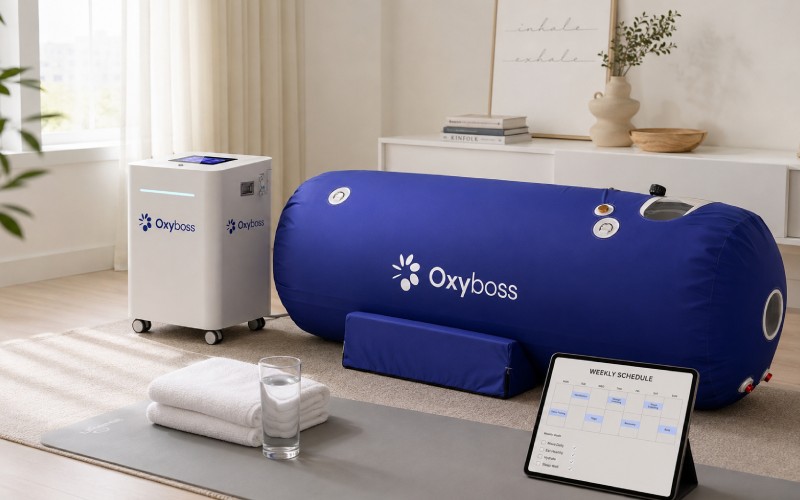
These units are portable. Some fold down into carrying bags. They fit in a spare bedroom or a corner of a home gym. They don’t usually require specialized installation. Two people can set one up in about an hour.
Standard Hyperbaric Oxygen Therapy (HBOT)
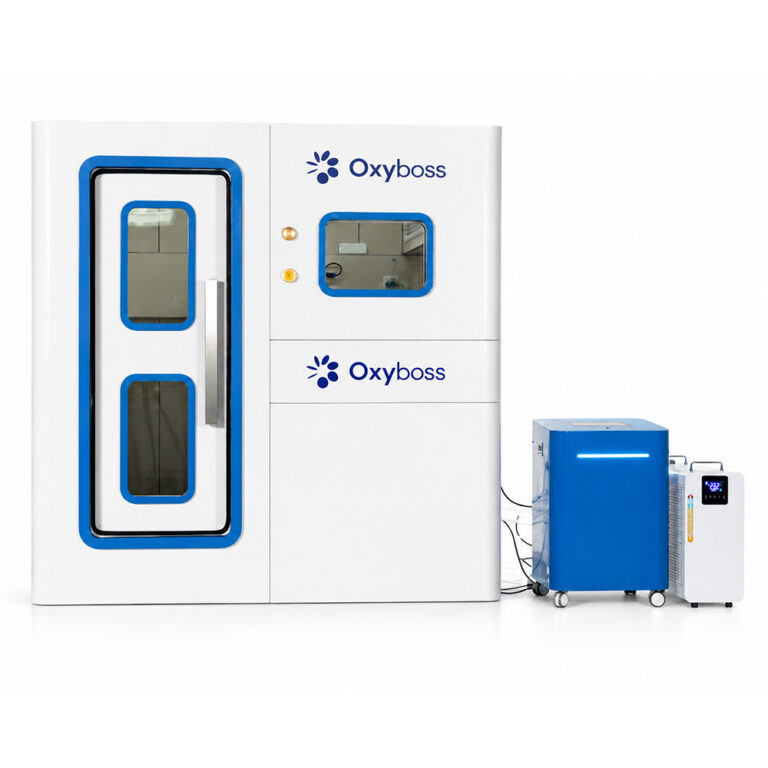
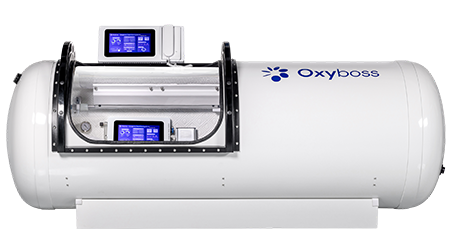
Standard HBOT chambers run at 2.0 to 3.0 ATA — roughly the pressure of being 33 to 66 feet underwater. These are rigid, hard-shelled units made from steel, acrylic, or aluminum. In many clinical configurations, the entire interior fills with 100% medical-grade oxygen, or oxygen is delivered through a hood or mask, depending on the chamber type.
These chambers are found primarily in supervised facilities and specialized centers. They’re large, heavy, and require professional installation and operation. Some multiplace units accommodate several people simultaneously, with a trained attendant inside.
Standard HBOT sessions usually run 60 to 120 minutes, sometimes with scheduled “air breaks” — brief periods of breathing normal air to reduce the risk of oxygen-related side effects.
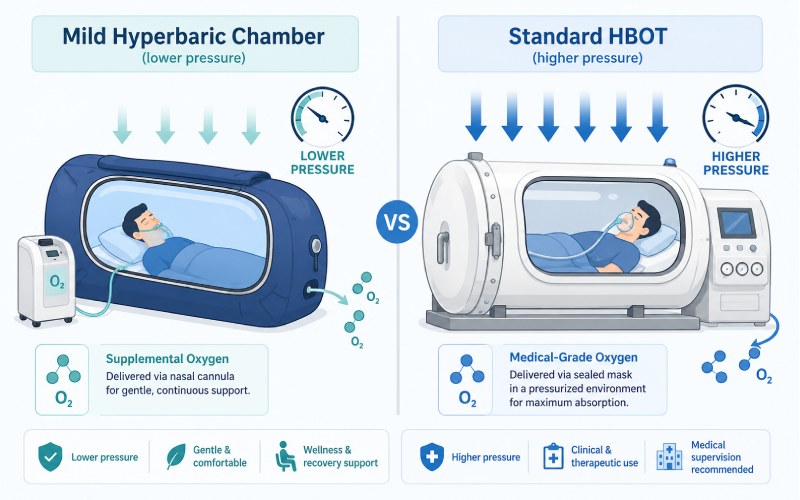
Mild Chambers vs HBOT: The Comparison at a Glance
| Feature | Mild Chamber Use | HBOT (Standard) |
| Pressure Range | 1.3–1.5 ATA | 2.0–3.0 ATA |
| Oxygen Delivery | Ambient-air pressurization; supplemental oxygen may be added by mask/cannula | 100% medical-grade oxygen in a supervised clinical setting |
| Chamber Construction | Soft-sided, inflatable, portable | Rigid steel or acrylic, fixed installation |
| Session Duration | 60–90 minutes | 60–150 minutes (with air breaks) |
| Supervision Needed | Minimal; commonly used for home wellness routines | Typically requires trained personnel |
| Typical Setting | Home, wellness studio, gym | Specialized center, supervised facility |
| Fire Risk | Lower in air-pressurized systems, but safety rules still apply | Higher in oxygen-enriched environments |
| Approximate Cost (Chamber) | $5,000–$20,000 | $30,000–$150,000+ |
| Cost Per Session (Facility Visit) | $75–$150 | $150–$400 |
| Ear Pressure / Barotrauma Risk | Lower (gentler pressurization) | Higher (faster, deeper pressure changes) |
| Portability | High — many models are collapsible | None — requires dedicated space |
How Pressure and Oxygen Affect the Body Differently
People throw around ATA numbers without explaining why the difference matters in your body. So here’s the short version.
At 1.3 ATA with supplemental oxygen through a concentrator mask, oxygen exposure rises meaningfully above baseline. That’s a real physiological shift. It may help support a general wellness routine, recovery habits, and oxygen delivery compared to normal sea-level breathing.
At 2.0 ATA breathing 100% oxygen, you’re looking at a much larger increase in dissolved plasma oxygen. The oxygen saturation in your tissues gets high enough to create a very different physiological dose — which is one reason standard HBOT is treated as a separate clinical category rather than just a stronger version of a home chamber session.
At 2.4 ATA and above, you’re approaching the upper range of what’s commonly used in clinical settings, and the dissolved oxygen is high enough that tissues with significantly compromised blood flow may receive oxygen that would be difficult to deliver under milder pressure.
The dose-response relationship isn’t linear. Going from 1.0 to 1.3 ATA creates a noticeable bump. Going from 1.3 to 2.0 ATA creates a much larger jump. Going from 2.0 to 2.5 ATA adds more, but the incremental gain starts to flatten while the risk profile begins to climb.
That last part gets glossed over a lot. Higher pressure is not automatically superior. It depends on what you’re trying to accomplish — and whether you’re talking about home wellness use or supervised clinical care.
Benefits of Mild Hyperbaric Chambers vs Standard Hyperbaric Chambers
Where Mild Chambers Hold Their Own
Mild hyperbaric chambers are not just “watered-down” versions of the real thing. They occupy a distinct niche, and for many people, they’re the right tool.
Daily consistency. Because mild chambers operate at lower pressures and don’t involve the same oxygen-enriched chamber environment used in clinical HBOT, they generally have a gentler risk profile. Many people use them regularly. And with oxygen-based wellness routines, one thing keeps showing up: consistency over time matters more than any single session at maximum intensity. If someone needs weeks of repeated sessions to feel a difference, having a chamber in the next room — rather than relying on appointment scheduling — changes the math entirely.
Practicality and accessibility. A soft-sided chamber in a spare room means sessions can happen during a lunch break, after a workout, or before bed. This is a massive advantage that gets underestimated. The best protocol in the world fails if you stop showing up.
A gentler pressure experience. For many people, the lower pressure is simply easier to tolerate. The pressurization is slower, the ear strain is lower, and the overall experience tends to feel more manageable for regular use.
A different use case. Mild chambers are best understood as a home wellness and recovery tool — not as a replacement for clinical HBOT. That distinction matters. For someone focused on routine, convenience, and cumulative use, the mild category has clear advantages.
Where Standard HBOT Pulls Ahead
When the stakes are higher or the need is deeper, the additional pressure and clinical oxygen delivery of standard HBOT become important.
Deeper tissue oxygen delivery. At 2.0+ ATA with 100% oxygen, oxygen diffuses much further from capillaries into surrounding tissue than it does under normal conditions. For situations involving severely compromised circulation, this difference matters enormously.
A larger oxygen dose per session. Standard HBOT delivers a much stronger exposure. That’s part of why it sits in a separate category and is used under professional supervision rather than treated as a plug-and-play home routine.
Clinical context. Higher-pressure HBOT has been studied in supervised settings for specific medical applications and remains the setting in which the most intensive protocols are used. Mild chambers and clinical HBOT may share some underlying physics, but they are not interchangeable.
Speed and intensity. People using standard HBOT often notice that the experience feels more intense from session to session. Whether that intensity is necessary depends entirely on the goal — and on whether a qualified professional has determined that higher-pressure HBOT is appropriate.
Mild Chambers vs HBOT Safety Profile and Side Effects
Mild Chamber Safety Profile
Mild hyperbaric chambers are generally well tolerated when used as directed. The lower pressure means:
- Ear discomfort is the most common complaint, and it’s usually mild — similar to what you’d feel on an airplane. Swallowing, yawning, or gentle jaw movements during pressurization generally resolve it.
- Oxygen-related side effects are uncommon at these pressures and oxygen concentrations, especially compared to higher-pressure clinical protocols.
- Fire risk is lower in ambient-air pressurized systems than in oxygen-enriched chamber environments, but users should still follow all manufacturer instructions about approved accessories and electronics.
- Self-operation is common. Most modern soft-sided chambers are designed to be operated by the user alone, with interior pressure releases allowing you to depressurize and exit independently.
Standard HBOT Safety Profile
Higher pressure and 100% oxygen introduce additional considerations:
- Ear and sinus barotrauma becomes more common due to faster, deeper pressure swings. Some people require equalization techniques similar to those used by divers.
- Oxygen-related side effects are dose-dependent, which is one reason higher-pressure clinical sessions are supervised and may include air breaks.
- Pulmonary effects from prolonged or repeated high-oxygen exposure can include substernal burning, coughing, and temporary changes in lung capacity. This is why sessions may include air breaks.
- Fire is a real concern. Oxygen-enriched environments dramatically accelerate combustion. Facilities follow strict protocols for good reason.
- Transient visual changes (temporary nearsightedness) can occur over a series of sessions, generally reversing within weeks of stopping.
Contraindications — Important for Both Types
Regardless of whether you’re considering mild chamber use or standard HBOT, certain situations require professional evaluation first:
- Untreated pneumothorax — this is the only universally recognized absolute contraindication for any pressurized chamber
- Severe chronic obstructive pulmonary conditions with CO₂ retention
- Recent ear or thoracic surgery
- Pregnancy (requires individual assessment)
- Certain medications or protocols that may interact with elevated oxygen
Always speak with a qualified professional who understands pressurized oxygen protocols before starting, especially if you have pre-existing conditions.
Frequently Asked Questions
Can I use a mild hyperbaric chamber every day? Many people do. At 1.3 ATA with supplemental oxygen via mask, the overall exposure is much gentler than clinical HBOT, which makes regular use more realistic for many individuals. As always, follow manufacturer instructions and consult a qualified professional if you have any medical concerns.
Is 1.3 ATA “enough” to do anything? It depends on what you mean by “anything.” At 1.3 ATA with supplemental oxygen, you do get a meaningful shift from normal breathing at sea level. It won’t replicate the deeper oxygen delivery of a 2.0+ ATA clinical chamber, but that doesn’t make it pointless. It means it’s a different tool with a different use case.
What does a session feel like? During pressurization (the first 5–10 minutes), you’ll likely feel pressure in your ears — similar to descending in an airplane. Once the chamber reaches target pressure, most people feel relaxed. Some describe a slightly heightened sense of alertness or warmth. At the end, depressurization takes another 5–10 minutes. The session itself is uneventful for most people.
How many sessions before you notice something? This varies wildly between individuals and depends on what you’re looking for. Some people report feeling more relaxed or sleeping better within 5–10 sessions. Others don’t feel much until they’ve built a consistent routine over a longer period. Consistency matters more than any single session.
Can I use electronics inside a mild chamber? That depends on the chamber manufacturer and the specific safety instructions for your unit. In air-pressurized soft chambers, the rules are usually more flexible than in oxygen-enriched clinical environments, but you should always follow the manufacturer’s guidance rather than assuming anything is automatically allowed.
Do children or older adults use these chambers? Many families with children and older adults use soft-sided mild chambers. The gentler pressure, slower pressurization rate, and lower-intensity experience make them more accessible for people who might have difficulty with the rapid pressure changes or confined spaces of hard-shell units. However, anyone with a pre-existing condition should consult a qualified professional before beginning any pressurized oxygen protocol.
What about insurance coverage? Insurance typically covers only a narrow list of specific, formally recognized conditions — and usually only when addressed in a supervised facility using standard HBOT. Wellness use and home-based mild chamber use are almost never covered.
Are soft-sided chambers less safe than hard-shell chambers? They have a different risk profile, not necessarily a higher one. Soft-sided chambers generally operate at lower pressures, which reduces barotrauma risk and makes the experience easier for many users. Hard-shell chambers offer superior structural durability and tighter pressure control but require more safety infrastructure and trained oversight due to the clinical oxygen environment. Both should be used according to their intended setting and instructions.
Neither approach is universally better. They’re different tools built for different situations.
Mild hyperbaric chambers give you accessibility, regular usability, a gentler experience, and a practical way to build consistency over time. Standard HBOT gives you higher pressure, deeper oxygen delivery, and a true clinical modality — at the cost of higher risk, higher expense, and less convenience.
The smartest move isn’t picking one and dismissing the other. It’s understanding what you need, being honest about what you’ll actually commit to doing consistently, and matching the tool to your reality — not to someone else’s marketing.