Diabetes is not only about blood sugar. That’s the part everyone measures — the number on the meter, the A1c on a lab sheet. The story underneath is slower and quieter: vessels that stiffen, capillaries that narrow, tissue that stops receiving the oxygen it expects. Over years, that shortage surfaces in odd places. A heel scrape that won’t close. Cold feet. Skin that repairs differently than it used to.
Which is why oxygen keeps entering conversations about metabolic health, and why hyperbaric chambers — once associated mainly with divers — have drifted into wellness discussions.
This article covers what’s reasonably established, what’s still early, and where the honest limits sit.
This is educational content about oxygen physiology and general wellness. It is not medical advice and does not replace guidance from a qualified health professional. Higher-pressure protocols used for serious diabetes-related wounds belong in licensed medical facilities under professional supervision — a separate world from recreational or wellness chamber use.
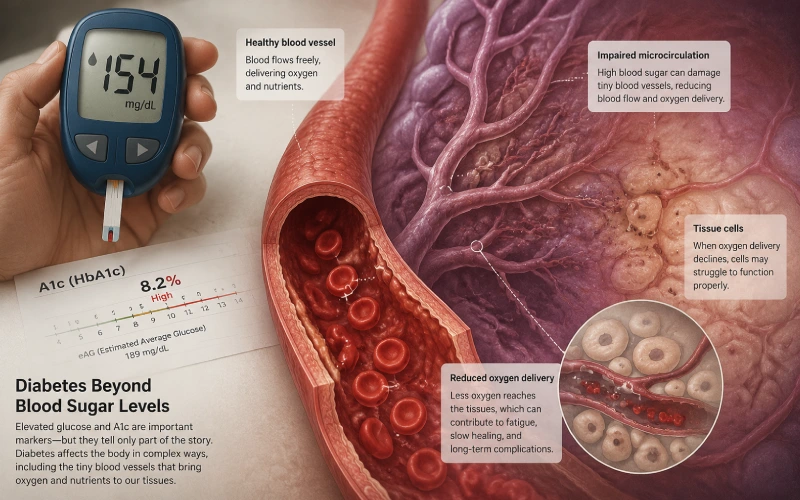
1. Diabetes Beyond Blood Sugar: Circulation, Oxygen Delivery and Tissue Repair
Elevated glucose is the marker. The downstream effects are structural.
Circulation. Sustained high blood sugar alters the inner lining of blood vessels. Large arteries accumulate plaque faster. Small vessels — the capillary beds in the feet, retina and kidneys — develop thicker walls and narrower openings. Blood still moves, just less of it, and less evenly [1].
Oxygen delivery. Even when circulation looks acceptable on paper, oxygen may not arrive where it’s needed. Glycated hemoglobin releases oxygen slightly less readily. Capillary density falls. The result is regional hypoxia: pockets of tissue running below their needs, sometimes for years, without any dramatic signal.
Tissue repair. Repair is expensive. Collagen synthesis requires oxygen. The immune cells that clear bacteria from a wound generate their bactericidal burst using oxygen. New capillaries sprouting into damaged tissue follow an oxygen gradient. When local supply is low, the whole repair sequence slows or stalls — a large part of why foot wounds in diabetes behave so differently from an ordinary cut [1].
So the framing shifts. Not “how do we lower the number,” but “why is this tissue starved, and can anything change that?”
2. How Hyperbaric Oxygen Works: Pressure, Dissolved Oxygen and Plasma Transport
Three variables. Pressure, oxygen concentration, time.
Breathing air at one atmosphere, nearly all the oxygen you carry is bound to hemoglobin — which is already close to saturated. That’s why breathing extra oxygen at normal pressure does surprisingly little for well-saturated blood. Only a small fraction of oxygen travels dissolved directly in plasma, roughly 0.3 mL per decilitre.
Raise the pressure and that changes. Gas dissolves into liquid in proportion to its partial pressure, a relationship worked out long before anyone put a person inside a chamber. Increase ambient pressure and inhaled oxygen concentration together, and dissolved plasma oxygen climbs steeply — enough that plasma becomes a real carrier rather than a bystander [2][10].
This matters because dissolved plasma oxygen doesn’t need a red blood cell to reach its destination. It diffuses. Through fluid, into interstitial space, into tissue that partially collapsed capillaries no longer service well. The effective diffusion distance from a working vessel increases.
| Condition | Inspired O₂ | Approx. arterial O₂ pressure | Dissolved plasma O₂ (approx.) |
|---|---|---|---|
| Air, sea level | ~21% | ~100 mmHg | ~0.3 mL/dL (baseline) |
| 100% O₂, sea level | 100% | ~600 mmHg | ~1.8 mL/dL (~6×) |
| 100% O₂, 2.0 ATA | 100% | ~1,400 mmHg | ~4.2 mL/dL (~14×) |
| 100% O₂, 2.4 ATA | 100% | ~1,700 mmHg | ~5.1 mL/dL (~17×) |
Illustrative figures based on standard solubility values. Individual physiology varies.
For scale: resting tissue extracts somewhere around 5 mL of oxygen per decilitre of blood. At the top of that table, dissolved plasma oxygen alone approaches that figure. Sessions typically run 60 to 90 minutes, and the effect on plasma oxygen fades afterward. What appears to persist — and what researchers find interesting — is the biological signaling triggered while pressure is up.
3. Mild vs Higher-Pressure Chambers: What 1.3 ATA Actually Delivers
This distinction gets glossed over constantly, so it’s worth doing properly before anything else.
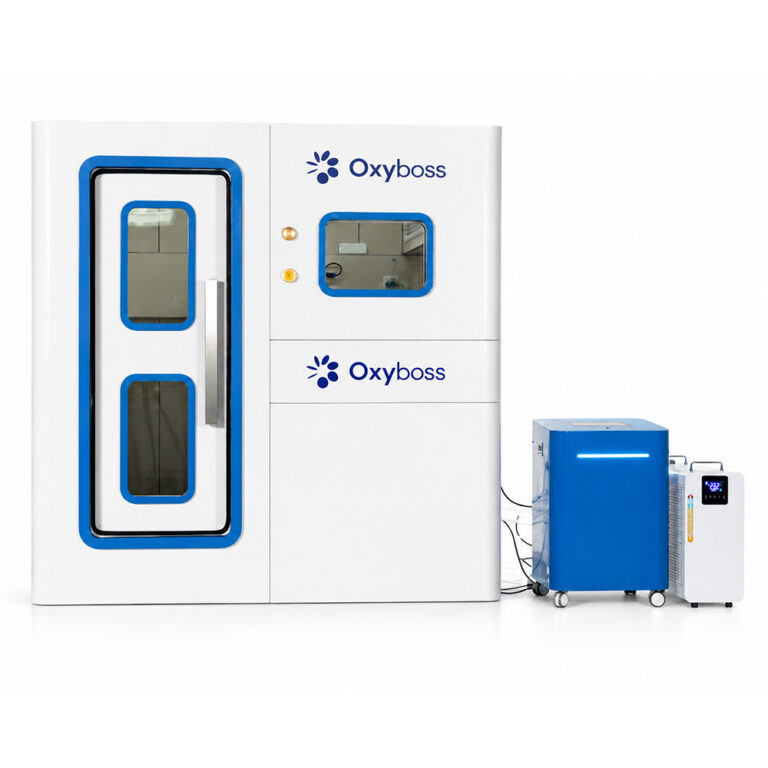
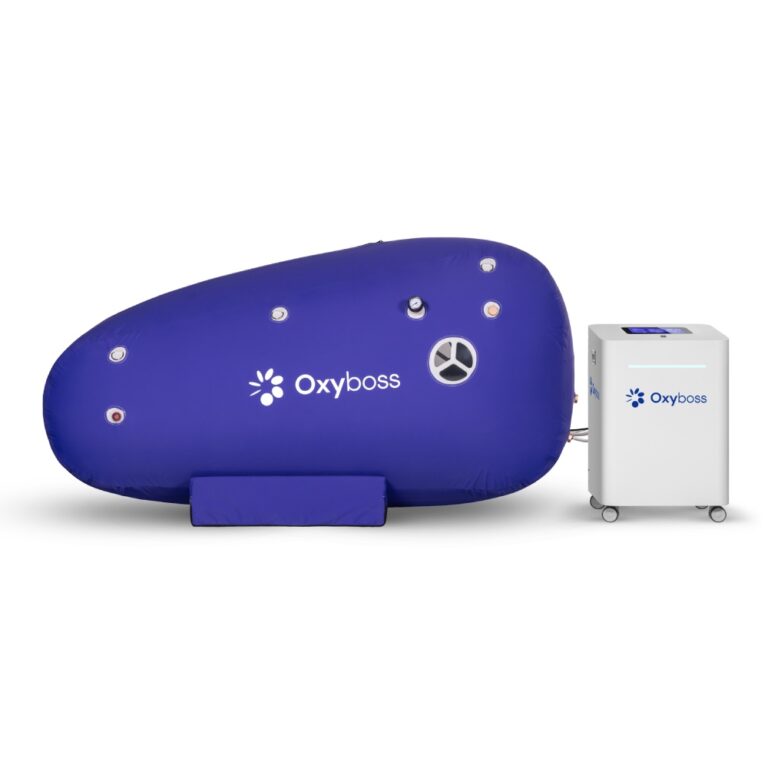
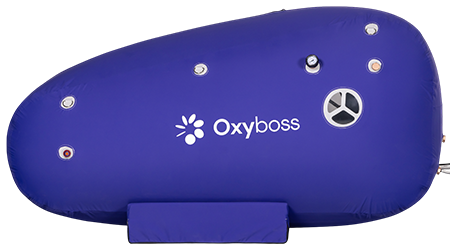
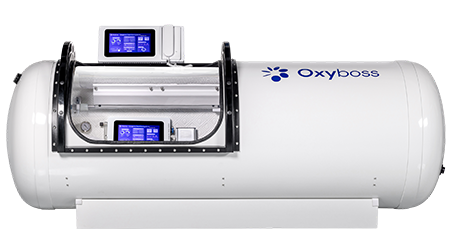
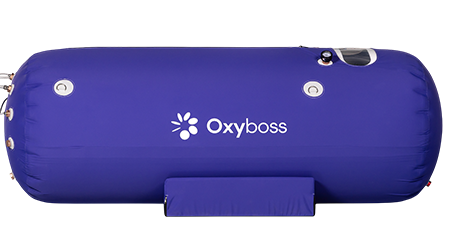
Almost all published research on diabetes-related wounds used 2.0–2.4 ATA with near-100% oxygen. Wellness and home-use chambers generally operate around 1.3 ATA, often with an oxygen concentrator rather than medical-grade oxygen. The gap is not cosmetic.
| ~1.3 ATA, compressed air only | ~1.3 ATA + high-concentration O₂ | ~2.4 ATA, 100% O₂ | |
|---|---|---|---|
| Approx. arterial O₂ pressure | ~150 mmHg | ~750–850 mmHg | ~1,700 mmHg |
| Dissolved plasma O₂ vs baseline | ~1.5× | ~8× | ~17× |
| Research base for diabetes-related wounds | Minimal | Limited | Substantial |
| Setting | Wellness / home | Wellness | Licensed medical facility |
Two conclusions fall out of this, and they pull in opposite directions.
First: findings from higher-pressure research cannot be transferred to a mild-pressure session. Different exposure, different magnitude, different context. Anyone quoting wound-closure statistics to describe a 1.3 ATA session is misreading their own source.
Second — and this gets lost — mild pressure is not nothing. Combining modest pressure with a high oxygen concentration still produces a several-fold rise in dissolved plasma oxygen over resting baseline. Whether that’s enough to matter biologically, and for what, is genuinely unresolved. The physics is real. The outcome data at that dose is thin.
Both statements are true at once. Holding them together is the only defensible position.
4. The Biological Mechanisms: How Oxygen Interacts With Diabetes-Related Changes
4.1 Supporting Tissue Oxygenation in Underserved Capillary Beds
Diabetes → vascular changes → reduced local oxygen delivery → tissue running below its metabolic needs → hyperbaric exposure temporarily raises what’s available
The interesting wrinkle is that intermittent exposure appears to do more than top up a deficit. Cycling between high and normal oxygen creates a signal. Cells read the swing, and one response involves hypoxia-inducible factor pathways and vascular growth factors that encourage new capillary formation — the body improving its own plumbing rather than borrowing oxygen for an hour [3].
Work in diabetic animal models has shown this signaling is measurable, and that blocking it blunts the wound-closure benefit [3]. Human data is less granular, as it usually is.
4.2 Oxygen and Slow-Healing Diabetes-Related Wounds
The area with the longest research history.
Wound in a person with diabetes → hypoxic wound bed, sluggish collagen synthesis, impaired bacterial clearance → raised wound-bed oxygen → repair machinery has what it needs
Chronic non-healing foot wounds affect a meaningful share of people living with diabetes over a lifetime, and recurrence rates are high [1]. Adjunctive hyperbaric protocols have been used in this setting for decades — in hospitals, alongside standard wound care: offloading, debridement, infection management, glucose control. Never instead of it.
Randomized trials have reported improved healing rates in certain wound categories, particularly deeper wounds with documented tissue hypoxia [4]. Systematic reviews are more restrained: short-term healing improvements appear, while effects on amputation risk and longer-term outcomes are less consistent, and many trials were small or methodologically uneven [5].
The gap between “there is a signal” and “we know exactly who benefits” is the honest state of things.
4.3 Oxidative Stress, Inflammation and the Hormesis Window
An apparent contradiction. Diabetes involves chronic oxidative stress. Oxygen at pressure produces reactive oxygen species. So wouldn’t more oxygen make things worse?
Sometimes, in principle. But the pattern observed in controlled protocols looks more like hormesis — a brief, bounded stress that prompts cells to upregulate their own antioxidant defenses. Pathways governing enzymes such as superoxide dismutase and catalase respond to the exposure, and antioxidant capacity has been described as rising over a course of sessions rather than falling [2].
Inflammatory signaling shifts too. Hyperbaric exposure has been associated with reduced expression of several pro-inflammatory cytokines and altered immune cell behavior [2][10]. Chronic low-grade inflammation is a recognized feature of type 2 diabetes, which is why this line of work attracts attention.
Dose matters enormously. The same variable is protective inside a narrow window and harmful outside it.
4.4 Cellular Energy: Mitochondria and ATP
Oxygen availability → oxidative phosphorylation → ATP → capacity for repair and normal cell function
Mitochondria consume most inhaled oxygen. Mitochondrial dysfunction appears repeatedly in research on insulin resistance and type 2 diabetes, in muscle and elsewhere.
Experimental work has shown that hyperbaric oxygen exposure can stimulate mitochondrial biogenesis — cells producing more mitochondria rather than just working existing ones harder — through regulatory pathways including PGC-1α and nuclear respiratory factors [6]. If that translates to human metabolic tissue in a durable way, it would be relevant. That “if” is doing real work in the sentence; most of this evidence remains preclinical and was generated in nervous tissue rather than muscle or skin.
One small human study reported improved insulin sensitivity in overweight men, with and without type 2 diabetes, across a course of sessions [7]. Small sample, short duration, unclear persistence. Interesting, not conclusive.
5. Where Support Is Plausible, and How Strong the Evidence Is
| Area | Proposed mechanism | Evidence strength |
|---|---|---|
| Slow-healing diabetes-related foot wounds | Raised wound-bed oxygen, angiogenesis, bacterial clearance | Strongest; multiple trials, higher-pressure medical settings only [4][5] |
| Circulation and capillary formation | HIF / VEGF signaling | Moderate; mechanistic and animal data solid, human data developing [3] |
| General tissue recovery | Collagen synthesis, fibroblast activity | Moderate, largely extrapolated from wound research |
| Oxidative and inflammatory balance | Adaptive antioxidant upregulation, cytokine modulation | Emerging; small studies and mechanistic work [2] |
| Cellular energy and metabolic markers | Mitochondrial biogenesis, insulin sensitivity | Early; preclinical plus preliminary human findings [6][7] |
Note the pattern. Evidence is strongest where the problem is local, physical and oxygen-limited. It thins out as claims become more systemic.
6. What Current Research Says — and Where It Stops
Diabetes-related foot wounds. The most examined application. Trials have shown benefit for selected wound types, especially when tissue oxygen measurements confirm hypoxia and standard care is already optimized [4]. International guidance on diabetes-related foot wounds describes hyperbaric oxygen as a possible adjunct in specific non-healing cases rather than a routine measure [8].
Emerging metabolic research. Insulin sensitivity, inflammatory markers, mitochondrial function, endothelial behavior. Small studies, short follow-up, few replications. Enough to justify continued research, not enough for confident claims [7].
Limitations, stated plainly:
- Protocols differ across studies — pressure, session count, duration — making results awkward to pool.
- Blinding is difficult. You can usually tell whether a chamber is pressurizing.
- Many trials are small and single-centre.
- Individual response varies, and predictors of response aren’t well defined.
- Plasma oxygen effects are temporary; the durability of downstream changes isn’t fully mapped.
- As covered in Section 3, mild-pressure exposure is a different dose, so higher-pressure findings don’t transfer.
7. Can Hyperbaric Oxygen Replace Diabetes Management?
No.
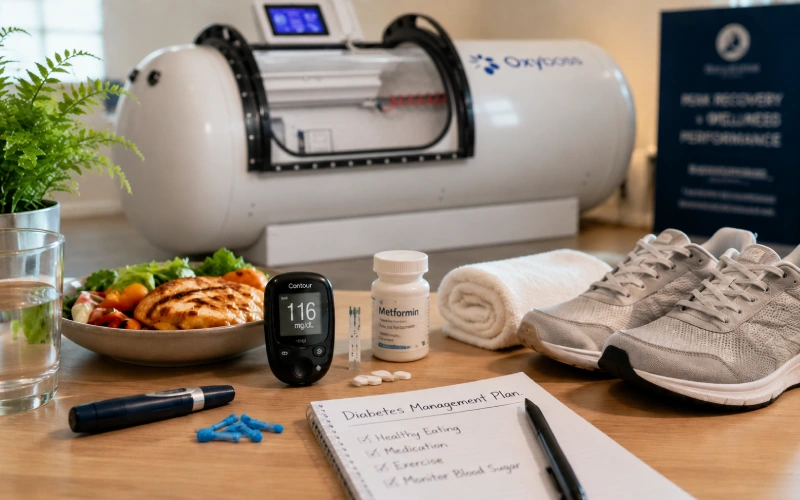
Nothing in the research suggests otherwise. Diabetes management rests on glucose monitoring, prescribed medication where indicated, nutrition, physical activity, sleep, foot checks, eye checks and regular professional oversight. Oxygen exposure sits outside that framework — at most alongside it, as a supportive practice, and only after a conversation with a qualified professional who knows your history.
Anyone suggesting a chamber makes medication unnecessary is not describing science.
8. Safety Considerations Before Using a Chamber
Ear and sinus barotrauma is the most common issue, caused by pressure change rather than oxygen. Slow equalization helps; so does skipping sessions while congested. It remains the most frequently reported side effect across studies [9].
Oxygen toxicity — affecting lungs or, rarely, the central nervous system — becomes a concern with excessive pressure, concentration or duration. Established protocols exist to stay inside safe limits [9].
Glucose behavior. Blood glucose can shift during hyperbaric sessions in people with diabetes, sometimes downward. This is documented in medical settings, where levels are checked before and after. It’s a specific reason to raise chamber use with your own healthcare provider first, and not to treat it casually.
Contraindications. Untreated pneumothorax is absolute. Certain lung conditions, recent ear surgery, some medications and specific cardiac conditions require professional evaluation beforehand.
Fire risk. Oxygen-rich pressurized spaces are flammable spaces. Equipment standards, material selection and operator training exist for good reason.
Comfort. Worth knowing how you respond to enclosed spaces before booking anything.
Frequently Asked Questions
Does hyperbaric oxygen lower blood sugar? Some studies and clinical observations report glucose declining during or after sessions in people with diabetes. Size and consistency vary, and it isn’t a glucose management tool. It’s a reason to monitor carefully and involve your healthcare provider.
How many sessions do studies typically use? Research on diabetes-related wounds often involved 20 to 40 daily sessions of 60 to 90 minutes at 2.0–2.4 ATA. Wellness protocols differ considerably. There’s no universal number.
Is a 1.3 ATA chamber the same thing as a hospital chamber? No. Section 3 covers the arithmetic. Lower pressure and lower oxygen concentration mean substantially less dissolved plasma oxygen, and higher-pressure research findings should not be assumed to apply.
Can it reverse nerve-related symptoms in the feet? Research is limited and mixed. Some small studies report changes in sensory measures; the evidence isn’t strong enough to support expectations. Any new or worsening foot symptom needs professional assessment, promptly.
Is it safe alongside insulin or oral medication? That’s a question for the professional managing your care. Glucose shifts during sessions are the main reason it needs asking.
Who should avoid chambers entirely? Anyone with untreated pneumothorax. Anyone with certain lung, ear or cardiac conditions until professionally evaluated. Anyone whose provider has advised against it.
Closing Thoughts
Hyperbaric oxygen is an emerging supportive approach, best understood as one input among many rather than an answer to a complex metabolic condition.
The physiology is sound and not particularly mysterious: more pressure, more dissolved oxygen, better diffusion into tissue that isn’t getting enough. Where diabetes creates a local oxygen shortage — most visibly in slow-healing foot wounds — that logic has been tested at higher pressures in medical settings, with real if variable results. Where claims broaden into whole-body metabolism and insulin behavior, the research is early. Promising in places. Not settled.
The reasonable position sits between dismissal and enthusiasm. Keep the core management in place. Ask questions. Involve the professionals who know your history. Treat oxygen as what it is — a powerful variable with a narrow useful window, not a shortcut.
References
- Armstrong DG, Boulton AJM, Bus SA. Diabetic Foot Ulcers and Their Recurrence. New England Journal of Medicine, 2017. https://www.nejm.org/doi/full/10.1056/NEJMra1615439
- Thom SR. Hyperbaric oxygen: its mechanisms and efficacy. Plastic and Reconstructive Surgery, 2011. https://pmc.ncbi.nlm.nih.gov/articles/PMC3237863/
- Sunkari VG, et al. Hyperbaric oxygen therapy activates hypoxia-inducible factor 1 (HIF-1), which contributes to improved wound healing in diabetic mice. Wound Repair and Regeneration, 2015. https://pubmed.ncbi.nlm.nih.gov/25703647/
- Löndahl M, et al. Hyperbaric oxygen therapy facilitates healing of chronic foot ulcers in patients with diabetes. Diabetes Care, 2010. https://diabetesjournals.org/care/article/33/5/998/25674
- Kranke P, et al. Hyperbaric oxygen therapy for chronic wounds. Cochrane Database of Systematic Reviews, 2015. https://www.cochranelibrary.com/cdsr/doi/10.1002/14651858.CD004123.pub4/full
- Gutsaeva DR, et al. Oxygen-induced mitochondrial biogenesis in the rat hippocampus. Neuroscience, 2006. https://pubmed.ncbi.nlm.nih.gov/16650618/
- Wilkinson D, et al. Hyperbaric oxygen therapy increases insulin sensitivity in overweight men with and without type 2 diabetes. Diving and Hyperbaric Medicine, 2012. https://pubmed.ncbi.nlm.nih.gov/22673687/
- International Working Group on the Diabetic Foot. Guidelines on interventions to enhance healing of foot ulcers in persons with diabetes, 2023. https://iwgdfguidelines.org/wound-healing-interventions-guideline/
- Heyboer M, et al. Hyperbaric Oxygen Therapy: Side Effects Defined and Quantified. Advances in Wound Care, 2017. https://pmc.ncbi.nlm.nih.gov/articles/PMC5467105/
- Camporesi EM, Bosco G. Mechanisms of action of hyperbaric oxygen therapy. Undersea and Hyperbaric Medicine, 2014. https://pubmed.ncbi.nlm.nih.gov/24984320/