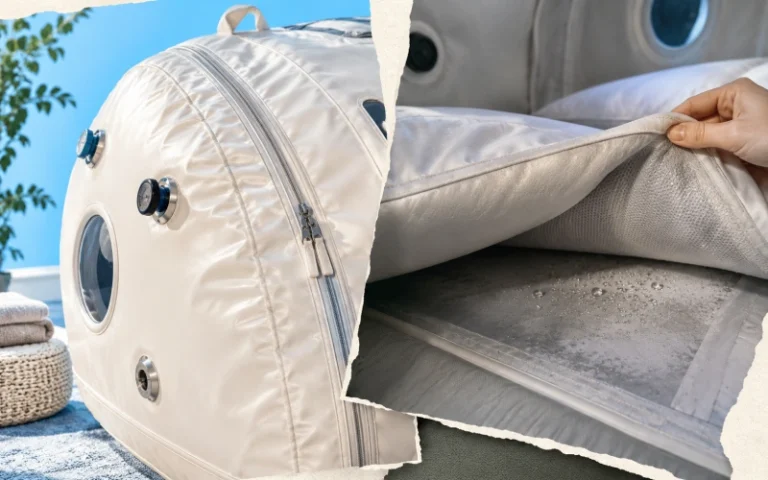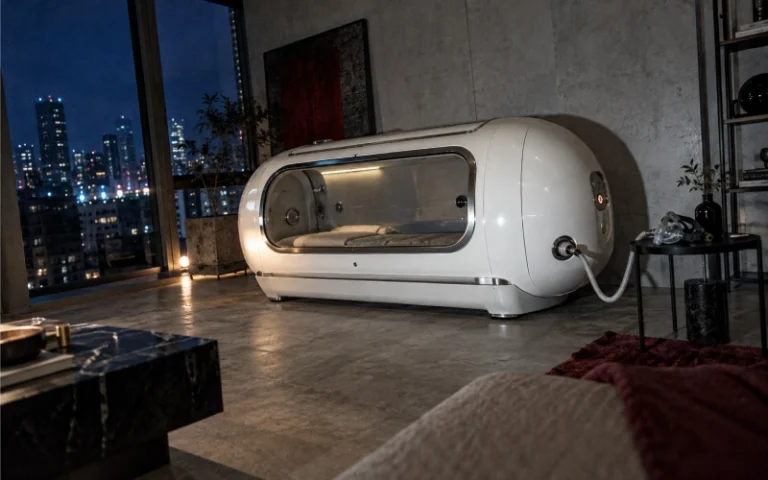
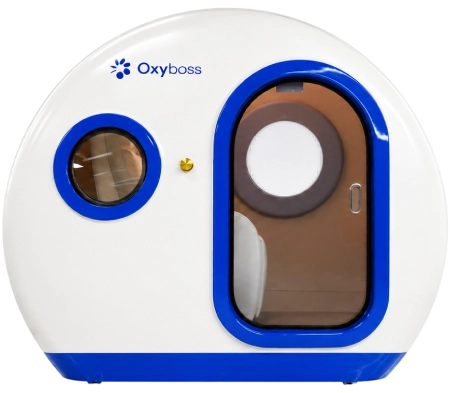
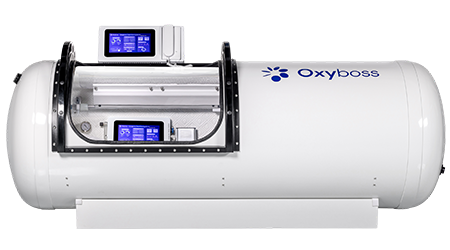
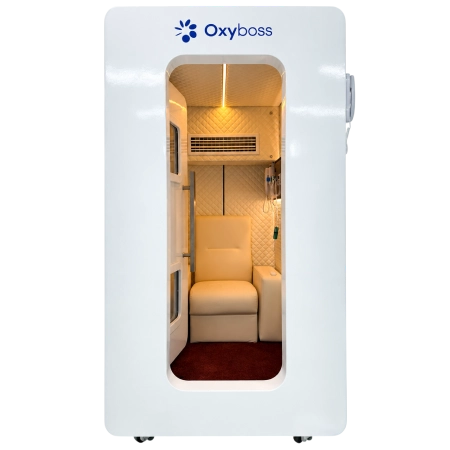
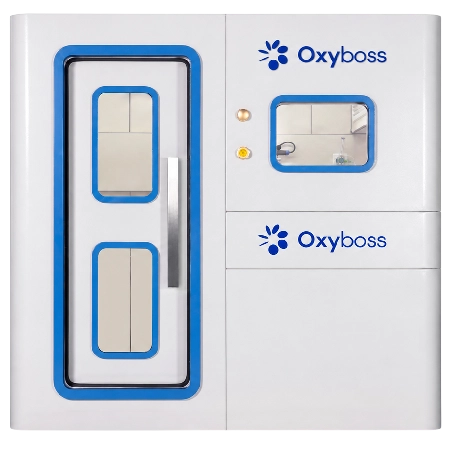
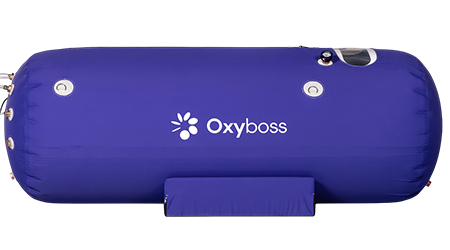
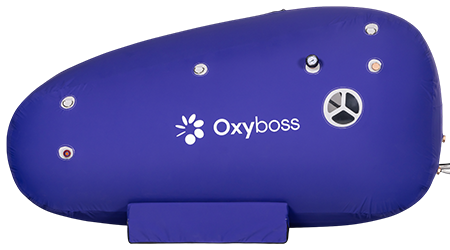
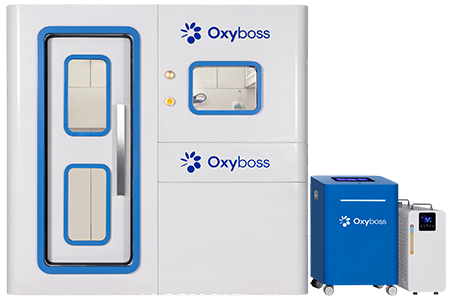
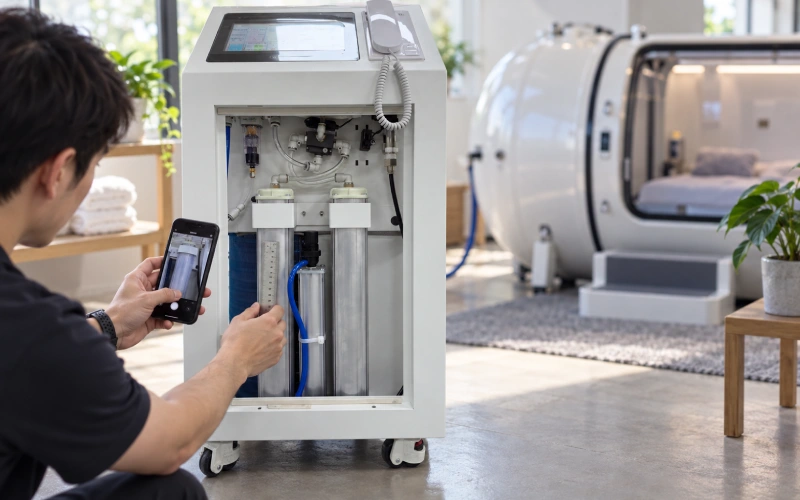
If you have a hyperbaric chamber at home or in a studio, at some point you’ll need to swap a filter. Maybe your chamber is starting to take longer to pressurize. Maybe the air coming out of the concentrator smells a bit different. Maybe you just realized you’ve been running for a year and you have no idea what’s actually inside that little black box.
This guide walks you through how to figure out which filter goes in your system — without buying the wrong one, and without falling for the “universal” filter trick. We’ll cover the four real filter points in a typical chamber, what each one does, how to read the part number off the side of yours, and the few hard rules around oxygen service.
The 30-second version
If you only do five things after reading this article, do these:
- Find the data plate on your chamber. The model number and serial number are printed on a metal plate riveted to the chamber shell. That plate is the single source of truth for which filter you need.
- Don’t buy “universal” filters. A filter that’s rated for industrial compressed air is not the same thing as one that’s safe in an oxygen-enriched environment. Materials, seals, and ratings differ.
- Match the airflow spec, not just the micron number. A filter that captures finer particles than yours needs is a filter that chokes your compressor. Read your existing filter’s rated flow (L/min or cfm) before you order a replacement.
- Replace on schedule, not when it “looks dirty.” By the time a chamber filter looks visibly clogged, your compressor has been working overtime for weeks. Schedule beats eyeballing.
- If anything looks off — burning smell, unusual noise, slow pressurization — stop and call the manufacturer before swapping. Filters live inside pressure systems. Treat them like brake pads, not water bottles.
Now let’s actually walk through how to identify the right one.
First: where filters live in your system
A soft or hard hyperbaric chamber is not one filter. It’s a small filtration chain. Get this picture in your head first, and the rest of the article will make sense.
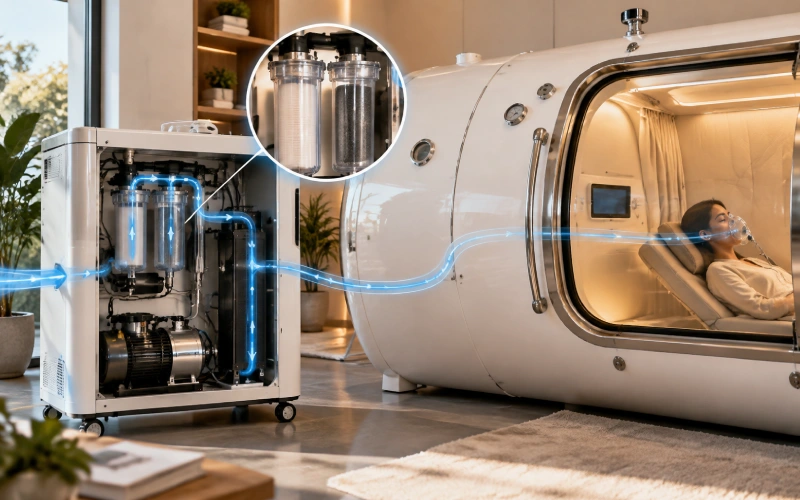
For soft-shell chambers running at 1.5 ATA, the airflow path looks roughly like this:
Room air → intake pre-filter (washable foam) → compressor → oxygen concentrator (10 L, 90% ± 3% O₂) → outlet HEPA / bacterial filter → tubing → mask.
For hard-shell chambers running up to 2.0 ATA, the chain is similar but the housing is harder to open, and the compressor side carries more heat and oil vapor.
Four things to notice:
- The oxygen concentrator and the air filter are not the same thing. The concentrator separates oxygen from nitrogen using a molecular sieve bed — that’s a sorbent, not a filter media. If someone tells you to “replace the sieve like a filter,” they’ve misunderstood the system. Sieves last 5,000–8,000 operating hours; filters last weeks to months.
- The chamber itself is pressurized with compressed air, not pure oxygen. You breathe high-concentration oxygen through a mask inside the chamber, but the chamber atmosphere stays close to normal air. This matters for filter selection — the filter sees air, not pure O₂, but the downstream oxygen line is a different story.
- There is usually more than one filter. A typical setup has a coarse intake pre-filter (often washable foam), a compressor intake filter, an oxygen-side outlet filter, and on some units an in-line bacterial / particulate filter on the mask line.
- Filters live in different pressure zones. The intake side is at suction (low pressure); the outlet side is at positive pressure. They are not interchangeable even if the micron ratings look similar on paper.
Once you see the chain, the next question is obvious: which one do I actually need to replace?
How to identify which filter you need
There are six ways to do this. We list them roughly in order from “do this first” to “do this only if nothing else worked.”
1. Read the data plate on the chamber
The metal nameplate riveted to the outside of every hard-shell chamber, and the printed label on the inside seam of every soft-shell chamber, contains:
- Model number (for example, OT-H401 or OT-S15T)
- Serial number
- Maximum working pressure in ATA
- Year of manufacture
- Manufacturer information
Take a phone photo of this plate before you do anything else. This is the part number you’ll quote when you contact us or any authorized distributor.
2. Read the label on the existing filter
Most replacement filters for chamber systems have a printed or embossed label that includes:
- A part number (sometimes prefixed with “P/N” or “RP”)
- A micron rating (e.g., 0.01 µm, 5 µm)
- A flow rating in L/min or cfm
- A maximum operating temperature
- A “do not use with” or “oxygen-clean” marking on oxygen-side filters
If the label is gone, faded, or painted over, move to step 3.
3. Measure the filter
Three measurements will get you 90% of the way there:
- Outer diameter (mm)
- Length (mm)
- Connector type and thread (e.g., 1/4″ NPT male, push-fit 6 mm)
A photo of the filter next to a ruler is even better. Send that, plus the data plate, when you contact us.
4. Look up the part number on the manufacturer’s spare parts list
For Oxyboss chambers, the Air Filter Kit part numbers, prices, and replacement intervals are listed on our consumables page. The price for the standard Air Filter Kit is around USD 50, and the recommended replacement interval is every 500–1,000 operating hours, or every 3–6 months, whichever comes first.
5. Send a photo to the manufacturer or authorized distributor
If you can’t read the data plate, or the filter label is gone, take three photos: the chamber data plate, the existing filter (with a ruler next to it), and the connector end. Email or WhatsApp them to the seller. Anyone selling replacement filters who is unwilling to look at a photo before quoting you a part is a red flag.
6. Don’t guess
We list this as the sixth option because it’s the most important. A wrong filter on the intake side chokes the compressor and shortens its life. A wrong filter on the oxygen-outlet side can introduce hydrocarbons into an oxygen-enriched line. Neither is a “good enough” outcome.
The four filter types you’ll actually meet
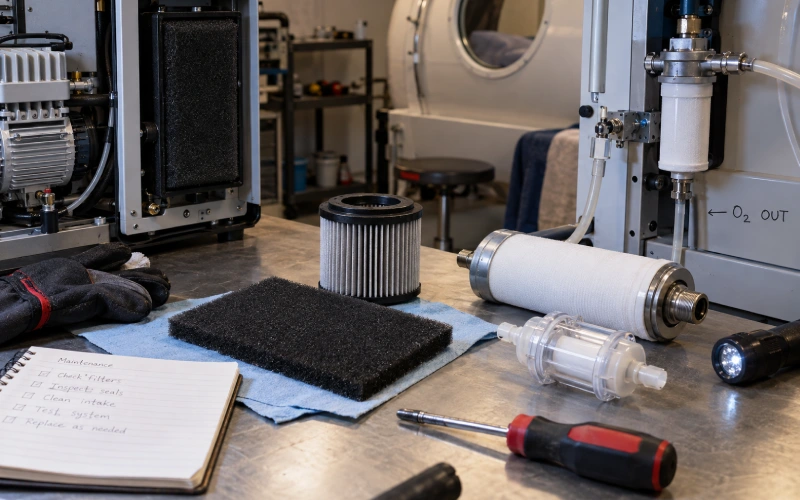
Even though part numbers vary by model, almost every chamber filter falls into one of these four buckets. Learn to recognize them.
| Filter type | Where it sits | What it catches | Reusable? | Typical interval |
|---|---|---|---|---|
| Pre-filter (foam / gross particulate) | Chamber room air intake | Dust, lint, hair | Yes — wash with mild soap, dry fully | Weekly visual check; replace if torn |
| Compressor intake filter | On the air compressor housing | Fine dust that would damage compressor valves | No | 500–1,000 hours |
| Oxygen-side outlet filter | Between concentrator and mask line | Particulates shed by sieve beds, any residual compressor carryover | No | 500–1,000 hours |
| Bacterial / HEPA in-line filter | On the mask line (optional on some models) | Bacteria, fine particles down to 0.01 µm | No | Per manufacturer; often 6–12 months |
A few notes on this table:
- Washable does not mean “rinse and reinstall.” Washable foam pre-filters must be fully dry before you put them back. Putting a damp filter into the suction side of a compressor is a common way to grow mold inside the air path.
- HEPA-grade filters (H13 / H14) are not washable. Water destroys the media. If your HEPA filter looks dirty, the answer is replace, not rinse. We see people try to vacuum these out — that also damages the media.
- The “oxygen-clean” marking is not a marketing line. Filters that go downstream of the concentrator and see elevated oxygen partial pressure must be cleaned and packaged to an oxygen-service standard. Industrial compressed-air filters often are not. We’ll come back to this in the safety section.
Micron ratings: smaller isn’t always better
You’ll see filter micron ratings all over the place — 40 µm, 5 µm, 0.3 µm, 0.01 µm. Here’s how to think about them.
| Micron rating | What it relates to in real life |
|---|---|
| 40 µm | Visible dust, lint, hair |
| 5 µm | Pollen, red blood cells (for reference) |
| 1 µm | Bacteria, large virus carriers |
| 0.3 µm | The MPPS (most-penetrating particle size) used to rate HEPA filters |
| 0.01 µm | True HEPA / sub-HEPA, used on oxygen outlet lines on some chamber systems |
The trap is to assume that finer is always better. It isn’t, for two reasons:
- Pressure drop. A finer filter media restricts airflow more. Your compressor has to work harder to push the same volume of air through. Over months, that extra load shortens compressor life. The manufacturer’s specified flow rating is the upper bound — go finer and you’re trading compressor longevity for filtration you may not need.
- Efficiency claims depend on the test method. You’ll see filter listings that say “99.97% efficiency” and others that say “99.999%.” Both can be true — they’re measured against different particle sizes, different test aerosols, and different flow rates. The 99.97% figure is the HEPA standard (tested at 0.3 µm MPPS, the worst-case particle size for mechanical filtration). The 99.999% figure is often measured at a larger particle size where filtration is easier. Without a stated test method and particle size, the two numbers are not comparable. This is one of the most common sources of confusion when buying replacement filters, and one of the most common ways people overspend.
If you want to compare two filters fairly, ask for:
- The test standard (EN 1822, ISO 29463, or ASTM equivalent)
- The MPPS or test particle size
- The rated flow at a stated pressure drop (typically 250 Pa for HEPA-grade filters)
If the seller can’t answer those three, treat the efficiency number as a marketing line, not a spec.
Replacement schedule: don’t trust a single number
If you’ve looked around the internet, you’ve seen replacement intervals quoted as “every 3 months,” “every 6–12 months,” “every 18–24 months,” and “every 2 years.” All of these numbers appear on real product pages. None of them are wrong, exactly — they’re just measuring different things.
Here’s the breakdown:
| Source of the number | What it’s actually measuring |
|---|---|
| 3–6 months | Continuous commercial use (spa, wellness center) with multiple sessions per day |
| 6–12 months | Home use with regular daily sessions (1–2 per day) |
| 12–24 months | Light home use (a few times per week) on the compressor-side filter, or oxygen-concentrator sieve beds (which are not filters) |
| 2 years / 20,000 hours | Sieve beds in PSA oxygen concentrators, again not filters |
The pattern: the interval scales with use intensity and what kind of component you’re talking about. There is no single “correct” interval that applies to every filter in every chamber.
The honest answer is the one we give in our own maintenance guide:
Replace the Air Filter Kit every 500–1,000 operating hours, or every 3–6 months, whichever comes first. Track your hours, not the calendar.
That interval is calibrated for Oxyboss chamber systems under typical home and small-commercial use. If you run sessions 8 hours a day at a wellness center, you’ll be closer to the 500-hour end. If you do one session a week at home, you’ll likely hit the 3–6 month end first.
OEM filters vs. third-party “compatible” filters
You’ll see filters on marketplaces like Amazon and eBay marketed as “compatible replacement for [your model].” Some of them are fine. Some of them are not. Here’s how to tell which is which.
The four questions that matter:
- Is the filter rated for the same flow as your OEM filter? If the listing only gives a micron rating and no flow rating, that’s a red flag.
- Is the filter oxygen-clean if it’s on the oxygen-outlet side? The “oxygen-clean” label means the filter was manufactured and packaged in a way that excludes hydrocarbons from the media. Industrial-grade filters usually are not oxygen-clean. Putting one on the oxygen side of your chamber is a fire risk in an oxygen-enriched line.
- Does the connector match exactly? NPT thread pitch, push-fit diameter, and seal type all matter. “Fits most models” usually means “fits loosely on most models.”
- What happens if the filter fails? A pre-filter that lets dust through is annoying. An oxygen-side filter that outgasses hydrocarbons is a different category of problem. The closer to the oxygen line, the less room for compromise.
Our recommendation: use OEM filters for the oxygen-side and compressor intake filters. Pre-filters (the washable foam ones) can usually be third-party as long as the dimensions match. This isn’t a sales line — the OEM filter on the oxygen side is one of the few components where the consequences of a bad replacement can be invisible until something goes wrong.
If you do buy a third-party filter, send us the spec sheet before you install it. We’ll tell you honestly whether it matches.
Safety: the things that nobody puts in the product description
A few things are worth knowing that won’t show up on a filter listing.
Oxygen service cleanliness
Filters on the oxygen-outlet side of your system must be cleaned and packaged to a standard that excludes oils, grease, and hydrocarbons from the media. The industry-standard references for this are ASTM G88 (Standard Guide for Designing Systems for Oxygen Service) and CGA G-4.1 (Cleaning of Equipment for Oxygen Service). If your filter’s datasheet doesn’t reference oxygen-service cleaning, don’t use it on the oxygen side.
Static and grounding
Hyperbaric chambers can build up static electricity, especially in dry indoor air in winter. This matters because static discharge near elevated oxygen partial pressure is an ignition source. The relevant references are NFPA 99 (Health Care Facilities Code) Chapter 14 for hyperbaric facilities, and the bonding and grounding requirements in your chamber’s installation manual. For Oxyboss chambers, the chamber body and the 3-in-1 oxygen source both have factory-installed grounding points; verify the wall outlet you plug into is properly grounded before first use.
Monitoring during sessions
Hyperbaric sessions should not be undertaken unattended, especially at higher pressures. The hard-shell Oxyboss chambers are designed for assisted or supervised use — keep an intercom or visual contact with the occupant throughout the session. This is true regardless of which filter is installed.
A note on safety communications
The U.S. Food and Drug Administration (FDA) has published safety communications highlighting that incidents — including serious injuries and, in some cases, deaths — have been reported with hyperbaric oxygen devices, often tied to unapproved uses, poor maintenance, or modified equipment. We reference this here as a reminder that hyperbaric equipment, including the filtration and pressure systems inside it, deserves the same respect you would give any pressurized system. The original FDA safety communication is the authoritative source.
When to stop and call, not tinker
A few symptoms mean stop using the chamber and contact the manufacturer before you do anything else:
- Burning smell or any electrical odor from the oxygen source
- Visible cracks or whitening on the acrylic viewing window
- Hissing sound that wasn’t there before, especially at the door seal
- Chamber fails to reach set pressure within the usual time (soft chamber about 10–12 minutes to 1.5 ATA; hard chamber about 20–25 minutes to 2.0 ATA, depending on model)
- Pressure drops after reaching set point and won’t hold
These symptoms can come from filters, but they can also come from door seals, pressure sensors, valves, or the compressor itself. The right answer is diagnostic, not guess-and-replace.
Maintenance log: keep one
We provide a maintenance log template in the user manual. Use it. Write down:
- The date of each session
- Any unusual observation (smell, sound, slow pressurization)
- Filter replacements: date, part number, hours at replacement
A simple spreadsheet or notebook is enough. When you contact us about a filter question, the first thing we’ll ask is your operating hours. If you have them, the answer takes five minutes. If you don’t, we’re guessing.
FAQ
How do I know if my filter is clogged?
Slow pressurization is the most common early sign. A clogged intake filter chokes airflow, so the compressor takes longer to push the chamber up to set pressure. By the time you can see dirt on the filter, it’s been overworked for weeks.
Can I clean and reuse a HEPA filter?
No. HEPA media is not washable and not vacuum-cleanable. Replace it.
My chamber came with a foam pre-filter. Can I substitute any foam of the same size?
If it’s the room-air intake pre-filter, yes — same dimensions and density work. If it’s on the compressor intake or oxygen side, no — use the OEM part.
What’s the difference between “absolute” and “nominal” filtration?
Nominal filtration means the filter captures a certain percentage of particles at a given size, with no formal efficiency class. Absolute filtration (rated to EN 1822 H13 or higher) means the filter has been tested against a defined particle size and certified to capture at least 99.95% at MPPS. For oxygen-outlet filters, absolute-rated filters are strongly preferred.
My filter’s label is unreadable. Can I just bring the old one to a hardware store and match it?
Not for the oxygen-side or compressor intake filter. The micron rating alone doesn’t tell you the flow rating, the oxygen-service cleaning, or the connector spec. Send a photo to us instead.
Do I need to replace filters after long storage?
If the chamber has been sitting unused for months, replace the air-side intake filter and visually inspect (don’t necessarily replace) the oxygen-side filter before the next session. Filters have a shelf life, especially foam.
References and further reading
The following are the standards and authoritative sources we used while writing this article. We do not link to third-party filter sellers or competing chamber brands — for parts, contact us directly.
- ASTM G88 — Standard Guide for Designing Systems for Oxygen Service
- CGA G-4.1 — Cleaning of Equipment for Oxygen Service
- NFPA 99 — Health Care Facilities Code (Chapter 14, hyperbaric facilities)
- ASME PVHO-1 — Safety Standard for Pressure Vessels for Human Occupancy (the standard our hard chambers are designed to)
- EN 1822 / ISO 29463 — HEPA and ULPA filter testing standards
- ISO 9001:2015 — Quality management systems
- ISO 13485:2016 — Medical devices quality management (our manufacturing process is certified to this; our products are not medical devices)
- EU Pressure Equipment Directive 2014/68/EU — applicable to our hard-shell chamber pressure vessels
- U.S. FDA — Safety Communication on Hyperbaric Oxygen Devices (referenced above)
Need help identifying your filter?
Send us:
- A photo of the chamber data plate
- A photo of the existing filter (with a ruler)
- Your operating hours since last replacement (if known)
We will reply within one working day with the exact OEM part number and a shipping quote to your address.
Disclaimer: This article is provided for general informational purposes. Hyperbaric chambers sold under the Oxyboss name are personal wellness devices designed for general wellness and recovery use. They are not medical devices and are not intended to diagnose, treat, cure, or prevent any medical condition. Always follow the installation, operation, and maintenance instructions in your chamber’s user manual. If you have a medical condition, consult a licensed physician before using any hyperbaric equipment.