
Key findings, up front:
- Neuropathy is a description of malfunctioning nerves, not a single condition — the cause determines whether oxygen is even a relevant variable.
- Randomized studies in nerve problems associated with diabetes report a favorable signal, but the pooled analysis carries acknowledged publication bias and relies partly on surrogate measurements.
- Neurology guidance documents and the accepted hyperbaric indication list do not include general neuropathy.
- Low-pressure fabric chambers and high-pressure oxygen chambers are physically different exposures; findings from one do not describe the other.
Neuropathy Isn’t One Condition — And That Changes the Question
“Can a hyperbaric chamber help neuropathy?” assumes neuropathy has one cause. It doesn’t. Neuropathy describes a state in which nerves outside the brain and spinal cord stop signalling correctly — closer in function to the word “fever” than to a specific diagnosis.
The documented origins include diabetes, chemotherapy-related nerve injury, hereditary disorders, autoimmune and inflammatory conditions, infections, protein abnormalities, toxic exposure, nutritional shortfalls, kidney failure, chronic alcohol use, and certain medications; in a meaningful share of cases, no cause is identified even after full evaluation[1]. Diabetes is the leading cause in the United States, and a large proportion of people with diabetes show some degree of nerve involvement[2].
Each of those origins runs on a different biological pathway. A nerve short of blood supply is not the same problem as a nerve under immune attack, which is not the same as a nerve disrupted by a platinum-based compound, which is not the same as a nerve failing because of an inherited defect in a structural protein. Any approach that works by changing oxygen delivery has a plausible target in only some of those cases — which is the entire argument of this article in one sentence.
What Pressurized Oxygen Actually Does to Nerve Tissue
Hyperbaric oxygen means breathing oxygen inside a sealed chamber at pressure above normal atmospheric pressure. Ambient air is roughly 21% oxygen; inside a pressurized chamber breathing pure oxygen, the lungs take on substantially more, and a larger amount dissolves directly into plasma[3]. Oxygen can then reach tissue by diffusion rather than depending entirely on red blood cells arriving there.
That part is physics. The biology is where the reasoning becomes speculative.
Repeated pressurized oxygen exposure appears to act less like a fuel top-up and more like a signal. Published marker studies describe exposure-induced oxidative stress lowering concentrations of pro-inflammatory proteins while raising growth factors involved in new vessel formation, with reactive oxygen species themselves driving synthesis of vessel-growth signals and helping mobilize bone-marrow stem cells[4]. Broader mechanism reviews add modulation of inflammation, cell death and perfusion, partly through an established oxidative-stress response pathway[5]. In nervous tissue specifically, proposed routes include improved mitochondrial function, reduced cell death, higher neurotrophin levels, and support for resident neural stem cells[6].
Put together, a hypothesis assembles itself: if some nerve damage is driven by poor microvascular supply, low-grade inflammation and failing metabolism inside the nerve, then something that pushes on all three deserves formal study. Deserving study is a much weaker claim than working.

Why the Mechanism Story Stops Short of Evidence
Mechanism is not outcome, and mechanism stories are persuasive precisely because they are tidy. Oxygen goes in, vessels grow, nerves recover — beginning, middle, end.
Biology rarely cooperates. Much of the mechanism list above runs through oxidative stress, and oxidative stress also appears on the short list of processes believed to damage nerves in the first place. The same reviews describing oxidative stress as the main driver of effect also note the counter-argument: elevated reactive oxygen and nitrogen species can produce oxidative damage, genotoxicity and sustained inflammation[4]. Pressure, duration, frequency and tissue context decide which direction it goes.
No amount of reasoning from first principles resolves that. Only human data does.
What Human Studies on Diabetes-Related Nerve Involvement Report
The usable research is concentrated almost entirely in one subgroup: nerve involvement associated with diabetes, labelled diabetic peripheral neuropathy in the published literature.
A 2024 systematic review and meta-analysis pooled randomized studies in which hyperbaric oxygen sessions were added alongside usual care. Fourteen randomized trials were included, covering 675 people in the hyperbaric group and 648 in the comparison group. The pooled analysis reported higher effectiveness rates and improved electrical conduction speed in several nerves relative to the comparison group, with six reported side-effect occurrences in the hyperbaric group and no significant difference in reported occurrences between groups[7].
On its face, that is a positive result. It is also where most articles stop reading, and that is the mistake.
Reading That Result More Carefully: Publication Bias and Surrogate Measures
Three features of that meta-analysis change how much weight it can carry.
Where the studies came from. The search spanned four international databases alongside four Chinese-language databases for work published before July 2022[7]. Regional literature is legitimate literature, but pooling across differing reporting conventions raises the odds that the average included study is small and loosely controlled.
What was measured. “Effective rate” is a composite judgement, not a hard endpoint. Conduction speed is objective but remains a surrogate — an electrical measurement that correlates imperfectly with whether someone’s feet feel different at three in the morning. Related, not identical.
What the authors themselves flagged. The published analysis explicitly notes publication bias in the pooled data[7]. When negative studies go unwritten, the pooled effect is inflated by an unknown margin — not necessarily to zero, but the real figure sits somewhere below the headline.
The fair summary: a genuine signal, measured on soft outcomes, inside a body of literature tilted upward. That justifies better studies. It does not justify telling anyone their nerves will improve.
Where Neurology and Hyperbaric Reference Documents Currently Stand
Professional bodies review the same material with more resources and less enthusiasm, which makes them a useful cross-check.
The 2022 guideline update on painful nerve involvement in diabetes, from the U.S. neurology academy, recommends several classes of oral and topical medications for pain reduction, advises switching between classes rather than within one when an option fails, and advises against opioids[8]. Non-pharmacological options mentioned include exercise, mindfulness approaches and tai chi. The guideline was reaffirmed in early 2025[9]. Pressurized oxygen does not appear on that list.
Separately, the reference manual maintained by the professional hyperbaric society defines the accepted indication set, currently 15 entries, with additional emerging candidates tracked through a multicentre registry[10]. Chronic non-healing wounds, including those associated with diabetes, fall inside that list; the most recent addition was avascular necrosis[11]. Neuropathy as a standalone entity is not on it.
Regulatory consumer guidance is blunt about the boundary: hyperbaric devices are considered safe and effective for certain specific conditions only, several circulating claims are unproven, and excess oxygen can itself cause harm[3].
Evidence by Cause: A Side-by-Side Comparison
| Cause of nerve involvement | Plausible oxygen-related mechanism? | State of human data | Fair reading |
|---|---|---|---|
| Associated with diabetes | Yes — microvascular supply, metabolic and inflammatory pathways[4][6] | Multiple randomized studies; pooled positive signal with acknowledged publication bias[7] | Unsettled; absent from guideline recommendations[8][9] |
| Non-healing foot wounds in diabetes | Yes — tissue oxygenation, vessel growth[4] | Established research base; sits inside accepted indications[10] | A different question from nerve symptoms — the two are frequently conflated |
| Chemotherapy-related | Partial and unpredictable — see note below | No reliable prevention approach established; options remain limited[12] | Insufficient data |
| Nutritional (e.g. low B12) | Weak — the shortfall is a nutrient, not oxygen | Identifying and correcting the deficit is the recognized route[2] | Address the actual deficit |
| Autoimmune / inflammatory | Speculative | Sparse | Insufficient data |
| Hereditary | Minimal — structural or genetic origin | Essentially none | No basis for expecting benefit |
| Idiopathic | Unknown by definition | None specific | Unknown |
On the chemotherapy row: platinum compounds accumulate in sensory nerve cell bodies and produce DNA damage, while taxanes disrupt microtubule-based transport along the axon, and mitochondrial dysfunction plus oxidative stress feature in both[12]. Since oxidative stress is also the main proposed mechanism of pressurized oxygen exposure[4], the direction of any net effect is genuinely unpredictable — which is why speculation here is worth less than usual.
That table is the substance of this page. One row carries a signal. The blank rows are not quietly positive.
Find the Cause of Your Neuropathy First
Researching oxygen chambers before knowing why nerves are misbehaving reverses the useful order of operations.
Identifying the cause is the step with the highest expected value, because some causes respond to specific action. Evaluation generally begins with history and neurological examination, since diabetes, kidney disease, autoimmune conditions, alcohol use, diet, infections, family history and medication exposure each offer clues, followed by blood work for common and correctable contributors[2]. Long-term metformin use and low B12 have a documented association[13] — one example of a contributor that is inexpensive to check and easy to overlook.
Spending months and significant money on chamber sessions while an unexamined nutritional or medication-related contributor sits in the background is a poor allocation of both.

Why Chamber Specifications Undercut Most Marketing Claims
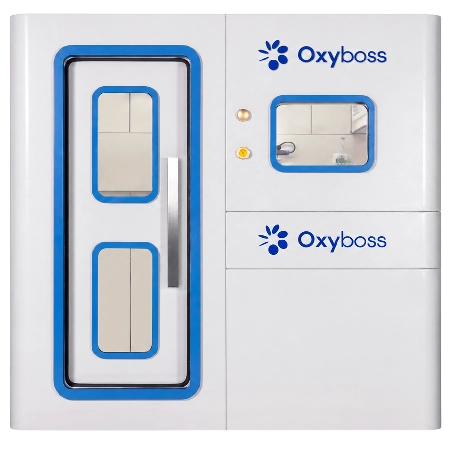
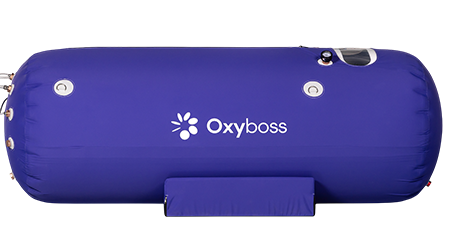
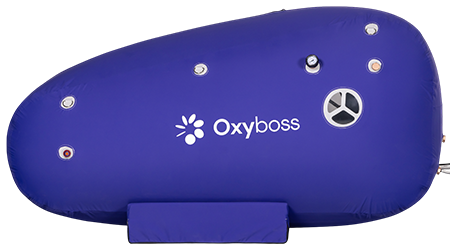
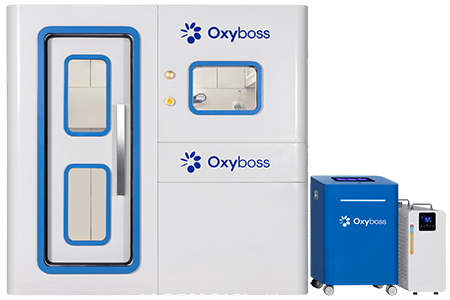
Hardware matters here for one specific reason: a large share of promotional claims transfer findings from high-pressure oxygen research onto low-pressure fabric equipment, and the two are not the same physical exposure. Reading the specifications is the fastest way to see that swap happen.
| Feature | Rigid single-occupant | Rigid multi-occupant | Flexible / fabric shell |
|---|---|---|---|
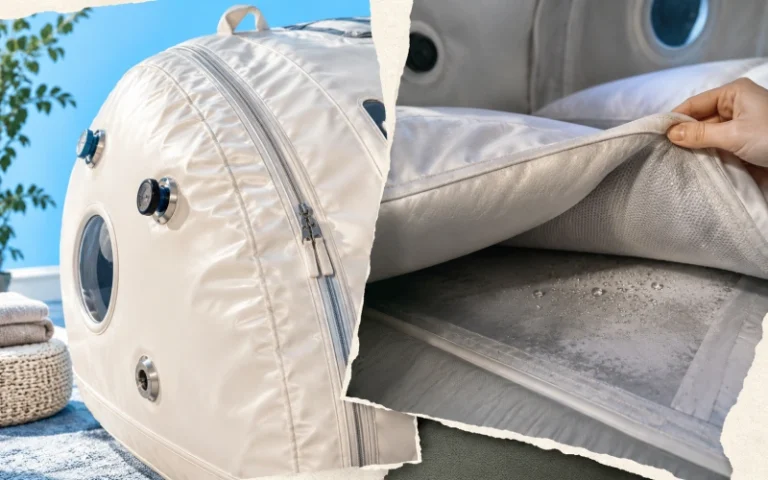
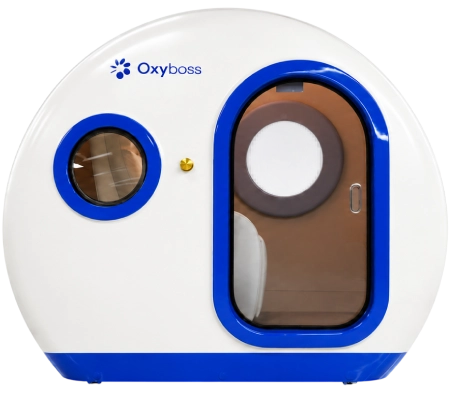
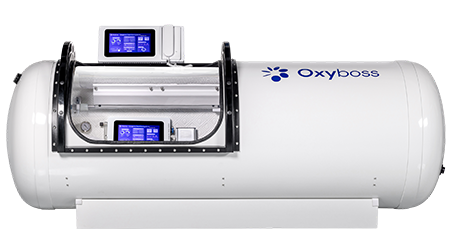
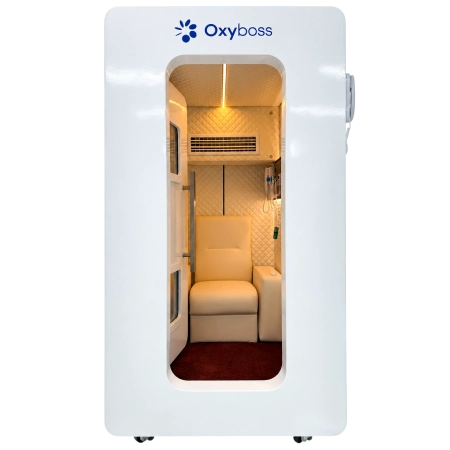
| Structure | Sealed acrylic or steel tube | Room-sized steel vessel | Reinforced textile shell, zipper closure |
| Typical pressure range | Roughly 2–3 atmospheres absolute[3] | Similar range, air-pressurized[3][14] | Substantially lower, commonly near 1.3 atmospheres |
| Gas arrangement | Chamber commonly filled with oxygen directly | Compressed air, with oxygen delivered separately by mask or hood[3] | Compressed ambient air in the low-pressure configuration |
| Occupancy | One person, no accompanying operator inside | Larger internal volume, generally easier for people uncomfortable in confined spaces | Usually one person |
| Research applicability | Matches most published protocols | Matches most published protocols | Does not match the pressure or gas mixture used in the studies above |
Two facts outweigh any promotional point. First, pressure and gas mixture are not incidental details — findings obtained at higher pressure with pure oxygen do not describe a low-pressure air-filled fabric unit, and any page that cites the former while selling the latter has substituted one thing for another. Second, oxygen under pressure is a fire hazard; regulators have documented chamber fires causing serious injury and death, including at facilities operating outside review and accreditation channels[14]. Protocol variation across published studies is also wide enough that session counts and durations differ substantially from one report to the next[7], which is part of why pooled results are hard to interpret.
FAQ
Does hyperbaric oxygen regenerate damaged nerves? Imaging and laboratory work has documented changes consistent with vessel growth and nerve-fibre remodelling in certain tissue contexts[6]. That is not the same as demonstrated recovery of nerve function in humans across neuropathy types, and the randomized data available are limited to the diabetes-associated subgroup[7].
Is a low-pressure fabric chamber the same thing? Physically, no. Low-pressure fabric units typically operate near 1.3 atmospheres without supplemental oxygen, an exposure not represented in the research discussed above.
What are the reported downsides? Documented issues include harm from excess oxygen exposure, discomfort in enclosed spaces, pressure-related ear and sinus effects, and temporary vision changes after repeated sessions[3], along with the fire-safety concerns above[14]. People with diabetes are also advised that glucose monitoring matters in this setting[3].
Why is the picture so thin outside diabetes? Because that subgroup is the most common[2], has existing research infrastructure around wound-related work[10], and maps most directly onto the proposed microvascular and metabolic mechanism. The other categories simply have not been studied at comparable scale.
What should I do first? Get the cause identified[2]. Whether an oxygen chamber is even a coherent idea in a given situation depends entirely on that answer.
The Short Version
Neuropathy is a category, not a diagnosis. Pressurized oxygen has a real mechanistic rationale and a modest, imperfect human evidence base in one subgroup. Neurology guidance has not adopted it, and given the state of the data that is a defensible position. Interest is reasonable; generalizing to all neuropathy is not.
This article reviews published research and regulatory documents for educational purposes. It is not medical advice and describes no medical benefit for any device. Decisions about nerve symptoms belong with a qualified clinician.
References
- The Foundation for Peripheral Neuropathy. Causes. https://www.foundationforpn.org/causes/
- National Institute of Neurological Disorders and Stroke. Peripheral Neuropathy. https://www.ninds.nih.gov/health-information/disorders/peripheral-neuropathy
- U.S. Food and Drug Administration. Hyperbaric Oxygen Therapy: Get the Facts. https://www.fda.gov/consumers/consumer-updates/hyperbaric-oxygen-therapy-get-facts
- de Wolde SD, et al. The Effects of Hyperbaric Oxygenation on Oxidative Stress, Inflammation and Angiogenesis. Biomolecules, 2021. https://pmc.ncbi.nlm.nih.gov/articles/PMC8394403/
- Lindenmann J, et al. Hyperbaric Oxygen Therapy and Tissue Regeneration: A Literature Survey. Biomedicines, 2022. https://pmc.ncbi.nlm.nih.gov/articles/PMC9775938/
- Tal S, Hadanny A, Sasson E, Suzin G, Efrati S. Hyperbaric Oxygen Therapy Can Induce Angiogenesis and Regeneration of Nerve Fibers. Frontiers in Human Neuroscience, 2017. https://pmc.ncbi.nlm.nih.gov/articles/PMC5654341/
- Weng J, Ren H, Guo Q, Huang K, Ding L. Efficacy and safety of hyperbaric oxygen therapy for diabetes peripheral neuropathy: a systematic review and meta-analysis. Medicine, 2024. https://pmc.ncbi.nlm.nih.gov/articles/PMC11383719/
- Price R, et al. Oral and Topical Treatment of Painful Diabetic Polyneuropathy: Practice Guideline Update Summary. Neurology, 2022. https://pubmed.ncbi.nlm.nih.gov/34965987/
- American Academy of Neurology. Oral and Topical Treatment of Painful Diabetic Polyneuropathy — Guideline Detail. https://www.aan.com/Guidelines/Home/GuidelineDetail/1037
- Undersea and Hyperbaric Medical Society. Indications for Hyperbaric Oxygen. https://www.uhms.org/resources/hbo-indications.html
- Undersea & Hyperbaric Medicine Section, American College of Emergency Physicians. Announcing HBO’s Newest Indication: Avascular Necrosis. https://www.acep.org/uhm/newsroom/march-2024/announcing-hbos-newest-indication-avascular-necrosis
- Zajączkowska R, et al. Mechanisms of Chemotherapy-Induced Peripheral Neuropathy. International Journal of Molecular Sciences, 2019. https://pmc.ncbi.nlm.nih.gov/articles/PMC6471666/
- Ahmed MA, Muntingh G, Rheeder P. Vitamin B12 deficiency in metformin-treated type-2 diabetes. BMC Pharmacology and Toxicology, 2016. https://pmc.ncbi.nlm.nih.gov/articles/PMC5054613/
- U.S. Food and Drug Administration. Follow Instructions for Safe Use of Hyperbaric Oxygen Therapy Devices — Letter to Health Care Providers. https://www.fda.gov/medical-devices/letters-health-care-providers/follow-instructions-safe-use-hyperbaric-oxygen-therapy-devices-letter-health-care-providers