When you’re researching hyperbaric chambers, you’ll run into two very different kinds of information: stories from people who’ve used one, and formal studies published in medical journals. Both show up in the same search results. Both sound convincing. And they’re often saying completely different things about the same topic.
The most common mistake isn’t trusting personal stories too much—it’s applying research findings to the wrong kind of chamber. A study about 2.4 ATA with 100% medical oxygen and a healthcare team doesn’t tell you what will happen with a 1.3 ATA mild chamber running on room air at home. These aren’t minor differences. They’re describing two different interventions.
This guide walks through what each type of information can actually tell you, where each one breaks down, and how to use both without fooling yourself.
What Personal Reports Can (and Can’t) Tell You
A single person’s experience can confirm tolerability and describe what the process feels like, but it can’t establish whether the chamber caused any health changes they noticed. That’s not a judgment about honesty—it’s about what one data point can and can’t do.
What you can learn from peer experiences:
- Did someone tolerate it? If three people report finishing 40 sessions without stopping, you know it’s physically possible for some people to do that.
- What does the routine actually look like? How long does setup take? What do you wear? Do you get hungry halfway through? Can you hear your phone? These process details don’t show up in research papers.
- What’s the subjective experience? Ear pressure, claustrophobia, the feeling right after you get out—these are real data points about the experience itself.
A Reddit user in r/covidlonghaulers described their HBOT routine like this:
“Did 20 sessions at 1.5 ATA. By session 8 I could equalize without thinking about it. The weird thing: I’d feel wired for about 2 hours after, then crash hard. Took me 3 weeks to figure out I needed to eat right before getting in.”
That’s useful information about the experience. It doesn’t tell you whether HBOT improved their long COVID symptoms, because:
What you cannot learn from one person’s story:
- Causation. If someone reports “I did 30 sessions and my brain fog improved,” that improvement could be from:
- The chamber itself
- Natural recovery over the same time period
- Placebo effect (expectation-driven improvement)
- Other treatments they were doing at the same time
- Getting more sleep because they committed to a routine
- Generalizability. One person’s response doesn’t predict yours. Biological variation is real.
- Safety across a population. “I had no side effects” doesn’t mean side effects are rare—just that this person didn’t get one.
This isn’t a reason to ignore personal reports. It’s a reason to know what job they can do. They answer “what’s it like?” and “can it be done?” They don’t answer “does it work?” or “how often does X happen?”
What Published Studies Can (and Can’t) Tell You
Research can establish cause and effect within a specific set of conditions. It cannot tell you what will happen if you change those conditions in ways that matter. And most of the published research on hyperbaric oxygen was done under conditions that don’t match home wellness chambers.
What studies can tell you (when done well):
- Effect size. In a controlled trial, did the group using HBOT have better outcomes than the control group, and by how much?
- Frequency of adverse events. Across 200 participants, how many experienced oxygen toxicity, ear barotrauma, or seizures?
- Dose-response relationships. Does 1.5 ATA produce a different outcome than 2.4 ATA?
The gold standard here is a randomized sham-controlled trial. In hyperbaric research, “sham” usually means a group that goes into a chamber but breathes room air at minimal pressure—just enough to feel and hear pressure changes without getting therapeutic oxygen levels. If both groups improve, you know something other than the oxygen is driving the change.
A 2024 BMJ trial on long COVID did exactly this: one group got 2.0 ATA with 100% O₂, the other got 1.2 ATA with room air. Both groups reported improvement. The researchers concluded the improvements weren’t from the oxygen dose—they were from expectation, attention, or the pressure change itself.
(Source: BMJ Open, DOI 10.1136/bmjopen-2024-094386)

The catch: most studies don’t match your situation
Here’s where it gets tricky. The Undersea & Hyperbaric Medical Society (UHMS) publishes a list of 14 conditions where hyperbaric oxygen has proven benefit. That list is based on studies using:
- Pressure: 2.0 to 3.0 ATA (sometimes higher)
- Oxygen: 100% medical-grade O₂
- Setting: Hospital or clinical environment with trained staff
- Monitoring: Continuous supervision, pre-screening for contraindications
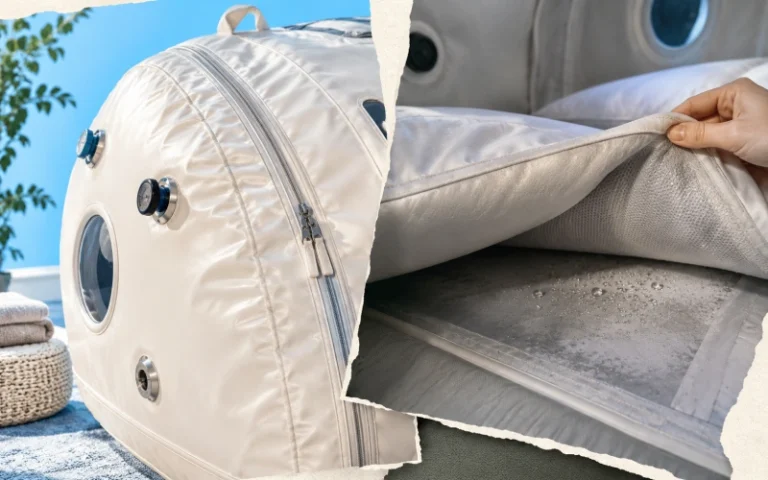
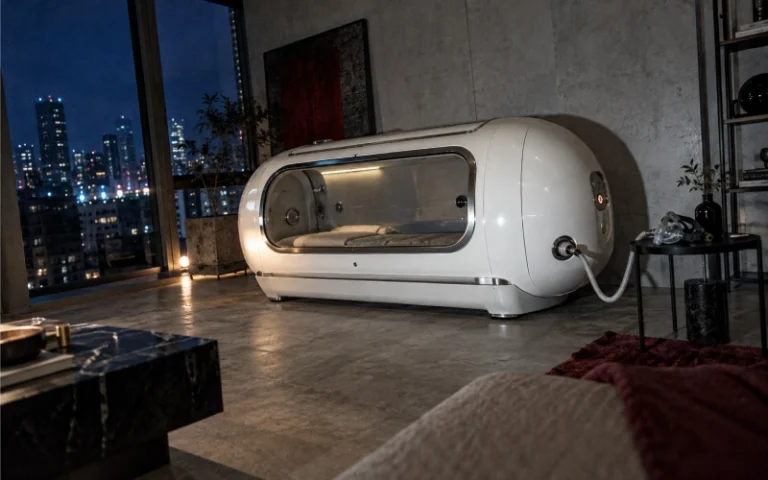
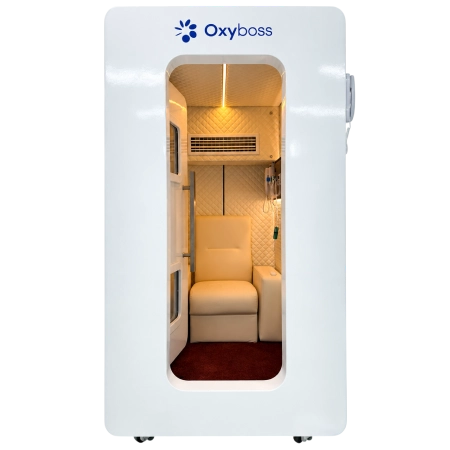
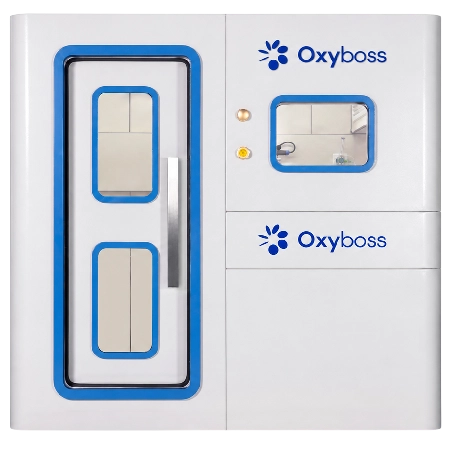
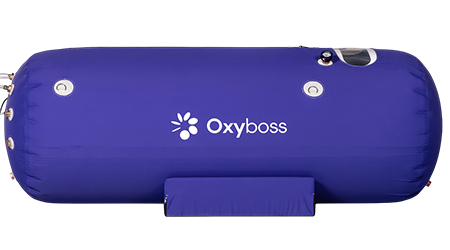
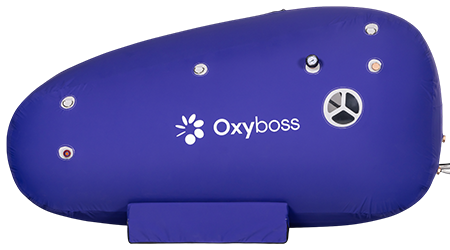
Mild hyperbaric chambers—the ones marketed for home wellness use—typically run at 1.3 to 1.5 ATA with room air (21% oxygen) or modest enrichment. The UHMS explicitly categorizes this as “Unproven Hyperbaric Treatment” in their position statement on low-pressure chambers.
(Source: UHMS Position Statement on Low-Pressure Chambers, PDF)
So when you read a study showing HBOT helps diabetic foot ulcers, that study was done at 2.4 ATA with pure oxygen in a hospital. The results don’t automatically transfer to a 1.3 ATA soft chamber at home. That’s not a defect of the study—it answered the question it was designed to answer. It’s just not the question you’re asking.
What studies cannot tell you:
- What happens with the chamber you’re actually considering, if it differs in pressure, oxygen concentration, or treatment protocol from what was studied.
- Your personal response. Population averages don’t predict individual outcomes.
- Real-world tolerability. A 12-week trial with phone check-ins is different from doing this on your own for a year.
When “I Feel Better” Isn’t Enough to Know Why
One of the most persistent debates in chamber communities is what to do with subjective improvement without measurable change. Someone finishes 40 sessions and reports “my energy is way better, but my labs didn’t change.” Is that real? Is it placebo? Does it matter?
Improvement that you can feel is real—it’s just not enough to establish cause. The gap between “I noticed a change” and “the chamber caused the change” is where most people get stuck.
Three reasons improvement happens without the treatment causing it:
1. Natural recovery. Many conditions fluctuate or improve on their own over weeks to months. If you start chamber sessions during a dip and finish during an upswing, the chamber gets credit for timing.
2. Placebo and expectation effects. These aren’t “fake”—they’re real physiological changes driven by belief and attention. In pain research, placebo responses can be 30–40% of the active treatment effect. The expectation that something will help can improve sleep, reduce perceived pain, and boost energy—especially when you’re paying attention to those metrics.
3. Lifestyle changes that happen alongside the treatment. Committing to 40 chamber sessions often means committing to a routine: fixed sleep schedule, showing up somewhere, resting for 60–90 minutes. Those things have documented effects on energy and mood independent of the chamber.
A 2024 study on long COVID and hyperbaric oxygen illustrates this perfectly. Researchers gave one group 2.0 ATA with 100% oxygen, and the other group 1.2 ATA with room air (a sham condition that feels like pressure but delivers no therapeutic dose). Both groups improved. The improvement wasn’t from the oxygen—it was from expectation, routine, or the pressure sensation itself.
(Source: BMJ Open 2024, DOI 10.1136/bmjopen-2024-094386)
Does this mean your improvement “doesn’t count”? No. It means you can’t confidently say why it happened without a comparison. And that matters when you’re deciding whether to buy a $15,000 piece of equipment or recommend it to someone else.
The Pressure and Oxygen Mismatch: Why “HBOT Research” Might Not Apply
This is where most of the confusion happens. You see a headline: “Study shows HBOT improves cognitive function after stroke.” You think: great, I’m looking at chambers for post-concussion symptoms. But when you dig into the study, it used:
- Pressure: 2.4 ATA
- Oxygen: 100% medical-grade O₂ delivered via mask
- Setting: Hospital with neurologist oversight
- Duration: 40 sessions over 8 weeks, with pre- and post-imaging
The chamber you’re considering runs at 1.3 ATA with room air (21% oxygen), unsupervised, at home.
These are not the same intervention. It’s not a question of “close enough”—the dose, delivery, and monitoring are all different in ways that affect both safety and outcomes.
What the research actually studied vs. what you’re looking at:
| Research HBOT | Mild Hyperbaric Chambers |
| 2.0–3.0 ATA | 1.3–1.5 ATA |
| 100% oxygen via mask or hood | Room air (21% O₂) or modest enrichment |
| Clinical setting, trained operator | Home use, self-operated |
| Pre-screening for contraindications | User responsibility |
| FDA-cleared for specific indications | Marketed as wellness devices |
The Undersea & Hyperbaric Medical Society (UHMS) is explicit about this. In their position statement on low-pressure chambers, they write:
“Mild hyperbaric oxygen therapy at pressures less than 1.5 ATA… should be regarded as an unproven treatment modality at this time.”
(Source: UHMS Position Statement on Low-Pressure Chambers, PDF)
This doesn’t mean mild chambers do nothing. It means the evidence base for high-pressure medical HBOT doesn’t automatically transfer. If you’re evaluating a mild chamber, you need to look for studies on mild chambers specifically—and there are far fewer of them.
Why this distinction matters:
- Safety profile changes. Oxygen toxicity and seizures are dose-dependent. They’re documented risks at 2.0+ ATA with 100% O₂, but extremely rare at 1.3–1.5 ATA with room air. That’s not a minor difference.
- Mechanism assumptions may not hold. Much of the research on HBOT assumes hyperoxia (elevated tissue oxygen) drives the effect. At 1.3 ATA with 21% oxygen, you’re not getting significant hyperoxia. If the effect you’re hoping for depends on that mechanism, a mild chamber won’t deliver it.
- Insurance and regulatory status. Medical HBOT for approved indications may be covered by insurance. Mild chambers are wellness devices—out of pocket, no coverage.
When someone says “the research says HBOT works for X,” your first question should be: “What pressure, what oxygen concentration, and what setting?” If the answer doesn’t match what you’re considering, the research isn’t talking about your situation.
What Questions to Ask Before You Trust Any Claim
Whether you’re reading a peer’s story or a published study, here’s the minimum checklist to avoid fooling yourself:
For personal reports:
- Was there a clear baseline? “I feel better” is meaningless without knowing what “before” looked like.
- What else changed? New supplements, better sleep, physical therapy, different diet, reduced stress?
- How long has the improvement lasted? Two weeks after stopping is different from six months.
- Is this person selling something? Testimonials on manufacturer sites are marketing, not data.
For published studies:
- What was the pressure and oxygen concentration? If it doesn’t match your chamber, it’s not studying your chamber.
- Was there a control or sham group? Without one, you can’t separate treatment effects from everything else.
- How many people? Case reports (n=1 or n=5) are hypothesis-generating, not proof.
- Who funded it? Industry-funded studies aren’t automatically bad, but conflicts of interest matter.
- What was actually measured? Subjective self-report is valuable but different from objective biomarkers or imaging.
One Reddit user in r/Biohackers cut through the noise this way:
“I learned to ask: ‘Is this thing known to work, or is it plausible that it works?’ Most wellness devices live in plausible territory. That’s not a scam—it’s just where they are. But I’m not dropping 20k on plausible.”
That’s a fair filter.
When Peer Experiences Are the Most Useful Data
There’s one situation where personal reports beat published research every time: tolerability and process details.
Research papers will tell you “3% of participants experienced ear barotrauma.” They won’t tell you:
- What equalization technique actually works when you’re new
- How long it takes to stop thinking about your ears
- What it feels like when you’re doing it wrong
- Whether the hiss/hum bothers you after session 10
- If you can realistically do this every day for two months while working full-time
For these questions, someone’s detailed Reddit post is worth more than a dozen published trials.
A user in r/covidlonghaulers shared:
“Week 1: ears were hell, had to stop twice per session. Week 2: figured out I needed to swallow before I felt pressure. Week 3: barely noticed it. If someone had told me ‘you’ll adapt in 2–3 weeks,’ I wouldn’t have quit on day 4.”
That’s actionable information you can’t get anywhere else.
Another user in r/LongCovid:
“The post-session energy spike is real but it lasts like 90 minutes. Then I crash. Took me 15 sessions to figure out I needed to eat protein right before I got in, not after. No study is going to tell you that.”
These are the gaps peer experiences fill. Not “does it work?”—but “what’s it actually like to do this thing?”
Real-World Example: Comparing the Two Sources for the Same Question
Let’s take a concrete question: “How common are side effects with hyperbaric oxygen?”
What published research says:
A 2023 systematic review in Frontiers in Medicine looked at adverse events across multiple studies. For pressures ≥2.0 ATA, they found:
- Ear barotrauma: 14.4% of participants
- Sinus barotrauma: 3.2%
- Oxygen toxicity / CNS effects: 0.6%
- Claustrophobia leading to early termination: 2.1%
For <1.5 ATA, reported adverse events were rare, but the authors noted: “The safety profile of low-pressure chambers is less well characterized due to fewer rigorous trials.”
(Source: Frontiers in Medicine 2023, DOI 10.3389/fmed.2023.1160774)
What peer experiences say:
Across eight Reddit threads we reviewed (r/covidlonghaulers, r/Biohackers, r/LongCovid, r/PostConcussion), users mentioned:
- Ear equalization difficulty: Brought up by ~60% of first-time users, usually resolved by session 5–10
- Fatigue or “crash” after sessions: Mentioned by ~40%, described as temporary
- Claustrophobia: Mentioned by ~15%, but most said they adapted
- Headaches: Mentioned by ~10%, usually in first week
- No issues: ~30% reported zero side effects
The studies give you incidence rates in controlled settings. Peer reports give you subjective severity, adaptation timelines, and workarounds.
Neither alone is enough. Together, they let you form a realistic picture.
The Bottom Line: What Each Source Can Actually Do
| Personal Reports | Published Studies | |
| Can confirm: | Tolerability, process details, subjective experience | Effect size, causation (when designed correctly), population-level safety |
| Cannot confirm: | Causation, generalizability, population safety | What your specific setup will do, personal response, real-world tolerability |
| Best used for: | “What’s it like?” “Can I do this?” | “Does it work under these conditions?” “How often does X happen?” |
| Falls apart when: | Treated as proof of effectiveness | Applied to equipment, doses, or settings it didn’t study |
The error isn’t trusting one too much—it’s asking the wrong questions of each.
If you want to know whether hyperbaric oxygen can improve chronic wound healing in a hospital setting with 2.4 ATA and 100% O₂, published research answers that (yes, for certain wound types, per UHMS guidelines).
If you want to know what it’s like to use a 1.3 ATA chamber at home for three months, peer reports answer that (mixed results, ear adaptation takes 1–3 weeks, some people love the routine, others find it unsustainable).
If you want to know whether a 1.3 ATA chamber at home will improve your chronic fatigue, neither source can tell you that with confidence. One will tell you what’s plausible based on related mechanisms. The other will tell you what happened to people who tried it. Neither can predict your outcome.
That’s not a defect of the information—it’s a limit of what information can do. The best you can do is know which source answers which question, and not stretch either one past where it holds up.
FAQ
If placebo effects are real, why does it matter whether the chamber “works”?
Placebo effects are real physiological changes, but they’re not reliable or durable. They depend on continued belief, and they don’t work equally well for all conditions or all people. If you’re spending $15,000 on equipment, you want effects that don’t depend on you never learning the truth.
Also: distinguishing placebo from direct effects matters for safety. If a treatment has risks (time, money, rare adverse events), and its benefits come entirely from expectation, you could get the same benefit from something safer or cheaper.
Can I trust a study if it’s funded by a chamber manufacturer?
Funding source alone doesn’t disqualify a study, but it should make you read more carefully. Look for:
- Independent outcome assessment (someone not connected to the funder measured the results)
- Pre-registration (the study protocol was posted publicly before they started, so they couldn’t change endpoints after seeing the data)
- Replication (has anyone outside the manufacturer’s orbit found the same thing?)
Industry-funded studies are often well-designed—manufacturers want something they can cite. But they’re also more likely to focus on outcomes that favor the product, or to stop early when results look good.
What if I try a chamber and feel better—is that enough?
For you personally? That might be all you need. If you feel better, you can tolerate the routine, and you’re not sacrificing other treatments that have stronger evidence, then it’s serving a purpose.
But it’s not enough to conclude the chamber caused the improvement, or to recommend it to others as effective. Those require a higher standard of evidence.
How do I evaluate a clinic’s or seller’s claims?
Start with these questions:
- What pressure and oxygen concentration are they using? If they cite research, does that research match their specs?
- Are they claiming it “treats” or “cures” specific diseases? That’s a regulated claim. If they’re making it without FDA clearance for that indication, that’s a red flag.
- Do they pre-screen for contraindications? (Untreated pneumothorax, certain seizure disorders, some cardiac conditions, recent ear surgery.) If they don’t ask, they’re not following safety protocols.
- Can they show you the references they’re citing? And when you read those references, do they actually say what the clinic claims?
A clinic or seller who’s confident in their work will answer those questions directly.
Disclaimer: This article provides general information about evaluating hyperbaric chamber claims. It is not medical advice and does not recommend or discourage any specific treatment. Hyperbaric oxygen therapy for medical conditions should be discussed with a qualified healthcare provider. Wellness chamber use should be based on informed personal choice after reviewing available evidence.