
The short answer
Not in the way most search results suggest. There is liver-related hyperbaric research out there, but it is mostly review articles, animal work, or studies aimed at adjacent questions like post-surgical regeneration and transplant injury.[1][2][3] That body of work does not establish cirrhosis as a use case for a hyperbaric chamber, and it especially does not establish it for a non-medical chamber used at home.[1][4]
If you came in hoping for a yes, the honest version is: the topic is research-adjacent, not settled. The rest of this article explains why the question keeps surfacing online, what the studies actually cover, where the common misreadings happen, and what matters on the safety side.
Why people connect hyperbaric chambers with liver cirrhosis
The oxygen/fibrosis idea in plain English
The logic tends to go like this. Cirrhosis involves scarring. Scarred tissue tends to be poorly oxygenated. Low oxygen is part of the signaling environment associated with fibrosis. A chamber raises ambient pressure, which increases how much oxygen dissolves in plasma. So — more oxygen to stressed tissue, less low-oxygen signaling, maybe less of the process driving fibrosis.[1]
On paper, that chain sounds clean. It is also the kind of reasoning that gets repeated in blog posts until it starts to read like a conclusion.
Why that idea is not the same as proof
A mechanism explains how something might work if it works. It does not tell you whether the effect is large enough to matter in a chronic disease, whether it shows up in humans at all, or whether it survives the variables that make real biology messy — disease stage, chamber pressure, session length, and study context.[1]
Plausible is not proven. That gap is where most of the confusion on this topic lives.
What the evidence actually looks like
Cirrhosis-specific evidence
Direct, cirrhosis-specific human evidence for hyperbaric exposure is thin. You can find case reports and small studies around specific complications sometimes seen in advanced liver disease, but these sit inside hospital contexts, at clinical pressures, addressing a defined complication — not cirrhosis as a whole.[1] None of this amounts to a body of evidence saying “a chamber changes the course of cirrhosis.” That question has not been answered in any robust way.
The four kinds of liver studies that get over-extended online
Most articles quote one of four research buckets and let readers connect the dots toward cirrhosis. Each bucket answers a different question. None of them answer the one a cirrhosis-focused reader actually has.
- Liver regeneration after partial hepatectomy (mostly animal).
What it studies: how liver tissue regrows after a piece is surgically removed, often in rats.[2]
How it gets misread: “Hyperbaric oxygen helps the liver regenerate, so it should help a cirrhotic liver recover.”
Why that does not follow: surgical resection in a healthy or experimentally altered animal liver and long-standing fibrotic scarring in a human liver are different biological situations. Regrowth after a clean cut is not the same process as reversing years of accumulated scarring. - Transplant and ischemia-reperfusion studies.
What they study: what happens to liver tissue when blood flow is cut off and then restored, typically around transplant.[1][3]
How they get misread: “Hyperbaric oxygen protects the liver from injury, so it must be generally good for liver disease.”
Why that does not follow: these studies target a short, acute injury window inside a surgical setting. Chronic cirrhosis is not an acute reperfusion event. And results in this area are mixed — at least one rat study found hyperbaric exposure actually worsened liver reperfusion injury under the conditions tested.[3] - Hypoxia-fibrosis signaling papers.
What they study: how low-oxygen signaling pathways influence fibrotic processes at the cellular level.[1]
How they get misread: “Low oxygen drives fibrosis, so adding oxygen reduces fibrosis.”
Why that does not follow: signaling pathways are not one-to-one switches. Raising dissolved oxygen during a chamber session does not mean the underlying disease signaling resets. Cellular mechanism papers describe possibility, not outcome. - Overview and review articles on hyperbaric oxygen in liver diseases.
What they do: summarize the research landscape, usually ending with calls for more study.[1]
How they get misread: a cautious review gets paraphrased online as “research supports hyperbaric oxygen for liver conditions.”
Why that does not follow: “the area is worth studying” and “this is a reasonable thing to do at home” are not the same statement.
The leap from any of these four to “a person with cirrhosis should use a hyperbaric chamber” is a leap most of these papers’ authors would not make themselves.

What the evidence does not show
Taken together, the honest picture looks like this:
- Mechanism papers that propose pathways.[1]
- Animal data that points in multiple directions, including some unfavorable findings.[2][3]
- Human clinical work tied to specific complications, at medical pressures, under supervision.[1][4]
- No established basis for approaching cirrhosis itself with a hyperbaric chamber, medical or otherwise.[1][4]
Clinical HBOT vs non-medical chamber context
Pressure, oxygen source, supervision, and setting
The Undersea & Hyperbaric Medical Society describes scientifically supported hyperbaric oxygen therapy as generally operating in the range of about 1.9 to 3.0 ATA, delivered with near-100% oxygen, in a clinical setting, with trained staff, for a defined list of approved indications. Cirrhosis is not on that list.[4]
UHMS also uses the term “mild hyperbaric oxygen” for exposures below roughly 1.5 ATA and notes those lower-pressure uses are unproven for most conditions marketed around them.[4]
These are not small technical differences. Pressure, oxygen concentration, session structure, monitoring, and medical oversight all change what an exposure actually is.
Why “a chamber” is not one single category
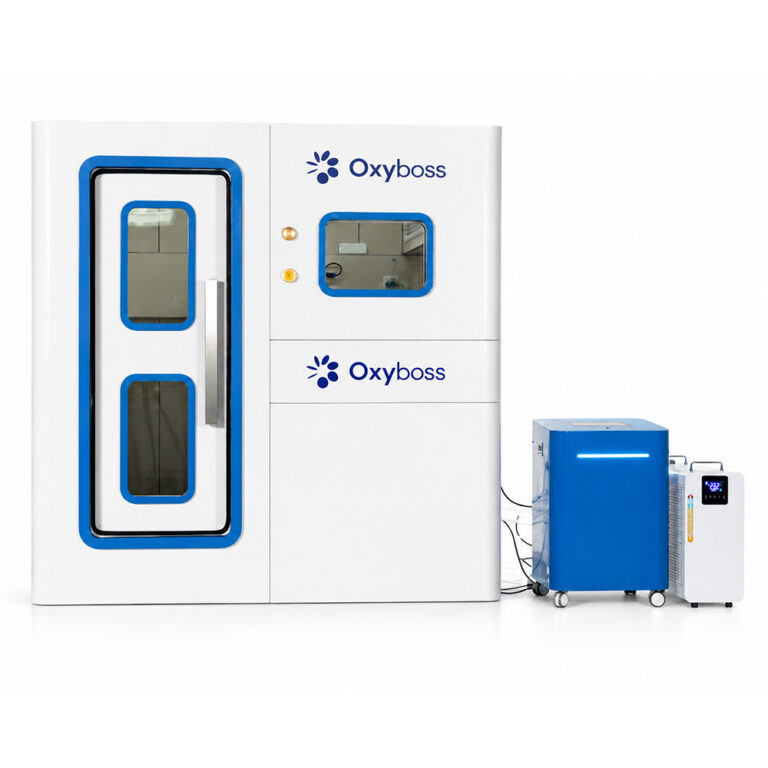
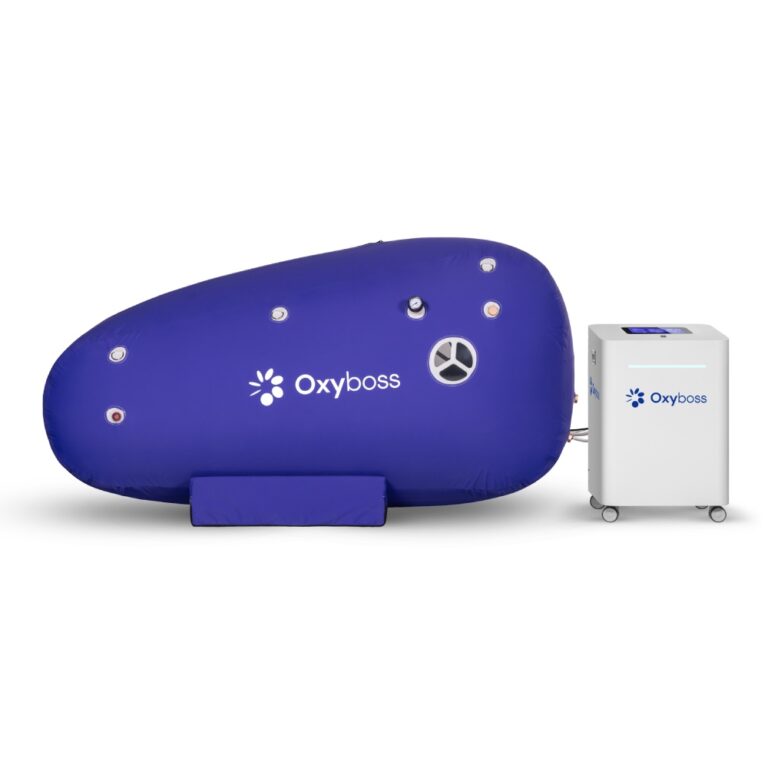
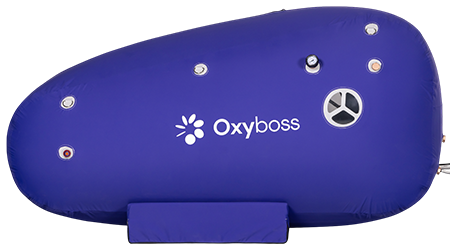
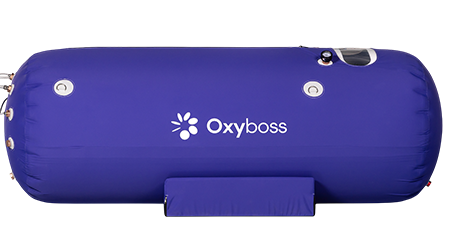
When someone reads a study about hyperbaric oxygen and then looks at a soft-sided hyperbaric chamber sitting in a living room, it is easy to assume the two are the same thing at different price points. They are not.
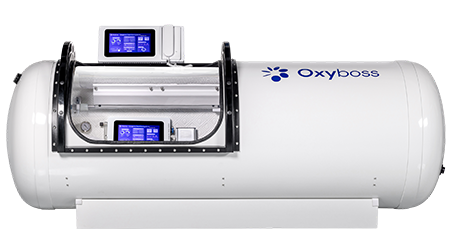
A hospital multiplace chamber running at 2.4 ATA with medical-grade oxygen, a protocoled session, and a physician on call is a different object — practically and scientifically — from a lower-pressure home unit used without medical supervision.[4] Study results tied to one context do not automatically transfer to the other. This is the single most common category error in hyperbaric content online.

What this topic suggests vs what current evidence actually supports
| What a reader might be thinking | What the cited research actually covers | What that research does not prove | Safer non-medical takeaway |
| “I read that oxygen therapy can help the liver recover” | Rat studies on regrowth after surgical removal of part of the liver | That chronic scarring in a human cirrhotic liver reverses under hyperbaric exposure | Post-surgical regrowth in animals is not the same biology as long-standing cirrhosis |
| “Someone told me more oxygen reduces fibrosis” | Mechanism papers on hypoxia and fibrotic signaling | That raising dissolved oxygen in a session changes disease signaling in a person with cirrhosis | A signaling pathway is a hypothesis route, not an outcome |
| “Hyperbaric oxygen protects the liver, I’ve seen papers” | Transplant and ischemia-reperfusion studies, often in animals | That chronic cirrhosis responds the way acute surgical injury does | Acute injury windows and chronic disease are not interchangeable |
| “Hyperbaric oxygen is FDA-recognized, so it should be fine here” | Approved indications at roughly 1.9–3.0 ATA in clinical settings | That cirrhosis is an approved indication, or that home-pressure chambers match clinical HBOT | Approved indications and non-medical chamber use are different conversations |
| “The overall research looks positive” | Some favorable mechanism and animal findings | That findings are consistent — at least one study showed worsening under specific conditions | Mixed evidence calls for caution, not enthusiasm |
Safety and decision-quality questions
Non-medical chamber use has a physical-safety checklist of its own, separate from any disease question. The FDA has issued guidance on safe use of hyperbaric oxygen therapy devices, and most of it is physical safety rather than disease-specific decision-making.[5]
Pressure changes and enclosed-space basics
Ambient pressure changes during a session are a physical fact of how a chamber operates. The most common practical considerations are around ear and sinus pressure equalization, similar to what people experience on a flight, and general comfort inside an enclosed space. These are user-experience factors tied to the device, not instructions for any particular health condition.
Fire, static, clothing, and device-use basics
The practical safety points worth internalizing:
- Fire and static risk. An environment with elevated oxygen is more ignition-sensitive than normal air. That shapes what can go inside a hyperbaric chamber and what cannot.[5]
- Clothing and materials. Manufacturers specify acceptable fabrics. Synthetic materials that build static, loose fibers, lotions, oils, and electronics with batteries are common exclusions. Follow the manual, not a forum post.[5]
- Maintenance. Zippers, seals, pressure gauges, compressors, and filters need the checks the manufacturer lists. Skipped maintenance is where small issues grow.[5]
- Supervision and setup. Even at lower pressures, first-time use with someone else present is sensible. Knowing how to depressurize and exit is part of ordinary use, not a rare edge case.
- Instructions. The manufacturer’s instructions are the primary source for your specific unit. Generic online advice, including this article, is not a substitute.[5]
None of the above speaks to whether a hyperbaric chamber is appropriate for any particular health condition. That question does not belong in a blog post.
A realistic takeaway
The topic “whether a hyperbaric chamber can help liver cirrhosis” sits inside an open research area, not a consumer use case. There is liver-related literature. Most of it is mechanism, animal, or adjacent to other clinical questions.[1][2][3] Some of it is mixed.[3] None of it adds up to a non-medical chamber being a reasonable response to cirrhosis.[1][4]
A non-medical chamber is a device with its own context: lower pressures, home settings, and a set of physical safety rules worth respecting on their own terms.[4][5] Stretching research about clinical HBOT or animal studies to cover cirrhosis at home is where the wording usually goes wrong. Any disease-specific decision — including whether hyperbaric exposure of any kind fits into a person’s situation — belongs with a licensed clinician who knows the case.
FAQ
- If the mechanism sounds reasonable, why isn’t it enough?
Because medicine regularly sees mechanisms that look clean on paper and then fail to produce a meaningful effect in actual disease. Dose, timing, disease stage, and individual variation all change the picture. A mechanism is a starting hypothesis. Outcome data in the right population is what turns it into a use case, and that data does not exist for cirrhosis.[1] - Why does some hospital-based liver research still not answer the home-use question?
Because those studies usually sit inside tightly controlled medical settings, with clinical pressures, medical oxygen, defined complications, and supervision.[1][4] That is not the same exposure context as a lower-pressure non-medical chamber used at home. - Why does this topic keep showing up in search results if the evidence is thin?
Two reasons. First, cirrhosis vocabulary overlaps with words like “hypoxia” and “fibrosis,” which pull in hyperbaric content.[1] Second, some sites take broad liver research and write headlines as if it applied to cirrhosis directly. The query is common. Strong cirrhosis-specific evidence behind it is not. - Are lower-pressure home hyperbaric chambers just a weaker version of clinical HBOT?
No. Scientifically supported hyperbaric oxygen therapy generally runs at about 1.9–3.0 ATA with near-100% oxygen and medical oversight.[4] Exposures below around 1.5 ATA are described by UHMS as “mild hyperbaric oxygen” and are considered unproven for most of the conditions marketed around them.[4] Pressure, oxygen source, supervision, and setting all differ — it is a different category, not a dialed-down version of the same thing. - What should I actually take away from all the liver studies cited online?
That researchers find the area scientifically interesting enough to keep studying — mostly in animals, mostly around surgical or acute contexts, and mostly at mechanism level.[1][2][3] “Worth studying” is not the same as “ready for consumer use for cirrhosis.” Treat citations in product-adjacent articles as context, not as clinical guidance. - What safety issues matter most with chamber use itself?
Pressure equalization comfort, enclosed-space tolerance, fire and static precautions tied to oxygen-rich environments, clothing and material rules, maintenance of seals and gauges, having someone present for early sessions, and following the manufacturer’s instructions for the specific device.[5] - Can this article tell me whether I should use a chamber for a liver condition?
No, and it should not try to. Disease-specific decisions belong with a licensed clinician who can look at the individual case. An article like this can explain why the topic surfaces online, what the research does and does not say, and what general safety points matter — and stop there.
References
- Sun Y, Liu D, Song J. Hyperbaric Oxygen Therapy in Liver Diseases. Int J Med Sci. 2018;15(8):782-789.
- Ozdogan M, Kamanli A, Gurer A, et al. Beneficial effect of hyperbaric oxygenation on liver regeneration in cirrhotic rats after partial hepatectomy. J Surg Res. 2005.
- Lima CX, Sanches MD, Rezende Neto JB, et al. Hyperbaric oxygen therapy aggravates liver reperfusion injury in rats. Acta Cir Bras. 2008;23(4):315-321.
- Undersea & Hyperbaric Medical Society. HBO Indications.
- U.S. Food and Drug Administration. Follow Instructions for Safe Use of Hyperbaric Oxygen Therapy Devices – Letter to Health Care Providers. August 25, 2025.