A grounded look at how spending time in a pressurized oxygen environment interacts with your body’s own renewal systems — and where the research stands right now.
Disclaimer: This article summarizes findings from published, peer-reviewed scientific research. It is provided for educational and informational purposes only. The content on this site does not claim that any product or service offered here can diagnose, cure, mitigate, or prevent any disease. The chambers discussed on this site are wellness-oriented devices and are not presented here as medical treatments for aging, stem cell activation, telomere lengthening, or any disease-related condition. Always consult a qualified professional before beginning any new wellness protocol.
Why Atmospheric Pressure Deserves More Attention
Most people never think about atmospheric pressure. You breathe, your lungs do their thing, and that’s the end of it. But a growing body of peer-reviewed research suggests that when you change the pressure equation — when you sit inside a hyperbaric chamber breathing oxygen-enriched air at pressures above normal sea level — the body responds in ways that nobody fully predicted thirty years ago.
Here’s the part that catches people off guard: the effect is not just about getting more oxygen. It’s about what happens when oxygen dissolves directly into blood plasma in greater amounts, supplementing the usual hemoglobin transport system, and reaches tissues that are normally oxygen-limited. Cells involved in skin maintenance, immune function, and internal repair begin behaving differently under these conditions.
And a significant chunk of that behavior, according to published research, involves stem cells — the body’s built-in maintenance crew.
The Oxygen Paradox: When “More” Triggers Protection
You’d expect that flooding the body with extra oxygen would cause damage. Reactive oxygen species (ROS) are real, and too many of them wreck cellular structures. Basic biology.
But the picture is less straightforward than that.
When researchers expose subjects to repeated sessions of pressurized oxygen — with deliberate breaks where they return to normal air — something counterintuitive emerges. The body’s antioxidant defenses ramp up. Enzymes like superoxide dismutase and glutathione peroxidase increase. And because these protective molecules persist longer than the ROS that triggered them, the net effect after exiting the chamber trends toward an antioxidant-positive state 1.
Scientists have a name for this: the hyperoxic-hypoxic paradox. The intermittent bursts of elevated oxygen appear to activate the same protective pathways that normally switch on during low-oxygen conditions. Hypoxia-inducible factor (HIF-1α), a master regulator controlling everything from new blood vessel formation to stem cell release, gets activated — not by lack of oxygen, but by the rhythmic fluctuation of going from high oxygen back to baseline 2.
Think of it as the body perceiving a need to rebuild, without the actual damage of oxygen deprivation.
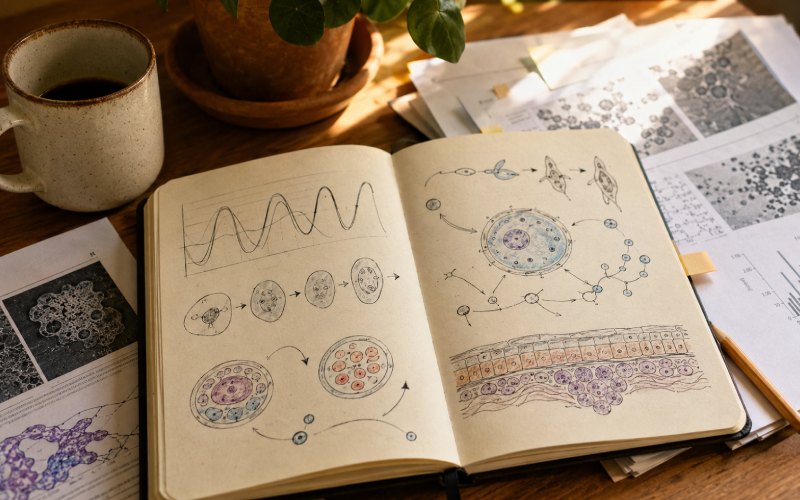
Stem Cells: The Body’s Quiet Renovation Crew
Stem cells sit in bone marrow, in tissue niches, and in various organs, waiting. When tissue is worn down or stressed, signals go out, and these progenitor cells mobilize, migrate, and get to work.
The problem? This system slows with age. The signals weaken. The cells get sluggish. Fewer of them circulate in the bloodstream, and those that do tend to be less effective.
This is where the research on pressurized oxygen environments gets genuinely interesting.
Mobilization From Bone Marrow
Published studies show that exposure to hyperbaric conditions stimulates nitric oxide synthase in bone marrow. This triggers the release of CD34+ stem progenitor cells — a population involved in vascular maintenance, tissue renewal, and immune support — into circulation.
An important distinction needs to be made here regarding pressure levels:
- In a medical-grade protocol (2.0 ATA, 100% oxygen), researchers documented a roughly two-fold increase in circulating stem progenitor cells after a single session, growing to approximately eight-fold after 20 sessions 3. These results come from clinical-grade chambers operating at pressures and oxygen concentrations well above what wellness-oriented chambers provide.
- In a separate study using mild hyperbaric conditions (1.27 ATA, room air) — much closer to what non-medical chambers offer — stem progenitor cells still showed a nearly two-fold increase after 9 exposures and a three-fold increase 72 hours after the final session 4. This was a small early study measuring circulating progenitor cells, not a demonstration of clinical anti-aging outcomes.
That second finding is noteworthy because it suggests even modest pressure changes may nudge regenerative systems. But it would be misleading to treat these two data sets as interchangeable. Different pressures, different oxygen sources, different magnitudes of response.
Proliferation and Differentiation
Beyond mobilization, pressurized environments also appear to influence what stem cells do once activated. Studies using intestinal stem cells in mice demonstrated that consecutive daily sessions of pressurized oxygen increased proliferation through the mTORC1/S6K1 signaling pathway — the same pathway involved in caloric restriction-related longevity research 5.
In other models, mesenchymal stem cells exposed to hyperbaric conditions showed increased differentiation capacity and modified protein secretion profiles 1.
These are laboratory and clinical-protocol findings. How they translate to the milder pressures used in wellness settings is an active area of inquiry, not a settled question.
Telomeres, Senescent Cells, and the Biological Clock
If stem cell mobilization is the body’s repair service, telomeres are its ticking clock.
Telomeres — repetitive DNA sequences capping chromosome ends — shorten with every cell division. When they get critically short, the cell either stops dividing (enters senescence) or dies. This gradual erosion is one of the most reliable markers of biological aging 6.
One of the most widely cited studies in this space is a 2020 prospective trial involving 35 healthy adults aged 64 and older. After 60 daily sessions at 2.0 ATA with 100% oxygen (with intermittent air breaks), researchers observed the following 7:
| Marker | Change Observed |
| B-cell telomere length | +37.63% |
| T-helper telomere length | +29.30% |
| Natural killer cell telomere length | +22.16% |
| Senescent T-helper cells | −37.30% |
| Senescent T-cytotoxic cells | −10.96% |
⚠️ Critical context: These results were achieved using medical-grade hard-shell chambers operating at 2.0 ATA with 100% pure oxygen. This is a fundamentally different environment from wellness-oriented mild hyperbaric chambers, which typically operate between 1.3–1.5 ATA using concentrated (not pure) oxygen or ambient air. No published study has replicated these specific telomere results at mild hyperbaric pressures. Citing this data as evidence for what a home or wellness chamber can do would be inaccurate.
That said, the data itself is remarkable. It also comes from a relatively small prospective study, so it should be interpreted as promising rather than definitive. Whether some fraction of these effects occurs at lower pressures is a genuine scientific question — one that hasn’t been answered yet.

What Published Research Shows About Skin, Recovery, and Day-to-Day Vitality
Not everything in this field is about chromosomes and molecular signaling. Some of the most tangible findings involve skin and connective tissue.
Collagen and Elastic Fiber Observations
A prospective study on skin aging found that repeated intermittent hyperbaric exposures (again, at medical-grade 2.0 ATA protocols) led to measurable changes in the dermis: increased collagen density, longer and more stable elastic fibers, reduced senescent skin cells, and new blood vessel formation in areas shielded from sun exposure 8. The sun-shielded detail matters — it isolates intrinsic aging from photoaging. This was also a small clinical study, and it does not establish that the same effect occurs in mild-pressure wellness chambers.
New Blood Vessel Growth
Angiogenesis — the formation of new capillaries — is among the best-documented responses to pressurized oxygen settings. Through HIF-1α and VEGF signaling, hyperbaric conditions promote capillary budding from existing vessels. Improved capillary networks support nutrient delivery and waste removal 1.
Shifts in Inflammatory Markers
Chronic low-grade inflammation, sometimes called “inflammaging,” accelerates tissue breakdown throughout the body. Research in hyperbaric settings has documented reductions in pro-inflammatory cytokines (IL-6, IL-1β, TNF-α) alongside increases in anti-inflammatory mediators like IL-10 1. A calmer inflammatory baseline, at least theoretically, creates conditions where repair processes can keep pace with degradation.
A Realistic Look at What’s Known and What Isn’t
| What the research supports | What remains uncertain |
| Pressurized oxygen increases dissolved O₂ in plasma beyond what normal breathing achieves | Whether mild-pressure (1.3–1.5 ATA) chambers produce the same magnitude of biological effects as 2.0 ATA medical protocols |
| Stem progenitor cell mobilization occurs even at mild pressures (1.27 ATA) | Whether mild-pressure chambers produce comparable clinical effects, rather than biomarker shifts alone |
| Antioxidant enzyme upregulation follows repeated hyperbaric exposures | Long-term durability of any observed changes without maintenance sessions |
| Telomere lengthening was documented at 2.0 ATA with pure oxygen | Whether any telomere effects occur at sub-2.0 ATA pressures |
| Individual variation in response is significant | Which genetic or lifestyle factors predict who responds most strongly |
Research in this space is active and genuinely promising. But “promising” is not the same as “proven across all conditions,” and anyone telling you otherwise is selling certainty that doesn’t yet exist.
Frequently Asked Questions
How does a hyperbaric chamber relate to stem cell activity?
Published studies show that pressurized oxygen environments stimulate nitric oxide production in bone marrow, which triggers the release of CD34+ stem progenitor cells into the bloodstream. This has been documented at both medical-grade pressures (2.0 ATA) and milder settings (1.27 ATA), though the magnitude of response differs significantly between the two 3 4.
Can pressurized oxygen make telomeres longer?
A 2020 study documented telomere elongation of over 20% across multiple immune cell types in adults over 64 after 60 sessions at 2.0 ATA with 100% oxygen 7. This was groundbreaking — but it has not been replicated at the lower pressures typical of wellness-oriented chambers. The distinction matters.
How many sessions does the research typically use?
Most published protocols involve 40 to 60 sessions, generally five days per week over 8 to 12 weeks. Some effects (like stem cell mobilization) appear after a single session, while others (like telomere changes) build cumulatively over the full protocol duration.
Is this the same as breathing oxygen from a concentrator?
No. The pressurized environment is the key variable. At higher atmospheric pressure, oxygen dissolves into blood plasma in greater amounts and reaches tissues that standard-pressure breathing cannot adequately supply. This plasma-dissolved oxygen — working alongside hemoglobin-based transport — is what drives many of the documented biological responses.
What are common side effects of spending time in a hyperbaric chamber?
The most frequently reported experience is mild ear or sinus discomfort during pressure changes, similar to what you feel during airplane takeoff or descent. Some people report temporary changes in near-focus vision, which typically resolve within days to weeks after completing a series of sessions.
Who should avoid hyperbaric chambers?
Individuals with certain lung conditions, untreated pneumothorax, or those using specific incompatible substances should seek professional guidance before entering any pressurized environment. Pregnancy and certain seizure-prone conditions may also warrant caution.
Curious about integrating mild hyperbaric environments into your wellness routine? Explore our range of wellness-oriented chambers here.
References
1 Fu, Q., Duan, R., Sun, Y., & Li, Q. (2022). Hyperbaric oxygen therapy for healthy aging: From mechanisms to therapeutics. Redox Biology, 53, 102352.
2 Hadanny, A., & Efrati, S. (2020). The hyperoxic-hypoxic paradox. Biomolecules, 10(6), 958.
3 Thom, S. R., Bhopale, V. M., Velazquez, O. C., Goldstein, L. J., Thom, L. H., & Buerk, D. G. (2006). Stem cell mobilization by hyperbaric oxygen. American Journal of Physiology – Heart and Circulatory Physiology, 290(4), H1378–H1386.
4 MacLaughlin, K. J., Barton, G. P., Braun, R. K., MacLaughlin, J. E., Lamers, J. J., Marcou, M. D., & Eldridge, M. W. (2023). Hyperbaric air mobilizes stem cells in humans; a new perspective on the hormetic dose curve. Frontiers in Neurology, 14, 1192793.
5 Casanova-Maldonado, I., Arancibia, D., Lois, P., Peña-Villalobos, I., & Palma, V. (2023). Hyperbaric oxygen treatment increases intestinal stem cell proliferation through the mTORC1/S6K1 signaling pathway in Mus musculus. Biological Research, 56, 41.
6 López-Otín, C., Blasco, M. A., Partridge, L., Serrano, M., & Kroemer, G. (2013). The hallmarks of aging. Cell, 153(6), 1194–1217.
7 Hachmo, Y., Hadanny, A., Abu Hamed, R., Daniel-Kotovsky, M., Catalogna, M., Fishlev, G., … & Efrati, S. (2020). Hyperbaric oxygen therapy increases telomere length and decreases immunosenescence in isolated blood cells: a prospective trial. Aging, 12(22), 22445–22456.
8 Hachmo, Y., Hadanny, A., Mendelovic, S., et al. (2021). The effect of hyperbaric oxygen therapy on the pathophysiology of skin aging: a prospective clinical trial. Aging, 13(24), 24500–24510.