The short version, in case you skip the rest
- Sleep apnea is not on the FDA’s list of cleared indications for hyperbaric oxygen therapy (HBOT). [[1]]
- CPAP and APAP are the first-line treatments for adults with OSA, per the AASM clinical practice guideline. [[2]]
- A 2025 peer-reviewed review of HBOT in sleep apnea called the human data “small, mostly uncontrolled, and inconsistent.” [[3]]
- Clinical HBOT runs at 1.5–3.0 ATA in accredited, supervised facilities. Wellness chambers like ours run much lower and are built for rest and recovery, not therapy. [[1]]
- If you have symptoms, the right next step is a sleep study with a clinician. A wellness chamber is none of those things.
What sleep apnea is, in plain words
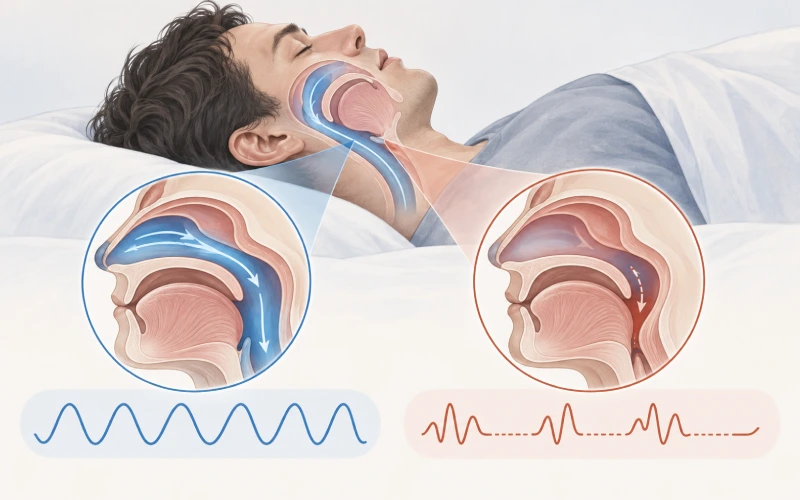
Obstructive sleep apnea (OSA) is when your upper airway keeps collapsing while you sleep. Central sleep apnea (CSA) is when your brain briefly stops sending the “breathe” signal. Both drop your blood oxygen in cycles all night, both wreck your sleep architecture, and both are diagnosed by an objective sleep study — a polysomnogram in a lab or a validated home sleep test — not by a symptom checklist and not by a smartwatch.
The number clinicians use is the apnea–hypopnea index (AHI): events per hour of sleep. Mild is 5–14, moderate 15–29, severe 30 and up. If someone told you your AHI, that is the number.
Daytime signs look like: waking unrefreshed, morning headaches, brain fog, loud snoring with witnessed pauses, fighting to stay awake during the day. Untreated, OSA stacks the deck against your heart, your blood pressure, your blood sugar, and your car keys.
Standard care, and why it gets a long section
We are spending the time on this because most vendor pages skim past it. The truth is, the answer to most of the searches behind this keyword is here.
- CPAP / APAP is first-line for adults with OSA, especially with daytime sleepiness, impaired quality of life, or hypertension. AASM gives this a strong recommendation, and recommends CPAP/APAP over BPAP as an initial choice. [[2]]
- Home APAP titration or in-lab titration are both acceptable for adults without major heart, lung, or neuromuscular disease. Also strong. [[2]]
- Oral appliances (mandibular advancement devices) — for mild or moderate OSA, or for people who cannot tolerate CPAP. Fitted by a qualified dentist.
- Positional therapy if your events are mostly on your back.
- Weight management can move AHI meaningfully over time.
- Surgery: UPPP, maxillomandibular advancement, hypoglossal nerve stimulation (Inspire) for selected patients.
- Drug therapies for OSA are in clinical development but not yet standard care as of 2026-09.
If CPAP is not working for you, the answer is almost never “skip it.” It is usually a different mask, a different pressure, APAP instead of CPAP, a humidifier, a chinstrap, or an oral appliance. Sleep clinics do this all day. Ask.
Why HBOT comes up at all for sleep apnea
Two reasons, and they are not the same.
The mechanism story. OSA drops your oxygen in cycles; those cycles drive inflammation, oxidative stress, and endothelial trouble. HBOT pushes 100% oxygen at pressures above one atmosphere, which raises the amount dissolved in plasma. On paper, that looks like it should help someone whose problem is intermittent low oxygen. On paper.
The CPAP-is-hard story. Real-world CPAP adherence is famously mixed, and the internet is full of people looking for anything easier. That search behaviour is what turned “HBOT for sleep apnea” into a keyword. It does not turn HBOT into a treatment.
What the actual evidence says
A 2025 review in a peer-reviewed pulmonary journal looked at every HBOT-in-OSA or HBOT-in-CSA study it could find. The plain summary: the mechanism is plausible, the human data are small and inconsistent, and across the existing trials there is no formal risk-of-bias assessment, no meta-analysis, and no preregistered protocol. The authors themselves say so. [[3]]
Then there is a different, often-confused question: what about just breathing more oxygen at night? That is supplemental oxygen, not HBOT — different device, different pressure, different intervention.
- A meta-analysis in a leading chest journal found supplemental oxygen vs placebo produced an SMD of −0.32 for AHI (95% CI −0.74 to 0.08), which is not a statistically significant reduction. [[4]]
- Across five observational studies, three recorded that respiratory events got longer on supplemental oxygen. [[4]]
- Versus CPAP, supplemental oxygen is inferior for AHI and for blood pressure. [[4]] [[5]]
The two pressure worlds
Clinical HBOT in a hard-shell chamber runs at 1.5–3.0 ATA, with a physician, at an accredited facility. It is a medical procedure.
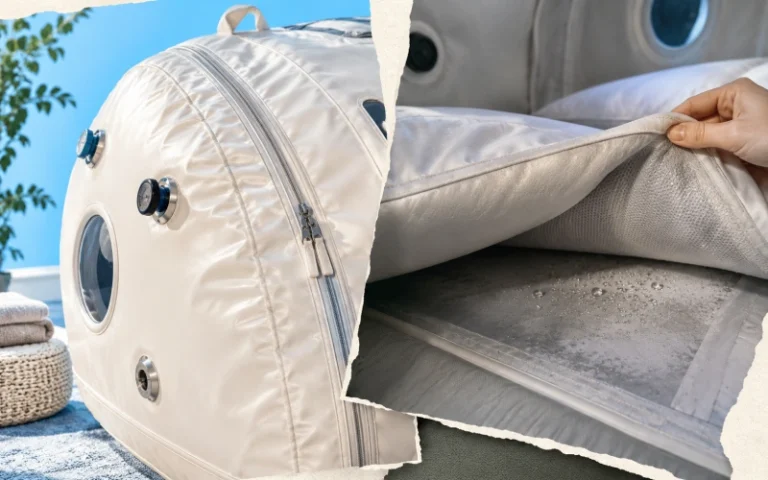
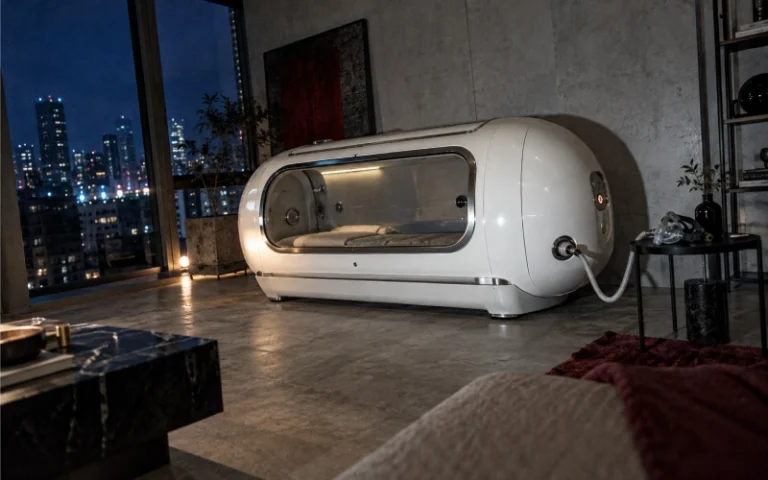
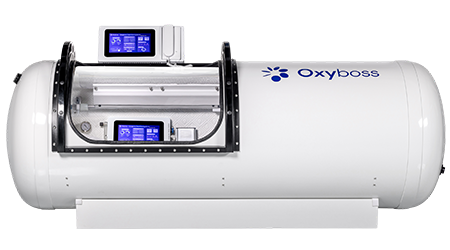
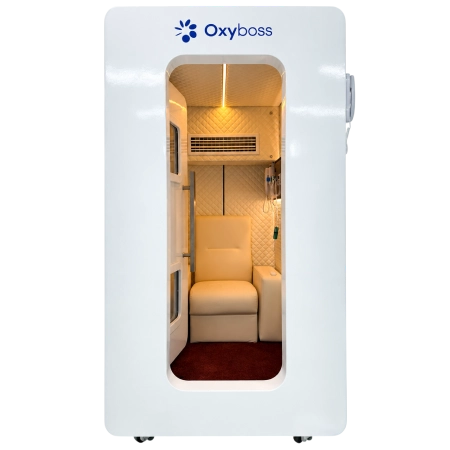
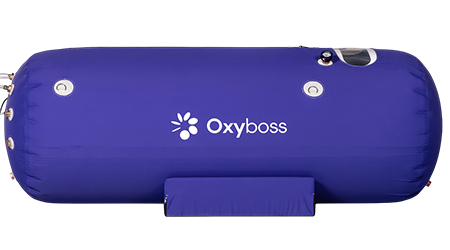
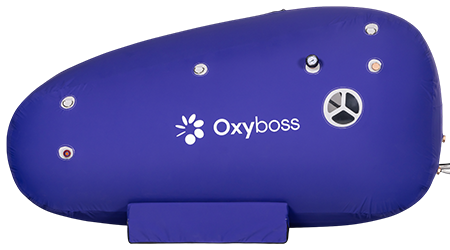
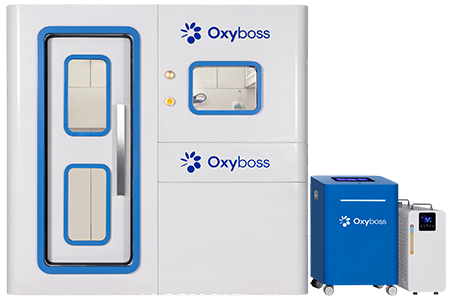
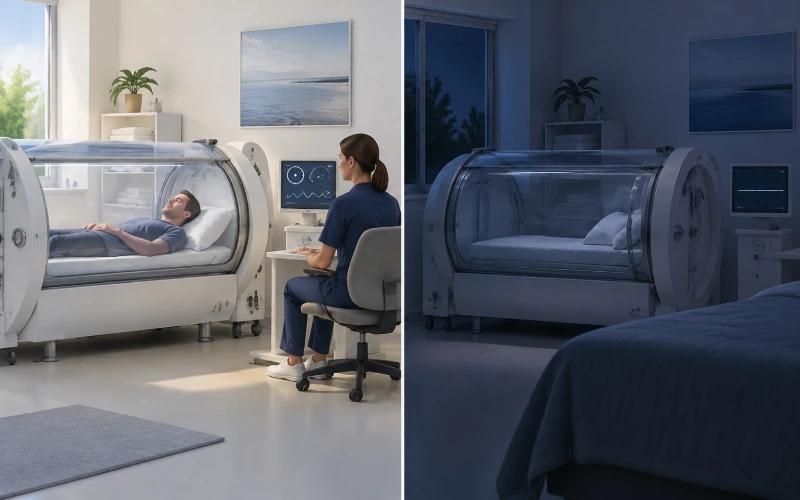
Wellness chambers, including ours, run much lower — typically well under 1.5 ATA. We design them for rest, relaxation, and post-training recovery. They are not clinical HBOT, and they are not a treatment for sleep apnea. The studies above do not automatically transfer to them.
Where a wellness chamber actually fits
We make non-medical wellness chambers. This page exists because people search the term at the top of it, and we would rather they meet an honest page than a sales page. Our commercial interest is that some readers, later, look at our chambers for what they are actually for: rest, downtime, post-training recovery — general wellness, not disease care.
If, after reading this, your next move is a sleep study or a conversation with your sleep clinician, that is the correct outcome and we are glad it happened here.
FAQ
Is HBOT FDA-approved for sleep apnea? No. Sleep apnea is not on the FDA-cleared indication list for HBOT. [[1]]
Is HBOT an alternative to CPAP? No. AASM guidelines put CPAP/APAP first-line for adult OSA and recommend them over BPAP. [[2]] No guideline recommends HBOT in place of PAP therapy.
Does breathing extra oxygen at night fix sleep apnea? No. Supplemental oxygen did not significantly reduce AHI vs placebo in a meta-analysis, and is inferior to CPAP. Some studies saw respiratory events get longer. [[4]] [[5]]
Is it safe to sleep in a hyperbaric chamber? No. Chambers are meant to be attended and time-limited. Using one unattended carries pressure and fire risk. [[1]]
What pressure is a wellness chamber running? Well under 1.5 ATA. Clinical HBOT is 1.5–3.0 ATA under physician oversight at an accredited facility. [[1]]
Are wellness chambers a substitute for anything a doctor prescribed? No. They are non-medical products for general wellness use.
Where should I actually start if I think I have sleep apnea? A sleep clinician and a validated sleep study. Everything else follows that. [[2]]
Where do I report a safety issue with an oxygen or pressurised device? MedWatch, the FDA’s adverse event reporting program. [[1]]
Sources
- U.S. Food and Drug Administration. Hyperbaric Oxygen Therapy: Get the Facts. Regulator consumer page — cleared indications, risks, safe-use conditions, MedWatch. Retrieved 2026-09-16.
- American Academy of Sleep Medicine. Clinical Practice Guideline for the Treatment of Adult Obstructive Sleep Apnea with Positive Airway Pressure. Strength-graded recommendations, home vs lab titration, CPAP/APAP over BPAP. Retrieved 2026-09-16.
- Springer / Pulmonary Therapy. A narrative review of hyperbaric oxygen therapy in obstructive and central sleep apnea (2025). Peer-reviewed; self-disclosed limitations; no external funding. Retrieved 2026-09-16.
- American College of Chest Physicians (CHEST journal). Oxygen Therapy in Sleep-Disordered Breathing. Meta-analysis of supplemental oxygen in SDB. Retrieved 2026-09-16.
- National Library of Medicine / PubMed Central. Obstructive Sleep Apnea and Oxygen Therapy: A Systematic Review. Peer-reviewed systematic review. Retrieved 2026-09-16.