
There is no such thing as a “hyperbolic chamber.” Full stop. And yet people search for it constantly. The mixup is almost understandable—the words share twelve out of thirteen letters. But the difference between them isn’t semantic trivia. It’s the difference between a math term and a pressurized vessel.
This post separates the two terms, explains the basic pressure concept people are usually referring to, and clears up a confusion that keeps spreading online. It is not a treatment guide, and it should not be used as a substitute for manufacturer instructions, facility procedures, or qualified clinical guidance where applicable.
The Etymology Nobody Bothers With
Both words borrow from Greek. “Hyper” means above or beyond. After that, they diverge completely.
- Hyperbolic comes from hyperbolē — to throw beyond. In rhetoric, it means exaggeration. “I’ve told you a million times.” That’s hyperbole. In mathematics, it describes a specific class of curves and functions — ( y = 1/x ), hyperbolic cosine (cosh), the hyperbolic paraboloid your local architect won’t shut up about. None of this has anything to do with oxygen or pressure.
- Hyperbaric pairs hyper with baric, from baros — weight or pressure. It literally means “above normal pressure.” That’s the core idea: a sealed environment where atmospheric pressure is raised above what you experience standing outside at sea level.
So when someone says “hyperbolic chamber,” they’re accidentally describing a room full of exaggeration. Which, depending on the claims attached, may be more accurate than intended.

What a Hyperbaric Chamber Actually Is
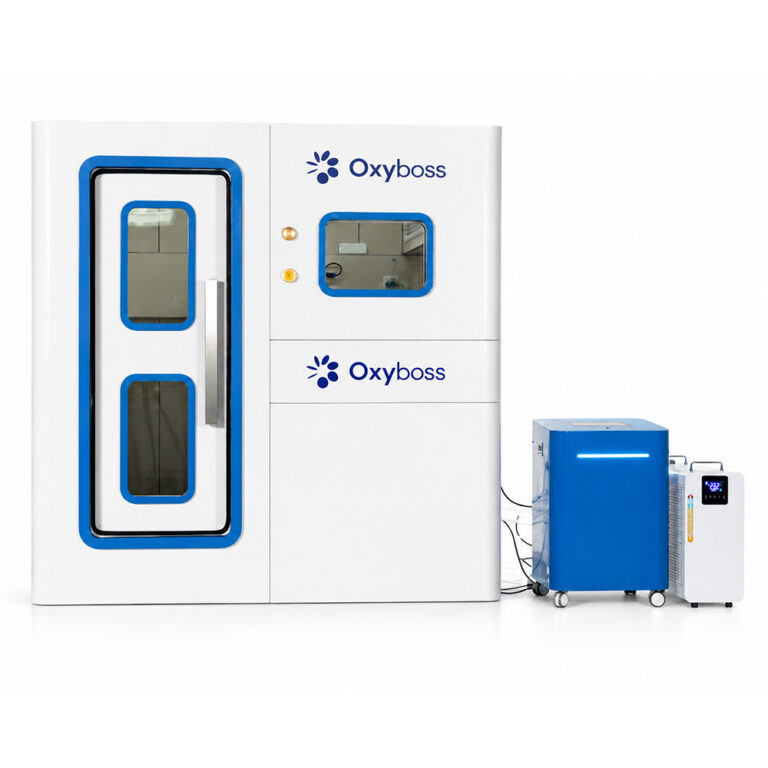
A hyperbaric chamber is a pressure vessel designed for human occupancy. Air pressure inside is raised above normal atmospheric pressure. In plain terms, it is a sealed environment where pressure is increased beyond everyday sea-level conditions.
There are multiple categories of hyperbaric systems, and people online often flatten them into one bucket when they should not. Pressure range, construction, gas delivery, supervision requirements, and intended setting can differ substantially.
There are two broad categories:
Monoplace
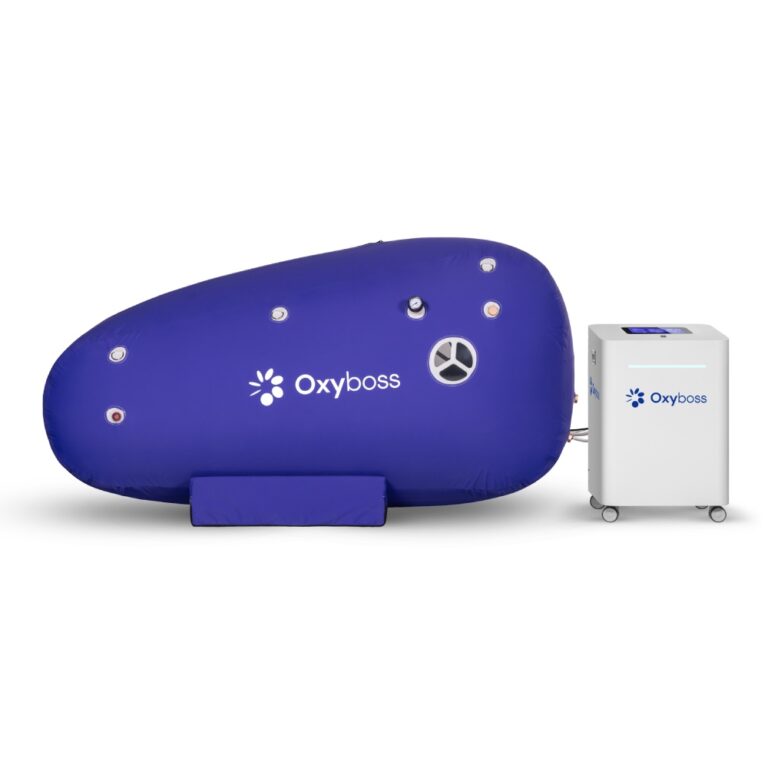
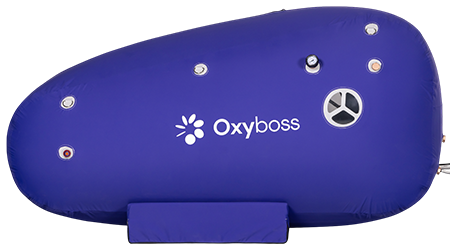
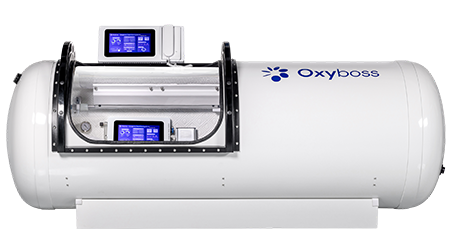
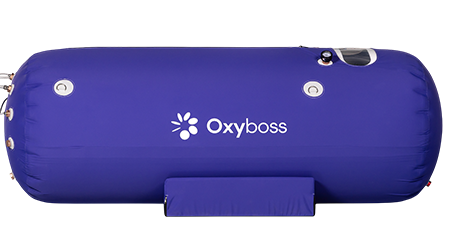
Single-occupant. The person lies or sits inside a sealed tube or pod. Some are rigid (steel, acrylic, aluminum), others are inflatable (reinforced polyurethane, nylon).
Rigid and soft designs are not interchangeable. Some systems operate in clinical settings under stricter operating procedures. Some lower-pressure systems are designed around compressed air. Any accessory oxygen use depends on the specific device, manufacturer instructions, intended use, and applicable regulations.
Multiplace
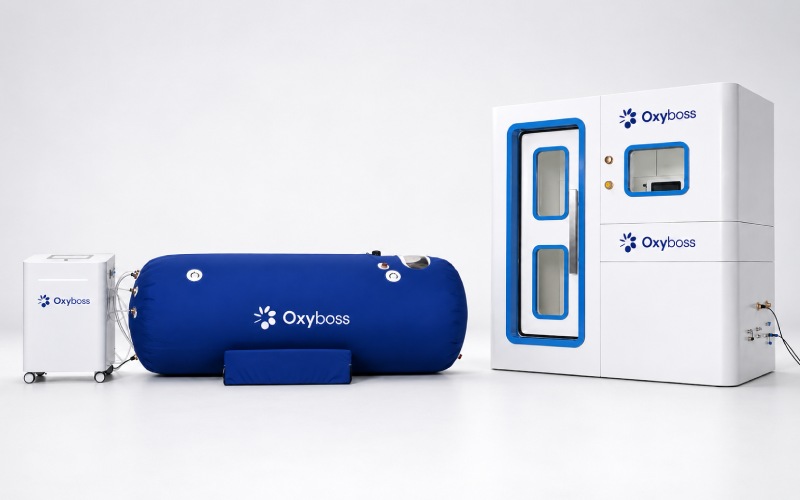
Room-sized. Multiple people can occupy the space simultaneously. Pressure is applied to the whole room. In clinical environments, occupants may breathe oxygen through hoods or masks while trained operators manage the system and gas delivery.
The Physics: Henry’s Law Does the Heavy Lifting
Under normal conditions, oxygen hitches a ride through your bloodstream almost entirely via hemoglobin in red blood cells. There’s a hard ceiling to how much hemoglobin can carry — once it’s saturated, that’s it.
But Henry’s Law says something useful: the amount of gas dissolved in a liquid is proportional to the partial pressure of that gas above the liquid. Raise the pressure, and more gas can dissolve into liquid than it can at sea level.
That is the underlying gas-law principle behind hyperbaric environments. It does not mean every chamber on the market creates the same oxygen exposure, and it definitely does not make different pressure classes interchangeable. Pressure, gas composition, chamber design, and operating context all matter.
That’s not a wellness slogan. It’s gas physics.
The Head-to-Head Nobody Asked For (But Everyone Needs)
| Feature | Hyperbolic | Hyperbaric |
| Origin | Greek hyperbolē (exaggeration) | Greek hyper + baros (above pressure) |
| Fields | Rhetoric, mathematics, geometry | Pressure physics, diving science, hyperbaric systems |
| Physical device? | No. There is no “hyperbolic chamber.” | Yes. A pressure vessel for human occupancy. |
| Mathematical use | Hyperbolic functions: sinh(x), cosh(x), tanh(x); hyperbolic geometry (negative curvature spaces) | Pressure is commonly discussed in ATA, PSI, or kPa. |
| Everyday example | “I’m so tired I could sleep for a year.” | Sitting inside a sealed pod or chamber at pressure above normal atmospheric conditions. |
| Relation to oxygen | Absolutely none | Depends on the system, gas source, and operating context. |
| Common confusion | People say “hyperbolic chamber” when they mean hyperbaric | The correct term. Always. |
Pressure Ratings: What the Numbers Mean
Pressure is often expressed in ATA — atmospheres absolute. Normal sea level is 1.0 ATA. Every 33 feet of seawater adds another 1.0 ATA. Inside a chamber, the compressor does the work instead of a column of ocean.
Here’s how common pressure ratings are often discussed:
| ATA | Equivalent Depth | Shell Type | Typical Gas / Operating Configuration | Typical Setting |
| 1.3 | ~10 ft / 3 m | Soft (inflatable) | Commonly compressed air, depending on device design | Lower-pressure consumer or wellness settings |
| 1.5 | ~16.5 ft / 5 m | Soft or hard | Configuration varies by system | Lower-pressure non-clinical or facility-based settings |
| 2.0 | ~33 ft / 10 m | Hard (rigid metal/acrylic) | System-specific gas delivery under controlled procedures | Professional or clinical settings |
| 2.4–3.0 | ~46–66 ft / 14–20 m | Hard | System-specific gas delivery under controlled procedures | Specialized clinical settings |
A soft chamber at 1.3 ATA is not the same experience as a rigid chamber at 2.4 ATA. They may share a broad label and a pressure-based concept, but they do not automatically create the same operating conditions.
This matters. Not all chambers do the same thing. Not all pressure ratings produce the same environment. And not all systems should be described as though they belong to one interchangeable category.
What Happens to Your Body at Elevated Pressure
Skip this if you already understand partial pressures and gas exchange. If not:
- Compression phase. The chamber pressurizes gradually. Your ears will feel it — same sensation as descending in an airplane or freediving a few meters. You equalize by swallowing, yawning, or performing a gentle Valsalva (pinch nose, blow softly). If it hurts, the pressurization rate needs to slow down.
- At pressure. The environment stabilizes. You breathe normally within the operating setup of that particular chamber. Under elevated pressure, gas partial pressures differ from what they are at sea level. Exactly what that means for oxygen exposure depends on pressure, gas composition, device design, and how the system is intended to be used.
- Decompression. Pressure returns to ambient. Your ears may pop or squeak. Temperature may shift slightly. Session ends.
How long a session lasts, and how often one is used, should follow the manufacturer’s instructions, facility procedures, and applicable clinical guidance where relevant — not a generic internet template.
Soft Shell vs. Hard Shell: An Honest Breakdown
The internet is full of people selling one type while dismissing the other. Here’s what’s actually different:
Soft-shell chambers are portable, inflatable, and generally lower-pressure. They are often easier to place in a residential or light-commercial setting than rigid systems. Many are designed around compressed air rather than an oxygen-enriched chamber atmosphere. Because designs and regulatory frameworks differ, you should not assume that one soft chamber operates the same way as another, or that every accessory setup is appropriate for every device. The fire risk is generally lower than in an oxygen-enriched whole-chamber environment, but “lower risk” is not “no risk.”
Hard-shell chambers are rigid, heavier, and capable of higher pressures. They are more commonly associated with clinical or professionally operated environments, and they may involve stricter installation, operating, and safety requirements. Fire risk in oxygen-enriched environments is real and well-documented — which is why protocols around clothing, ignition sources, electronics, and operating procedures exist in the first place.
Neither type is universally “better.” They are different categories with different pressure ranges, operating assumptions, supervision expectations, and intended settings.
The “Hyperbolic Chamber” in Pop Culture
The phrase “hyperbolic time chamber” comes from a well-known anime series where characters train inside a dimension where time moves differently. It has nothing to do with oxygen or pressure — it’s a fictional time-distortion room.
But the term leaked into common speech, and now people conflate “hyperbolic” with “hyperbaric” constantly. The confusion shows up online over and over again.
If you’ve found this page by searching “hyperbolic chamber” — welcome. You’re in the right place now.
Frequently Asked Questions
Is there such a thing as a hyperbolic chamber?
No. “Hyperbolic” refers to exaggeration (rhetoric) or a class of mathematical curves and functions. The correct term for a pressurized environment is “hyperbaric chamber.” The mixup comes from the words looking and sounding nearly identical.
What does a hyperbaric chamber feel like?
During compression, you’ll notice ear pressure similar to an airplane descent. Once pressure stabilizes, most people report no dramatic sensation beyond being inside an enclosed, pressurized environment. Some people feel warmer during compression and cooler during decompression. Experiences vary by person, device, and setting.
How often should someone use a hyperbaric chamber?
There is no meaningful one-size-fits-all answer. Frequency depends on the specific device, its pressure range, the manufacturer’s instructions, the operating setting, and whether the system is being used in a clinical environment. Generic internet schedules are a poor substitute for device-specific guidance.
What’s the difference between hyperbaric and hypobaric?
They’re opposites. Hyperbaric = above normal atmospheric pressure. Hypobaric = below normal atmospheric pressure. Hypobaric chambers simulate high-altitude conditions (reduced pressure, lower oxygen availability). A hyperbaric chamber increases pressure above normal atmospheric conditions.
Can you buy a hyperbaric chamber for home use?
Some lower-pressure chambers are sold for home or wellness use in certain markets. Availability, classification, and permitted marketing claims vary by jurisdiction, design, pressure range, and intended use. A lower-pressure home unit is not the same thing as a hospital hyperbaric system.
Are there risks?
Yes. Pressure systems are not toys. Ear and sinus pressure problems are common issues. Higher-pressure and oxygen-enriched environments introduce additional risks, including oxygen-related hazards and fire risk. Risk varies with pressure, gas composition, system design, operating procedures, and user condition.
Does the “hyperbolic time chamber” from anime relate to hyperbaric chambers at all?
Not even slightly. The anime concept involves time distortion in a fictional dimension. The only connection is phonetic similarity. But the cultural impact is real — it’s a major driver of the “hyperbolic chamber” misnomer online.
Remember: every time you say “hyperbolic chamber,” a mathematician gets confused and a pressure-vessel operator gets annoyed. The word you want is hyperbaric.