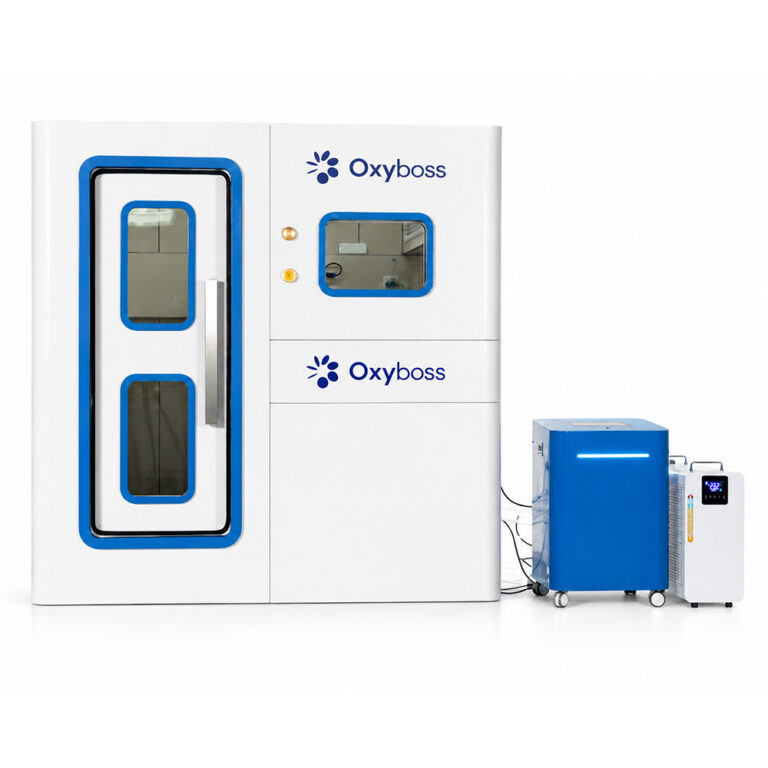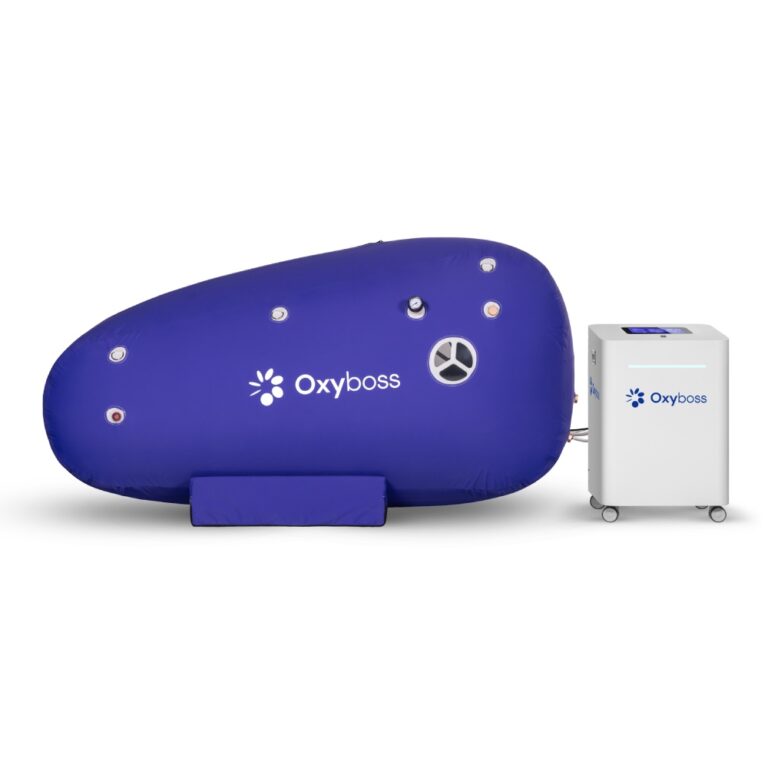
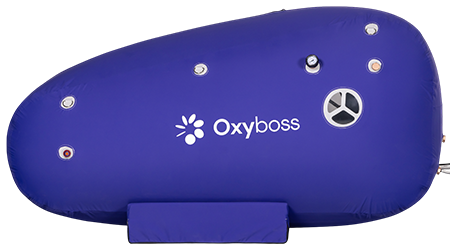
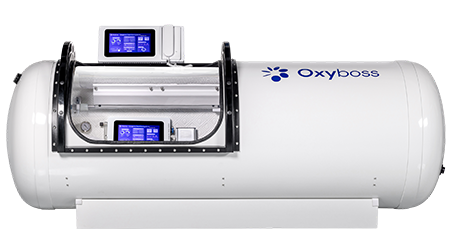
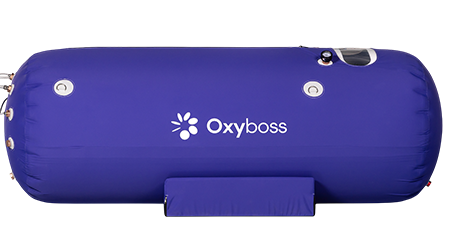

A hyperbaric chamber is a sealed enclosure that raises the air pressure around you above sea-level pressure, so that more oxygen dissolves into your blood. That single physical fact is why the idea keeps circling back to multiple sclerosis. The short answer, up front: the physics is real and well understood, but the evidence that it changes anything about MS is thin and inconsistent — and most of the older research used a very different kind of chamber than the low-pressure ones sold for home and wellness use.
This article separates those threads. What the pressure actually does. What decades of study found. Why the pressure setting matters more than almost anything else in the conversation. And where a chamber realistically sits next to the everyday habits that carry more weight.
Nothing here is guidance for any health condition, and it isn’t a substitute for a conversation with a qualified professional. Decisions about MS belong with your own care team.
How Pressure Changes Oxygen Delivery
Under normal conditions oxygen moves through the body a simple way. It enters the lungs, binds to hemoglobin in red blood cells, and travels to tissues. The catch is that hemoglobin is already close to fully loaded at sea level, so breathing “more” doesn’t add much.
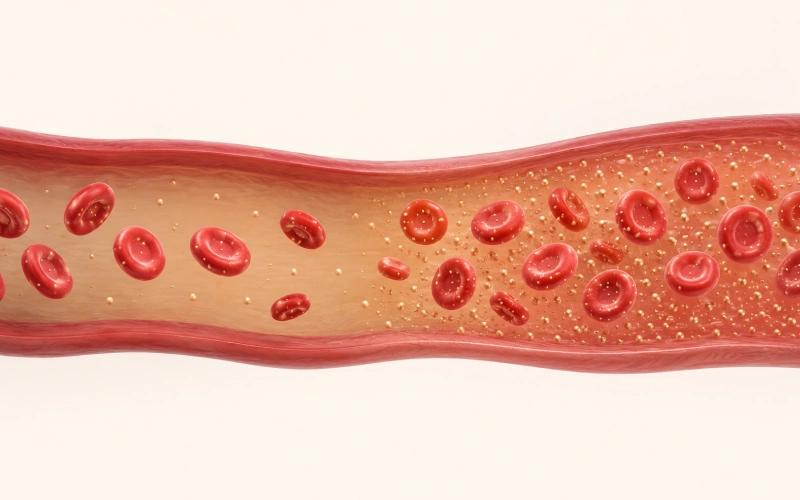
Pressure gets around that ceiling by using a different carrier: the liquid part of your blood. Under Henry’s law, raising the partial pressure of a gas increases how much of it dissolves into a fluid. Under specific conditions — around 3.0 ATA while breathing concentrated oxygen — total blood oxygen content has been measured rising from roughly 16.2 mL O₂/dL to about 23 mL O₂/dL, a large share of that gain sitting in dissolved plasma oxygen rather than on red cells [3]. That figure is tied to those specific pressure and oxygen conditions; it is not what a low-pressure environment produces.
The appeal of dissolved oxygen is that plasma can reach places where flow is sluggish. That’s the mechanism people find interesting, and it’s the honest floor of this whole topic — physically true, and separate from any claim about MS.
One nuance that gets skipped: more oxygen is not automatically better. Oxygen is the final electron acceptor in the chain that produces cellular energy, and that process always throws off small amounts of reactive oxygen species (ROS). A higher-oxygen state raises ROS production [3]. The body constantly rebalances this, and a mild, modest rise in ROS can also nudge the body’s own antioxidant systems into gear — the effect runs in both directions, which is exactly why pressure and duration are the variables that matter, not something to push blindly.
Why MS Entered the Conversation at All
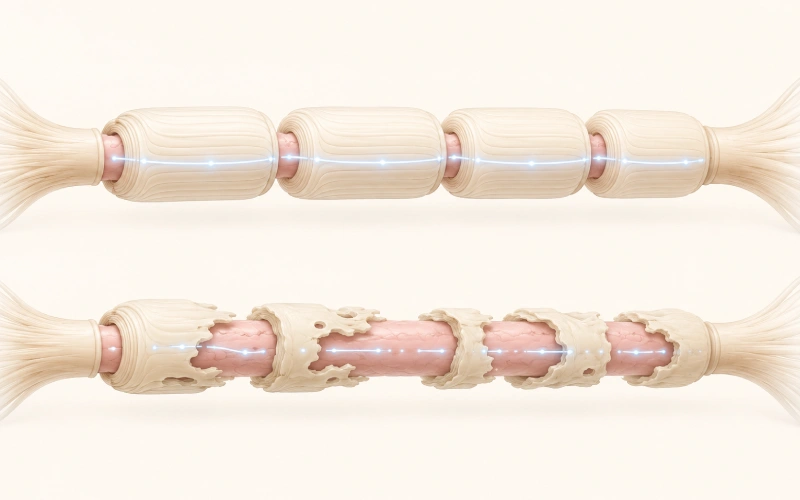
MS involves disrupted signalling in the nervous system. Oxygen came up decades ago on a hypothesis — a guess — that poor oxygen delivery to affected nerves might make matters worse, and that flooding the blood with oxygen might counter it. That hypothesis has never been confirmed [1]. Keep that unresolved status in mind, because a lot of the marketing quietly rounds it up to a settled fact.
What Studies Have Actually Found
The evidence here is not a clean success story, and pretending otherwise is where most pages go wrong.
The interest traces back to one striking early-1980s controlled study. Under a higher-pressure, concentrated-oxygen setup, that trial reported objective improvement in 12 of 17 people in the oxygen group versus 1 of 20 in the placebo group [1]. Even that paper was careful about scope: the effect was transient for several and longer-lasting for a few, with milder cases responding more favourably [1].
Then the follow-up work arrived and mostly failed to reproduce it. A later systematic review pooling nine trials found no consistent evidence that the approach improves disability or changes the course of MS, and described the isolated positive signals as hard to explain biologically and in need of confirmation by well-designed future work [2].
So why hasn’t the idea simply died? Two reasons.
First, a measurement gap. The disability scores used in trials seldom capture the day-to-day effects that some individuals say they notice [5]. That doesn’t turn personal reports into evidence, but it does leave a genuine open question.
Second, small lab-level signals. In one project designed with input from people living with MS, a lower-pressure oxygen exposure was associated with a reduction in a cell-surface marker (ICAM-1 / CD54) linked to inflammatory activity at the blood–brain barrier [5]. That is a cellular observation, not a real-world outcome. It keeps the question alive; it does not answer it.
Evidence at a Glance
| Question | What the record shows | Confidence |
|---|---|---|
| Does higher pressure increase dissolved plasma oxygen? | Yes, a measurable rise under specific pressure/oxygen conditions [3] | High |
| Does it slow MS progression? | No consistent evidence across pooled trials [2] | Low / negative |
| Did any early trial show improvement? | One 1983 higher-pressure study did; often transient, hard to replicate [1] | Mixed |
| Are there plausible cellular signals? | Early lab observations on inflammatory markers exist [5] | Preliminary |
| Do trial scores match personal experience? | People report a mismatch [5] | Noted, unresolved |
The Detail That Reframes the Whole Topic: Pressure Level
This is the single most important distinction, and it’s the one most articles blur.
The older MS studies — including the 1983 result and the safety figures below — used higher-pressure setups, roughly 2.0–2.5 ATA, breathing concentrated oxygen [1][2]. Oxygen at that intensity carries its own well-documented downside. At those levels it can, rarely, trigger pre-seizure symptoms or a self-terminating seizure, with the odds rising as pressure and oxygen dose climb; one commonly cited figure puts the rate around 1 in 1,500 at 2.5 ATA over 90 minutes [3]. Rare, but not zero — and directly tied to how high the pressure and oxygen concentration were pushed.
Lower-pressure environments — the mild kind, around 1.3–1.5 ATA — are a different thing. The concern above is governed by an oxygen-tension threshold, and mild low-pressure settings sit well below where that particular risk lives. Interest in gentler pressures comes partly from work suggesting that even a modest rise around 1.5 ATA measurably increases oxygen availability in blood and tissue and can influence cellular activity [4]. So when you read alarming figures about oxygen at 2.5 ATA, understand that they describe the high-pressure, concentrated-oxygen scenario — not the mild low-pressure one — and don’t let the two get welded together.
Two takeaways from this:
- The bulk of the MS research was done at higher pressures, so it doesn’t cleanly transfer to mild low-pressure settings anyway.
- “Mild” still means a controlled environment used sensibly, not a gadget to improvise with.
Where a Chamber Fits in a Wellness Routine
Take the evidence seriously and a chamber lands, at most, as an optional extra — sitting beside habits with far stronger footing.
Movement adapted to what your body allows keeps showing up as the reliable lever. Activities like walking, swimming, and cycling raise the heart rate, support circulation, and help the body use oxygen more efficiently [6]. Water-based movement gets a specific mention because it can ease joint strain and reduce heat sensitivity while you move [6].
Diet, sleep, and heat management round it out. Research keeps linking a healthier eating pattern with better-reported wellbeing across several measures [7]. And well-known triggers are worth respecting: hot environments, minor illnesses, and overexertion can all temporarily drain energy [6].
None of that is exciting. All of it is better supported than chamber time. If a mild chamber has any role for a given person, it’s as a small add-on to a routine already built on those basics — not a substitute for them.
A Calm Way to Think It Through
- Separate the physics from the outcomes. Dissolved plasma oxygen is real; MS benefit is unsettled.
- Check which pressure level a claim refers to. High-pressure study results don’t automatically apply to mild low-pressure settings, and their risk profiles differ.
- Treat dramatic before-and-after stories as stories worth noting, not decisions to act on.
- Keep it a conversation with your own professionals. Anyone claiming it definitively works for MS is saying more than the record knows.
FAQ
Does a hyperbaric chamber reverse MS? No. Pooled research does not support that; a systematic review found no consistent beneficial effect and did not consider routine use justified [2].
Why do some people say they feel better after sessions? Part of it may be a gap between what standard scales measure and what individuals notice day to day [5]. Personal reports are real experiences, but they aren’t the same as trial evidence.
What does the chamber physically do? It raises pressure so more oxygen dissolves into blood plasma, which can reach tissue where flow is limited [3].
Are the seizure-risk figures relevant to a mild home chamber? Those figures come from higher-pressure, concentrated-oxygen setups around 2.5 ATA [3]. The concern is tied to an oxygen-tension threshold that mild low-pressure environments (roughly 1.3–1.5 ATA) sit below. Don’t map high-pressure risks onto mild low-pressure use.
Is more pressure always better? No. Higher pressure and oxygen dose raise the odds of oxygen-related side effects and push ROS higher [3]. Dose and duration are the whole ballgame.
What has stronger support for everyday MS wellbeing? Consistent adapted movement, a healthier eating pattern, decent sleep, and managing heat and overexertion — all better documented than chamber time [6][7].
Is it something to try on my own? No. Oxygen under pressure is a controlled environment, and decisions about it belong with qualified professionals who know your situation.
References
- Fischer BH, Marks M, Reich T. Hyperbaric-Oxygen Treatment of Multiple Sclerosis: A Randomized, Placebo-Controlled, Double-Blind Study. New England Journal of Medicine, 1983. Link 1
- Bennett M, Heard R. Hyperbaric oxygen therapy for multiple sclerosis (systematic review). PMC, NIH. Link 2
- Hyperbaric Physiological and Pharmacological Effects of Gases. StatPearls, NCBI Bookshelf. Link 3
- Hyperoxia: Effective Mechanism of Hyperbaric Treatment at Mild-Pressure. PMC, NIH. Link 4
- Engagement of people with multiple sclerosis to enhance research into the physiological effect of hyperbaric oxygen therapy. ScienceDirect, 2020. Link 5
- How exercise can help with multiple sclerosis. Banner Health. Link 6
- A multi-domain lifestyle intervention in multiple sclerosis: a longitudinal observational study. PMC, NIH. Link 7