Key points, in 30 seconds:
- The lingering symptoms after COVID likely come from several overlapping problems at once — not one single cause.
- On paper, hyperbaric oxygen’s studied effects overlap neatly with those mechanisms. On paper is not the same as proven.
- The strongest positive studies used a specific, intensive setup: 40 sessions at 2.0 ATA breathing near-100% oxygen. Lower-pressure setups are a different physical situation and have far less data behind them.
- Honest status: promising, but not established. Encouraging signals, some real durability, set against small sample sizes and open questions about the placebo effect.
You had COVID. It passed. The cough went away, the fever broke, life was supposed to click back into its old shape.
Then months went by. And something was still off.
The fatigue that doesn’t lift after a full night’s sleep. The strange fog that makes finding a simple word feel like reaching into an empty pocket. Sleep that never quite feels like rest. If this sounds familiar, you’re describing what many people now call long COVID — and you’re not imagining it.
One question keeps coming up in wellness circles: could time inside a pressurized oxygen chamber help? It’s a fair question. Let’s walk through it honestly, without hype.
Why do symptoms linger after recovery?
Here’s the frustrating part. The infection ends, but the aftereffects don’t always follow the same schedule.
Long COVID isn’t tidy. It’s generally described as signs and symptoms that develop during or following an infection consistent with COVID-19, continue for more than 12 weeks, and are not explained by something else. That’s a wide net, and it catches a lot of different experiences.
The reason it’s hard to pin down is simple: it probably isn’t one thing. Researchers increasingly think several overlapping problems are happening at once.
The tangle underneath
When scientists look at what may be driving the lingering symptoms, a handful of mechanisms keep surfacing. None of them fully explains everything on its own. Together, they start to sketch a picture.
- Inflammation that doesn’t switch off the way it should.
- Blood vessel dysfunction — the lining of small vessels not behaving normally.
- Reduced tissue oxygenation, where cells aren’t getting oxygen efficiently even when the lungs are fine.
- Mitochondrial dysfunction — the tiny engines inside cells losing efficiency, which many suspect is tied to the crushing tiredness.
- Neurological changes affecting focus, memory, and mood.
Researchers studying this have noted the underlying drivers remain something of a puzzle, with suggested mechanisms including dysregulated immune activation, chronic oxidative stress, mitochondrial dysfunction, and endothelial dysfunction [1]. Notice how much of that list circles back to oxygen, blood flow, and cellular energy.
That overlap is exactly why one idea drew attention.
So why is a pressure chamber even in the conversation?
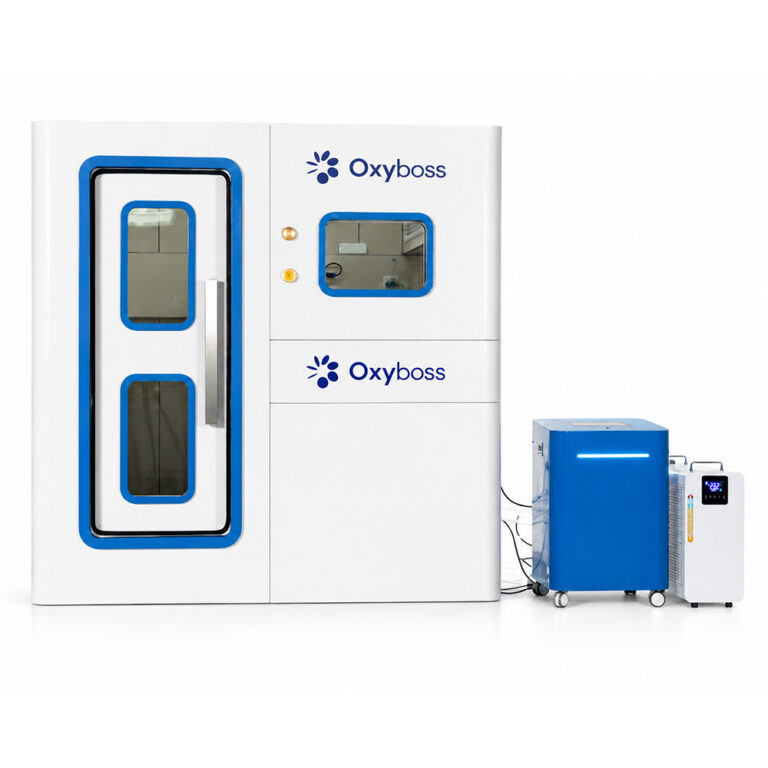
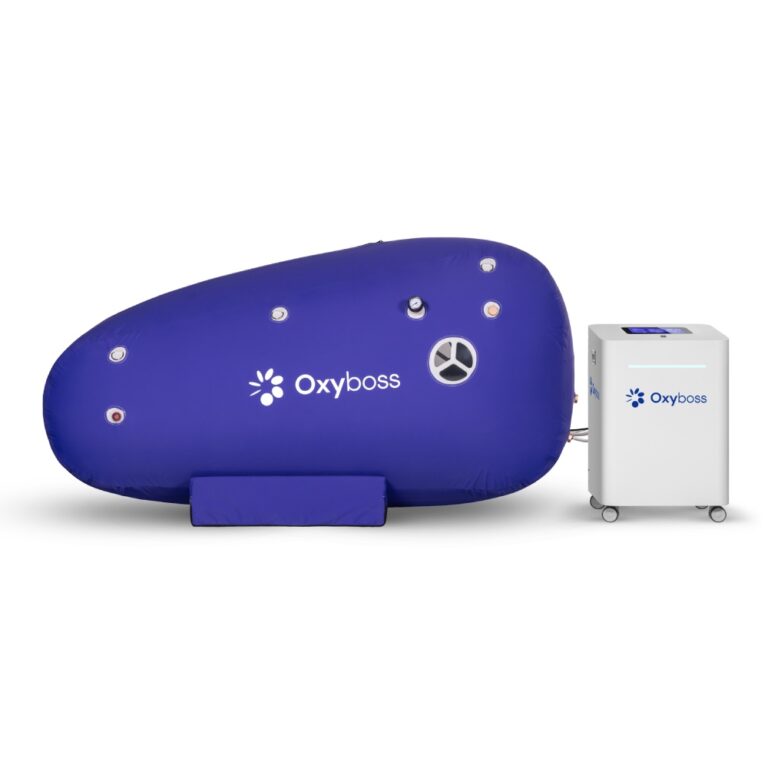
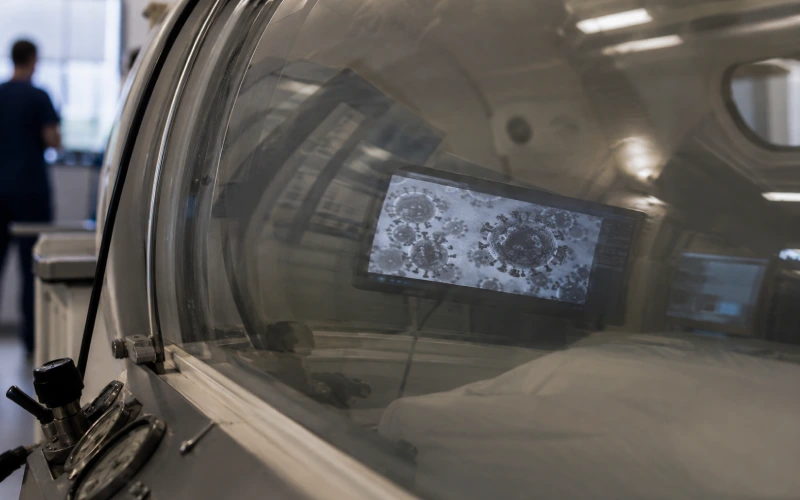
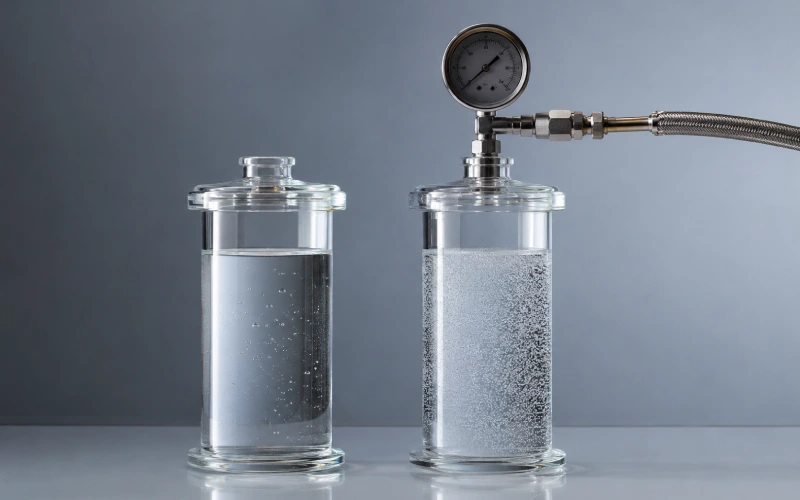
The concept is older than COVID. A hyperbaric oxygen chamber does two things at once: it raises the surrounding pressure, and it increases the concentration of oxygen in the air being breathed.
Under pressure, oxygen dissolves into the bloodstream in far greater amounts than it would at normal air pressure. That’s the whole trick. More oxygen, pushed further into tissue that breathing alone can’t easily reach.
From there, the biology gets interesting. Research on hyperbaric oxygen points to several downstream effects: it raises tissue oxygen levels and switches on genes tied to regenerative processes, including stem-cell activity, anti-inflammatory responses, and angiogenesis (new blood vessel growth); it can support mitochondrial function; and it influences blood flow in the brain and neuroplasticity [1].
One thing you have to get straight first: not all chambers are the same
This is the part most articles skip, and it matters more than almost anything else here.
When you read a headline about “hyperbaric oxygen and long COVID,” it’s worth asking a blunt question: at what pressure, and with how much oxygen? Because those two numbers change everything.
The breakthrough studies you’ll read about below all used the same demanding setup — 2.0 ATA (roughly double normal atmospheric pressure) with near-100% oxygen [1]. That’s a specific physical dose.
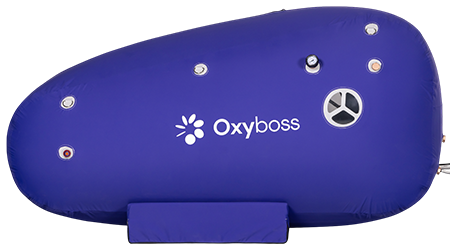
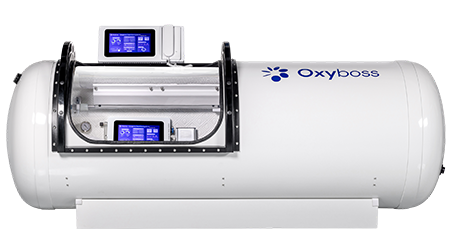
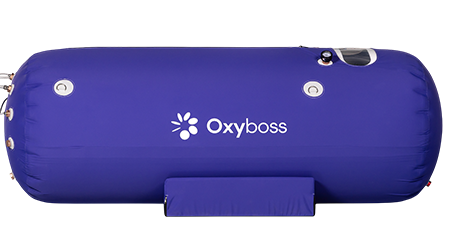
Softer, lower-pressure setups (often in the 1.3–1.5 ATA range, sometimes without near-pure oxygen) are a genuinely different physical situation. The amount of oxygen that dissolves into the blood doesn’t scale in a simple straight line as pressure changes, and some of the effects researchers get excited about — the gene activity, the vessel growth — appear to depend on crossing certain thresholds. So the data collected at 2.0 ATA can’t just be copied and pasted onto every chamber.
If a source blurs that line, be a little suspicious. The honest framing is: the strong evidence sits at one specific setting, and lower-pressure setups have far less research behind them for this particular question.
Where the two stories meet
With that caveat in place, line the two lists up side by side and the reason for the research becomes obvious.
| Long COVID mechanism | What hyperbaric oxygen is studied for |
|---|---|
| Ongoing inflammation | Anti-inflammatory gene activity |
| Blood vessel dysfunction | Angiogenesis, better perfusion |
| Reduced tissue oxygenation | Higher oxygen availability in tissue |
| Mitochondrial dysfunction | Support for mitochondrial function |
| Neurological changes / brain fog | Brain blood flow, neuroplasticity |
It’s a neat overlap on paper. But paper isn’t proof. A mechanism that could help is a hypothesis, not a result. The only thing that settles it is looking at what happened when actual people went through the sessions.
What did the studies find?
Here’s where you need patience, because the honest answer is: it’s mixed, and the mixed-ness is the whole point.
The encouraging evidence — cognition, fatigue, and staying power
The most cited work is a randomized, sham-controlled study — the kind of design where neither the participants nor the evaluators know who got real oxygen. Researchers looked at 73 people who’d had symptoms for at least three months. The setup was intensive: 40 sessions, five days per week, each at 2.0 ATA of near-100% oxygen for 90 minutes [1].
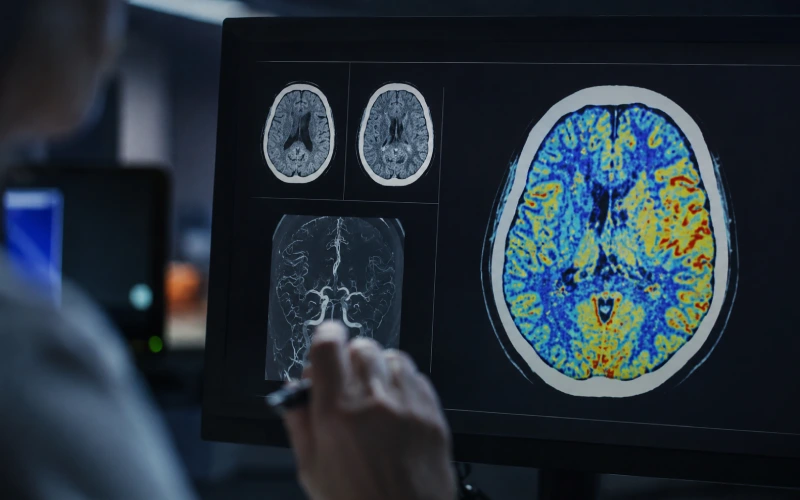
The results were genuinely notable. Afterward, there was a significant group-by-time difference in global cognitive function, attention, and executive function. The authors called it the first prospective, randomized sham-controlled study showing improvement beyond the expected recovery course of the post-COVID condition [1]. Brain scans backed up the self-reports — the changes lined up with increased brain blood flow and microstructural changes in frontal, parietal, and limbic regions [1].
And the effects didn’t evaporate. A follow-up more than a year later found something rare in this field: durability. Improvements in quality of life, sleep, mood, and pain were reported as persistent even one year after the last session [2].
A large real-world registry added texture. It wasn’t a controlled experiment, so it can’t prove cause. But 56–63% of long COVID individuals reported improved quality of life three months afterward, with the biggest gains in social functioning, energy, and physical functioning, plus a large drop in severe cognitive symptoms [3].
The counter-evidence — placebo controls and limits
Now the counterweight, which matters just as much.
A separate double-blind study set out specifically to test whether the improvements might be a placebo response. The reasoning was blunt: because expectation can shape how people feel and the time cost is high, the researchers split 101 people into four groups and built the design so participants couldn’t easily guess which one they were in [4]. When you engineer a study to be genuinely hard to fool, softer results tend to shake out — which is part of why researchers keep flagging that positive findings so far come from a limited number of publications.
There’s also the plain reality that the strongest positive data still comes from a fairly small pool. The authors of the landmark study were candid: the sample was relatively small, larger studies may identify who benefits most, the ideal number of sessions is not yet settled, and results were collected only one to three weeks after the last session [1].
Reading the scoreboard
Put simply, the field is leaning cautiously optimistic but hasn’t reached a verdict. A recent scoping review pulled together the full spread of published work — 21 studies including a case report, ten randomized controlled studies, eight systematic reviews, and three mechanism studies [6]. That’s a real body of evidence building, yet the quality and size of individual studies still vary a lot.
So the fair conclusion isn’t “it works” and it isn’t “it doesn’t.” It’s this: promising, but not established. Encouraging signals, several well-designed studies, some real durability — set against small samples, placebo concerns, and the fact that big confirmatory studies are still running.
If someone tells you it’s settled either way, they’re ahead of the data.
Safety and the fine print
Comfort with a chamber isn’t the same as guaranteed smoothness. One safety-focused report was refreshingly transparent about this. In that group, 31 adverse events occurred across 60% of participants, most commonly cough and chest discomfort [5]. That sounds alarming until you read the oversight board’s take: the frequency was higher than expected, but the overall safety profile was still assessed as favourable [5].
Most reported issues are minor and related to pressure changes — the ears and sinuses tend to protest first, the same way they do on a descending flight. Still, a pressurized oxygen environment isn’t something to wander into casually. Screening beforehand matters, and anyone weighing it up should talk with a qualified professional about their own situation rather than relying on a blog, including this one.
A few limits worth keeping in your back pocket:
- The intensive setups in studies (40 sessions) are a real time commitment.
- Real-world registries can show association, not cause.
- We still don’t know the ideal “dose,” who responds best, or how long benefits last beyond the follow-up windows studied so far.
- Almost all the strong data sits at 2.0 ATA with near-pure oxygen — not at the lower-pressure end.
FAQ
Is hyperbaric oxygen a proven fix for long COVID? No. The current state is best described as promising but not established. Several controlled studies show real improvements in cognition, fatigue, and quality of life, while other researchers caution that placebo effects and small samples leave the question open.
How many sessions did the studies use? The most cited research used an intensive schedule — 40 sessions, five days a week, each at 2.0 ATA of near-100% oxygen for 90 minutes [1]. That’s a demanding commitment, not a one-off visit.
Does the pressure setting actually matter? A lot. The strong positive data all comes from 2.0 ATA with near-pure oxygen [1]. Lower-pressure setups are a physically different situation, and the amount of oxygen dissolved into the blood doesn’t scale in a simple straight line as pressure drops — so results from one setting can’t be assumed to carry over to another.
Do any benefits last, or fade fast? At least one long-term follow-up is encouraging — improvements were reported as persistent a year after the last session [2]. But that’s a single follow-up on a modest group, so read it as a hopeful signal, not a guarantee.
Why do some studies disagree? Design differences, mostly. One study was built specifically to separate a genuine biological effect from a placebo response [4]. Stricter designs tend to produce more conservative results, which is exactly why the field hasn’t reached consensus.
Is it safe? Reported issues are usually minor, often ear or sinus related from the pressure. One safety report found events were common but still rated the overall profile as favourable [5]. Individual suitability varies, so a professional assessment beforehand is essential.
The neat thing about this topic is also the hard thing: the mechanisms line up beautifully, and biology doesn’t always care whether things line up neatly. That’s why the researchers themselves keep reaching for “promising” instead of “proven.” It’s the right word. And it’s worth remembering the strong evidence points at one specific setting — the details matter as much as the headline.
References
- Zilberman-Itskovich S., Hadanny A., et al. Hyperbaric oxygen therapy improves neurocognitive functions and symptoms of post-COVID condition: randomized controlled trial. Scientific Reports, 2022. https://www.nature.com/articles/s41598-022-15565-0
- Hadanny A., et al. Long term outcomes of hyperbaric oxygen therapy in post covid condition: longitudinal follow-up of a randomized controlled trial. Scientific Reports, 2024. https://www.nature.com/articles/s41598-024-53091-3
- Hyperbaric oxygen therapy for long COVID: a prospective registry. Scientific Reports, 2025. https://www.nature.com/articles/s41598-025-11539-0
- Effect of normobaric and hyperbaric hyperoxia on symptoms and cognitive capacities in Long COVID: a randomised placebo-controlled, double-blind trial. PMC, 2025. https://pmc.ncbi.nlm.nih.gov/articles/PMC12267068/
- Kjellberg A., et al. Hyperbaric oxygen therapy for long COVID (HOT-LoCO), an interim safety report from a randomised controlled trial. BMC Infectious Diseases, 2023. https://www.ncbi.nlm.nih.gov/pmc/articles/PMC9854077/
- Hyperbaric Oxygen Therapy on Long COVID Symptoms: A scoping review. Diseases, 2026. https://www.mdpi.com/2079-9721/14/2/60
- Safety and Efficacy of Hyperbaric Oxygen Therapy for Long COVID Syndrome (NCT04842448). ClinicalTrials.gov. https://clinicaltrials.gov/study/NCT04842448