Introduction
Before we go anywhere, one distinction sits at the center of this whole conversation—and most articles skip right past it.
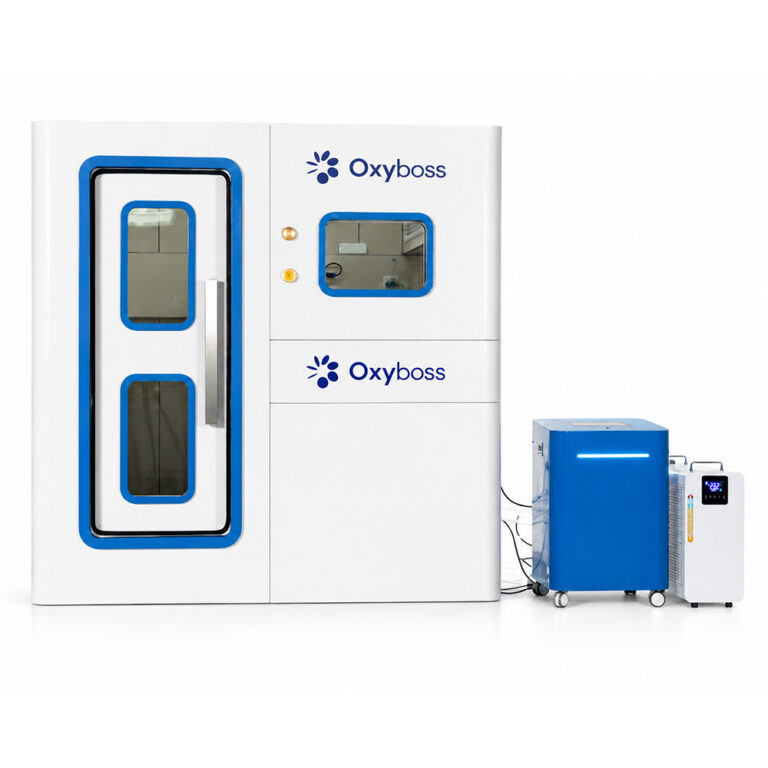
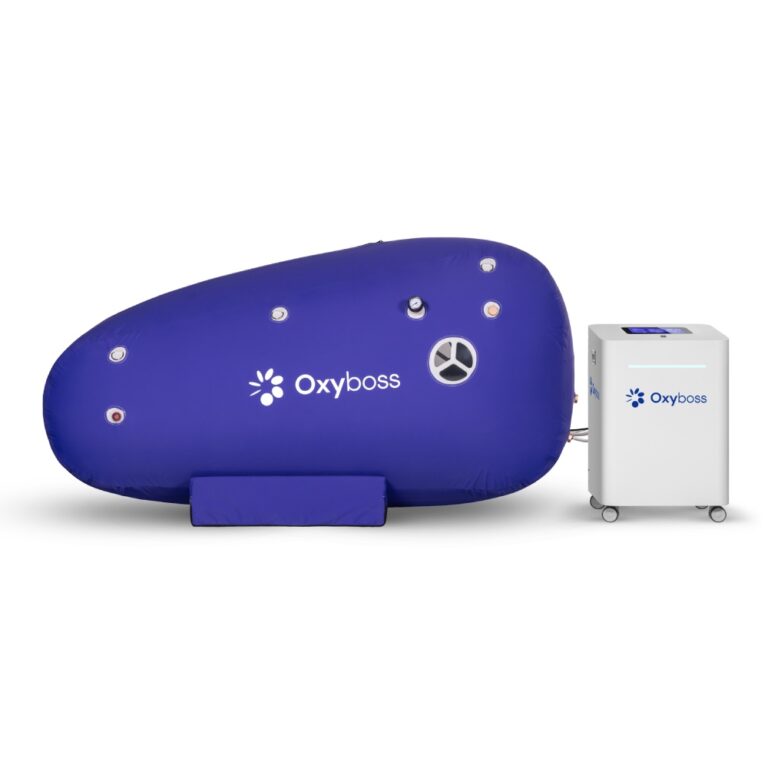
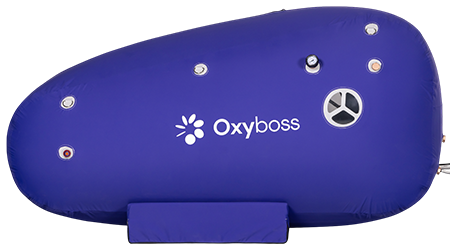
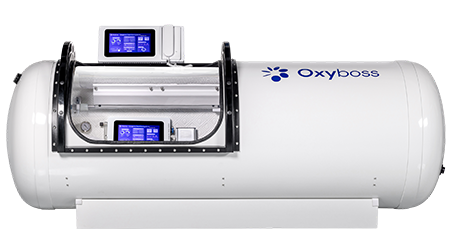
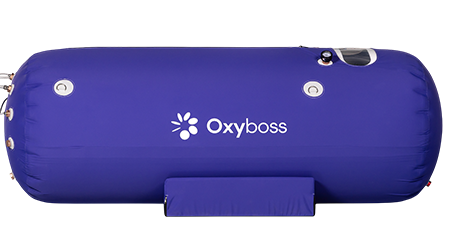
Not all hyperbaric chambers are the same. The eye-catching studies you’ll see quoted—the ones showing rewired nerve fibers and new blood vessels—almost all come from hospital-grade chambers running at high pressure with concentrated oxygen. The soft-sided, home-friendly chambers people are more likely to encounter run at much lower pressure. That gap isn’t a footnote. It changes what the oxygen physically does inside the body.
So this article does two things at once. It walks through why brain recovery is so slow and complicated, and how extra oxygen might help. And it keeps pointing back to that pressure question, because reading a study without knowing which chamber it used is how people end up with the wrong expectations.
No hype. Just mechanisms, the honest gaps, and the one comparison that actually matters.
Why Brain Recovery Is Complex
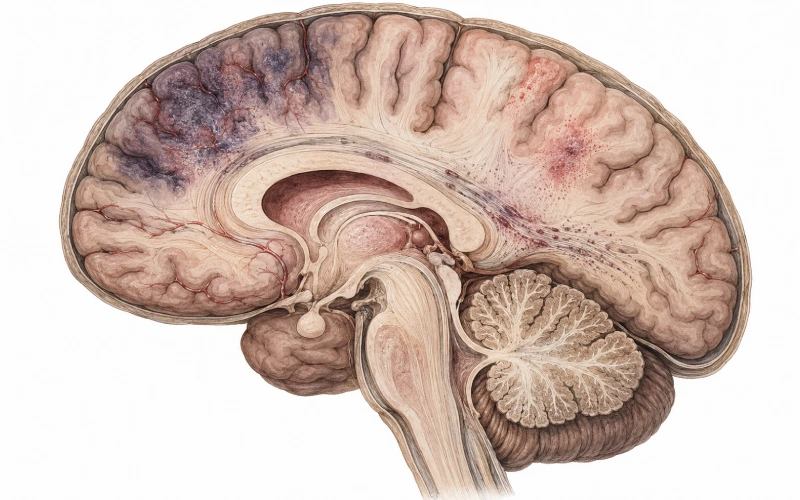
The damage from a serious knock to the head isn’t a single moment. The initial impact is only the opening act. What follows is a slow cascade that can unfold over hours, days, sometimes years. This delayed second wave—separate from the mechanical damage of the initial impact—involves restricted blood supply, metabolic breakdown, oxygen starvation, and swelling.
That second wave is exactly what makes recovery stubborn. A few overlapping problems drive it.
Reduced oxygen availability. When tissue swells or blood flow gets pinched off, oxygen stops reaching the zones that need it most. Cells that might have pulled through start to fail. Getting oxygen back into those struggling areas is one of the central puzzles researchers keep circling.
Lingering inflammation. The body floods a damaged area with an inflammatory response. Useful early on. But when it doesn’t switch off, it can keep quietly degrading the surrounding tissue instead of protecting it. That’s one reason some people stall out and plateau.
Cellular energy breakdown. The tiny power plants inside every cell often stop producing energy efficiently after an injury. Without steady energy, repair can’t get moving. Animal work has tied this energy failure directly to lasting damage, which is why so much research effort now targets that specific breakdown.
Neuroplasticity. Here’s the hopeful part. The brain can rewire. Neurons form new connections, and undamaged regions sometimes pick up jobs that injured areas used to do. This is the engine behind most real recovery. The catch: it needs the right conditions—enough oxygen, less inflammation, working energy. Miss those, and rewiring stalls.
What Hyperbaric Oxygen Actually Is
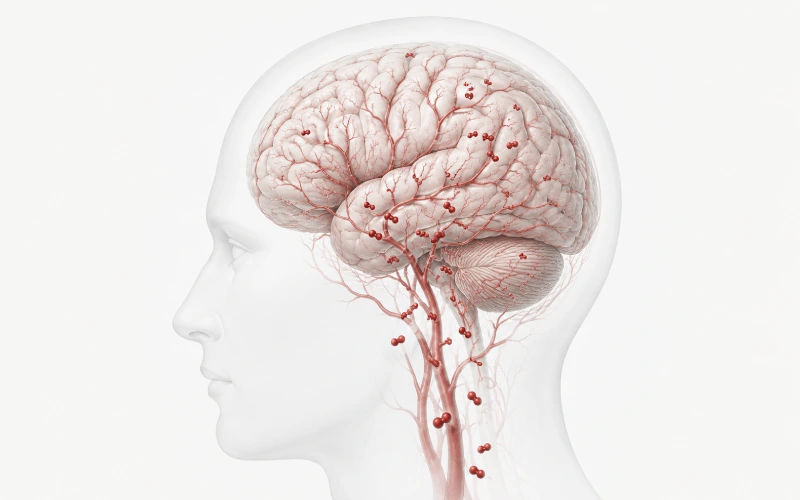
The core idea is simple. You breathe oxygen-rich air inside a chamber pressurized above normal atmospheric pressure. Raising the pressure lets the body dissolve far more oxygen into the blood than ordinary breathing ever could. That dissolved oxygen can then reach tissue that normal circulation struggles to serve.
But “pressurized above normal” hides a huge range. And that range is where the whole thing lives or dies.
The Distinction Nobody Should Skip: Two Very Different Chambers
Pressure gets measured in ATA—atmospheres absolute—where 1.0 ATA is normal sea-level pressure. The amount of oxygen you can dissolve into blood climbs with pressure, a relationship described by Henry’s Law. This isn’t a marketing detail. It’s physics. Double the effective pressure of oxygen and you roughly double how much dissolves into the liquid part of the blood.
That’s why the two ends of the spectrum aren’t the same thing wearing different labels:
| Higher-pressure (clinical) chambers | Lower-pressure (mild) chambers | |
|---|---|---|
| Typical pressure | ~1.5–2.0+ ATA | ~1.3–1.4 ATA |
| Oxygen source | Near-pure oxygen | Concentrated air (~90–95%) via a concentrator |
| Dissolved oxygen gain | Large | Modest, by comparison |
| Where the “impressive” studies come from | Almost all of them | Very few |
| Setting | Facility-based, supervised | Often portable, home-adjacent |
Read that table once more, because here’s the uncomfortable part. When you see a study reporting new blood vessels, structural brain-imaging changes, or big cognitive gains, it is overwhelmingly likely that the study used the left column. Applying those results to the right column is a leap the physics doesn’t support. The dissolved-oxygen difference between 1.3 ATA and 2.0 ATA isn’t a rounding error—it’s the difference between the two columns.
Anyone weighing a chamber deserves to know which one a given claim actually rests on. Keep that lens on for the rest of this article.
How Extra Oxygen Might Support Recovery
So why would more dissolved oxygen matter beyond the obvious? It maps neatly onto the bottlenecks above. Researchers point to a few overlapping pathways—noting these were mostly observed with higher-pressure setups.
Reaching starved tissue. By loading the blood with dissolved oxygen, the approach can supply regions ordinary flow can’t fully serve. One line of imaging research found meaningfully increased blood flow and blood volume in the brain after a long series of daily higher-pressure sessions. Researchers even proposed that poor tissue perfusion may act as a rate-limiting factor for regeneration—meaning fix the oxygen supply and other repair processes may get room to run.
Restoring cellular energy. Oxygen is the fuel those failing power plants run on. Lab work suggests the approach can help restore their function—shifting the balance of the proteins that govern cell survival and boosting energy production—alongside pathways tied to forming new neurons and connections.
Calming inflammation. There’s a genuine paradox here worth pausing on: oxygen can generate stress molecules, yet the overall effect leans anti-inflammatory. Mechanistic reviews describe reduced levels of the signaling molecules most associated with the lingering inflammation that stalls recovery.
Opening the door for rewiring. With better oxygen, more energy, and less inflammation, the rewiring machinery has room to work. Imaging has picked up structural signals consistent with this—changes in tissue microstructure and increased blood flow after a course of higher-pressure sessions. The most striking claim from that work: an appropriate biological trigger might reawaken plasticity months to years after the original event—challenging the old idea that the recovery window slams shut on a fixed schedule.
What the Research Actually Says
Promising in places. Uneven overall. Here’s a grounded look at three areas—with the chamber caveat attached throughout.
| Area | What higher-pressure research suggests | Typical protocol studied | How settled |
|---|---|---|---|
| Impact-related brain injury | Gains in memory, processing speed, executive function; imaging signs of tissue change even years later | ~40–60 daily sessions, 1.5–2.0 ATA | Promising, needs larger standardized trials |
| Blood-flow-related brain events | Improved function even in later chronic stages | ~40 daily sessions over ~2 months | Encouraging, some strong signals |
| As part of a broader plan | Works best layered with other approaches | Varies widely | Early, mostly small studies |
On impact-related injury, one imaging study followed people long past their original injuries—some more than two decades out—and still recorded meaningful cognitive gains. A recent pooled analysis landed on a cautious note: it reported improvement versus baseline while stressing that larger, standardized trials are needed to pin down the real role. That “while stressing” is doing heavy lifting, and we’ll get to why in a second.
On blood-flow-related events, a crossover trial reported improved function and quality of life after a course of daily higher-pressure sessions, with no comparable change during the control period—a detail that helps argue the sessions, not just the passage of time, mattered.
On broader recovery plans, the approach shows up as one layer, not a standalone answer—often paired with other methods rather than replacing them.
The Controversy This Field Can’t Ignore
Now the part a truly honest overview has to include—and the part where “efficacy remains debated” is too vague to be useful.
The specific, well-known fight is about the control group. Several large, carefully blinded studies compared people breathing concentrated oxygen at higher pressure against a comparison group sitting in a chamber at very low pressure breathing ordinary air. The awkward result: in a number of these, both groups improved—and the difference between them didn’t reach statistical significance.
That finding cuts two ways, and both are worth sitting with. One reading: the benefit might owe a lot to expectation, routine, and the structure of showing up daily—a placebo-style effect. The other reading, and this is the genuinely interesting one for the chamber question: maybe the low-pressure “sham” wasn’t inert at all. If even 1.3-ish ATA does something, then it’s not a true placebo—it’s a low dose, and the study accidentally compared a high dose against a low one rather than against nothing.
Nobody has fully closed this out. And that unresolved knot is exactly why blanket claims—in either direction, boosterish or dismissive—should raise an eyebrow. It’s also why the earlier reviews keep hammering the same point: the strongest data come from smaller or backward-looking studies, and the field still lacks enough large, standardized ones to speak in certainties.
Who Tends to Look Into This
Broadly, the people showing up in this research fall into a few groups: those who plateaued long after an initial injury, those still dealing with lingering slowness in thinking or memory, and those looking to complement a routine they already have.
One point reshapes expectations more than any other: a lot of the encouraging data comes from people well past the traditional recovery window—sometimes years out. That’s what makes the topic worth understanding for anyone who was told the door had already closed.
And a plain caution: this isn’t a fit for everyone, results vary a great deal between individuals, and none of the above is a substitute for talking your specific situation through with a qualified professional first.

Reading Claims Without Getting Fooled
If you take one practical habit from this article, make it this: whenever you see a hyperbaric claim, ask two questions before believing it.
- What pressure was used? If the source doesn’t say, or quietly borrows high-pressure results to imply low-pressure benefit, treat the claim as unproven for the lower-pressure setting.
- What was it compared against? “Improved versus their own starting point” is a much weaker claim than “beat a genuine comparison group.” Many headline numbers are the former.
Those two questions filter out most of the overreach on their own.
Frequently Asked Questions
Why does breathing oxygen under pressure differ from just breathing more oxygen normally? Pressure is the whole trick. Raising it lets far more oxygen dissolve directly into the blood, reaching tissue that normal supply struggles to serve. The amount that dissolves scales with pressure—which is also why a lower-pressure chamber and a higher-pressure one are not interchangeable.
Is a low-pressure home-style chamber the same as the ones in the studies? Usually no. Most of the eye-catching research used higher-pressure, near-pure-oxygen setups. Lower-pressure chambers dissolve considerably less oxygen, so applying the higher-pressure results to them isn’t supported by the physics.
Can it help if the injury happened years ago? That’s one of the more surprising threads. Several studies enrolled people many years out and still recorded gains, supporting the idea that rewiring can be reawakened late. Individual results vary widely, and this comes mostly from higher-pressure research.
Why do some studies show no real difference from a placebo? Because some blinded studies found both groups improving similarly. It’s unresolved whether that points to an expectation effect or to the low-pressure comparison group quietly getting a small real dose. Both explanations are still on the table.
Does it replace other recovery approaches? The research treats it as one layer within a broader plan, not a stand-in for anything else.
Conclusion
Strip away the noise and the idea is elegant: give struggling tissue the oxygen it’s missing and see whether repair processes that stalled can restart. The mechanistic story holds together—more oxygen, more cellular energy, calmer inflammation, more room to rewire. Imaging and cognitive studies have added real weight to it.
But two honest asterisks travel with almost every claim. Most of the strong evidence used higher-pressure chambers, so it doesn’t automatically carry over to lower-pressure ones. And the placebo question is genuinely unsettled. Coherent isn’t the same as proven.
If you’re curious, treat this as one option among several, always check which chamber a claim rests on, and lean on qualified professional guidance over headlines. The oxygen story is still being written—and the pressure gauge is a bigger part of that story than most people are told.
References
- Tal S, et al. Hyperbaric Oxygen Therapy Can Induce Angiogenesis and Regeneration of Nerve Fibers in Traumatic Brain Injury Patients. Frontiers in Human Neuroscience, 2017. https://www.ncbi.nlm.nih.gov/pmc/articles/PMC5654341/
- Hyperbaric oxygen therapy as a neuromodulatory technique: a review of the recent evidence. Frontiers in Neurology, 2024. https://www.ncbi.nlm.nih.gov/pmc/articles/PMC11496187/
- Wang Y, Chen D, Chen G. Hyperbaric oxygen therapy applied research in traumatic brain injury: from mechanisms to clinical investigation. 2014. https://www.ncbi.nlm.nih.gov/pmc/articles/PMC4406166/
- Impact of Hyperbaric Oxygen Therapy on Cognitive Functions: a Systematic Review. https://pmc.ncbi.nlm.nih.gov/articles/PMC8888529/
- Hyperbaric Oxygen Therapy Alleviates Memory and Motor Impairments Following Traumatic Brain Injury via the Modulation of Mitochondrial-Dysfunction-Induced Neuronal Apoptosis in Rats. https://www.ncbi.nlm.nih.gov/pmc/articles/PMC10740762/
- Repetitive Long-Term Hyperbaric Oxygen Treatment Administered after Experimental Traumatic Brain Injury in Rats Induces Significant Remyelination and a Recovery of Sensorimotor Function. https://www.ncbi.nlm.nih.gov/pmc/articles/PMC4029808/
- HBOT for Treating Neurocognitive Deficits in Traumatic Brain Injury: A Systematic Review and Meta-analysis. Neurology, 2025. https://www.neurology.org/doi/10.1212/WNL.0000000000211724
- Hyperbaric oxygen therapy for traumatic brain injury (sham-control and blinded trials discussion). https://www.ncbi.nlm.nih.gov/pmc/articles/PMC3231802/
- Bibliometric analysis of research trends on hyperbaric oxygen therapy in stroke from 2000 to 2022. Frontiers in Neurology, 2025. https://www.frontiersin.org/journals/neurology/articles/10.3389/fneur.2025.1455545/full
- Boussi-Gross R, et al. Hyperbaric Oxygen Therapy in Post-Stroke and Chronic Brain Injury: crossover and late-window findings. https://www.ncbi.nlm.nih.gov/pmc/articles/PMC5654341/