
If you’ve landed here, you probably have a head that hasn’t felt right in weeks
That’s a miserable place to be. You’re reading clinic pages, watching YouTube testimonials, and trying to work out if a hyperbaric chamber is worth the time and money. A lot of those pages already give you the answer they want you to read. This one is going to give you the answer the studies actually support.
Three things this page does:
- Lines up the evidence — what the research found, who ran it, where it was published.
- Walks you through the real risks and the regulatory status in the U.S.
- Gives you a short list of questions to bring to a doctor before you spend anything.
That’s it. No “X sessions will fix your brain.” No cherry-picked trial quoted like gospel. If you read the whole thing, you’ll be able to tell who’s being straight with you.
1. What a hyperbaric chamber actually does
A hyperbaric chamber puts you in a pressurized space and breathes higher-concentration oxygen. Under pressure, more oxygen dissolves into your blood plasma — that’s the whole trick. In the U.S., doctors use it for a defined list of conditions the FDA has cleared: decompression sickness, carbon monoxide poisoning, gas embolism, certain hard-to-heal wounds, radiation injury, severe infections, burns, and a few acute ischemic injuries. (FDA, Hyperbaric Oxygen Therapy: Get the Facts)
Concussion is not on that list. We’ll come back to what that means in a minute.
The theory for brain injury goes like this: a brain injury reduces blood flow and triggers inflammation, so cells become “idle” rather than dead; pump in more oxygen under pressure and you reduce swelling, calm inflammation, push stem cells toward the injury, and — maybe — wake those idle cells up. (TBI Center of Excellence, DoD, March 2025)
It sounds tidy. The catch is that those mechanisms are mostly shown in animal studies, imaging snapshots, or uncontrolled clinical reports. They show what could happen. They don’t prove what does happen for an adult sitting in a chamber after a concussion. We’ll get to the human evidence next — but keep that gap in mind. A plausible mechanism is the start of a question, not the end of one.
Plain-English sidebar
“Off-label” just means a doctor can legally prescribe an FDA-cleared device for a condition the FDA hasn’t cleared it for. It does not mean the use is proven. It means nobody has yet shown the FDA enough evidence to add it to the list. (FDA, Get the Facts)
2. What the research actually says
The clearest thing in the literature is that the evidence is split, and the best-controlled studies — the ones with a sham (fake) chamber for comparison — mostly come out negative for concussion and post-concussion syndrome.
Here’s a plain summary of the key studies. (A “sham” chamber looks and sounds like the real one but is set up so it shouldn’t deliver the active treatment — it’s how researchers tell a real effect from a placebo.)
Positive signals
| Study | What they did | What they reported |
|---|---|---|
| Boussi-Gross et al., 2013 (PLOS ONE) | 56 civilians with chronic PCS, randomized crossover, 40 sessions at 1.5 ATA, 100% oxygen | Improvements in cognition, quality of life, and SPECT brain perfusion |
| Harch et al., 2020 | 63 patients, randomized crossover, 40 sessions at ~1.5 ATA | Reported multi-domain improvement — but no sham group |
| Hadanny et al., 2022 (Scientific Reports) | 25 children aged 8–15, double-blind, sham-controlled, 60 sessions at 1.5 ATA | Improvements in cognition, behavior, PCS symptoms, quality of life vs. sham |
| Weaver et al., 2025 (Scientific Reports) | Double-blind pilot, 40 sessions HBOT vs. sham; only 42 people counted toward the main analysis (16 with mTBI in the HBOT arm, 11 in sham) | At 13 weeks, HBOT arm scored 7 points better on the primary measure (P=.01); mixed causes, exploratory design |
Sources: Boussi-Gross 2013 · Harch 2020 · Hadanny 2022 · Weaver 2025
Negative or null signals (the ones clinics rarely mention)
| Study | What they did | What they found |
|---|---|---|
| Wolf et al., 2012 | 50 military members with combat-related mTBI, double-blind sham-controlled, 2.4 ATA | Both groups improved; no real HBOT effect over sham |
| Walker et al., 2014 | 60 Marines with PCS, double-blind, three arms (1.5 ATA, 2.0 ATA, sham), 40 sessions | No benefit over sham on cognitive, balance, or fine-motor tests |
| HOPPS — Cifu/Miller et al., 2015 (JAMA Internal Medicine) | 72 service members, ~40 sessions at 1.5 ATA vs. sham air vs. usual care | RPQ-3 improvement: 52% HBOT, 33% sham, 25% usual care — not statistically significant (P=.24) |
| DoD-funded portfolio, 2018 | Five randomized studies at 1.2–2.4 ATA across pressures and oxygen levels | Four found no advantage over sham; the fifth (BIMA) lacked a proper sham and had blinding issues |
Sources: Wolf 2012 · Walker 2014 · HOPPS 2015 · DoD 2018 report
What the military review said
The DoD’s Traumatic Brain Injury Center of Excellence put it bluntly in March 2025: across the studies they funded, patients “either showed no significant differences in symptoms between those who underwent HBOT and those who completed a sham control treatment; or improvements observed after HBOT diminish in the months after treatment ends.” (TBI CoE 2025)
And here’s the part that should change how you read every clinic testimonial: in most of these trials, both the real-chamber group and the sham-chamber group got better. That tells us something important — and it’s worth its own section.
3. Why “both groups got better” matters more than it sounds
If you’re sitting in a fake chamber and your headaches still fade, that’s not a flaw in the study. That’s a clue.
Three things are probably happening at the same time for people in any chamber trial:
- Time and natural recovery. Most concussions do improve over weeks to months, even with no treatment at all.
- The placebo effect. Just believing you’re getting a powerful treatment — and committing to 40 sessions — measurably changes how people rate their symptoms.
- The “doing something structured” effect. Showing up daily, resting in a quiet room, being monitored, taking a break from normal stress — those alone can change how someone feels.
The sham-chamber studies were designed to test whether the high-pressure oxygen itself adds anything on top of all that. In most of them, it didn’t. (VA HSR&D Evidence Brief on HBOT for TBI)
One honest wrinkle: some researchers argue that 1.2–1.3 ATA room-air “sham” isn’t truly inert — that pressure alone raises tissue oxygen, which would muddy the comparison. That’s a real methodological argument, and it’s why the question isn’t fully closed. But it doesn’t flip the result. It just means we can’t rule out a small effect in some people. (Harch commentary on Wolf 2012)
What to take from this
If a clinic shows you a “before / after” chart with no comparison group, you’re looking at the placebo effect, not a proven treatment. Ask to see the same chart for people who went through a sham protocol.
4. The regulatory and payment reality nobody mentions
Here’s the part that gets brushed past on most clinic websites.
FDA position. The FDA has cleared HBOT devices for the conditions listed in section 1. TBI, concussion, post-concussion syndrome, and PTSD are not on that list. The FDA specifically warns patients not to confuse unproven uses with established treatment. (FDA, Get the Facts)
VA / DoD clinical practice guideline (2021). The official guideline for managing mild TBI gives HBOT a strong recommendation against for persistent post-concussion symptoms — citing lack of demonstrated benefit, the burden of treatment, cost, possible harms, and lack of FDA clearance. (VA/DoD CPG for the Management of mTBI)
2018 DoD memorandum. The DoD concluded that HBOT should not be prescribed for persistent post-concussion symptoms. (DoD 2018 report)
UHMS position. The Undersea & Hyperbaric Medical Society defines clinical HBOT as near-100% oxygen at at least 1.4 ATA, and their position on chronic brain injury is that evidence is insufficient to recommend HBOT. (TBI CoE 2025)
Who pays. Because the use is off-label and not FDA-cleared for concussion, commercial insurance, VA eligibility, and TRICARE generally don’t cover it. People pay out of pocket — and a full 40-session course commonly runs into the thousands of dollars. (VA Evidence Brief)
Conflict of interest. The DoD’s 2018 review also flagged that several positive recent studies have methodological limitations and financial conflicts of interest worth knowing about when you read them. (DoD 2018 report)
If a clinic page doesn’t mention any of this, that’s not an oversight. They’re not going to volunteer it.

5. The actual risks
Clinic pages tend to wave risks away. The trials tell a more useful story.
Common and usually mild:
- Ear pain, sinus pressure, or middle-ear barotrauma (trouble equalizing pressure in your ears)
- Temporary vision changes or mild nearsightedness
- Claustrophobia, anxiety, headache, dizziness, nausea, fatigue
- Low blood sugar in people with diabetes on certain medications
Less common but real:
- Lung barotrauma, lung collapse (pulmonary barotrauma)
- Pulmonary oxygen toxicity
- Oxygen-toxicity seizures
- Fire — high-concentration oxygen is genuinely flammable, and the FDA has reported severe injuries and deaths from chamber fires (FDA, Get the Facts)
The actual numbers from trials:
- Middle-ear barotrauma: about 8% with HBOT vs. 0% with sham at 1.5 ATA; about 42% vs. 16% at 2.4 ATA in another trial (VA Evidence Brief)
- In the pediatric trial: adverse events in about 86–90% of children — described as mild with no long-term issues, but a useful reminder that “mild side effects” still happen to most kids in the chamber (Hadanny 2022)
Hard “no” — absolute contraindications:
- An untreated pneumothorax (collapsed lung with air still trapped) is the textbook absolute contraindication. (VA Evidence Brief)
- Other conditions need careful screening: certain lung diseases that trap air, recent ear or chest surgery, an active sinus or upper-respiratory infection, inability to equalize ear pressure, uncontrolled medical conditions, severe claustrophobia, and some chemotherapy drugs.
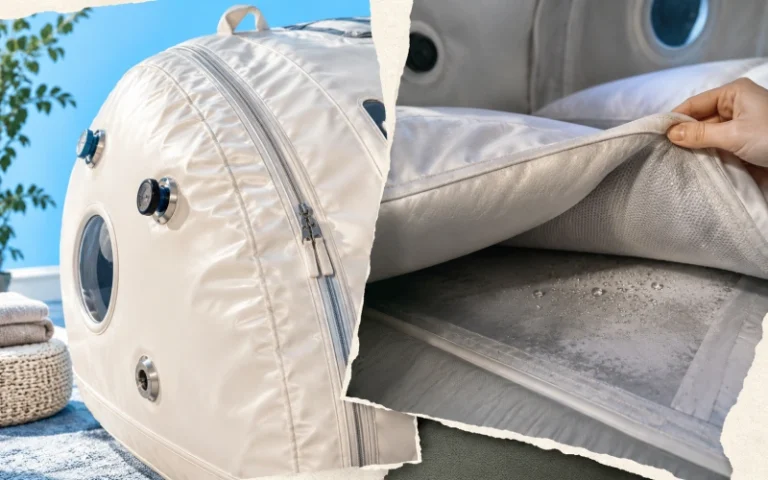
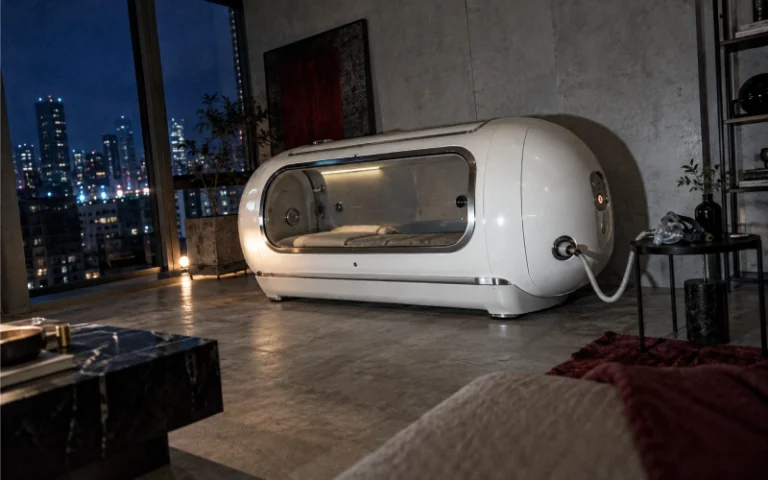
Why this matters even if you’re only “shopping” home chambers: the same pressure physics apply to any pressurized enclosure. A home chamber can’t cause oxygen toxicity the way a 100%-oxygen medical chamber can — because the gas is air, not pure oxygen — but barotrauma, ear injury, fire risk, and the absolute contraindications all still apply. We’ll come back to this distinction in section 7.
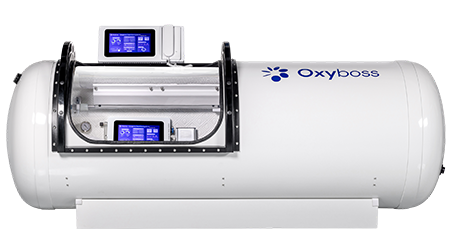
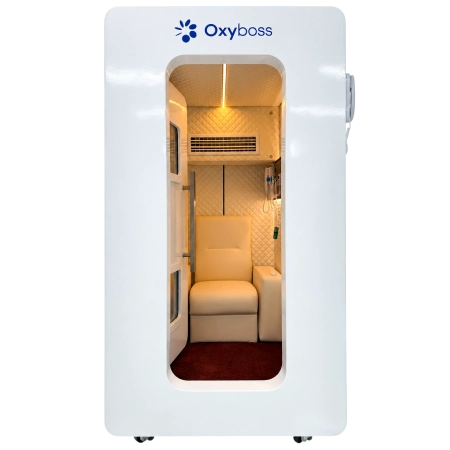
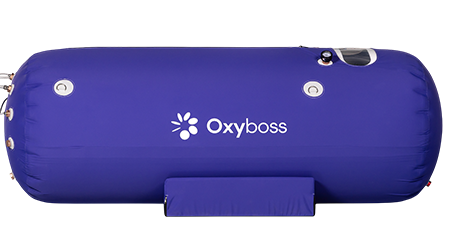
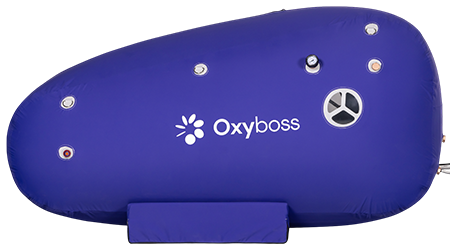
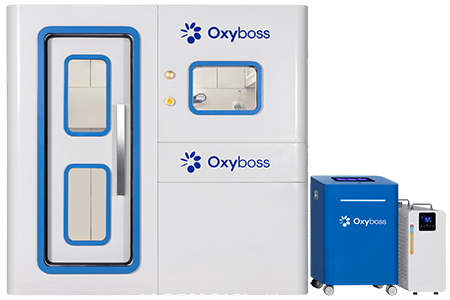
6. Home hyperbaric chambers vs. clinical hyperbaric chambers (the honest comparison)
You found this page because you were looking at hyperbaric chambers. Here’s a straight comparison so you can tell the difference between the two things people sell under the same name.
| Clinical / medical hyperbaric chamber | Home / wellness chamber | |
|---|---|---|
| Pressure | Typically 1.5–2.4 ATA or higher | Usually mild pressure (commonly ~1.3 ATA in many consumer units) |
| Gas | 100% oxygen, usually via mask or hood in a multiplace chamber, or the chamber itself filled with oxygen in a monoplace unit | Compressed room air; you breathe regular air inside |
| Supervision | Trained hyperbaric physician and inside attendants; medical screening required | Self-operated; no medical screening or monitoring |
| Intended use | Treat specific FDA-cleared medical conditions (decompression sickness, wound healing, etc.) | General relaxation, recovery, and wellness for healthy adults |
| Regulatory status | FDA-cleared as a medical device | Not cleared for the diagnosis, treatment, or prevention of any disease |
| Concussion / PCS use | Off-label even in medical chambers — discussed in sections 2–6 above | Not a medical device. Not for any medical condition, including concussion or PCS. |

FAQ
Can a hyperbaric chamber help a concussion?
For most people, the honest answer is “we don’t know yet.” Some small studies show improvement; the best-controlled trials mostly don’t show benefit over a sham chamber. Talk to a clinician who works with post-concussion patients.
Is hyperbaric oxygen therapy FDA approved for concussion?
No. The FDA has cleared HBOT for a specific list of conditions — decompression sickness, CO poisoning, certain wounds, radiation injury, and a few others. Concussion, TBI, PCS, and PTSD are not on that list. (FDA, Get the Facts)
How many sessions does HBOT take for concussion?
There’s no validated dose. The most common research protocol is around 40 sessions at 1.5 ATA over 8–12 weeks. Other studies used 2.0 or 2.4 ATA, or about 60 sessions in children. None of these are a proven standard.
Why did military studies find no benefit over a sham chamber?
That’s the honest finding from Wolf 2012, Walker 2014, and HOPPS 2015 — the largest sham-controlled trials in service members with mild TBI or PCS. In HOPPS, both chamber groups improved more than usual care, but HBOT wasn’t significantly better than sham. The leading explanation is that the chamber experience itself — rest, monitoring, expectation, structure — produces real improvement, on top of which the extra oxygen doesn’t add a clearly detectable benefit in most people.
What are the risks of hyperbaric oxygen therapy?
Middle-ear barotrauma (about 8% at 1.5 ATA and up to 42% at 2.4 ATA in trials), sinus pain, temporary vision changes, claustrophobia, lung barotrauma in rare cases, oxygen-toxicity seizures in rare cases, and fire risk. Untreated pneumothorax is the absolute “no.”
Can a home hyperbaric chamber treat post-concussion syndrome?
No. Home chambers are not medical devices and are not intended to diagnose, treat, cure, or prevent any disease, including concussion or post-concussion syndrome. They’re built for general relaxation and wellness in healthy adults. If you have ongoing post-concussion symptoms, work with a clinician — start with the symptom-focused management approaches described in section 7.
Is HBOT covered by insurance for concussion?
Generally not. Because the use is off-label and not FDA-cleared for this indication, commercial insurance, VA eligibility, and TRICARE typically don’t cover it. Most people pay out of pocket. (VA Evidence Brief)
The bottom line
For most people with a concussion or post-concussion syndrome in the United States, hyperbaric oxygen therapy is an unproven, often expensive, self-pay option — not established care. It might help a small subset of people; the best-controlled trials say it usually doesn’t help more than a sham chamber; the FDA hasn’t cleared it for this use; the VA/DoD guideline recommends against it for persistent symptoms.
If you’ve read this far, you’re better informed than most of the people handing over their credit card. Take the question list in section 10 to a doctor who actually treats post-concussion patients. If you decide to try HBOT anyway, do it under physician supervision in an accredited medical facility, alongside the standard rehab work — not instead of it. And if a clinic tells you their protocol is “the one that works,” ask them to show you the sham-controlled trial.
If you’re looking at a chamber for relaxation, recovery, and breathing pressurized air in a calm environment — that’s a different conversation, and one we’re happy to have. You can compare Oxyboss chambers or read about how we build them.
Medical disclaimer
This page is for general educational purposes only. It is not medical advice and is not a substitute for evaluation by a qualified healthcare provider. Oxyboss home chambers are wellness devices intended for healthy adults; they are not intended to diagnose, treat, cure, or prevent any disease or medical condition, including concussion or post-concussion syndrome. Always consult a licensed physician about symptoms, diagnosis, and treatment options. If you think you have a concussion or are experiencing new neurological symptoms, seek medical attention promptly.
Sources
- FDA, Hyperbaric Oxygen Therapy: Get the Facts — fda.gov
- VA / DoD Clinical Practice Guideline for the Management of mTBI (2021) — healthquality.va.gov
- VA HSR&D, Evidence Brief: Hyperbaric Oxygen Therapy for Traumatic Brain Injury — hsrd.research.va.gov
- DoD Traumatic Brain Injury Center of Excellence, Hyperbaric Oxygen Therapy and TBI (March 2025) — health.mil
- DoD, Hyperbaric Oxygen Therapy for Mild Traumatic Brain Injury (2018) — health.mil
- Wolf G. et al., The effect of hyperbaric oxygen on symptoms after mild traumatic brain injury (2012) — PubMed 23031217
- Walker W. et al., Randomized, Sham-Controlled, Feasibility Trial of HBOT for mTBI (2014) — PubMed 24370568
- Cifu D. / Miller R. et al. (HOPPS), Effects of Hyperbaric Oxygen on Symptoms and Quality of Life Among Service Members With Persistent PCS (2015, JAMA Internal Medicine) — JAMA Network
- Boussi-Gross R. et al., HBOT Can Improve Post Concussion Syndrome Years After Mild TBI (2013, PLOS ONE) — PLOS ONE
- Harch P. et al., HBOT for mild TBI persistent post-concussion syndrome (2020) — PMC 7871939
- Hadanny A. et al., HBOT in children with post-concussion syndrome (2022, Scientific Reports) — Nature
- Weaver L. et al., A double-blind randomized trial of hyperbaric oxygen for persistent post-concussive symptoms (2025, Scientific Reports) — Nature
- Harch P., HBOT for PCS: Contradictory Conclusions from a Study Mischaracterized as Sham-Controlled (2013) — PMC 3837504
- Cognitive FX, Can Hyperbaric Oxygen Treatment Help with Brain Injury? — cognitivefxusa.com