When families start looking at hyperbaric chambers for a child, the first question is almost always: “Do I need a smaller chamber?”
The answer is no — but the reason matters more than you’d think.
The chamber itself doesn’t need to change. What needs to change is everything around the smaller body using it.
Here’s why: pressure settings are determined by the application, not by body weight. Pediatric hyperbaric research in the National Library of Medicine shows that whether someone weighs 40 pounds or 180 pounds, a 1.3 ATA session is still 1.3 ATA. The physics don’t scale down.
So if pressure doesn’t adjust, what actually does?
The physical environment. How much room they have to move. Whether they can see you. How fast the air pressure builds. Whether the door opens in a way that makes sense to a six-year-old. And whether someone can be right there the first few times, not on the other side of a wall.
These aren’t comfort features. These are the variables that determine whether a child will get in the chamber a second time.
The Real Question: How Much Room Do They Actually Need?
A chamber rated for one person will physically fit a smaller body — that’s never been the issue. The issue is whether they feel like they can move a little. Whether there’s room for your hand to reach in. Whether the space feels manageable instead of confining.
Interior dimensions matter more than the external footprint listed in a spec sheet. A lying chamber needs to be long enough that a child can fully extend without their head or feet pressing into the ends — think 200+ cm in length. Width is where most of the negotiation happens. An 80 cm diameter works for solo use. A 90 cm diameter gives you room to sit alongside or for a parent’s arm to reach in during the first few sessions.
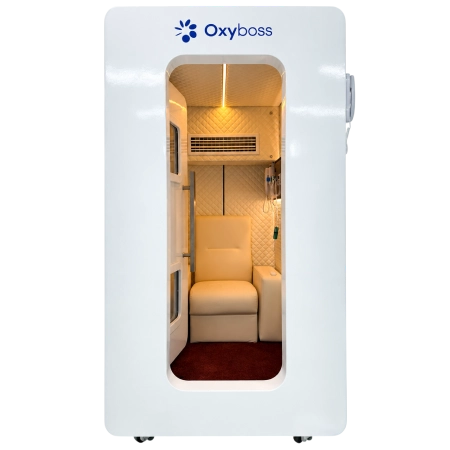
For sitting chambers, you’re looking at height and floor space. A child needs to sit without their head touching the ceiling, which means at least 100 cm of interior height. If a parent plans to sit next to them (common for the first 5–10 sessions), you need enough width for two people shoulder-to-shoulder — around 140–150 cm interior width.
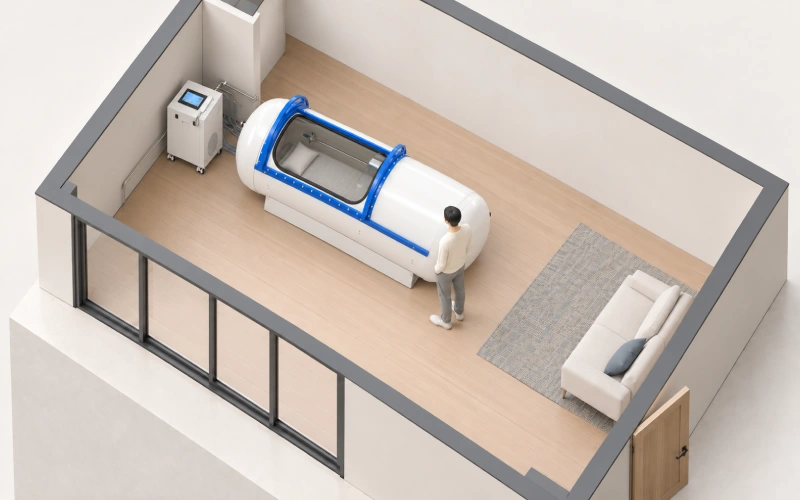
Room clearance is the thing most families miss. You can’t put a chamber flush against a wall. You need 2–3 feet of clearance on all sides for ventilation, for the oxygen supply unit (which sits outside the chamber), and for someone to kneel or sit beside the chamber during a session. A chamber with a 75 cm diameter might only take up 75 cm on paper, but it actually needs a 10′ × 7′ room minimum when you account for door swing, hose routing, and access.
If your available space is smaller than that, you’re not out of options — but you need to be realistic about what “works” means. A chamber wedged into a corner might technically fit, but it becomes harder to service, harder to clean, and psychologically harder for a nervous child to approach.
Why Pressure Stays the Same (and Why That’s Not a Problem)
This is where a lot of confusion starts. If you’re buying a personal wellness chamber, the pressure range is already set by the design — typically 1.3–2.0 ATA for hard-shell models, 1.1–1.5 ATA for soft-sided. You’re not “prescribing” a dose. You’re operating equipment at its specified range.
Some families worry that a lighter body weight means they should dial the pressure down. That’s not how it works. The Undersea and Hyperbaric Medical Society notes that pressure ranges are selected based on the application, not the user’s size. A 1.5 ATA session is 1.5 ATA whether the person inside is a child or an adult.
What you can control — and what actually matters for a smaller body — is pressurization speed.
Most chambers ramp pressure at a fixed rate, typically in the range of 10–14 kPa per minute. For an adult who’s done this before, that’s fine. For a child on their first session, it can be too fast for their ears to keep up.
If you have manual control over the ramp (pause, hold, resume), you can pressurize in stages: ramp to 1.1 ATA, pause for 2–3 minutes, let them swallow or try equalizing their ears, then continue. This doesn’t change the final pressure — it just gives their bodies time to adjust on the way there.
The other variable is session length. Time at pressure is separate from the pressure itself. Many families start with 20–30 minutes at full pressure and extend as the child gets comfortable. You’re not “building up tolerance” to the pressure — you’re building familiarity with the process.
Getting In and Out: The Part No One Talks About
Most kids aren’t anxious about the pressure. They’re anxious about the door closing.
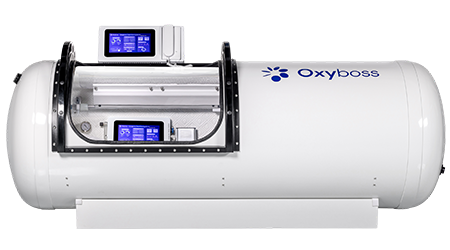
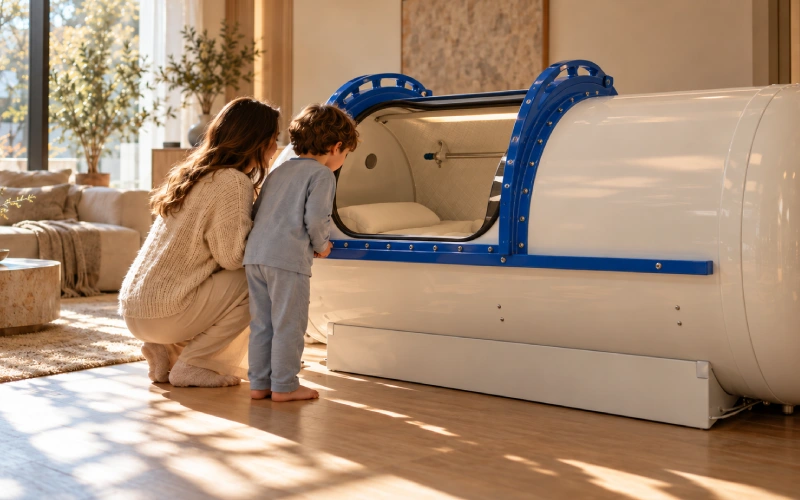
Door type and size directly affect how confident a child feels. Some chambers use a dome that lifts from one end, like a car hood opening toward you. A child lying down can watch you open it, see exactly how it moves, and understand how to lift it themselves if they need to get out. That visibility matters.
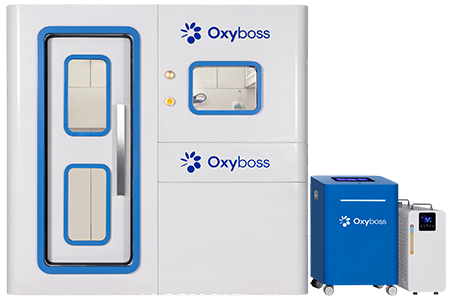
Sitting chambers typically have hinged or sliding doors. The opening needs to be wide enough (at least 60 cm) and tall enough (at least 120 cm) that a child doesn’t have to crouch or squeeze to get in. If the entrance feels like they’re crawling into a tunnel, you’re going to have resistance.
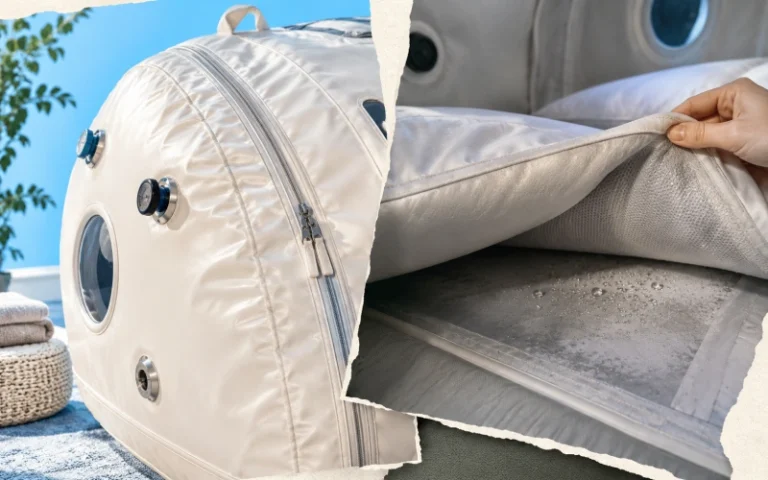
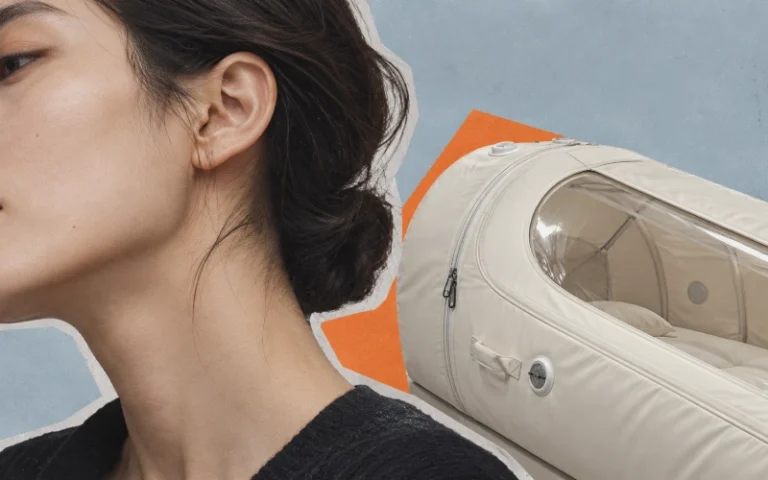
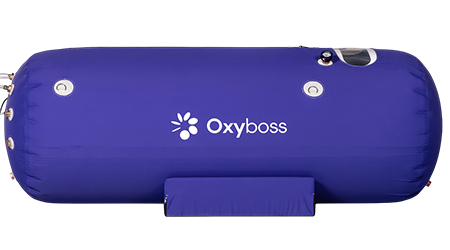
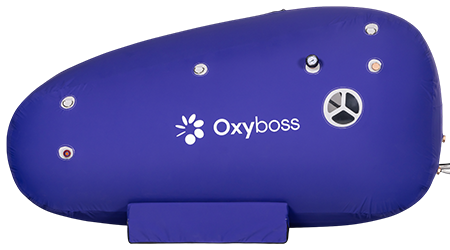
Soft chambers use a long zippered opening — sometimes the entire length of the chamber. A child can see the zipper teeth from the inside, watch you unzip it, and physically reach the zipper pull themselves if they want out. The fabric is translucent, so they’re never in complete darkness. And because soft chambers are lightweight (typically 18–25 kg), an anxious child can physically push the material aside even with air pressure inside. That’s not a flaw — it’s a psychological safety feature.
Ear Pressure: The Real Variable in Smaller Bodies
Pressure in the chamber goes up. Pressure in the middle ear needs to match. Adults do this automatically through swallowing, yawning, or the Valsalva maneuver (pinching your nose and gently blowing). Kids can learn these techniques, but it takes practice.
Research on pediatric ear pressure equalization found that most children can start learning active techniques like Valsalva around age 4–6. Full proficiency — meaning they can equalize as reliably as an adult — comes around age 12–13. Before that, younger kids rely on passive methods: swallowing, chewing gum, sucking on a pacifier, drinking through a straw.
If your child is under 6, or if they have a history of ear infections or tubes, the pressurization ramp becomes your most important variable. Chambers with manual ramp control let you pause mid-ascent, hold pressure at an intermediate level, and give ears time to catch up before continuing. If ears don’t clear, you can abort and depressurize without hitting the target pressure at all.
Most modern chambers have dual controls — one inside, one outside. If your child is inside and signals discomfort, they can tap a stop button on their screen and you’ll see it on yours. Decompression happens automatically and gradually. You don’t need to calculate rates or worry about doing it wrong.
Oxygen Delivery: Fit Matters More Than You Think
Chambers include an oxygen concentrator — typically a 10L unit delivering around 90% oxygen. That’s the supply. The actual oxygen concentration a person breathes depends entirely on how the delivery system fits.
Masks are the weak link, especially for kids. A loose mask leaks room air in, diluting the oxygen. An overly tight mask presses into soft facial tissue and becomes uncomfortable within 10–15 minutes. Standard adult masks often don’t fit children under age 8 well — the bridge sits wrong, the seal gaps at the cheeks, or the straps are too long.
Many families end up sourcing pediatric-sized masks separately. Look for nasal cannulas or non-rebreather masks rated for 10–25 kg body weight. These are widely available from medical supply retailers and aren’t chamber-specific.
The FDA notes that personal-use hyperbaric chambers (specifically soft-sided units under 1.5 ATA) are cleared for limited applications and should not be fitted with supplemental oxygen unless under professional guidance. Hard chambers operating in the 1.1–2.0 ATA range typically come with integrated oxygen systems as standard — not something added later.
If your child can’t tolerate a mask at all, some families use a hood — a plastic chamber that fits over the head and fills with oxygen-enriched air. Hoods are less claustrophobic but also less efficient, because you’re oxygenating the space around the face rather than delivering directly to the nose and mouth.
Noise: The Hidden Deal-Breaker
A hyperbaric chamber makes noise. The air compressor runs continuously during pressurization and intermittently during the session. The oxygen concentrator hums. If there’s air conditioning in the unit, it cycles on and off.
Most families don’t think about this until session three, when their child refuses to get in because “it’s too loud.”
Typical sound levels during operation range from 55–65 dB, depending on the chamber type and the power of the oxygen unit. For reference, that’s comparable to a normal indoor conversation or background music playing in a room. A whisper is around 30 dB. A vacuum cleaner is around 70 dB.
If your child is sensitive to sound — common with sensory processing differences, autism spectrum, or just general anxiety — 60 dB sustained for an hour can be overwhelming. The sound isn’t dangerous, but it’s persistent.
What helps:
- Soft foam earplugs (not noise-canceling headphones — electronics and changing pressure don’t mix well)
- Audiobooks, music, or white noise played from a phone or tablet placed inside before sealing
- Shorter sessions at first (20–30 minutes) so sound exposure doesn’t compound with fatigue
Some families ask manufacturers if they can make the compressor quieter. The tradeoff is usually fixed: lower noise means slower pressurization or reduced ventilation. Faster ramp speed and better air circulation require more airflow, which means more sound.
Visibility: Can They See You?
Clear materials — acrylic viewports on hard chambers, translucent fabric on soft chambers — serve two purposes. The person inside can see out. And you can monitor them without opening the door and losing pressure.
For anxious kids, visibility isn’t a nice-to-have. It’s the difference between tolerating the session and panicking.
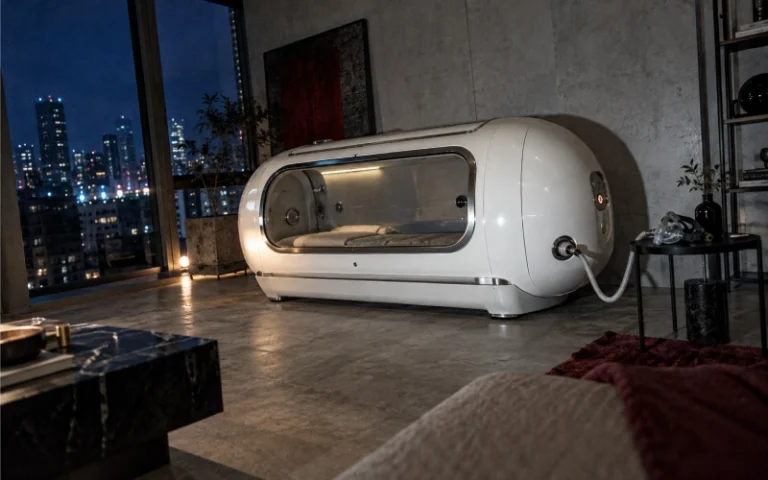
Capsule-style chambers (lying down, acrylic dome overhead) give 360° visibility. A child can see you sitting right beside them, can watch you move around, and can make eye contact the entire time. Some families find this works better than sitting chambers with smaller windows, where the child sees you through a porthole but loses peripheral vision.
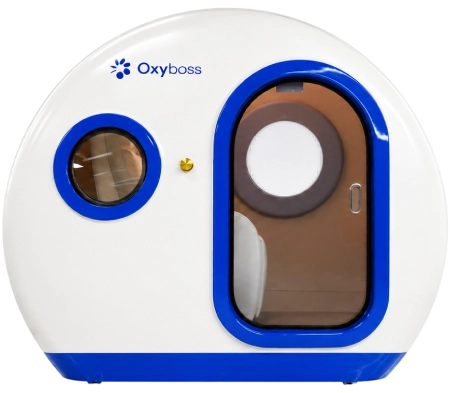
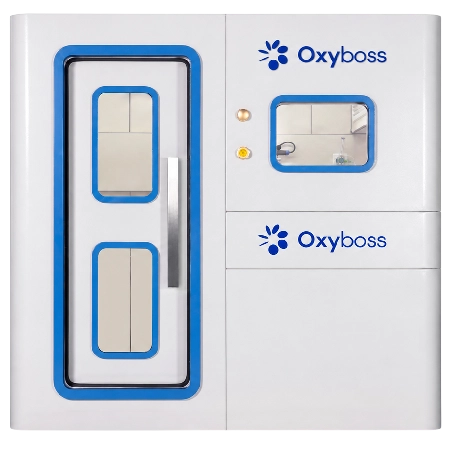
Sitting chambers typically have acrylic panels on the door and sides — smaller viewports, but you can sit facing each other and maintain eye contact. For families where a parent needs to be inside the chamber for the first few sessions, two-person chambers (either side-by-side seating or lying configurations) give enough space for a parent and child together.
Soft chambers use translucent medical-grade TPU. You can see shapes, light, and movement — enough to know someone is there — but not fine detail like facial expressions. It’s less total visibility than acrylic, but it’s also less confining than an opaque enclosure.

After the Session: What Happens When Pressure Drops
Most guides tell you what to do during a session. Almost none tell you what to expect in the 10–15 minutes after the door opens.
Depressurization is automatic and gradual — typically 5–8 minutes to return to normal atmospheric pressure. Ears may feel “full” or slightly muffled for a few minutes afterward. This is normal. The eustachian tubes are finishing their equalization. It resolves on its own.
Immediate post-session:
- Have your child sit still for 2–3 minutes before standing up (some people feel briefly lightheaded)
- Offer water — the air inside was dry, and kids usually come out thirsty
- Don’t schedule anything demanding right after (homework, sports practice, a long car ride)
Younger children sometimes experience a mild “oxygen high” — a brief burst of extra energy or giggliness that fades within 30–60 minutes. If your child seems unusually tired or cranky after a session, that’s also within normal range. Let them rest.
Safety: What Actually Matters
Fire safety is real but often misunderstood. Oxygen doesn’t burn. It makes other things burn faster and hotter. The risk is ignitable materials in an oxygen-enriched environment.
Reputable chambers follow pressure vessel design standards (ASME PVHO-1 family is the common reference). Electrical components inside are sealed and rated for the environment. The oxygen delivery system is separate from the pressurization system — oxygen goes to the mask or hood, not into the chamber air itself.
What you actually need to do:
- No petroleum-based products on skin or hair before entering (petroleum + oxygen = fire hazard)
- No electronics with exposed batteries inside
- No open flames, lighters, or spark-producing items anywhere near the chamber
- Keep the oxygen concentrator unit away from space heaters, stoves, or smoking areas
Maintenance is not optional. Air filters need replacement every 500–1,000 hours of use (cost: around $50). Door seals should be inspected every 6 months and replaced every 2 years or sooner if you see wear (cost: around $150). An annual pressure test — where you verify the chamber holds pressure without slow leaks — is standard practice.
Most chambers come with a 1–3 year warranty. Consumables (masks, filters, seals, padding) typically aren’t covered. These are lifetime replaceable parts, not defects.
Record-Keeping: The Piece Everyone Skips
If you’re using a chamber at home, no one is tracking your sessions for you. Most families think “I’ll remember,” and by session 15, they have no reliable memory of what they did on day 3 or day 10.
This matters if you’re working with a healthcare provider. They’re going to ask: How many sessions? What pressure? Any pattern to the days your child felt off or reported discomfort?
A simple log template you can copy:
| Date | Start Time | Target Pressure | Time at Pressure | Mask or Hood | Ears OK? | Notes |
|---|---|---|---|---|---|---|
| 1/15 | 3:00 PM | 1.3 ATA | 30 min | Mask | Yes | First session — nervous but finished |
| 1/17 | 3:15 PM | 1.3 ATA | 35 min | Mask | No — stopped at 1.1 | Ears hurt, couldn’t clear |
Keep this somewhere your provider can see it — a shared doc, a folder you bring to appointments, or a photo album on your phone. If you need to troubleshoot (“Why does my child get a headache on Tuesday sessions but not Thursday sessions?”), this log is the only way you’ll spot patterns.
What This Means for Your Decision
The chamber doesn’t need to be smaller. The process around it needs to be adjustable.
When you’re evaluating chambers — whether you’re comparing models from one manufacturer or shopping across brands — here’s what actually matters for a smaller body:
- Can you control how fast pressure builds? (Manual ramp control, pause/hold features, or at minimum a gentle default ramp speed)
- Can they see you clearly? (Full acrylic dome, large viewports, or translucent material — not small portholes)
- Can you stop immediately if something feels wrong? (Dual controls, emergency abort button, automatic decompression)
- Is there room for a caregiver alongside for the first few sessions? (Either physical space for two people, or chamber positioning that lets you sit next to the door and maintain visibility)
- Can you replace consumables yourself? (Filters, seals, masks — modular parts you can swap without calling a technician)
The specific brand or model number matters less than whether the design supports these five things. A chamber that checks all five will work for a child. A chamber that misses two or more will be a fight every session, no matter how good the specs look on paper.
At Oxyboss, we make chambers for families who need them to work, not families who need them to look impressive. Our full product line covers lying chambers (soft and hard-shell), sitting chambers (single and double occupancy), and portable soft models. All hard chambers operate in the 1.1–2.0 ATA range; soft chambers at 1.1–1.5 ATA. Every model includes dual synchronized touchscreens, manual ramp control, integrated oxygen delivery, and modular consumable parts.
If you want to see specs, dimensions, and which models fit which floor spaces, we have detailed breakdowns available. But the decision starts with the five questions above, not with a data sheet.
For questions about whether a specific chamber makes sense for your situation — your child’s age, your available space, your comfort level with technical equipment — reach out. We respond within one business day, and it’s a real person, not an automated drip email.
Positioning note:
Oxyboss chambers are personal wellness devices for home use. They are not medical devices. They do not diagnose, treat, cure, or prevent any disease or medical condition. Always consult your healthcare provider before starting any new wellness routine, especially for children. This article is for educational purposes and is not a substitute for professional medical advice.