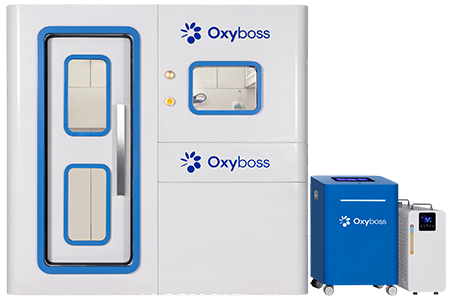
We make hyperbaric chambers. And here’s something we tell every customer when they call about slow pressurization: your chamber will leak. Not “if,” but “when.” Door seals wear, valve seats erode, acrylic windows develop microfractures. The question isn’t whether it’ll happen—it’s whether you’ll catch it before it burns through session time, oxygen, and treatment capacity.
This isn’t about selling you something. This is what a developing leak actually costs, where it happens, and how to find it with tools you probably already own.
What One Leak Costs (The Math Nobody Wants to Do)
A chamber running 6 sessions daily at 1.5 ATA, 60 minutes each. A door seal starts failing. Pressurization adds 8 minutes per session. That’s 48 minutes lost daily—almost a full session. Over a month: 24 hours of capacity gone. If you charge $150 per session, that leak just cost **$3,600 in lost throughput**, plus the oxygen burned holding pressure against it.
The compressor doesn’t know it’s fighting a leak. It just runs longer. Neither does your power meter.
And patients notice. When a 60-minute session becomes 75 minutes, they start wondering if the treatment works. That’s not a mechanical problem anymore—it’s a trust problem.
Where Leaks Develop
Door Seals and Gaskets
Door seals get blamed for everything because they’re usually guilty. Elastomers degrade in oxygen-rich environments. UV exposure from the viewport accelerates it. Contamination from petroleum-based products (which should never enter a chamber but often do) hardens the material. A seal that compressed perfectly 18 months ago now leaves a 0.5mm gap.
Replacement intervals vary by usage intensity and oxygen purity, but ignoring them always costs more than the $120–$180 gasket.
Valve Stems and Fittings
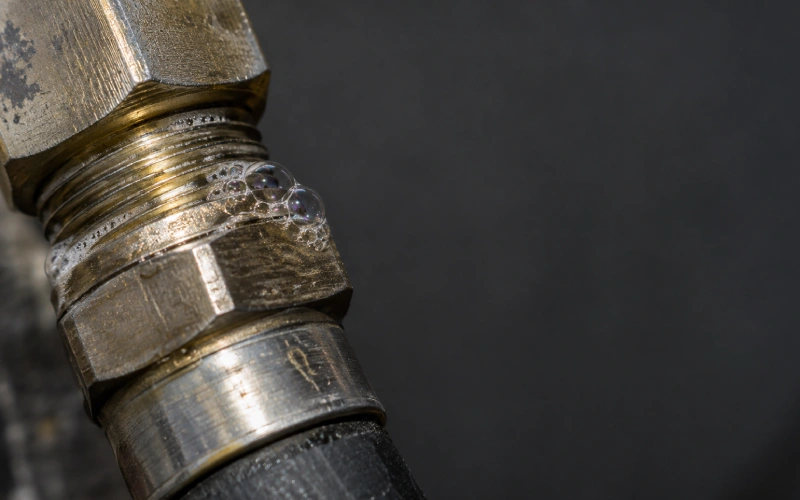
The brass seat on an intake valve wears from particulate in compressed air. The O-ring inside a quick-disconnect dries out. These create 2–5 psi/min leaks—small enough you won’t hear them, large enough that your 12-minute pressurization becomes 18 minutes.
Heat-Seamed Fabric and Windows
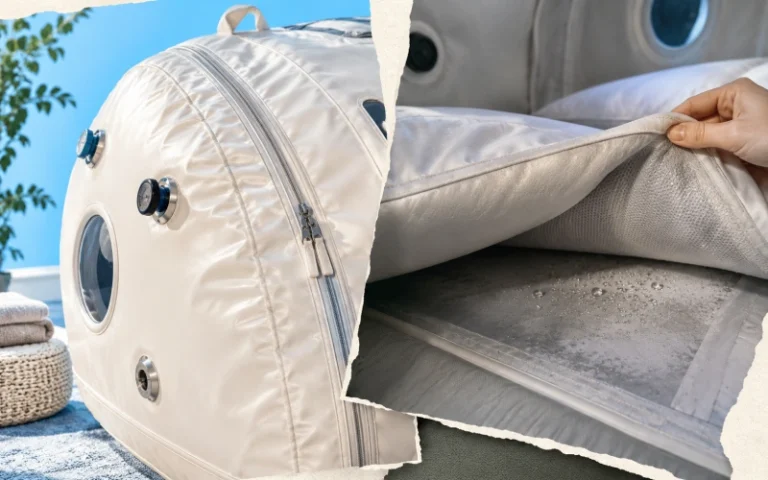
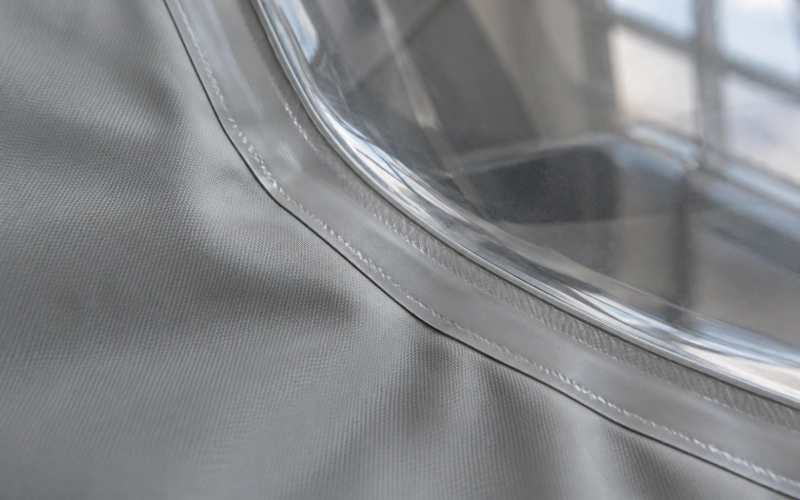
On soft chambers, acrylic windows installed under tension develop stress cracks over years. Fabric seams separate by millimeters along a six-inch run. You won’t see it visually. You’ll see it in baseline pressurization time trending upward over months.
Pressure Relief Valves
When PRVs leak, it’s catastrophic. If your chamber won’t hold pressure even with the compressor running continuously, the PRV is probably chattering or stuck partially open.
The Overlooked Stuff
Penetrations—anywhere a cable, hose, or sensor passes through the chamber wall. Sealant degrades.
Frame flex points on soft chambers. Uneven surfaces or frequent moves create localized stress and eventual seam failure.
How to Find Them (Skip the $15,000 Helium Sniffer)
You’ll see guides recommending helium leak detectors, ultrasonic probes, or acoustic emission testing. For a 1.3–1.5 ATA soft chamber, that’s over-engineering borrowed from submarine and aerospace applications. You don’t need it.
1. Pressure Hold Test
Close the empty chamber, pressurize to operating pressure (1.5 ATA = ~7 psig), shut off the compressor, close the isolation valve, and watch the gauge for 10–15 minutes.
Practical thresholds:
- ≤0.1 psi/min = tight, no action needed
- 0.1–0.3 psi/min = developing leak, inspect within 30 days
- >0.3 psi/min = active leak, repair before next session
If you’ve never done this test, do it now and write down the number. That’s your baseline. Repeat monthly. When decay crosses 0.15 psi/min, you’ve got 2–4 weeks before it becomes a problem.
2. Soap Solution
Mix 1 part dish soap with 3 parts water. Pressurize to operating pressure. Spray every seal, valve, fitting, and seam. Bubbles = leak.
Safety note: Dilute solutions are acceptable for oxygen service equipment per medical device testing standards, but wipe off immediately after testing. Never use petroleum-based leak detectors.
3. Baseline Pressurization Time
Time how long it takes to reach operating pressure from ambient. Do this monthly. Log it.
When that number drifts from 12 minutes to 15 to 18, you have a leak somewhere. The compressor runtime doesn’t lie.
Why NOT Helium, Ultrasonic, or Acoustic Emission?
Helium leak detection: Sensitivity down to 10⁻¹² mbar·l/s. Great for vacuum chambers. Overkill for soft hyperbaric where you’re hunting 0.5 psi/min decay. Equipment costs $8,000–$25,000.
Ultrasonic detection: Works for 80–120 psi compressed air. Your chamber runs at 7–22 psi. The leak signature is below useful sensitivity.
Acoustic emission: A 2024 study documents AE for Class B multiplace chamber requalification (detecting stress-corrosion cracking in steel shells). If you’re operating a soft chamber for wellness, this isn’t your application.
Diagnostic Decision Matrix
| Symptom | Likely Cause | How to Rule Out | Action |
|---|---|---|---|
| Slow pressurization + audible hiss near door | Door seal degraded | Soap test door at pressure | Replace seal; inspect for contamination |
| Slow pressurization + no audible leak | Internal valve leak or fitting | Soap test fittings; check PRV | Rebuild valve; replace O-rings |
| Reaches pressure then slowly drops (compressor off) | Seal degradation or acrylic microcrack | Pressure hold + soap test windows/seams | Replace seal; inspect window under magnification |
| Compressor runs continuously, pressure never stabilizes | PRV stuck open or major structural failure | Check PRV manually; inspect for fabric tears | Replace PRV; if fabric tear, take offline immediately |
| Pressurization time increasing over months | Seal wear or frame misalignment | Compare baseline to current; check frame level | Scheduled seal replacement; realign frame |
Pressure Hold Test Procedure
- Prep the chamber: Remove occupants, cushions, loose items. Close door/zipper completely.
- Pressurize to operating pressure: 1.5 ATA = 7.3 psig; 1.3 ATA = 4.4 psig.
- Isolate: Shut off compressor, close isolation valve. Chamber is now closed system.
- Start timing: Note exact pressure. Use calibrated gauge accurate to ±0.1 psi.
- Wait 10–15 minutes: Don’t open door. Don’t touch controls.
- Record final pressure: Calculate decay rate = (start psi − end psi) ÷ elapsed minutes.
- Compare to threshold: <0.1 = pass, 0.1–0.3 = watch, >0.3 = fail.
Calibration note: Pressure transducers used in medical equipment should be verified annually against known-good reference. A miscalibrated gauge costs more in false diagnostics than the calibration fee.
What to Replace and When
Door gaskets (soft chambers): Every 1,000–1,500 operating hours. For 1,500 hours/year (6 sessions/day × 5 days/week), that’s annual replacement.
Valve O-rings: Every 2,000 hours or when leak detected, whichever first.
Window seals: Every 2,500 hours or upon visible cracking.
Cost (parts only, OEM):
- Door gasket: $120–$180
- Valve rebuild kit: $45–$80
- Acrylic window assembly: $850–$1,200
DIY vs. professional: Door gasket replacement is straightforward—pull old gasket from channel, clean with isopropyl alcohol, press new one in. No special tools. Valve rebuilds require disassembly and torque specs. Acrylic window replacement involves structural fasteners and pressure-boundary integrity—do not DIY this.
The Compliance Layer
What the Standards Actually Say
ASME PVHO-2 is the in-service standard for pressure vessels for human occupancy. It provides testing methodology (pressure hold, pressure relief device verification) that applies even to portable soft chambers below the formal pressure vessel classification threshold.
UHMS Clinical Hyperbaric Facility Accreditation Manual (4th Edition) includes maintenance program requirements: pressure hold test, PRV function test (manual lift, verify discharge), compressor intake filter replacement, oxygen analyzer calibration, electrical grounding continuity test, seal integrity inspection, documentation of baseline pressurization time.
FDA’s 2025 letter to healthcare providers emphasizes following manufacturer-recommended maintenance intervals and safety checks for each device.
OSHA’s pressure vessel guidance covers compressed air systems. If your chamber’s compressor system includes an air receiver tank, external inspection is required annually, and any vessel must be leak-tested before returning to service after repair.
Petroleum Products in Oxygen Environments
Petroleum-based products are prohibited in oxygen-enriched environments. This isn’t arbitrary—materials containing petrolatum, mineral oil, or paraffin have heat of combustion comparable to gasoline in pure oxygen conditions. Water-based or silicone-based alternatives exist that are chamber-safe.
This is why you use aqueous soap solution for leak detection, not WD-40 or spray sealants.
FAQ
How much does hyperbaric chamber maintenance cost per year?
For a single soft chamber in commercial service (6 sessions/day, 5 days/week):
- Scheduled maintenance: $600–$1,200 (annual inspection + PM)
- Seal replacement: $300–$500 (parts + labor, one door seal)
- Compressor filter/oil: $150–$300
- Oxygen analyzer calibration: $100–$200
- Total: 2,200/year
Catch leaks early with monthly pressure hold tests, and you stay in this range. Ignore them, add $1,500–$3,000 in emergency service calls and lost revenue.
How often should door seals be replaced?
Every 1,000–1,500 operating hours, or sooner if pressure hold shows decay >0.15 psi/min. For 1,500 hours/year, that’s annual replacement. High-usage facilities (2,500+ hours/year) should plan for every 8–10 months.
Can you use soapy water in an oxygen environment?
Yes, with precautions. Use dilute solution (1:3 soap:water), apply externally to suspect areas, and wipe off immediately. Aqueous surfactants are acceptable for oxygen service equipment provided they don’t contact oxygen supply lines directly and are removed after testing. Never spray inside the chamber or onto oxygen delivery components.
What is the 10–15 minute pressure-hold test?
Pressurize the empty chamber to operating pressure, shut off compressor, close isolation valve, observe gauge for 10–15 minutes. Acceptable decay is <0.1 psi/min for tight chambers. Decay >0.3 psi/min indicates active leak requiring immediate repair. Record monthly to establish baseline.
When should you stop troubleshooting and call a professional?
- PRV is stuck open or won’t reseat
- You’ve found a window crack or structural fabric tear
- Chamber can’t reach 50% of rated pressure with compressor running
- Electrical components or sensor wiring involved
- You’ve replaced door seal and leak persists (likely internal)
Do not attempt valve rebuilds without torque specs or window replacements without proper sealant—both can create worse problems.
Can a leak make a session ineffective even if pressure is eventually reached?
Yes. If pressurization takes 25 minutes instead of 12, the patient spends 20+ minutes at sub-therapeutic pressure. They may receive only 40–45 minutes of effective pressure time in what was supposed to be a 60-minute session. The gauge might read 1.5 ATA, but if it took too long to get there, treatment dose is reduced.
This is why baseline pressurization time is a critical diagnostic metric.
Final word: You can run a chamber with a small leak for months. It’ll pressurize. The gauge will read fine once you’re at altitude. But every session takes a little longer, costs a little more oxygen, wears your compressor a little harder. Six months from now, operating costs are up 18% and patients are asking why sessions feel longer.
Or you spend 15 minutes this week with a gauge and a spray bottle.