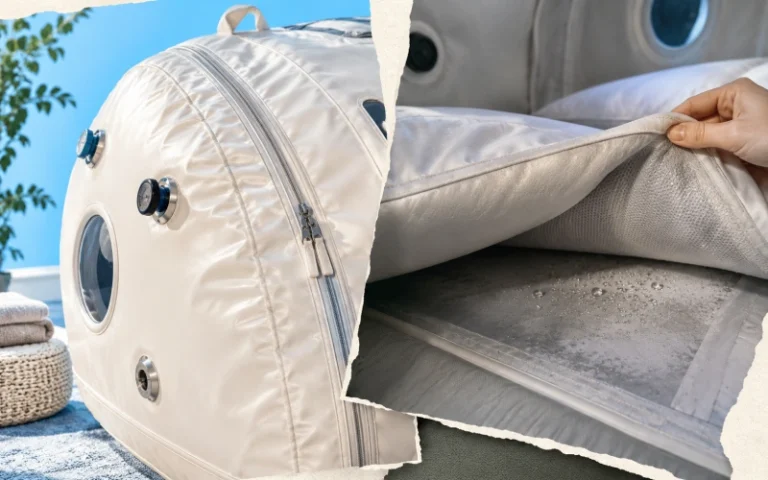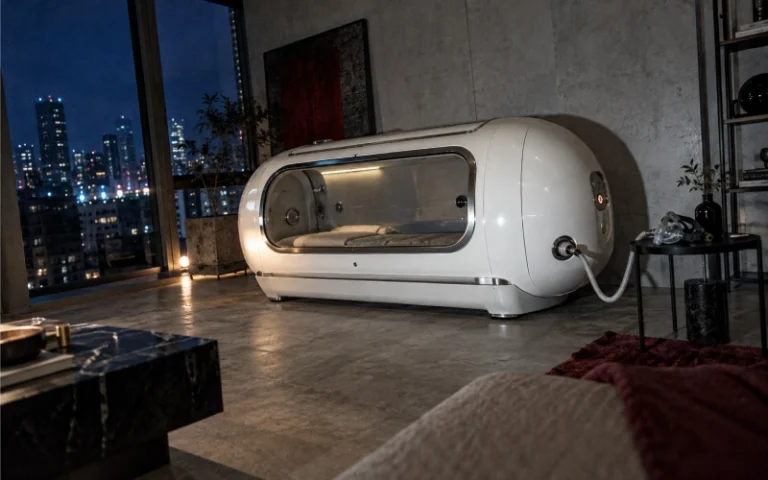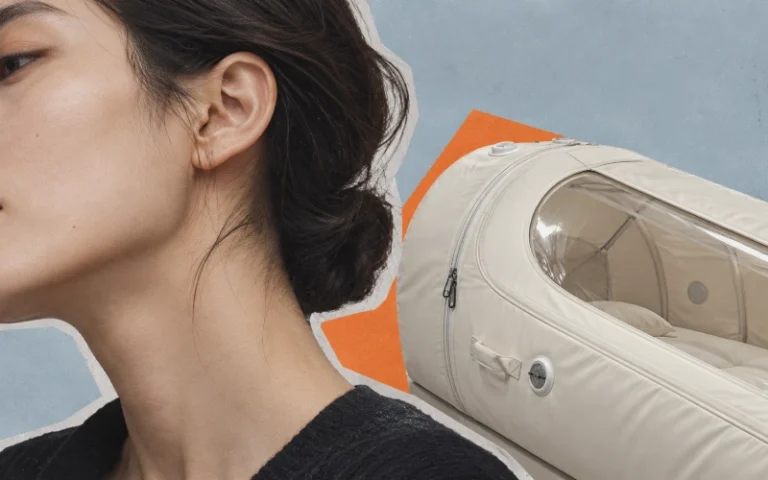
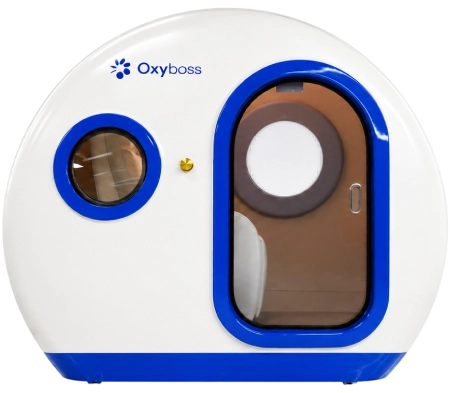
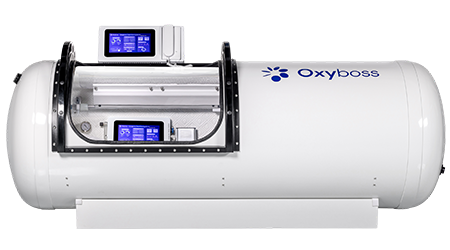
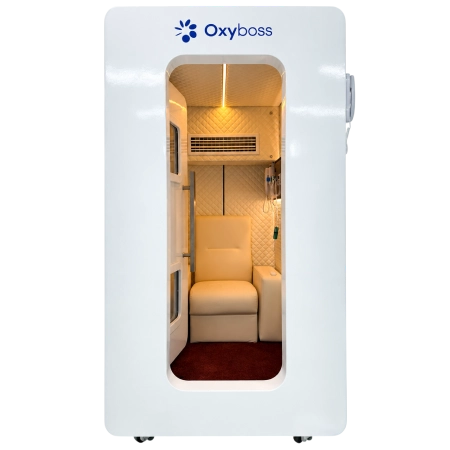
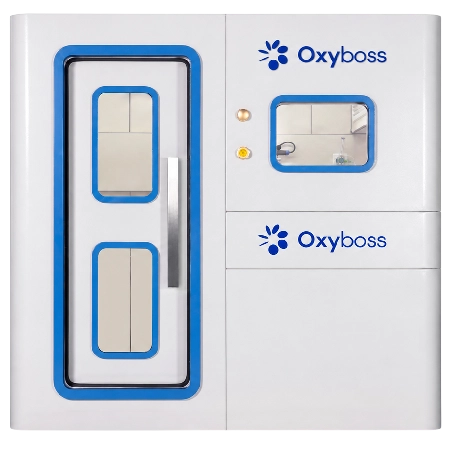
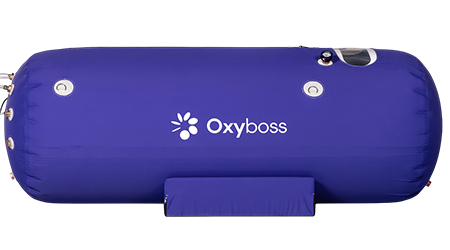
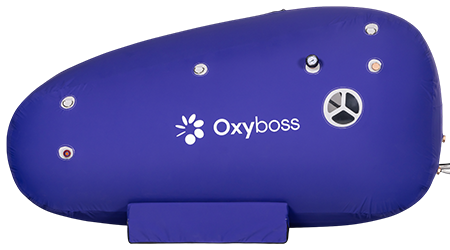
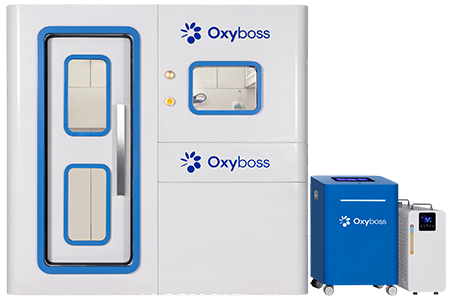
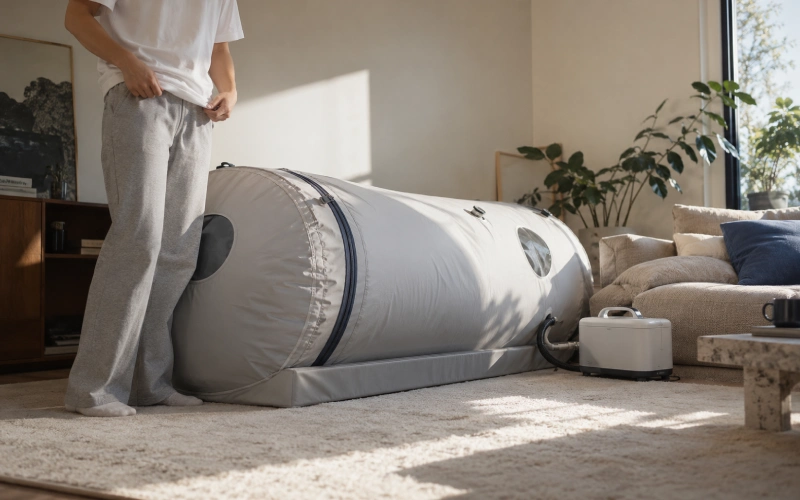
You’re home. The chamber is on the floor near the couch, the pump is humming, and in a few minutes you’ll climb in, zip it up, and spend about an hour inside at a pressure somewhere between 1.3 and 2.0 atmospheres.
What you do in the fifteen minutes before that zipper goes up matters a lot — and almost none of it has to do with what’s inside the chamber.
Here’s how to prep.
Safety note: Chamber pressure, oxygen delivery, and approved materials differ by device. Follow the FDA’s current device-safety recommendations and the manufacturer’s instructions; low-pressure home sessions are not necessarily equivalent to clinically defined hyperbaric oxygen therapy.
Start with your body, not your bag
Clothes and jewelry come off in a minute. First, check in with yourself.
Did you sleep last night? Short sleep leaves your Eustachian tubes a little puffy. That’s the small tube between the back of your nose and your middle ear. When it’s puffy, equalizing pressure is harder, and ear discomfort is one of the most common chamber-related complications.
Any cold, flu, sinus pressure, or stuffy nose today? If yes, skip and come back tomorrow. A nose that can’t move air can’t move pressure either. One of the few hard rules.
Four cups of coffee in the last hour? Jittery heart rate plus an hour in a sealed space is a recipe for an uncomfortable session. Not dangerous — just not fun.
Any ear infection, recent ear surgery, or ruptured eardrum that hasn’t healed? This one isn’t a judgment call. Wait until your ENT clears you.
If any of those four apply, the right move is to reschedule, not push through. The chamber will still be there tomorrow.
What goes on your body
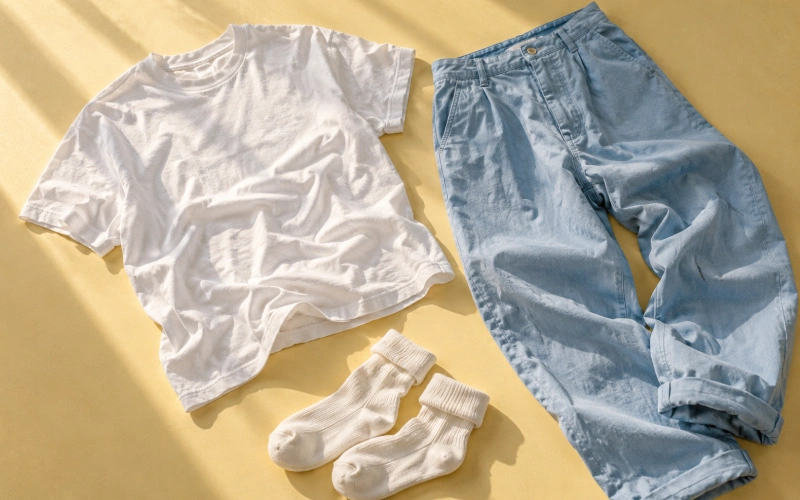
A conservative starting rule: manufacturer-approved clothing (often 100% cotton), no unapproved products on skin or hair, and nothing in the pockets.
Cotton matters because some chambers contain oxygen-enriched atmospheres, depending on the device and oxygen-delivery setup. Oxygen itself doesn’t burn, but oxygen-enriched atmospheres can accelerate combustion if an ignition source and fuel are present. Synthetic fabrics — polyester, nylon, spandex, fleece, performance wear — can carry static charge and melt rather than char. NFPA 99, Chapter 14 sets safety requirements for clinical hyperbaric facilities, including rules for textiles and ignition sources. UHMS explains that permitted cotton/polyester blends vary by chamber classification; 100% cotton is a conservative default, not a universal NFPA 99 requirement. At home, follow the device manufacturer’s garment and fire-safety instructions.
Practical version: cotton t-shirt, cotton pants or shorts, cotton socks — if those fabrics are permitted for your chamber. If the label says “cotton blend,” check the composition and your manufacturer’s guidance rather than relying on a fixed percentage.
What comes off, what stays off
Off your body:
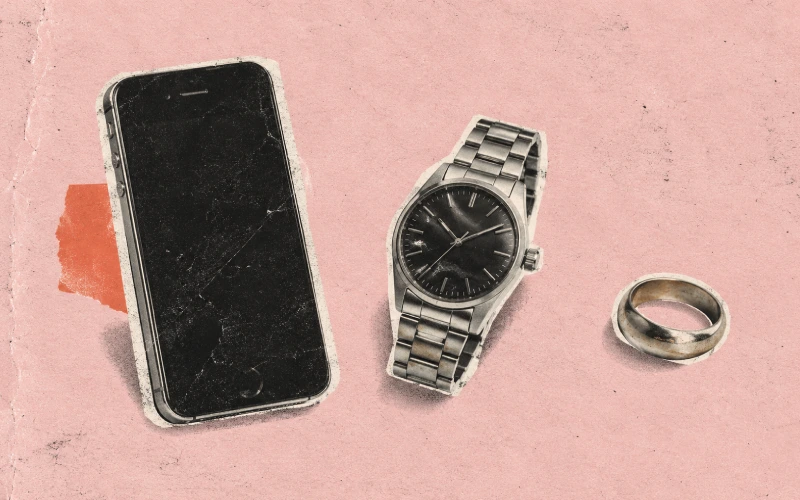
- Watches, rings, bracelets, necklaces, earrings
- Hair clips with metal or coated plastic
- Belts with metal buckles — switch to cloth or go without
- Shoes with LED soles or any battery
Off your skin and hair (see UHMS guidance on assessing items and topical products):
- Lotions, oils, hair gel, hairspray, pomade, mustache wax — anything petroleum-based
- Lip balm with petrolatum. If your lips are dry, use a water-based balm or plain water
- Press-on nails with glue
- Perfume, cologne, scented body spray
- Makeup goes on after, not before
Hair itself: dry it before you get in. Wet hair holds static. A plain cotton or elastic hair tie without a metal clasp is fine.
Pockets, hands, and things that don’t come in
Phones out. Tablets, smartwatches, fitness trackers, earbuds, portable speakers — all out unless specifically approved for your chamber. The FDA warns against introducing prohibited electrical or static-generating devices into hyperbaric chambers; follow the manufacturer’s rules instead of assuming consumer electronics are safe under pressure.
Hearing aids are a specific question. Modern hearing aids run on button-cell or rechargeable lithium batteries. The safe default is to take them off and leave them in a case outside. If you need to communicate during the session, agree on hand signals with your helper before you zip up.
Prescription glasses are fine. Modern soft contact lenses are fine too — the old concern about contacts in hyperbaric settings came from gas-permeable lenses decades ago. If you have dry eyes, a small bottle of water inside the chamber solves it.
Dentures stay in if they fit well and come out if they’re loose. A loose plate shifting around in a sealed space is distraction you don’t need. Dental work like crowns, fillings, and implants doesn’t need to come out, but if you had a dental procedure in the last 24 hours and there’s any chance of trapped air under temporary cement, call your dentist before the session.
Food, water, and the bathroom
Three questions get asked constantly.
Do I need to fast? For sessions in the 1.3 to 2.0 ATA range at 45 to 60 minutes, usually no. A light meal one to two hours earlier is fine. The reason the “fast first” idea exists is gastric gas — a volume of gas that was comfortable at normal pressure can feel less comfortable when pressure changes around it. If your stomach is sensitive, eat lightly and eat earlier. Skip the giant burrito.
What to avoid in that pre-session meal: anything carbonated (soda, sparkling water, beer), anything that routinely gives you gas (beans and cruciferous vegetables if you’re sensitive), and anything heavy and greasy.
Should I drink water? Yes, but spread it out. Being hydrated helps your body handle temperature changes — soft chambers warm a few degrees once you’re inside — and keeps your mucous membranes moist, which helps your ears equalize. Finish your last large glass about 30 minutes before you zip up.
Should I use the bathroom first? Yes. Every time. Once that zipper is up, depressurizing takes a few minutes, and nobody wants their first solo session to end with an emergency unzip. Use the bathroom. Then use it again if you’re not sure.
Alcohol, caffeine, nicotine
Alcohol: nothing within 8 hours of a session. Alcohol dulls your sense of what’s happening in your body and depresses your breathing — exactly the two things you want working well in a sealed, pressurized space. Also, hangovers and pressure changes make a bad pair.
Caffeine: a normal morning coffee is fine. Pre-workout formulas with 300+ mg of caffeine are not. The goal is to feel calm, not wired.
Nicotine: cigarettes, cigars, vapes, pouches, patches — nicotine can have vasoconstrictive effects, which may reduce blood flow to tissues. That works against what you’re trying to do inside the chamber. A good rule is no nicotine for at least 2 hours before, and longer if you can stretch it. If you’re a daily smoker, don’t quit cold on session day. Just skip the morning cigarette and the one right before you zip up.
Your ears, specifically
You’ve probably seen the pressure-equalization techniques: Valsalva (pinch nose, gentle blow), Toynbee (pinch nose, swallow), Frenzel. All three work, and all three are worth practicing before you need them.
There’s a second question that matters just as much, and almost nobody asks it: are your ears in shape to equalize today?
Signals that today isn’t the day:
- Nasal congestion that doesn’t clear when you blow your nose
- Pressure or pain over your cheekbones or forehead
- A head cold in the last three days, even if you feel mostly recovered
- A flight in the last 24 hours where your ears didn’t pop properly
- Scuba diving or free-diving in the last 24 hours
Any of these, give it a day. Forcing equalization through an inflamed Eustachian tube is how a comfortable hour turns into a sore week.
During the session, equalize early and often. The first minute of compression — when pressure is actually changing — is when ear discomfort shows up. Yawn, swallow, run a gentle Valsalva. If anything feels sharp or wrong, pause the compression and sort it before continuing.
Medications
Medications are the one area where the honest answer is “ask the person who prescribed them.”
Some medicines can affect whether hyperbaric therapy is appropriate. Specific drugs on specific schedules can require specific gaps between dosing and sessions. The list is specific, the intervals are specific, and the person who knows your medical history is the right one to decide.
What you can do before you call:
- List every prescription you’re on, every over-the-counter you take regularly, and every supplement
- Note anything you took in the last 72 hours
- Mention any chemotherapy, radiation, or eye surgery you’ve had recently
Then call the prescriber and ask: “I’m using a hyperbaric chamber at [pressure] ATA for [duration]. Does my current medication affect that?”
Two moves to skip: stopping a medication on your own, and doubling a dose to “make up” for the session.
When to loop in a clinician before you zip up
Short list, no judgment:
- Pregnancy or possible pregnancy
- Chemotherapy, current or within the last few weeks
- Recent ear, sinus, or lung surgery
- A pneumothorax (collapsed lung) at any point in your life
- Severe uncontrolled asthma, or an asthma attack in the last two weeks
- A pacemaker, implanted defibrillator, or insulin pump not cleared for pressure
- Claustrophobia strong enough that enclosed spaces trigger panic
A previous or resolved condition on this list may require individual clinical assessment, rather than an automatic no. An untreated pneumothorax, however, is an absolute contraindication to HBOT. These are “get a yes from the right clinician first” cases. Research on pressure, pregnancy, implants, and specific conditions is detailed and gets updated — your clinician has access to the current version.
Setting up the room
The chamber takes up more floor than people expect. Check the model-specific installation and clearance requirements in the manual; ASME PVHO-1 covers pressure-vessel design and safety, not universal room dimensions. A single-person soft shell at 1.3 ATA needs roughly 8 by 3 feet of flat, level space, plus about 2 feet of clearance on at least one long side for the pump and the person helping you. Double-size chambers roughly double the footprint. A 1.5 to 2.0 ATA hard shell needs more clearance for ladder or ramp access and ventilation.
Floor matters. Carpet is kinder than hardwood on a soft chamber’s underside. On tile or hardwood, a yoga mat or a thin cotton rug under the chamber keeps pressure off any seam.
Air flow matters too. For air-pressurized models, the pump pulls room air through a filter and pushes it into the chamber. Keep an air path open — not pressed against a wall, not blocked by a sofa. Give the pump at least a foot of clearance on all sides.
To reduce hyperbaric fire risks, clear from the room before you zip up:
- Open flames — candles, incense, a gas stove running next door with the door open
- Space heaters within 6 feet
- Loose pets that climb on things. A calm pet nearby is fine. A kitten who thinks a soft shell is a trampoline is not.
- Anything flammable within arm’s reach of the zipper, including that stack of newspapers you keep meaning to recycle
Reach test before you zip up: lie down, close the chamber in your head, and check what you can touch. Within arm’s length: the emergency depressurization valve, your intercom or phone-to-helper line, your water bottle, a book or e-reader if your model allows one. Beyond arm’s length: everything else.
Soft 1.3 and firm 2.0 — why prep looks a little different
Core prep is the same across the whole 1.3 to 2.0 range. Two things shift as pressure goes up:
Equalization timing. At 1.3 ATA compression is gentle and the pressure difference your ears handle is modest, so you’ve got room. At 2.0 ATA compression takes longer and the difference is bigger. More active equalization during the ramp-up, not less. Start equalizing before you feel like you need to.
Session length and water. 1.3 ATA sessions typically run 45 to 60 minutes. Home sessions at 1.5 to 2.0 ATA usually run 60 to 90. Longer sessions mean a little more water in the hour before, and definitely a bathroom stop right before you zip up.
Pressure range does not override the manufacturer’s approved-clothing and electronics rules, or the need to equalize your ears carefully. Check the specific guidance for your model.
Single vs double chambers add one wrinkle: coordinate. If two people are inside, both equalize on the same schedule during compression. If one person needs to pause, the other needs to know. Agree on a hand signal and a word before you zip up.
The 60 seconds before you zip up
Say these to yourself out loud:
Clothes are approved for this chamber. Pockets are empty. Jewelry is off. Unapproved lotions and lip balm are off. Hair is dry. Water bottle is inside only if permitted. Phone is outside. Intercom works. Bathroom is done. Ears feel clear. Head feels clear. Helper knows the plan. Zipper runs smooth.
Then zip up.
A few things that come up after a first session
Feeling tired after. Normal? For many people, yes. A nap is reasonable. If “tired” is actually lightheaded or short of breath, call your clinician.
Ears clicked and popped during. Normal? Yes — that’s equalization doing its job. Sharp pain is different. That one you phone in.
Fell asleep inside and the session ran a little long. If your pre-set timer and depressurization sequence worked, no concern. If anything felt off during the depressurization, note it and mention it next time.
Eating right after? A light meal and water, same as before. Save the big meal for a bit later.
Session frequency? That’s a question for your clinician based on what you’re using the chamber for.
Where the specific rules come from
For readers who want to go to the primary sources:
- NFPA 99, Health Care Facilities Code, Chapter 14, Hyperbaric Facilities — hyperbaric fire safety, textile controls, and ignition-source requirements. See also UHMS’s explanation of the garment rules.
- FDA: Follow Instructions for Safe Use of Hyperbaric Oxygen Therapy Devices (August 25, 2025) — current official recommendations on fire prevention, clothing, electrical devices, monitoring, and manufacturer instructions.
- Undersea and Hyperbaric Medical Society (UHMS): Indications for Hyperbaric Oxygen Therapy — clinical definitions and indications; and UHMS safety/technical guidance on assessing materials and devices.
- StatPearls on the NCBI Bookshelf: Hyperbaric Oxygen Therapy Contraindications, Hyperbaric Complications, and Ear Barotrauma — clinical background and pressure-related risks.
- OSHA Technical Manual: atmospheric hazards and oxygen enrichment — why oxygen-enriched atmospheres increase fire risk (general workplace safety guidance, not a substitute for hyperbaric-specific rules).
- ASME PVHO-1 (2023), Safety Standard for Pressure Vessels for Human Occupancy — pressure-vessel design, fabrication, inspection, testing, and certification.
Use these as the authoritative source when the stakes are higher than a prep checklist — medication specifics, surgical history, pregnancy, chemotherapy, implant clearance, pressure vessel certification.
Walk up to the chamber ready, and the session takes care of itself. The checklist is short. Your body gets the biggest say in whether today is a session day or a rest day — listen to it before you listen to the schedule.