Short answer: there’s no recognized body of evidence that directly supports using a hyperbaric chamber — especially a mild-pressure wellness unit — for a herniated disc. Herniated disc is not listed among UHMS-recognized indications for hyperbaric oxygen therapy, and mainstream low back pain and sciatica guidelines discuss physical, pharmacological, interventional, and surgical management rather than hyperbaric therapy [4] [5] [9]. The research that does touch on related topics is limited to animal models, cell cultures, and general disc degeneration mechanisms — not herniated disc outcomes in people.
That said, the question keeps coming up. And there are reasons why it comes up that are worth understanding honestly, without pretending the science says more than it does.
First: Why This Question Exists at All
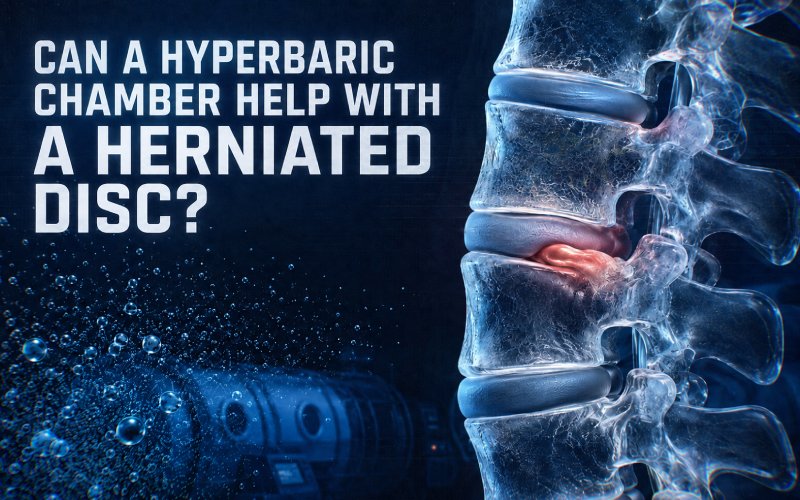
A herniated disc means the soft inner material of a spinal disc has pushed through a tear in its tougher outer ring. When that material presses on nearby nerves, the result can include sharp pain, numbness, tingling, or weakness — often radiating into a leg or arm depending on the location.
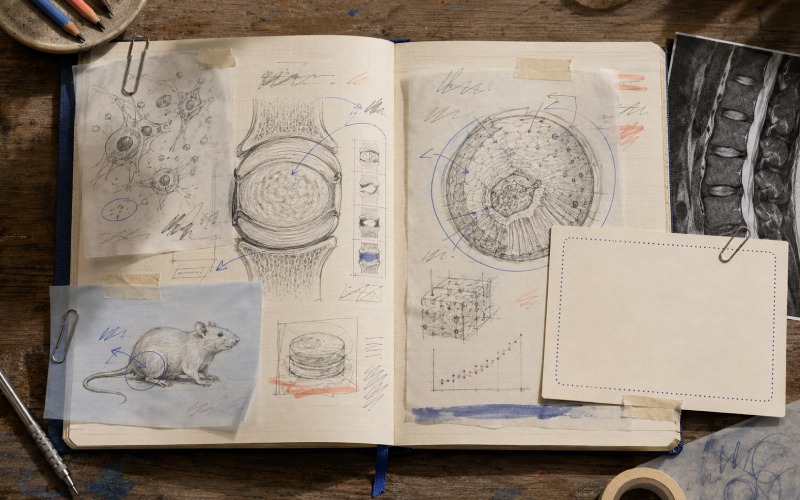
What makes disc problems notoriously slow to resolve is something most people never hear about: spinal discs are among the largest structures in the human body that have almost no direct blood supply [1]. By adulthood, they rely on a sluggish diffusion process to get oxygen and nutrients from tiny blood vessels at the edges of the vertebral endplates. It’s a bottleneck by design.
Cells in the center of a disc operate in markedly hypoxic conditions [2]. Under normal circumstances, they manage. After structural damage, the demand for oxygen and repair materials rises while the delivery system stays the same.
This basic biological fact is the entire reason hyperbaric chambers enter the conversation. The logic goes: if the disc is oxygen-starved, and a pressurized environment increases dissolved oxygen in body fluids, maybe more oxygen reaches the disc. That logic isn’t crazy. But logic and evidence are different things, and the gap between them matters here.
What a Hyperbaric Chamber Actually Does
Inside a hyperbaric chamber, air pressure is raised above normal atmospheric levels. Under increased pressure, Henry’s Law dictates that more oxygen dissolves directly into blood plasma and other body fluids — beyond what hemoglobin alone carries [3].
This is well-established physics. It’s part of why hyperbaric oxygen has recognized applications for a handful of specific, serious situations: decompression sickness, carbon monoxide poisoning, certain non-healing wounds, and a limited number of other conditions listed by oversight bodies [4] [5].
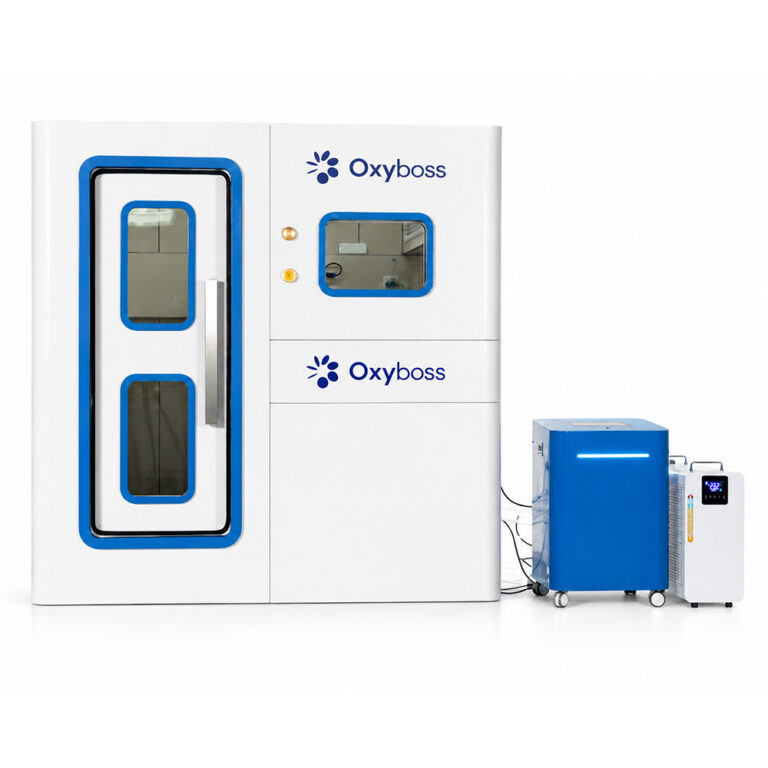
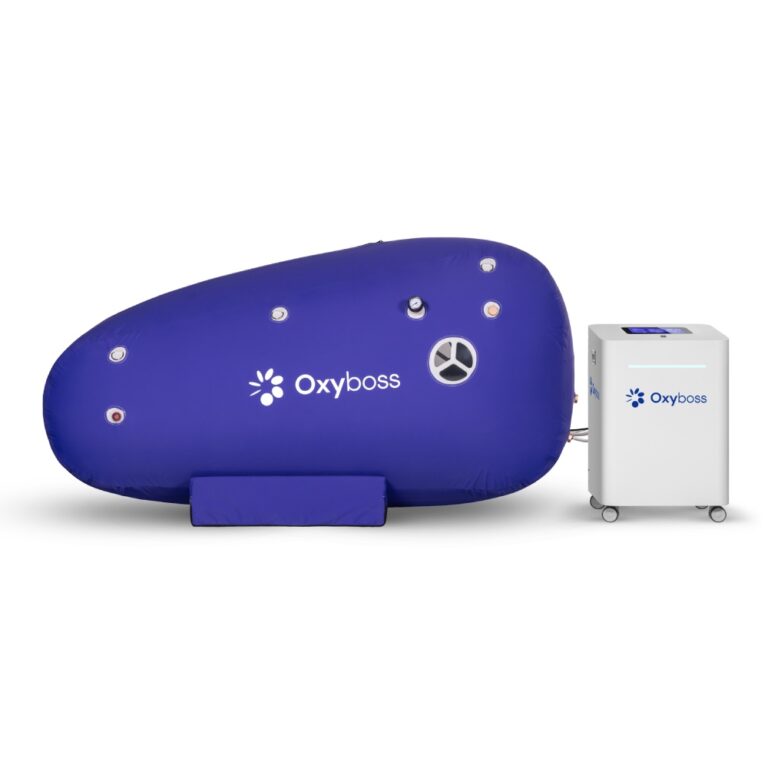
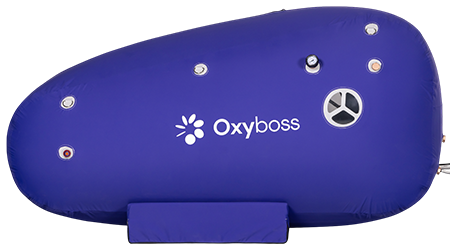
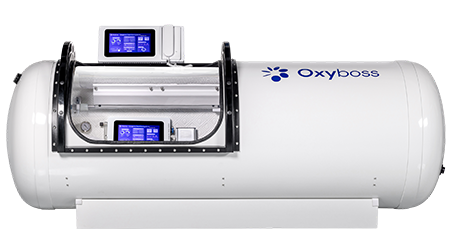
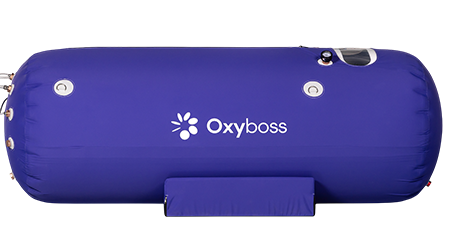
The key detail most discussions leave out: for recognized HBOT indications, treatment is typically delivered at about 1.9 to 3.0 ATA [5] with 100% oxygen in FDA-cleared Class II medical devices under professional supervision [4]. This is a fundamentally different context from mild-pressure wellness chambers operating at lower pressures, often with ambient air or oxygen concentrators.
That distinction isn’t a technicality. It’s the whole ballgame.
What the Research Actually Shows (and Doesn’t)
Here’s where honesty gets uncomfortable, because the research is genuinely interesting — and genuinely insufficient.
What exists:
- A 2013 animal study found that hyperbaric oxygen exposure slowed disc height loss and reduced inflammatory markers (IL-1β, PGE-2) in rats with induced disc degeneration — not herniation [6].
- A 2023 preclinical study identified a specific microRNA pathway (miR-107) through which hyperbaric oxygen appeared to protect against degenerative changes in disc cells and related models [7].
- A 2011 in vitro study using degenerated human lumbar nucleus pulposus specimens found that hyperbaric oxygen reduced IL-1β, PGE-2, and nitric oxide while increasing cell number and matrix synthesis in cultured cells [8].
What doesn’t exist:
- Controlled studies on hyperbaric oxygen for herniated discs specifically in people.
- Any data showing that mild-pressure wellness chamber use produces meaningful oxygen delivery changes within disc tissue in living humans.
- Evidence linking specific session counts, frequencies, or durations to outcomes for herniated disc symptoms.
The most blurred critical distinction:
Disc degeneration and disc herniation are not the same thing. Degeneration is a gradual biochemical and structural breakdown. Herniation is a mechanical event — material pushing through a tear. They can be related, but studying one does not automatically tell you about the other. Research on degeneration-related cell behavior in rats or cultured tissue cannot be cleanly extended to “this might help your herniated disc.”
And even within that degeneration research, the treatment context is typically medical HBOT — not a mild-pressure wellness setup [5].
The Extrapolation Problem
There are three layers of extrapolation happening when someone suggests a mild-pressure wellness chamber might help a herniated disc:
| Layer | What’s Being Assumed | How Strong Is the Basis |
| 1. Mechanism → Outcome | Because discs are oxygen-deprived, increasing oxygen should help repair | Logical but unproven in humans for this application |
| 2. Degeneration → Herniation | Because some animal and cell studies show effects on degeneration, the same should apply to herniation | Unsupported — different pathology |
| 3. Medical HBOT → Mild-pressure chamber | Because studies in medical HBOT settings show effects, similar results should occur in a mild-pressure wellness chamber | No direct evidence supports this transfer |
Each layer alone would require caution. Stacking all three makes the overall claim very weak. Being transparent about this isn’t pessimism — it’s the only responsible way to discuss the topic.
Safety: Not as Simple as “Low Pressure, Low Risk”
A common claim is that mild-pressure chambers carry essentially no risk. This deserves more nuance.
The FDA issued guidance in 2025 specifically addressing hyperbaric oxygen therapy devices, noting reports of serious injuries and deaths associated with HBOT equipment, and emphasizing fire risks, the importance of following manufacturer instructions, and the need for adequate training and supervision [4]. UHMS also cautions that “mild hyperbaric” use outside medical facilities remains unproven and may involve uncertified equipment or inadequate fire-safety standards [5].
At lower pressures, the risk profile is different from medical HBOT, but “different” is not the same as “negligible.” Practical considerations include:
- Ear and sinus barotrauma. Pressure changes affect the middle ear and sinuses. People with active ear issues, recent ear procedures, or chronic sinus conditions should get professional input before using any pressurized environment.
- Fire risk. Any environment with elevated oxygen concentration carries increased fire risk. This applies to chambers used with oxygen concentrators.
- Contraindications that aren’t always obvious. Certain lung conditions, untreated pneumothorax, and some other situations can make pressurized environments dangerous. Untreated pneumothorax is the only absolute contraindication to HBOT [10].
Frequently Asked Questions
Does a herniated disc respond to hyperbaric oxygen?
There is no direct human evidence that hyperbaric oxygen — at any pressure level — produces measurable improvement in herniated disc outcomes. Existing related research focuses on disc degeneration in animal models and cell cultures, which is a different condition studied under different conditions.
What’s the difference between a medical hyperbaric chamber and a wellness one?
Medical HBOT for recognized indications is typically delivered at about 1.9 to 3.0 ATA [5] with 100% oxygen in FDA-cleared Class II devices under professional supervision [4]. Wellness chambers usually operate at lower pressures and may use ambient air or supplemental oxygen from a concentrator. The two share basic physics (increased pressure → increased dissolved gas) but differ substantially in oxygen delivery, evidence base, regulatory context, and intended use.
Can more oxygen actually reach the inside of a spinal disc?
In theory, yes — because disc nutrition depends on diffusion from surrounding fluids, and higher dissolved oxygen in those fluids could improve oxygen availability at the disc [1] [2] [3]. In practice, no study has directly shown that mild-pressure chamber use produces meaningful oxygen concentration changes inside human disc tissue.
Are mild-pressure chambers safe?
They may carry a lower risk profile than medical HBOT, but they are not risk-free. Barotrauma (ear/sinus), fire risk in oxygen-enriched environments, and unrecognized contraindications are real considerations [4] [5] [10]. Anyone with a relevant ear, sinus, or lung history should get qualified input before using a pressurized chamber.
Should I buy a hyperbaric chamber for my herniated disc?
Based on currently available evidence, a herniated disc should not be treated as an evidence-based purchase rationale for a hyperbaric chamber. If you’re interested in a chamber for general wellness purposes unrelated to a specific physical condition, that’s a separate decision. But framing the purchase around a disc issue would still be getting ahead of what the science supports.
Where This Stands, Honestly
The biology of disc oxygen deprivation is real. The physics of increased gas solubility under pressure is real. The early-stage research on oxygen and disc cell behavior is real. But none of these, individually or together, add up to “a hyperbaric chamber can help with a herniated disc.”
What they add up to is: this is an area where early-stage science has identified an interesting question that hasn’t been answered yet. That also fits with mainstream low back pain and sciatica guidance, which focuses on established conservative, pharmacological, interventional, and surgical pathways rather than hyperbaric therapy [9]. Acknowledging that is more useful — to you, to your decision-making, and to the broader conversation — than pretending the dots connect when they don’t.
If your disc situation is affecting your daily life, the most productive step is working with a qualified professional who can evaluate your specific situation. That kind of individualized assessment matters more here than any generalized claim about a chamber.
References
- Fournier, D.E., Kiser, P.K., Shoemaker, J.K., Battié, M.C., & Séguin, C.A. “Vascularization of the human intervertebral disc: A scoping review.” JOR Spine, 3(4), e1123, 2020.
- Johnson, W.E.B., Stephan, S., & Roberts, S. “The influence of serum, glucose and oxygen on intervertebral disc cell growth in vitro: implications for degenerative disc disease.” Arthritis Research & Therapy, 10(2), R46, 2008.
- Jones, M.W., et al. “Hyperbaric Physics.” StatPearls, NCBI Bookshelf, updated 2024.
- U.S. Food and Drug Administration. “Follow Instructions for Safe Use of Hyperbaric Oxygen Therapy Devices — Letter to Health Care Providers.” August 25, 2025.
- Undersea and Hyperbaric Medical Society. “HBO Indications.” Updated 2020.
- Wang, I.-C., Ueng, S.W.N., Yuan, L.-J., et al. “Effect of Hyperbaric Oxygenation on Intervertebral Disc Degeneration: An In Vivo Study With Sprague-Dawley Rats.” Spine, 38(3), E137–E142, 2013.
- Lin, S.-S., Ueng, S.W.N., Niu, C.-C., et al. “Effects of Hyperbaric Oxygen Intervention on the Degenerated Intervertebral Disc: From Molecular Mechanisms to Animal Models.” Cells, 12(16), 2111, 2023.
- Wang, I.-C., Ueng, S.W.N., Yuan, L.-J., et al. “Effect of Hyperbaric Oxygenation on Intervertebral Disc Degeneration: An In Vitro Study With Human Lumbar Nucleus Pulposus.” Spine, 36(8), 654–661, 2011.
- National Institute for Health and Care Excellence (NICE). Low Back Pain and Sciatica in Over 16s: Assessment and Management (NG59). Published 2016, last updated 2020.
- Gawdi, R., et al. “Hyperbaric Oxygen Therapy Contraindications.” StatPearls, NCBI Bookshelf, updated 2025.