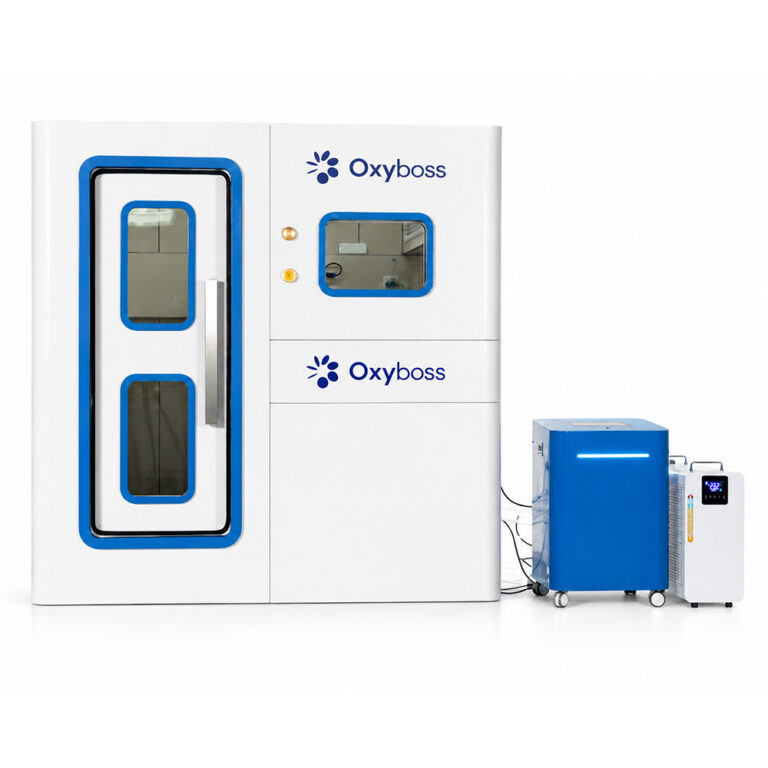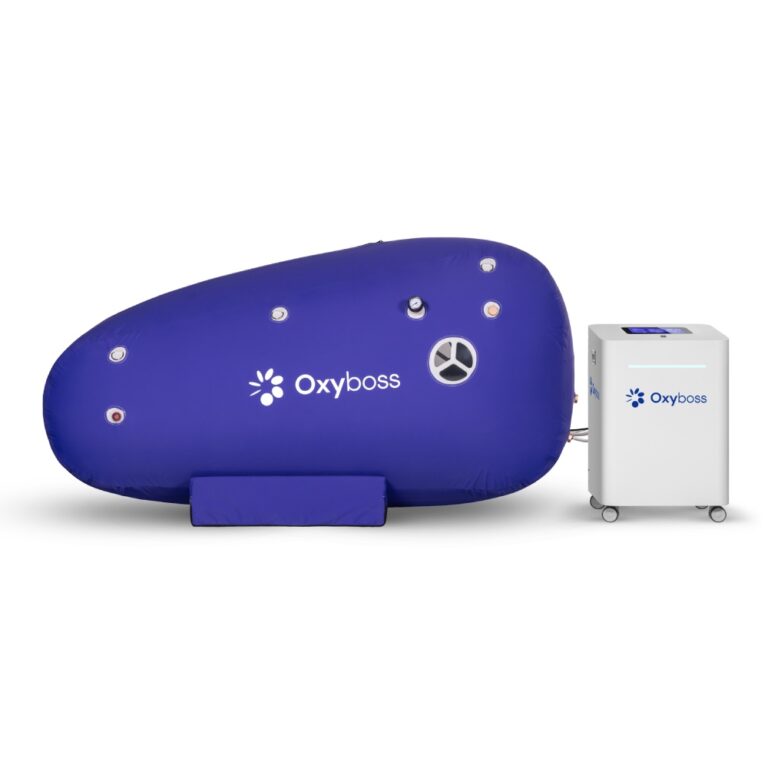
Knees take a beating. Running, squatting, that awkward twist coming down a flight of stairs — the joint absorbs a lot, and it doesn’t complain until it does. When soreness lingers longer than you’d like after hard training, people start looking past ice packs and rest days. One tool that keeps showing up in recovery conversations, especially among people who train seriously, is the hyperbaric chamber.
This isn’t a magic box. It’s a pressurized enclosure, and the idea behind it is fairly simple once you strip away the hype. Let’s walk through how it relates to knee comfort after exercise, what the research actually suggests, and where the honest limits are.
A quick note on scope: this article is about wellness and athletic recovery, not medical care. Nothing here is a substitute for professional guidance, and none of it is a claim to address any diagnosed condition.
The Basic Idea: Pressure, Oxygen, and Circulation
Inside a chamber, air pressure is raised above what you’d feel standing in your kitchen. Under that added pressure, your body takes in more oxygen than usual, and that oxygen dissolves into the blood and plasma rather than only hitching a ride on red blood cells.
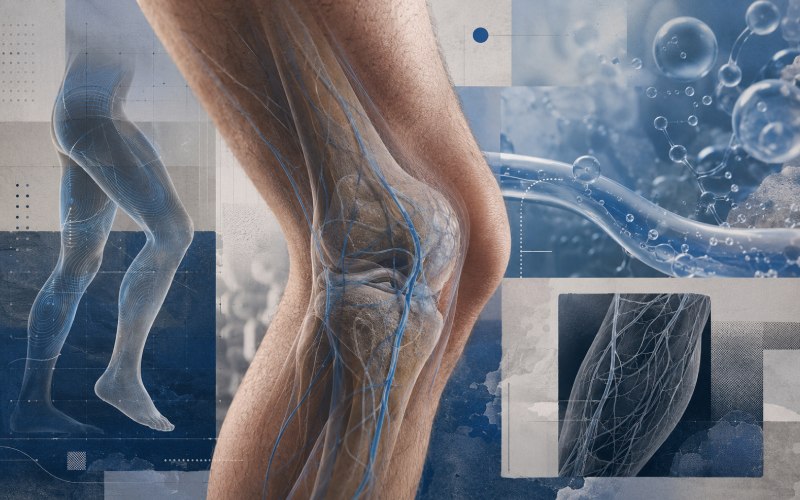
Why does that matter for a knee? Because the connective tissue around the joint doesn’t get a rich blood supply the way muscle does. When those structures are stressed by heavy, repetitive load, oxygen delivery to them is naturally slow. The thinking is that a temporarily oxygen-rich internal environment gives the body a better environment to do its own recovery work after the demands of sport.
There’s a physiological logic here that shows up across the research on recovery: more available oxygen, and less of the swelling that tends to slow circulation in an overworked joint.
Mild Versus High-Pressure: Not the Same Conversation
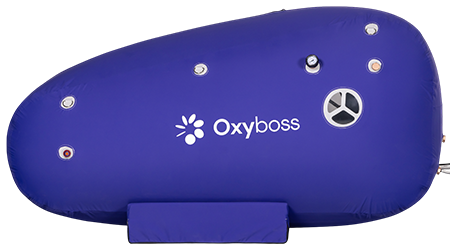
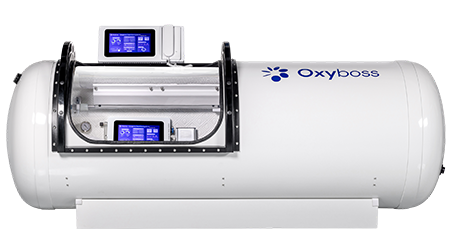
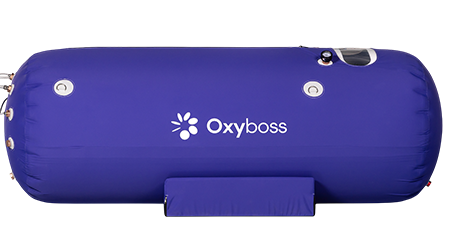
Here’s a distinction that gets muddied a lot. There’s a big difference between the high-pressure, hospital-grade chambers used for specific certified applications and the milder chambers that show up in wellness and sports-recovery settings.
Unlike those high-pressure, hospital-grade chambers, the mild chambers popular in sports wellness operate at lower, gentler pressures. The wellness-focused approach is about the gentler end of the spectrum. Mild hyperbaric use isn’t about forcing the body to do something unnatural. It’s about giving it a supportive environment to recover on its own terms.
Mild hyperbaric chambers typically run at a modest step above normal pressure — often around 1.3 atm, compared with the much higher pressures used in certified clinical settings. The approach is considered “mild” because it uses lower pressure while still raising oxygen availability in the body.
This blog is about that wellness and recovery side of things, and nothing else.
Where the Knee Fits In
Knee complaints after training come in flavors. Some are the dull ache after a heavy leg day. Some are the nagging front-of-the-knee irritation runners know well. Some follow the general wear and tear of high-intensity, contact-heavy sport. The recovery logic behind chamber use is roughly the same across the board: ease the swelling that slows circulation, and support the oxygen supply the tissue draws on when it’s rebuilding after load.
That swelling point is worth sitting with for a second. Swelling tends to choke off blood flow and oxygen to worked tissue, which slows the whole recovery process down. If pressure and oxygen can nudge that along, the knee gets a friendlier environment to work in.
Some of the most relevant observations come from sport-recovery research. In one comparison, athletes in a high-intensity contact sport were tracked on how quickly they returned to full activity after significant knee strain. The group using hyperbaric sessions returned to play in about 31 days, compared with roughly 42 days for the group that didn’t — a difference of about a week and a half [1]. That’s meaningful if your calendar is built around a season, and worth noting even if you just want to move without wincing sooner.
The same work tracked same-day comfort, too. Reported discomfort while walking dropped between before and after a single session, and scores for discomfort while jogging showed a similar pattern. Small changes, measured honestly, not miracle numbers.
What a Session Actually Feels Like
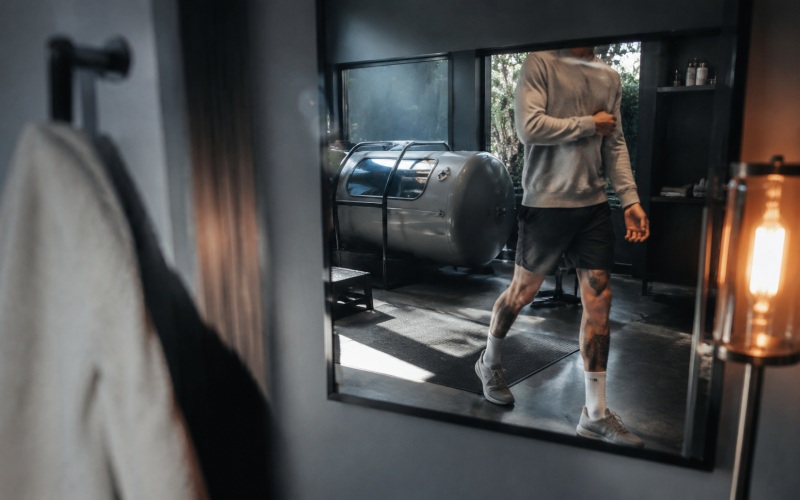
No drama here. You get in, the chamber pressurizes gradually, and you ride it out. A typical mild session runs about 60 to 90 minutes, sitting inside a pressurized chamber breathing enhanced oxygen.
The one sensation most people notice is in their ears — the same fullness you get on a plane or driving down a mountain. You clear it by swallowing or yawning. On the way back to normal pressure, you might need to clear your ears one last time. Aside from that, it’s a quiet, calm environment where your body can rest. The session is passive. You’re not doing reps. You’re just there.
A Practical Comparison
Recovery tools all have trade-offs. Here’s a rough side-by-side of common approaches for a worked, achy knee, framed around how they behave rather than any promise of results.
| Approach | Main mechanism | Effort required | Typical session time | Best paired with |
|---|---|---|---|---|
| Mild hyperbaric chamber | Raises oxygen availability under gentle pressure | Passive (you rest) | 60–90 min | Rest days, structured training |
| Cold/ice | Constricts vessels, dulls swelling short-term | Low | 10–20 min | Right after hard sessions |
| Compression sleeve | Mechanical pressure to limit swelling | Passive | Worn for hours | Daily wear during activity |
| Active mobility work | Blood flow through movement | High | 15–45 min | Everything |
| Rest alone | Time | None | Days | Patience |
The point of the table isn’t to crown a winner. It’s that these tools tend to work better together than any one does alone. Chamber use, in particular, is usually described as something you stack onto a routine, not a routine by itself. It sits alongside other recovery habits — mobility work, massage, cold exposure, stretching — and can complement them by supporting oxygen flow.
How Often, and For How Long
This is where honesty beats hype. There’s no universal number. Frequency depends on your training load and what you’re building toward. People pushing hard through a demanding block may lean on more frequent sessions until comfort and mobility improve, while a pre-activity session can help top up oxygen availability. The right rhythm should be tailored to your own needs, your sport, and your goals.
If you’re going to track anything, track how you feel and function, not how many hours you logged. A few useful markers: shorter recovery time between workouts, steadier endurance across sessions, and less lingering soreness the next day. Pay attention to the day after, not the hour inside.
The Faster-Recovery Angle for Active People
For people who train regularly, the appeal isn’t a single dramatic result — it’s the compounding effect of shorter downtime. Research on mild hyperbaric sessions points to reduced subjective fatigue and a quicker return of heart rate and blood perfusion toward baseline after intense exercise [3].
Shorter recovery windows change what your week can hold. Instead of needing two or three days to bounce back, you might feel ready to train again sooner, and less time spent sore means more consistent training. Consistency is the boring truth behind most progress. A cranky knee that keeps you off your feet is the enemy of that.
Being Straight About the Limits
A chamber isn’t for everyone, and it isn’t a fix-all. Some situations make a pressurized environment a poor fit. People with certain ear or sinus conditions, or specific respiratory concerns, should steer clear. Minor effects, though uncommon, can include mild ear discomfort, temporary vision changes, or sinus pressure.
So the sensible move: talk to a qualified professional before starting, especially if you have any pre-existing health concerns. A chamber supports your body’s own recovery process. It doesn’t replace a proper look at what’s actually going on with your knee.
And one grounded note on the evidence. Research on connective-tissue recovery in sport is still building. The return-to-play observation above came from a single non-randomized comparison, which is useful but not the final word. Treat these results as encouraging signals, not guarantees.
Putting It Together
If your knee is sore from heavy use, or you’re easing back into activity after a demanding stretch, a mild hyperbaric chamber is one option among several. Its logic is reasonable — more available oxygen, less swelling slowing circulation, a calmer environment for the body to recover after load. The evidence on the sport-recovery side is early but pointing in a favorable direction, especially for active people who care about getting back to full movement sooner.
Just keep the frame right. It’s a support, used alongside movement, rest, and good professional guidance. The knee does the actual work. The chamber just tries to make that work a little easier.
FAQ
Is a hyperbaric chamber comfortable to use for a sore knee? For most people, mild chamber use is well tolerated. Some notice mild ear discomfort or temporary tiredness that settles shortly after. Check with a professional first if you have any pre-existing concerns.
How long before I notice anything? It varies by person and by how much load your knee has taken on. Some report same-session comfort changes, while broader recovery takes longer. Focus on how movement feels over days and weeks rather than after any single session.
Can I use it while also doing my mobility and strength work? Yes — that’s the common approach. It’s meant to sit alongside movement work, not replace it, and the two are described as complementary.
Mild chamber or high-pressure chamber — which one for post-exercise recovery? The wellness and sports-recovery context centers on mild chambers at gentler pressures. High-pressure, hospital-grade chambers are a separate category used for specific certified applications and fall outside general recovery use.
How many sessions should I plan? There’s no fixed number. Frequency should match your training load and goals — sometimes more often during a demanding block — and it’s best set with input from a qualified professional.
Does it help performance, or only recovery? Its clearest role is recovery — shorter downtime and less fatigue between hard efforts. Any performance edge tends to come indirectly, from being able to train more consistently rather than from a single session.
References
- Ishii Y, et al. Hyperbaric oxygen and recovery timelines in professional and semi-professional rugby athletes with knee strain. PubMed. https://pubmed.ncbi.nlm.nih.gov/31683363/
- Hyperbaric oxygen, muscle load, and inflammation following knee procedures: a randomized controlled trial. Scientific Reports (Nature). https://www.nature.com/articles/s41598-025-06223-2
- Qu C, et al. Effects of mild hyperbaric oxygen therapy on timing sequence recovery of muscle fatigue in Chinese university male athletes. PubMed. https://pubmed.ncbi.nlm.nih.gov/38721019/
- Johnson-Arbor K. Hyperbaric oxygen therapy for high performance athletes: a narrative review. Undersea & Hyperbaric Medical Society. https://www.uhms.org/uhm-search/uhm-journal-volume-52-2025/number-3/694.html
- Hyperbaric oxygen therapy. MedlinePlus Medical Encyclopedia, U.S. National Library of Medicine. https://medlineplus.gov/ency/article/002375.htm
- Indications for Hyperbaric Oxygen Therapy. Undersea & Hyperbaric Medical Society. https://www.uhms.org/resources/featured-resources/hbo-indications.html
- UHMS Position Statement: Low-Pressure Fabric Hyperbaric Chambers. Undersea & Hyperbaric Medical Society. https://www.uhms.org/images/Position-Statements/UHMS_Position_Statement_LP_chambers_revised.pdf
- Follow Instructions for Safe Use of Hyperbaric Oxygen Therapy Devices — Letter to Health Care Providers. U.S. Food and Drug Administration. https://www.fda.gov/medical-devices/letters-health-care-providers/follow-instructions-safe-use-hyperbaric-oxygen-therapy-devices-letter-health-care-providers