Your brain uses roughly 20% of your body’s oxygen supply. Constantly. Even while you’re reading this sentence. That’s a remarkable demand — and when oxygen delivery, circulation, sleep, stress load, or overall recovery are off, you may start to feel it: wandering attention, the word on the tip of your tongue that won’t come, the afternoon where you’re staring at a screen and nothing sticks.
What if part of the answer to sharper thinking was, quite literally, better oxygen availability?
What Happens Inside a Hyperbaric Chamber (And Why Your Brain Cares)
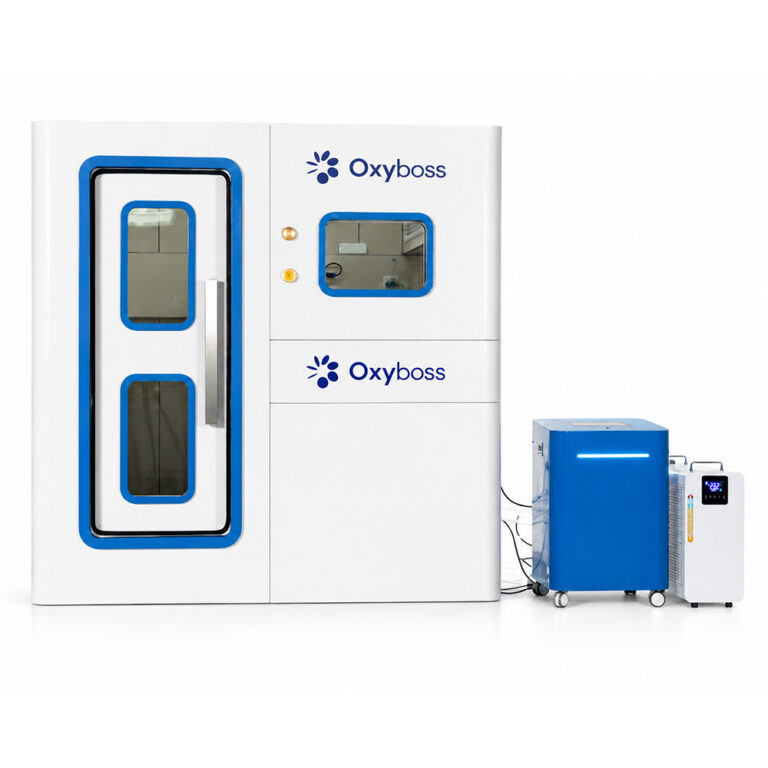
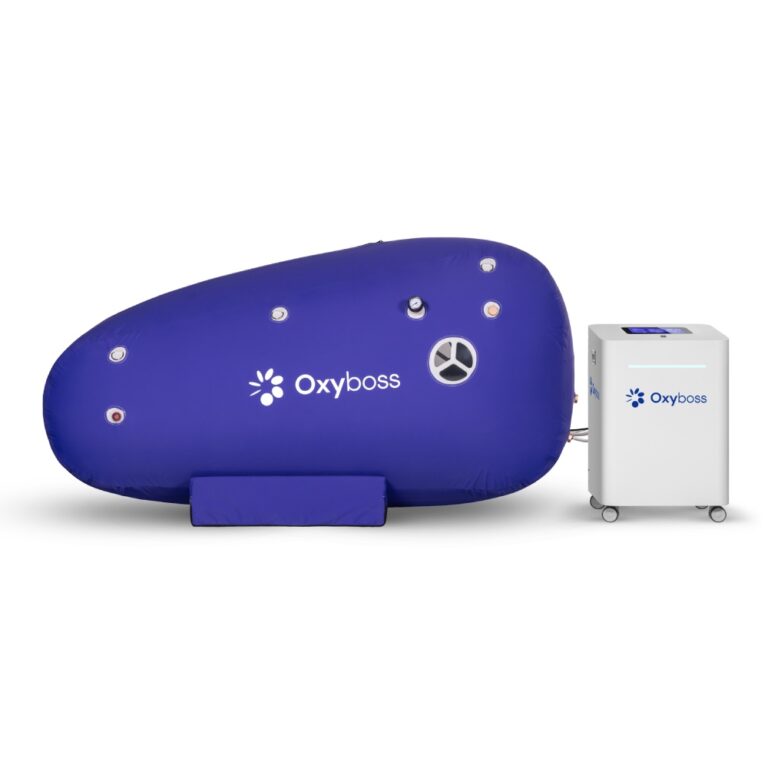
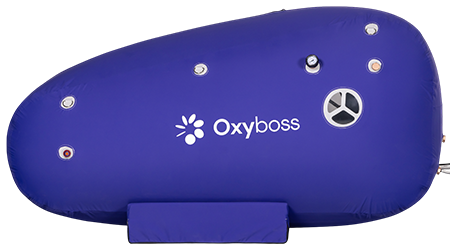
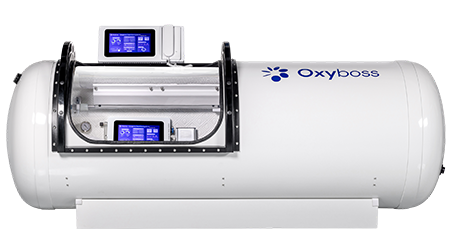
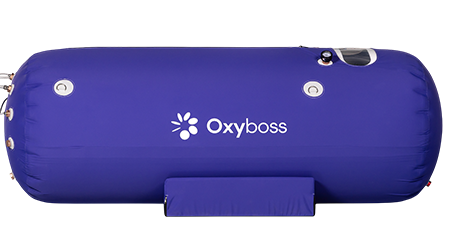
A hyperbaric oxygen chamber is a sealed, pressurized environment where oxygen is delivered at levels above normal atmospheric pressure. In clinical hyperbaric oxygen therapy (HBOT), this typically means breathing 100% oxygen under pressures above normal atmospheric conditions. Mild hyperbaric environments generally operate at lower pressures and often use concentrated ambient oxygen rather than pure medical oxygen. 1
Under standard conditions, most oxygen travels through your bloodstream attached to hemoglobin. There’s a hard cap on how much hemoglobin can carry. But when surrounding pressure increases while oxygen concentration is elevated, something different happens: more oxygen can dissolve directly into the blood plasma. That dissolved oxygen may improve oxygen diffusion into tissues, including areas where circulation is less efficient. 1
A note on pressure levels: Research in this field spans a wide range of protocols. Some studies use clinical-grade chambers operating at 2.0 ATA or above with 100% oxygen, while mild hyperbaric environments typically operate between 1.3 and 1.5 ATA with concentrated (not pure) oxygen. The biological principle — increased oxygen dissolution in plasma under pressure — applies across this spectrum, but the magnitude and clinical relevance of effects can differ substantially depending on pressure, oxygen concentration, session length, and population studied. Where specific studies are cited in this article, we’ve noted the protocol details so you can draw your own conclusions. 1
The brain is highly dependent on oxygen. Neurons fire, networks communicate, and memories consolidate — all supported by oxygen-dependent energy production inside your cells’ mitochondria. When more oxygen becomes available under pressure, some of those processes may operate more efficiently under certain conditions. It’s not magic. It’s gas physics meeting biology. 1

Why Focus and Clarity Fade (And What Oxygen Has to Do With It)
Mental sharpness doesn’t just vanish for no reason. There’s usually a physiological explanation — even when it feels mysterious.
Here are some of the most common contributing factors:
- Low-grade inflammatory responses in brain tissue. Chronic stress, poor sleep, and routine aging can contribute to inflammatory signaling that may interfere with how neurons communicate with each other. 1
- Reduced blood flow to key brain areas. The hippocampus — involved in memory — and the prefrontal cortex — involved in decision-making — both depend heavily on steady circulation. When blood flow is reduced, cognitive performance can suffer. 1
- Mitochondrial fatigue. Your mitochondria produce ATP, the molecular energy currency your neurons spend to do basically everything. When oxygen availability drops, ATP production can also decline, along with mental stamina. 1
- Oxidative stress imbalance. Some level of reactive oxygen species is involved in normal cellular signaling, including learning and memory processes. But when the balance shifts too far, it can work against neurons instead of supporting them. 1
Pressurized oxygen has been studied because it may influence several of the same physiological conditions that contribute to these factors. That does not make it a single-pathway fix — or a guaranteed solution — but it helps explain why researchers have looked at hyperbaric oxygen in relation to brain function. 1
What Research Has Observed About Oxygen and Cognitive Performance
Research into hyperbaric oxygen and brain function stretches back decades. Early reports explored whether exposure to pressurized oxygen environments might influence cognitive performance in older adults. The field has grown considerably since then, including both broader reviews of cognitive outcomes and discussion pieces on possible applications in neurodegenerative conditions. 1 3
Here’s a summary of observations reported in published research. Important context: most of these findings come from studies using clinical-grade hyperbaric protocols (typically 2.0+ ATA with 100% oxygen). Results from mild hyperbaric environments at lower pressures may differ, and in many cases have not been established to the same standard. 1
| Observed Effect | What It May Mean for You | Proposed Mechanism |
| Increased cerebral blood flow | Potentially better delivery of oxygen and nutrients to brain tissue | Improved vascular function and vessel responsiveness |
| Improved spatial and working memory | Possible support for recall and multitasking in some settings | Greater oxygen availability to memory-related brain regions |
| Better performance on some complex tasks | Potential support for sustained mental performance under demand | Oxygen availability proposed as one factor limiting brain activity in certain conditions |
| Reduced inflammatory signaling markers | Possible reduction in factors associated with mental fatigue and fog | Modulation of inflammatory pathways |
| Enhanced cellular energy output | Potential support for mental endurance | Improved mitochondrial ATP production efficiency |
| Support for cellular maintenance processes | Possible support for normal recovery and adaptation pathways | Activation of signaling involved in repair and stress response |
Table based on themes discussed in the cited literature, especially the mechanism review and systematic review. 1
One particularly interesting finding: in a double-blind, randomized study involving healthy young adults, cognitive and motor performance scores were significantly better inside a hyperbaric oxygen environment (2.8 ATA, 100% oxygen) compared to normal conditions. The researchers proposed that oxygen availability may act as a rate-limiting factor for some aspects of brain activity under certain experimental conditions. 1
In a separate randomized controlled trial with healthy older adults, a series of 60 sessions at 2.0 ATA was associated with measurable cognitive improvements, alongside brain imaging findings showing increased blood flow to regions associated with memory and executive function. Whether similar magnitudes of improvement occur at lower pressures (such as 1.3–1.5 ATA) remains uncertain and requires more direct research. 1
The “Hyperoxic-Hypoxic Paradox” — Your Brain’s Clever Trick
This one is genuinely fascinating and not widely known outside of research circles.
During each hyperbaric session, oxygen levels in your tissues rise substantially above baseline. When the session ends and you return to regular air, those oxygen levels move back toward normal atmospheric levels. Researchers have proposed that your body may interpret this relative drop as a kind of adaptive signal, even though oxygen levels are still normal overall. 1
That “false alarm” appears to be associated with a cascade of adaptive responses: the body may upregulate protective factors, engage antioxidant defenses, and initiate maintenance pathways. It’s similar, in concept, to how brief cold exposure or high-intensity interval exercise creates a stress signal that can promote adaptation afterward. 1
So it’s not just the oxygen itself that matters. It’s the fluctuation between high oxygen and normal oxygen that may help engage the body’s adaptive machinery. Repeated sessions may amplify this effect over time — which is one reason consistency is often emphasized in published protocols. 1
Note: The hyperoxic-hypoxic paradox has been discussed primarily in relation to clinical-grade protocols. The degree to which this mechanism operates at mild pressures (1.3–1.5 ATA) is still being investigated. 1
What a Typical Session Looks Like
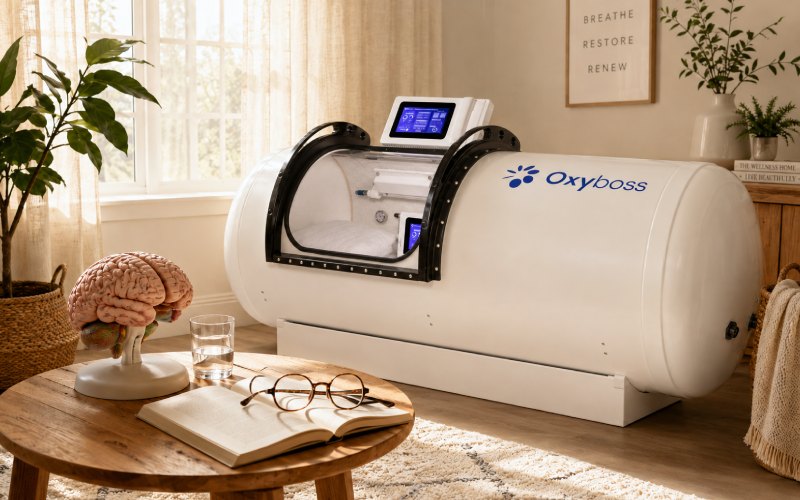
You step into the chamber. The door seals. Pressure gradually increases — you might feel a mild sensation in your ears, similar to what happens during airplane takeoff. Most people equalize the pressure by swallowing or yawning. Then you breathe. That’s it.
Sessions typically last between 60 and 90 minutes. During that time you may read, listen to audio, rest, or simply sit quietly, depending on the chamber type and facility policies. Some people report feeling relaxed during the session; others notice a subtle sense of clarity or alertness afterward. The experience itself is usually quiet and uneventful, which is part of the appeal.
For brain-related research questions, many published protocols range from 20 to 60 sessions, often scheduled five days a week. Some people report noticing changes within the first handful of visits. For others, it’s more gradual — like how exercise doesn’t reshape your body after one trip to the gym, but the cumulative effect over weeks can become noticeable. 1
Shorter protocols have not consistently shown durable cognitive changes in the published literature, especially when compared with longer clinical-grade protocols. The takeaway is less about any one session and more about repetition, protocol, and context. 1
Who Tends to Notice the Biggest Difference?
Not everyone is starting from the same place, so the experience varies:
- People in their 40s, 50s, and 60s who’ve noticed their mental edge dulling — forgetting names, losing the thread of conversations, taking longer to problem-solve. Age-related changes in cerebral blood flow have been documented, which is one reason this area has drawn research interest. 1
- High-performers and busy professionals who operate under sustained cognitive load — people whose brain is their primary working tool. When you depend on focus and processing speed, even a modest change can feel meaningful.
- Anyone dealing with persistent brain fog — that heavy, cotton-headed feeling that makes everything take more effort. Brain fog can have many causes, and oxygen-related physiology is only one piece of a much larger picture.
- Wellness-minded individuals exploring proactive approaches to long-term brain health. Some people are interested in supportive practices before a major problem appears.
Pairing Hyperbaric Sessions with Everyday Habits
A hyperbaric chamber doesn’t exist in a vacuum (pun intended). Whatever benefits a person notices are more likely to compound when sessions are paired with solid daily habits:
- Sleep. Your brain’s waste-clearance system (the glymphatic system) operates primarily during deep sleep. Extra oxygen is not a substitute for chronically poor rest.
- Movement. Regular physical activity increases cerebral blood flow on its own. Combined with hyperbaric oxygen, you’re engaging overlapping physiological pathways from two directions.
- Hydration and nutrition. Oxygen delivery depends in part on blood volume, circulation, and vascular health. Staying hydrated and eating nutrient-dense food supports the systems your brain relies on.
- Stress management. Chronic stress can reinforce inflammatory patterns associated with poor cognitive function. Breathwork, time in nature, or anything that activates your parasympathetic nervous system can improve the baseline you’re building from.
Think of hyperbaric oxygen as one part of a broader strategy, not the whole strategy by itself.
What Hyperbaric Oxygen Is Not
Let’s be straightforward. A hyperbaric chamber is not a miracle box. Sitting inside one will not give you a photographic memory or make you suddenly fluent in a second language. The body has biological limits, and responsible use means understanding what the technology actually does — and what it doesn’t.
What it may do, under the right protocol and in the right context, is shift some of the physiological conditions associated with brain performance: oxygen availability, circulation, and energy production. Over time and with consistency, those shifts may add up to a meaningful difference for some people. For others, the effects may be subtle — or difficult to separate from other lifestyle variables. 1
Results vary from person to person. Age, lifestyle, baseline health, protocol, and even genetics can influence the response. Some people are enthusiastic about the change. Others describe it as modest but worthwhile. Both experiences are plausible.
This is not a substitute for professional guidance. If you have specific health concerns, work with a qualified professional who can help you make informed decisions about what’s appropriate for your situation.

Frequently Asked Questions
How does pressurized oxygen differ from just breathing deeply or using an oxygen bar?
Regular deep breathing can increase oxygen intake slightly, but it doesn’t change the physics of how oxygen dissolves in your blood. You’re still largely limited by hemoglobin’s carrying capacity. In a pressurized environment, more oxygen can dissolve directly into your plasma. Oxygen bars operate at normal atmospheric pressure, so they do not create the same pressure-driven increase in dissolved oxygen. The pressure component is a major part of the difference — though the degree of difference depends on the specific protocol being used. 1
How many sessions does it typically take to notice changes in focus or mental clarity?
Some people report subtle shifts within the first 5 to 10 sessions — often described as clearer thinking, less afternoon fatigue, or easier word recall. In published studies using clinical-grade protocols (2.0+ ATA), more measurable changes in cognitive performance were generally reported after longer treatment series, often in the 20 to 60 session range. Shorter protocols may still feel meaningful to some individuals, but they have not consistently produced durable cognitive effects in the literature. 1
Is the process uncomfortable?
For most people, no. The most common sensation is mild ear pressure during pressurization, similar to ascending in an airplane. Swallowing, yawning, or gently blowing against pinched nostrils usually resolves it. The rest of the session is often quiet and relaxing.
That said, hyperbaric environments are not risk-free. Pressure changes, ear or sinus discomfort, claustrophobia, and oxygen-related safety issues are all important considerations. Sessions should follow appropriate operating procedures and safety guidance.
Can healthy people benefit, or is this only for people with specific concerns?
Some research involving healthy adults has reported improvements in certain cognitive or performance measures under clinical-grade hyperbaric conditions. That suggests hyperbaric oxygen may influence brain function even in people without diagnosed cognitive concerns. At the same time, those findings should not be assumed to apply equally across all chamber types, especially lower-pressure mild hyperbaric environments. 1
How long do the cognitive gains last after completing a series of sessions?
Published studies have reported improvements that persisted for weeks to a few months after the final session in some populations. The duration likely depends on the protocol used, the individual, and the outcome being measured. Like physical fitness, any change in performance may require ongoing support to maintain. 1
Are there any people who should avoid hyperbaric oxygen sessions?
Individuals with certain ear or sinus conditions, significant respiratory concerns, recent thoracic injury, uncontrolled seizures, or substantial anxiety in enclosed spaces should consult a qualified professional before starting. Pregnant individuals should also seek guidance first. Suitability depends on the person, the equipment, and the protocol. 2
Can I use my phone or read during a session?
Policies vary by facility and chamber type. Many chambers allow reading or quiet rest. Some restrict electronics or specific materials for safety reasons, especially in oxygen-enriched environments. The downtime is part of the appeal for many people — but the safety rules matter just as much as the comfort.
The Honest Bottom Line
Your brain runs on oxygen. That’s not a metaphor or a marketing line — it’s physiology. And the modern world, with its chronic stress, disrupted sleep, sedentary routines, and inflammatory load, can chip away at the systems that support clear thinking.
Hyperbaric oxygen chambers don’t change the basic biology. What they may do is alter oxygen availability and some related physiological conditions in ways that researchers continue to study. In clinical-grade settings, that has been associated with changes in circulation, energy metabolism, and, in some studies, aspects of cognitive performance. 1
Whether you’re trying to hold onto your mental edge, recover some of the sharpness you feel you’ve lost, or simply explore ways to support healthy aging, hyperbaric oxygen is a serious area of research — but it’s also an area where protocol matters. Not all chambers are the same. Not all pressures are the same. And findings from clinical HBOT should not automatically be assumed to apply to mild hyperbaric wellness settings. 1
The question isn’t whether oxygen matters to the brain. It clearly does. The more practical question is how different types of oxygen delivery and pressure exposure influence brain function — and under what conditions those effects are meaningful.
Disclaimer
The information in this article is provided for educational and general wellness purposes only. It is not intended to diagnose, treat, cure, or prevent any disease or medical condition, and should not be interpreted as professional medical advice.
The scientific studies referenced in this article were conducted primarily using clinical-grade hyperbaric oxygen protocols (typically 2.0 ATA or above with 100% medical-grade oxygen). Mild hyperbaric environments, which typically operate at 1.3–1.5 ATA with concentrated ambient oxygen, differ in both pressure and oxygen delivery. Findings from clinical-grade HBOT should not be assumed to apply equally to mild hyperbaric protocols, and that remains an active area of investigation. 1
Hyperbaric environments also require appropriate safety procedures. Chamber type, pressure, oxygen concentration, operator training, and adherence to facility guidance all matter.
If you have specific health concerns or existing conditions, please consult a qualified professional before beginning any new wellness protocol.
References
1 Hadanny A, Efrati S. The Hyperoxic-Hypoxic Paradox. Biomolecules. 2020;10(6):958. DOI: 10.3390/biom10060958.
2 Marcinkowska AB, Mańkowska ND, Kot J, Winklewski PJ. Impact of Hyperbaric Oxygen Therapy on Cognitive Functions: A Systematic Review. Neuropsychology Review. 2022;32(1):99–126. DOI: 10.1007/s11065-021-09500-9.
3 Shapira R, Efrati S, Ashery U. Hyperbaric Oxygen Therapy as a New Treatment Approach for Alzheimer’s Disease. Neural Regeneration Research. 2018;13(5):817–818. DOI: 10.4103/1673-5374.232475.