Disclaimer: Nothing on this page constitutes health advice, and no statement should be interpreted as a claim about the prevention, diagnosis, or management of any condition. The chambers discussed here include non-medical soft- and hard-shell models used in sport and wellness settings, including systems in the 1.3–2.0 ATA range. If you have questions about how pressurized environments might interact with your personal health, please consult a qualified professional.
Cyclists are obsessive optimizers. Tire pressure to the tenth of a PSI, chain wax versus wet lube debates that go on for hours, sleep tracked to the minute. So when pressurized chambers started showing up in wellness spaces and athlete lounges, it was only a matter of time before the cycling crowd started asking: does this actually do anything for how I ride?
The honest answer is that we’re early. The research is thin in places, thick with caveats in others, and almost none of it was designed with your Tuesday night crit in mind. But there are some interesting signals—and some important boundaries to understand before you form an opinion.
First, a Distinction That Matters
Not all pressurized chambers are the same, and this is the single most important thing to understand before reading anything else on this topic.
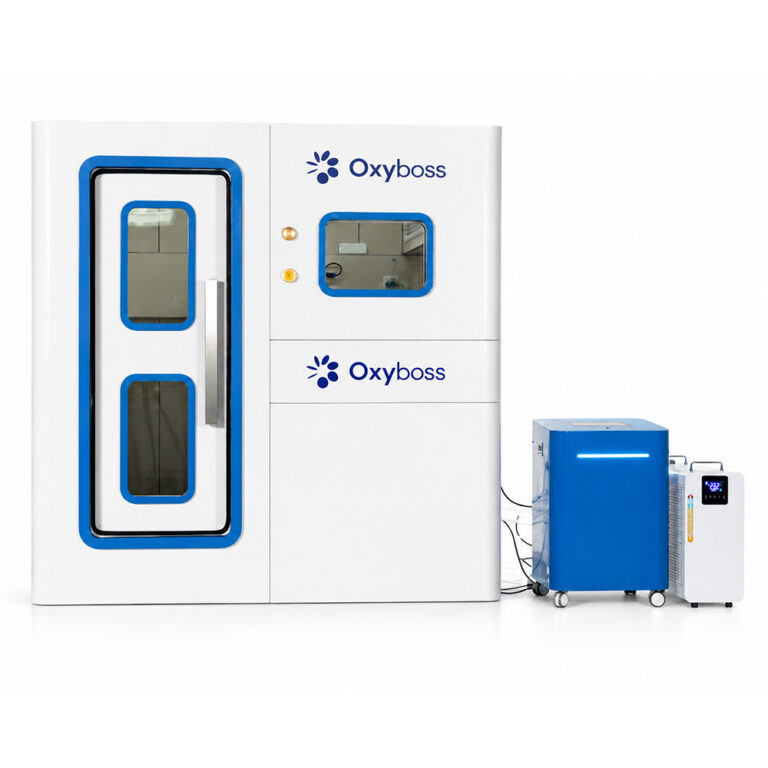
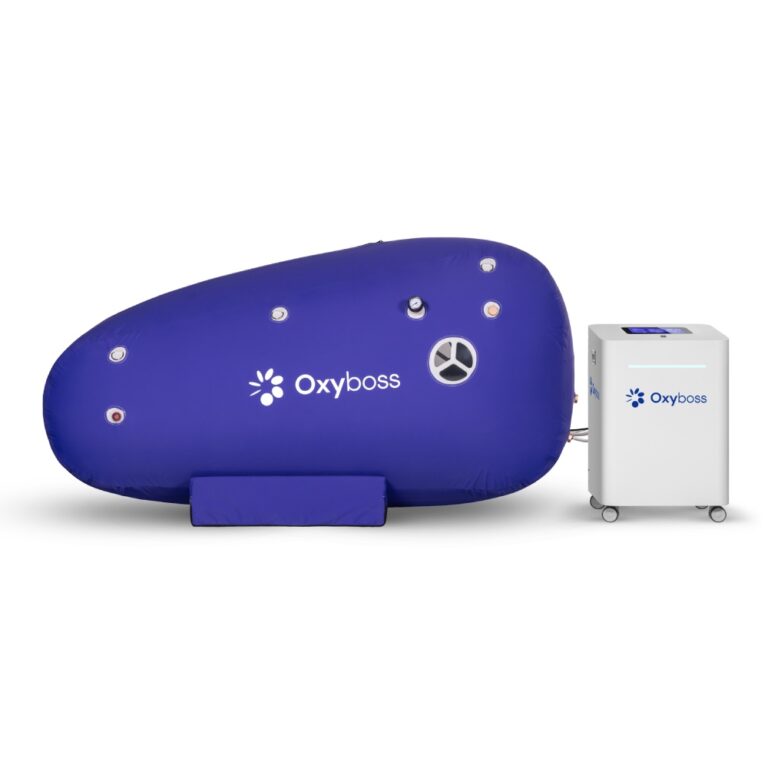
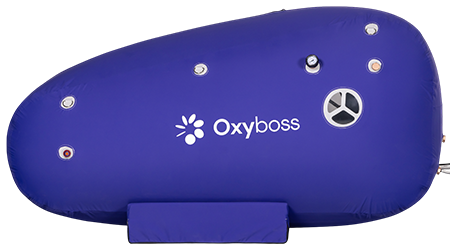
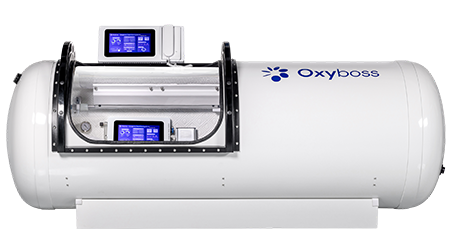
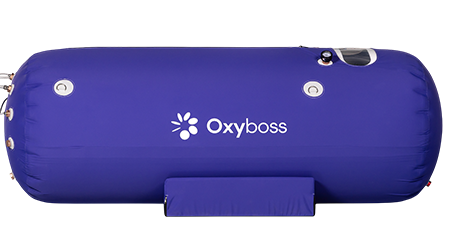
| Feature | Lower-Pressure Soft-Chamber Setups | Higher-Pressure Hard-Chamber Setups | Medical-Grade HBOT |
| Typical pressure | Around 1.3 ATA | Around 1.5–2.0 ATA | 1.5–3.0 ATA |
| Oxygen environment | Ambient air or modest enrichment | Varies by configuration and protocol | Typically near-100% oxygen under medical protocol |
| Typical setting | Homes, wellness centers, sport facilities | Sport-recovery or specialized non-medical settings | Specialized medical facilities with trained operators |
Published research spans several pressure and oxygen combinations. Treating all of it as one thing would be sloppy. We won’t do that.
Lower-pressure soft-chamber data, higher-pressure hard-chamber data, and medical-grade HBOT studies answer related but not identical questions. What follows is limited to studies that are at least directionally relevant to non-medical pressurized chamber use in sport and wellness settings, and where the protocol matters, we’ll say so plainly.
What Happens Under Pressurization
At the lower end of this range, around 1.3 ATA, the air pressure inside the chamber is roughly equivalent to being 10 feet underwater. Your body doesn’t experience this as dramatic. Most people notice mild ear pressure during pressurization—similar to descending in an airplane—and that’s about it.
The basic physics are straightforward: at higher ambient pressure, more oxygen dissolves into blood plasma beyond what hemoglobin already carries. As pressure and oxygen concentration rise, that dissolved-oxygen effect rises too. Whether that translates into anything a cyclist would actually notice depends on the dose, the protocol, and the outcome you’re measuring.
What the Research Shows (So Far)
Let’s be specific about what exists and what doesn’t.
During Exercise at Lower Pressure
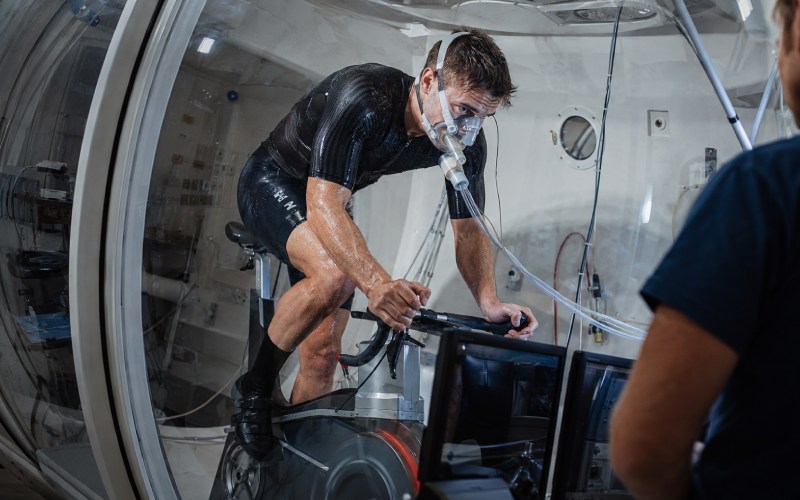
A 2025 study had 19 healthy men perform maximal cycle-ergometer tests inside a mild hyperbaric environment (1.3 ATA, 35% oxygen). The work rate at ventilatory threshold—basically, how hard they could push before their breathing patterns shifted toward anaerobic metabolism—was significantly higher under the mild pressure condition (168 ± 32 W) compared to normal conditions (148 ± 24 W). Cardiovascular stress markers at threshold were also lower [2].
That’s a meaningful finding within its own scope. But scope matters: this measured acute performance while inside the chamber, not lasting adaptation after leaving it. So the practical question—does this translate to better performance on actual roads—remains open.
Recovery After Exercise at Lower Pressure
A 2024 crossover study looked at 12 university-level male athletes who did intense cycling and then used a mild hyperbaric chamber (1.25 ATA, 26–28% oxygen, 60 minutes per session). A single session didn’t show much. But after six consecutive post-exercise sessions, researchers observed lower creatine kinase, lower lactate, reduced oxidative stress markers, and improved perceived fatigue scores compared to the control condition [3].
Perceived recovery matters in sport. If you feel more ready to train again, that can influence consistency and willingness to push during the next session. But it’s also fair to say that “feeling better” and “measurably recovering faster” are not necessarily the same claim, and we shouldn’t pretend they are.
Repeated Higher-Pressure Exposure
A 2022 double-blind randomized controlled trial in 37 healthy middle-aged master athletes used 40 one-hour sessions at 2.0 ATA with 100% oxygen. Compared with a sham condition, the authors reported significant increases in VO_2max and oxygen consumption at the anaerobic threshold, along with changes in mitochondrial respiration and mitochondrial mass [4].
That’s the strongest performance signal in the literature cited here. It is also a very specific protocol: repeated sessions, higher pressure, and high oxygen concentration. It should not be collapsed into “any chamber helps cycling,” because that’s not what the study showed. But it does matter, especially for readers interested in the upper end of non-medical hard-chamber use.
Acute Single Sessions
A 2025 randomized crossover study had 14 healthy young men do a single 60-minute session at 1.3 ATA while breathing 100% oxygen. It found improvements in resting heart rate and heart rate variability—both associated with parasympathetic recovery. But it did not find any measurable change in peak oxygen uptake or time to exhaustion [5].
One session. No clear performance change. But some autonomic nervous system signals that might be relevant to recovery quality. That’s a fair summary of where single-session evidence sits right now.
What This Evidence Does Not Tell Us
Intellectual honesty demands a clear-eyed look at the gaps. There are several, and they’re not small.
No cycling-specific field studies. None of these studies measured time trial performance, FTP, race results, or sustained power output on a real bike after a course of sessions. The outcomes measured are proxy markers—threshold wattage on an ergometer, blood chemistry, subjective fatigue scores, or laboratory oxygen-consumption measures. Proxies are useful. They’re not the same as the thing you actually care about.
Small sample sizes. The largest study in our relevant set has 37 participants. Others have 12–19. These are still relatively small investigations, not definitive sport-specific trials. Results can be real and still not replicate at scale.
Protocols vary a lot. The published protocols range from a single session to 40 sessions, across different pressures and oxygen concentrations. That makes dose-response hard to interpret. A lower-pressure soft-chamber routine is not interchangeable with a repeated 2.0 ATA hard-chamber protocol.
Very limited cyclist-specific data. One higher-pressure trial recruited master athletes, but most participants in this area are described as “healthy men” or “university-level athletes” rather than trained cyclists studied on cyclist-specific outcomes. That matters.
No long-term follow-up. Even where acute effects were observed, we don’t know how long they persist in practice.
The Honest Picture for Cyclists
Here’s where things stand, laid out as plainly as possible:
- Exercising inside a lower-pressure hyperbaric environment seems to allow slightly higher output before hitting ventilatory threshold. Interesting, but not directly applicable to normal outdoor riding.
- Repeated lower-pressure sessions after hard efforts show some recovery-related signals—lower stress markers, less perceived fatigue.
- A repeated higher-pressure protocol at 2.0 ATA showed improvements in VO2max-, anaerobic-threshold-, and mitochondrial-related measures in master athletes.
- Single sessions, even when physiologically interesting, have not shown clear lasting performance changes.
- The research base is still small and segmented by pressure, oxygen concentration, session count, and participant type.
None of that means pressurized chambers are useless for cyclists. It means we don’t have enough evidence to make lazy claims either way, and anyone telling you otherwise—in either direction—is outrunning the data.
Frequently Asked Questions
Is using a pressurized chamber the same as altitude training?
No. They work in opposite directions. Altitude training reduces oxygen availability to trigger adaptive responses (like shifts in red blood cell dynamics). A pressurized chamber increases ambient pressure and oxygen availability. Different stimulus, different physiological logic.
Is this banned by sports authorities?
Hyperbaric oxygen exposure is not included on the World Anti-Doping Agency’s 2026 prohibited list [6]. Individual sport federations may have their own specific rules, so check with your governing body if you race at a sanctioned level.
How long is a typical session?
Most protocols in the published research use 60-minute sessions. What varies more is the number of sessions and the exact pressure/oxygen setup.
Will a chamber raise my FTP?
No published study has demonstrated a direct FTP increase under the non-medical sport/wellness conditions discussed here. The research that exists has measured proxy markers like ventilatory threshold, recovery indicators, or lab-based oxygen-consumption outcomes—not functional threshold power on the road.
What does it feel like inside?
Most people describe ear pressure during the initial pressurization phase, similar to an airplane descent. Equalizing by swallowing or jaw movement usually resolves it quickly. The exact experience depends on chamber type, pressure, and protocol, but it is generally more uneventful than people expect.
Should I use a chamber instead of prioritizing training fundamentals?
No. Structured training, adequate sleep, proper nutrition, and bike fit have deep, well-established evidence bases behind them. A pressurized chamber is, at best, a supplementary tool—not a replacement for the fundamentals. Approach it with realistic expectations.
I have a specific health concern. Can this help?
We are not the right people to answer that question. Please consult a qualified professional who can evaluate your individual situation. We provide chambers for general wellness use and do not offer guidance on health-specific questions.
A Note on Safety
Pressurized oxygen environments should be treated with respect. The FDA has issued safety communications about hyperbaric oxygen therapy devices, noting serious risks when instructions are not followed, including fire hazards in oxygen-enriched settings and the importance of proper equipment maintenance and operating procedures [1].
If you use a chamber:
- Follow all manufacturer operating guidelines
- Only bring items into the chamber if they are explicitly permitted by the manufacturer
- Ensure the space is set up as instructed by the manufacturer
- Do not use a chamber if you are unable to equalize ear pressure
- If you experience discomfort beyond mild ear pressure, end the session and follow the product instructions
This is not an exhaustive safety guide. Always read the full documentation that comes with any chamber before use.
Where We Stand
The relationship between pressurized chamber exposure and cycling performance is an open question, not a settled one. There are early research signals that are worth watching—particularly around recovery from hard efforts, and in one higher-pressure repeated protocol, performance-related laboratory measures. There is not yet a body of cycling-specific evidence that would let anyone say with confidence, “this will make you faster on a bike.”
We find the research genuinely interesting, which is why we wrote about it. But we’d rather be honest about where the evidence is than oversell something based on studies that don’t quite apply to every chamber configuration. The science will keep moving. We’ll keep reading it. And if the picture changes, we’ll update this page.
In the meantime, keep your expectations realistic, your training consistent, and your curiosity intact.
References
- U.S. Food and Drug Administration. (2025). Follow Instructions for Safe Use of Hyperbaric Oxygen Therapy Devices — Letter to Health Care Providers.
https://www.fda.gov/medical-devices/letters-health-care-providers/follow-instructions-safe-use-hyperbaric-oxygen-therapy-devices-letter-health-care-providers - Hisamoto, K., Okubo, N., Fujita, M., Fukushima, H., Okizuka, Y., Yamanaka, T., et al. (2025). Mild hyperbaric hyperoxia improves aerobic capacity and suppresses cardiopulmonary stress during the maximal cycle-ergometer test. PLOS ONE, 20(5), e0323885.
https://doi.org/10.1371/journal.pone.0323885 - Qu, C., Xu, M., Lorenzo, S., Huang, P., Rao, Z., Geng, X., & Zhao, J. (2024). Effects of mild hyperbaric oxygen therapy on timing sequence recovery of muscle fatigue in Chinese university male athletes. Journal of Exercise Science & Fitness, 22(4), 305–315.
https://doi.org/10.1016/j.jesf.2024.04.005 - Hadanny, A., Hachmo, Y., Rozali, D., Catalogna, M., Yaakobi, E., Sova, M., Gattegno, H., Abu Hamed, R., Lang, E., Polak, N., Friedman, M., Finci, S., Zemel, Y., Bechor, Y., Gal, N., & Efrati, S. (2022). Effects of Hyperbaric Oxygen Therapy on Mitochondrial Respiration and Physical Performance in Middle-Aged Athletes: A Blinded, Randomized Controlled Trial. Sports Medicine – Open, 8(1), 22.
https://doi.org/10.1186/s40798-021-00403-w - Hu, Z., Guo, W., & Wu, H. (2025). A study on the effect of acute hyperbaric oxygen intervention on aerobic endurance. Journal of Physiological Anthropology, 44, 22.
https://doi.org/10.1186/s40101-025-00400-y - World Anti-Doping Agency. (2026). Prohibited List.
https://www.wada-ama.org/en/resources/world-anti-doping-code-and-international-standards/prohibited-list