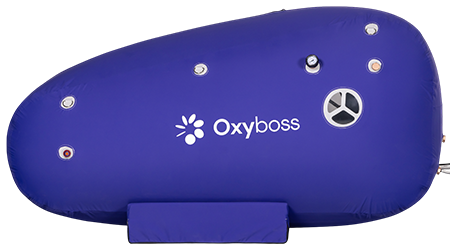
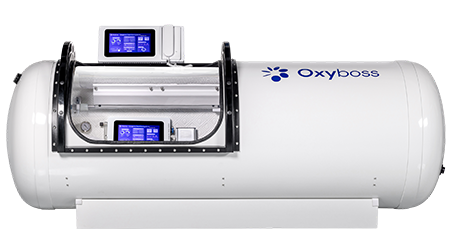
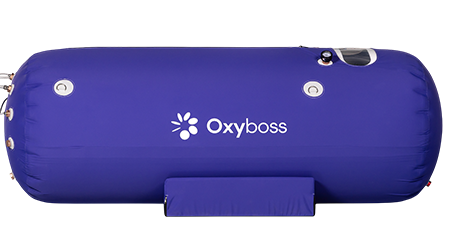

Hyperbaric chambers raise air pressure above normal atmospheric levels (1.0 ATA), which increases the amount of oxygen that can dissolve directly into blood plasma and other bodily fluids [1]. This is a physical property described by Henry’s Law, the same principle that keeps carbonation dissolved in a sealed bottle. Clinical hyperbaric oxygen therapy (HBOT) is typically defined separately as breathing near-100% oxygen in a chamber at or above 1.4 ATA [2]. Active adults use chambers in the 1.3–2.0 ATA range after workouts because the post-exercise period is when recovery demands are elevated, and increased dissolved oxygen is one of the reasons these pressurized environments are discussed in that context.
This guide covers how that process works at different pressure levels, how chamber format affects use in practice, how to think about session frequency and timing, and what factors matter most when deciding whether this belongs in your recovery routine.
Everything discussed here applies to chambers operating between 1.3 and 2.0 ATA — the range this guide focuses on for wellness and recovery use.
The Physics: What Actually Changes Under Pressure
This part is not opinion. It’s gas physics, and it’s worth understanding because it’s the foundation of everything else.
At normal sea-level pressure (1.0 ATA), most of the oxygen your body uses is carried by hemoglobin inside red blood cells. Only a much smaller fraction dissolves directly into plasma and other bodily fluids [1]. That dissolved fraction is small, but it behaves differently from hemoglobin-bound oxygen — it is already in solution and moves according to pressure gradients.
When you increase atmospheric pressure:
- At 1.3 ATA, the partial pressure of oxygen rises proportionally. More oxygen molecules are physically pushed into solution in your plasma. This is measurable, not theoretical.
- At 1.5 ATA, the dissolved fraction increases further.
- At 2.0 ATA, dissolved plasma oxygen rises further still. Under true HBOT conditions — where near-100% oxygen is breathed in the chamber — the increase is larger than it is in lower-pressure, lower-oxygen setups [1][2].
The relationship is predictable: all else equal, more pressure increases dissolved oxygen. The exact magnitude also depends on the oxygen concentration being breathed [1][2].
Why does this matter for exercise recovery? Because increased dissolved oxygen is one of the mechanisms commonly discussed when people talk about pressurized recovery environments after hard training. What is physically certain is the pressure–oxygen relationship. What that translates to in subjective recovery from exercise is still an area where published findings are mixed [3].
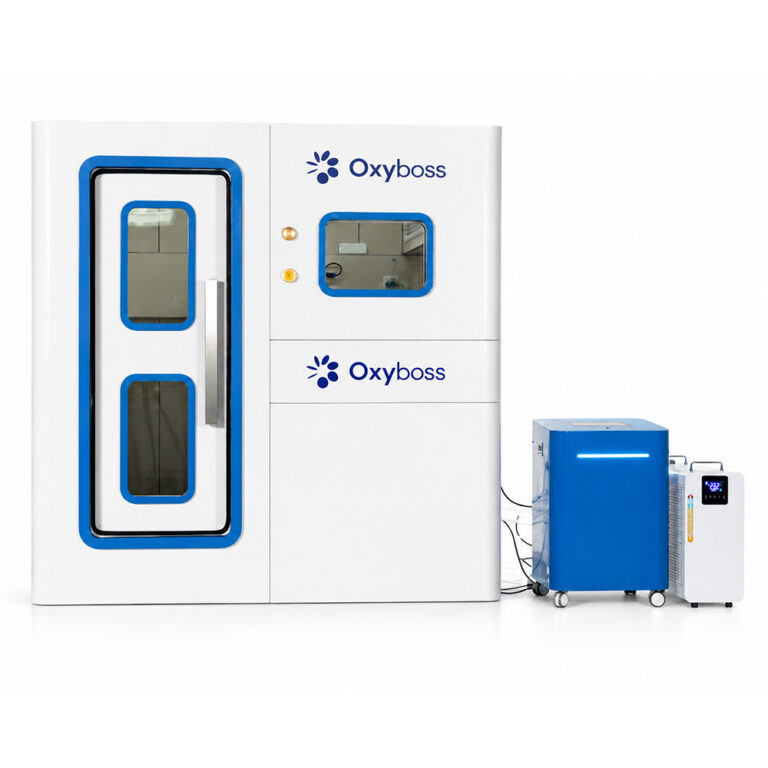
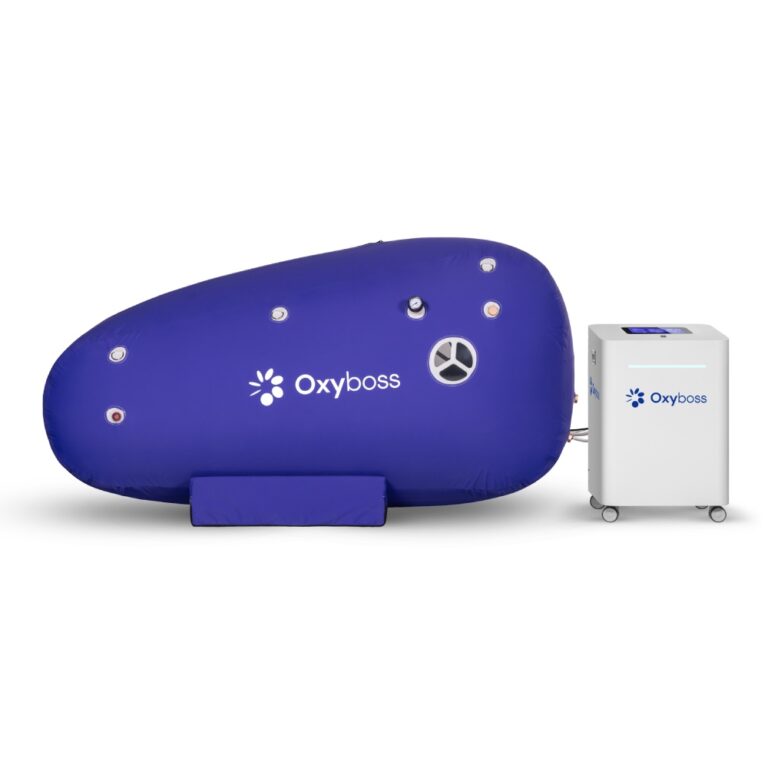
Soft-Shell vs. Hard-Shell Chambers: The Practical Difference
This matters less as a “which is better” debate and more as a question of how the chamber fits into your routine.
| Soft-Shell (1.3–1.5 ATA) | Hard-Shell (1.5–2.0 ATA) | |
| Pressure range | 1.3–1.5 ATA | 1.5–2.0 ATA |
| Dissolved oxygen increase | Moderate — measurably above baseline | Higher — greater than lower-pressure setups under comparable oxygen conditions |
| Typical access | Home use; available any time | Facility-based or dedicated home installation |
| Session frequency (common pattern) | 3–5 sessions per week | 1–3 sessions per week |
| Portability | Yes — designed for setup and storage | No — permanent or semi-permanent placement |
| Best fit for | Users who value convenience and routine | Users who want higher per-session pressure |
In practical terms, soft-shell chambers tend to support consistency: lower-pressure sessions that are easy to repeat because access is always there. Hard-shell chambers tend to support per-session depth: higher-pressure visits that may happen less often because they require a facility trip or a more dedicated setup.
Neither makes the other obsolete. A soft-shell chamber used frequently may fit everyday recovery better than a hard-shell chamber used sporadically, while a hard-shell chamber may appeal more to users who want higher pressure each session. The better choice usually comes down to routine, access, and how often you realistically plan to use it.
What a Session Looks Like (Start to Finish)
If you’ve never been inside a hyperbaric chamber, the actual experience is straightforward.
Getting in. Soft-shell chambers are typically entered by unzipping an opening and lying or reclining inside. Hard-shell units may have a door or hatch. Either way, you’re settled within a minute or two.
Pressurization (5–10 minutes). The chamber gradually reaches its operating pressure. You’ll feel this in your ears — the same sensation as descending in a commercial flight or driving through elevation changes. Swallowing, yawning, or gently blowing against pinched nostrils equalizes the pressure. Anyone who’s equalized while swimming understands the feeling.
The session itself (60–90 minutes). You lie or recline in a pressurized environment. Most people read, listen to podcasts, nap, or scroll their phone. It’s passive time. Some people pair it with breathing exercises or meditation. Others treat it as forced downtime from screens and just rest.
Depressurization (5–10 minutes). Pressure returns to normal gradually. No abrupt change.
After. You get out and go about your day. There’s no separate “recovery period” from the session itself. Most people describe feeling relaxed or mildly alert afterward, though this varies.
The total time commitment is typically 75–110 minutes including pressurization and depressurization. For a home unit, there’s no travel time. For a facility visit, factor in transit.
Timing: Before or After Exercise?
The most common pattern among active adults is post-workout use. The reasoning is straightforward: recovery demands are elevated after training, so many users see that as the most relevant time to schedule a session. Published exercise literature has not established a single clearly superior timing window [3].
Some users experiment with pre-workout sessions. This is less common and the reasoning for it is less clear-cut, though a small number of users report feeling more prepared or “primed” afterward. Most experienced users default to post-exercise timing.
As for the specific gap between training and the session — right after, a few hours later, or the following morning — there’s no established rule. What shows up consistently in user reports is that regularity over time matters more than precise timing on any given day. People who build it into a consistent post-training routine tend to speak more positively about the impact than people who use it sporadically regardless of timing.
How to Think About Frequency
There’s no universal prescription here, and this article won’t pretend there is. The table below describes common usage patterns in consumer and facility settings, not a clinical rulebook:
| Usage Pattern | Common Among | What Users Typically Report |
| 4–5x per week | Home soft-shell owners with daily training routines | Most likely to describe a cumulative difference in day-to-day readiness over weeks |
| 2–3x per week | Facility visitors or home users with moderate training loads | Often describe it as “noticeably helpful but hard to isolate from other recovery habits” |
| 1x per week or less | Casual users, people early in the exploration phase | Generally don’t report strong subjective differences; may not be frequent enough to form a clear impression |
Two things worth noting. First, the users who report the most consistent positive impressions tend to be those who’ve committed to a regular schedule for at least 4–6 weeks. Sporadic use doesn’t give the body — or the user — enough data points to evaluate. Second, the people who get the most value from higher frequency tend to be those training hard enough that recovery is actually a bottleneck. If you train twice a week at moderate intensity and recover fine, the incremental value of frequent chamber sessions may be hard to notice.

What a Hyperbaric Chamber Doesn’t Change
Being straightforward about boundaries is different from being discouraging. These are structural realities, not disclaimers:
Sleep is irreplaceable. Sleep is when the body performs its deepest repair and adaptation work. No tool substitutes for adequate, quality sleep. A chamber session doesn’t reproduce what happens during deep sleep cycles.
Nutrition provides the raw materials. Oxygen supports metabolic processes, but the actual building blocks — amino acids, micronutrients, hydration — come from food and fluids. Dissolved oxygen doesn’t replace a protein deficit.
Training load management prevents the problem. If your training consistently exceeds your body’s capacity to rebuild, the answer is programming adjustment, not more recovery inputs. A chamber can support recovery from hard training. It can’t fix a fundamentally unsustainable training load.
A single session is a single session. Some people feel a subtle difference after their first time. Many describe the first session as “pleasant but unremarkable.” The experience users describe most positively tends to develop over weeks of consistent use, not from a single exposure. This doesn’t mean a first session is pointless — it’s a necessary starting point and a chance to see if the experience fits your routine. It means expectations should match the usage pattern.

FAQ
What does a hyperbaric chamber actually do differently from just breathing more oxygen?
Breathing supplemental oxygen at normal atmospheric pressure (1.0 ATA) — like at an oxygen bar — mainly affects oxygen availability at normal pressure, where hemoglobin is already highly saturated in healthy individuals. A hyperbaric chamber changes pressure, which increases the amount of oxygen that can dissolve directly into plasma. That is a different mechanism [1].
How soon do people typically notice something?
This varies widely. Some users describe a subtle difference after a few sessions within the first week — often characterized as feeling less heavy or run-down the day after hard training. Others need 3–4 weeks of regular use before forming a clear impression. A meaningful number of users don’t describe a strong subjective sensation but continue based on how their training consistency and performance track over time.
Can I train on the same day as a session?
In practice, many users do. The common pattern is to train first and use the chamber later in the day. Published exercise literature has not established a standard same-day restriction within the ranges discussed here [3].
Is this allowed in competitive sports?
Yes. Hyperbaric chamber use is not listed as a prohibited method or substance on the current WADA Prohibited List [4].
Is a hyperbaric chamber safe for regular use?
Pressurized oxygen environments have recognized precautions and side effects, and ear pressure during pressurization is one of the most commonly discussed issues in the hyperbaric literature [5]. Chambers in the 1.3–2.0 ATA range are commonly used in wellness settings, but individuals with known ear, sinus, or respiratory sensitivities should consult a qualified professional before their first session.
References
- Ortega, M. A., Fraile-Martinez, O., García-Montero, C., et al. (2021). A General Overview on the Hyperbaric Oxygen Therapy: Applications, Mechanisms and Translational Opportunities. Medicina, 57(9), 864. https://doi.org/10.3390/medicina57090864
- Undersea and Hyperbaric Medical Society (UHMS). (2018). UHMS Position Statement: Low-Pressure Fabric Hyperbaric Chambers. https://www.uhms.org/images/Position-Statements/UHMS_Position_Statement_LP_chambers_revised.pdf
- Huang, X., Guo, F., Xie, L., et al. (2021). Effects of Pre-, Post- and Intra-Exercise Hyperbaric Oxygen Therapy on Performance and Recovery: A Systematic Review and Meta-Analysis. Frontiers in Physiology, 12, 791872. https://www.frontiersin.org/journals/physiology/articles/10.3389/fphys.2021.791872/full
- World Anti-Doping Agency. (2026). The 2026 Prohibited List: International Standard. https://www.wada-ama.org/sites/default/files/2025-09/2026list_en_final_clean_september_2025.pdf
- Heyboer III, M., Sharma, D., Santiago, W., & McCulloch, N. (2017). Hyperbaric Oxygen Therapy: Side Effects Defined and Quantified. Advances in Wound Care, 6(6), 210–224. https://doi.org/10.1089/wound.2016.0718