No. Non-medical hyperbaric chambers cannot be used for decompression sickness. They do not reach the pressure used to initiate standard recompression protocols (2.8 ATA), cannot deliver 100% oxygen through a sealed breathing circuit, are not certified pressure vessels for recompression duty, and are not operated by qualified chamber personnel. A diver with suspected DCS needs surface oxygen at the highest available flow, an emergency diving hotline call, and transport to a recompression facility — not a home chamber session.
That’s the answer. The rest of this article explains why, in enough depth that the reasoning holds up under scrutiny.
The Core Distinction in One Table
| Requirement for Decompression Sickness Recompression | Non-Medical Hyperbaric Chamber |
| Initial pressure of 2.8 ATA (≈60 feet of seawater) | Caps at 1.3–1.5 ATA (soft), ~2.0 ATA (rigid wellness class) |
| 100% oxygen via sealed built-in breathing system | Ambient air, or concentrator + mask at ~90–95% O₂ |
| ASME PVHO-1 certified pressure vessel | Consumer / wellness device certification |
| Trained chamber operator + supervising qualified personnel | Owner-operated or single attendant |
| Scheduled air breaks to manage oxygen toxicity | No protocol framework |
| ~285 minutes standard protocol duration | 60–90 minute wellness sessions |
| Emergency gas-switching (air / O₂ / mixed gas) | None |
These are protocol-defining requirements, not preferences. Missing one places the session outside a standard recompression protocol.
What Decompression Sickness Actually Is
A diver breathing compressed air at depth takes on extra nitrogen. Henry’s Law governs it: gas dissolves into a liquid in proportion to its partial pressure above that liquid [1][2]. Deeper dive, higher pressure, more nitrogen loaded into blood and tissue.
Ascent is where the risk shows up. Slow enough, and the nitrogen leaves through the lungs without incident. Too fast, and the dissolved gas comes out of solution inside the body — forming bubbles in vessels, joints, the spinal cord, and fatty tissue [1][3].
Those bubbles cause the damage. They block circulation, stretch surrounding tissue, and trigger inflammatory responses. Symptoms range from joint pain to numbness, skin mottling, vertigo, and neurological signs. About 50% of cases appear within an hour of surfacing; about 90% within six hours [3].
The response is recompression: raise ambient pressure to shrink the bubbles back toward solubility, while breathing pure oxygen to drive nitrogen out of the tissues. This has specific numbers attached to it, and the numbers are where the distinction lives.
Why 2.8 ATA Is a Defining Protocol Number
The reference protocol in most of the diving world is U.S. Navy Treatment Table 6. Its parameters:
- Initial pressurization to 2.8 ATA (approximately 60 feet of seawater) [4][5]
- 100% oxygen breathing in 20-minute cycles, separated by 5-minute air breaks to manage oxygen toxicity [5]
- Stepped ascent to 1.9 ATA, additional oxygen cycles, controlled decompression
- Total elapsed time around 285 minutes [4]
The 2.8 ATA figure comes from bubble physics. Boyle’s Law: $P_1 V_1 = P_2 V_2$. A bubble taken from 1.0 ATA to 2.8 ATA compresses to roughly 36% of its original volume — often enough to restore flow through a blocked vessel while the oxygen gradient pulls nitrogen out of surrounding tissue [3][6].
Running a chamber at 1.3 ATA compresses the same bubble to about 77% of its volume. At 1.5 ATA, about 67%. At 2.0 ATA, about 50%. These are not substitutes for a standard recompression table. They remain below the pressure used to start that protocol.
Where Non-Medical Chambers Are Actually Built to Operate
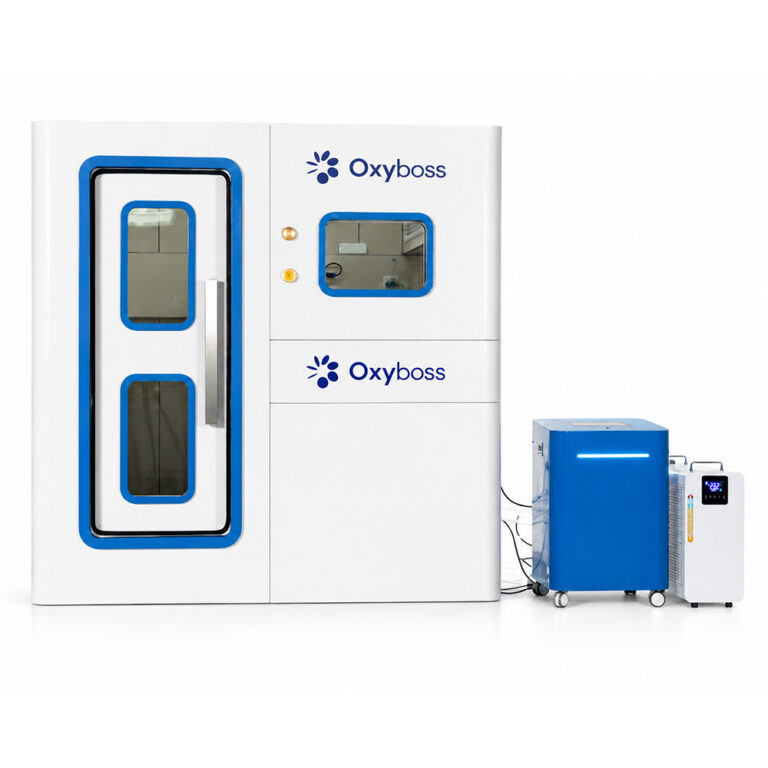
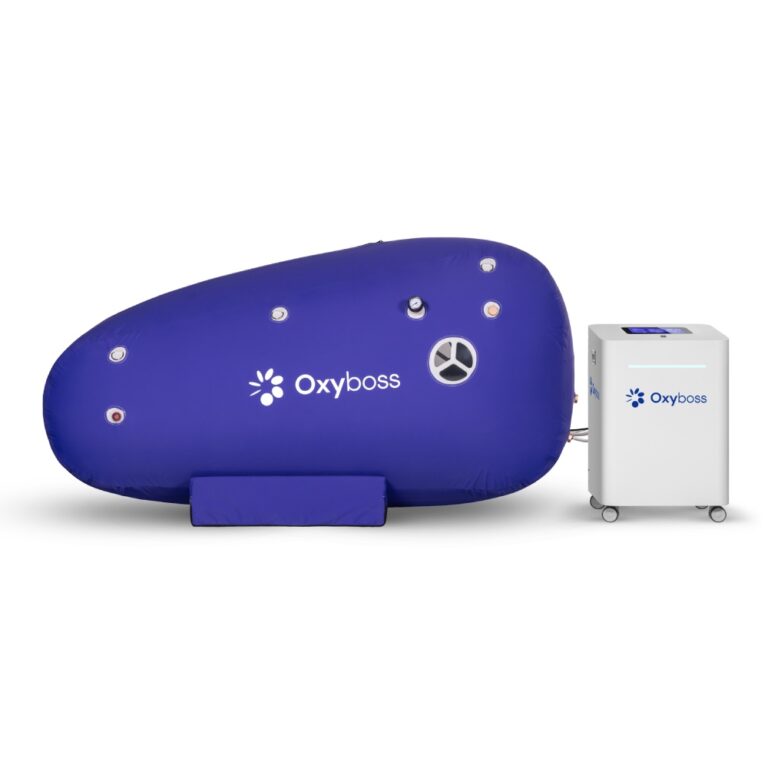
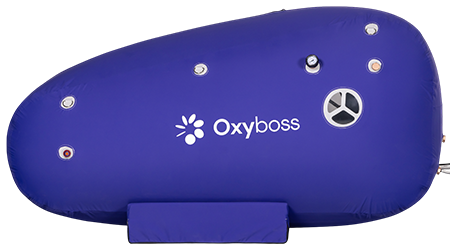
Wellness-tier chambers are engineered around a different operating envelope. The materials, seams, valves, and compressor assemblies are specified for lower pressures and lower oxygen fractions.
Typical operating ceilings:
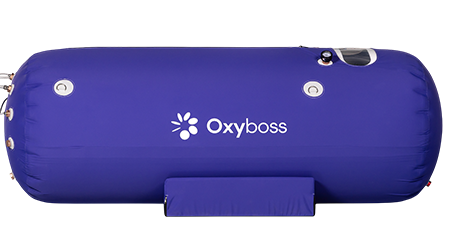
- Soft-shell chambers: ~1.3 ATA, occasionally 1.5 ATA, pressurized with compressed ambient air, often with a concentrator delivering elevated O₂ through a mask [7][8]
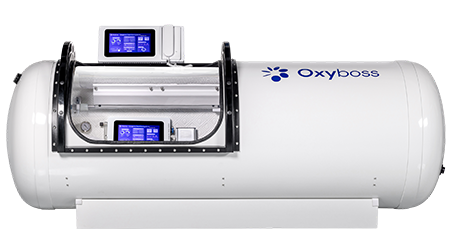
- Low-pressure rigid chambers in the non-medical class: typically capped around 1.5–2.0 ATA depending on build specification
These ceilings exist for valid engineering reasons. Higher pressures require thicker walls, different seal geometries, different fire-safety engineering, different relief-valve sizing, and — if pure oxygen is involved — entirely different material compatibility standards. A chamber designed for 1.3 ATA wellness use is not a smaller version of a recompression chamber. It is a different class of pressure vessel.
Why Pressure Alone Isn’t the Full Picture
Even a non-medical rigid chamber that reaches 2.0 ATA is not capable of running a recompression protocol. The pressure gap to 2.8 ATA is the visible issue. The less visible issues matter just as much:
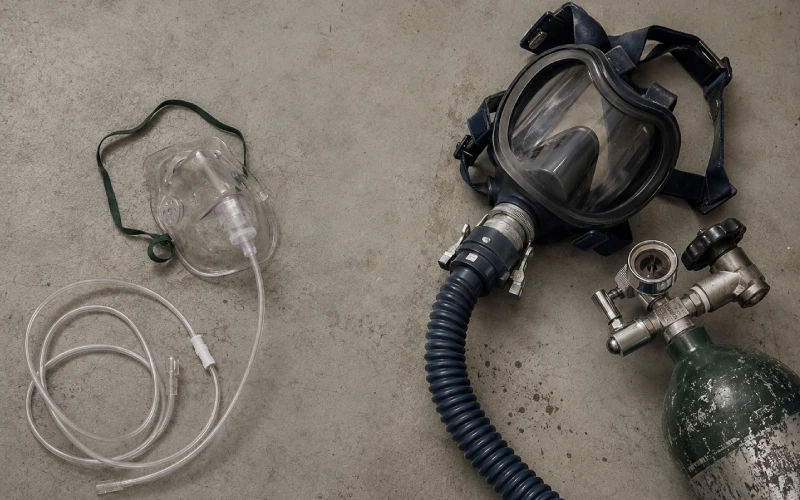
Gas delivery. Recompression protocols depend on the occupant breathing close to 100% O₂ at elevated pressure. A concentrator feeding a loose-fitting mask inside a 1.3 ATA envelope does not reproduce the inspired oxygen exposure the protocol assumes [6][8].
Air breaks. Breathing pure oxygen at 2.8 ATA carries its own risks over time, which is why the protocol builds in scheduled 5-minute air breaks. Wellness chambers have no such protocol framework, no switching system, and no supervising personnel to manage it.
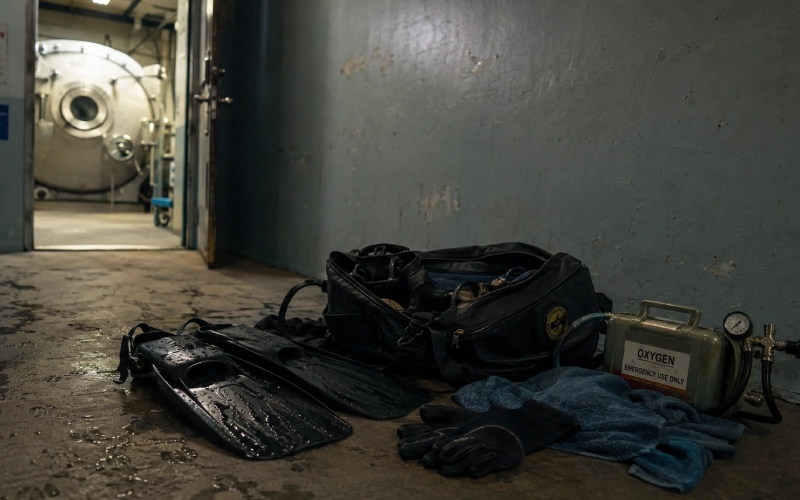
Vessel certification. Recompression chambers are built to ASME PVHO-1 and operated under NFPA 99 guidelines, with independent over-pressure relief, fire suppression, and redundant breathing systems [7]. These are not formalities — they exist because running elevated O₂ at high pressure has known failure modes.
Supervision. A recompression session is run by trained chamber operators with qualified supervising personnel on hand. Gas mixes, pressure curves, and timing are managed against the protocol, not improvised.
Missing any one of these is enough to put the session outside the protocol. Missing all of them, which is the realistic situation in any home setting, is not a substitute for recompression. It is a different activity entirely.
What Goes Wrong When Wellness Chambers Get Improvised Into This Role
Several failure modes show up when non-medical chambers are pressed into DCS response:
Insufficient bubble compression. At 1.3–1.5 ATA, bubbles shrink but do not shrink enough to reliably restore blood flow. Symptoms may partially ease while the underlying bubble load continues damaging tissue — a pattern also documented in inadequate in-water recompression attempts [9].
Insufficient oxygen gradient. The nitrogen-washout effect depends on a steep O₂ partial-pressure gradient at the alveolar membrane. Mask-delivered concentrator oxygen at 1.3 ATA does not produce that gradient at the level the protocol assumes.
Lost time. Outcome quality in DCS depends heavily on how quickly proper recompression begins. Time spent in a home chamber is time not spent on the three things that actually help before a diver reaches a recompression facility: high-flow surface oxygen, a call to an emergency diving hotline, and transport [9][10].
Material and fire risk. Elevated-O₂ environments inside fabric-seamed vessels introduce material-compatibility and fire-load concerns that don’t apply in certified multiplace facilities built for this duty.
What Non-Medical Chambers Are Actually Built For
There are legitimate uses for wellness-class chambers within their rated operating envelope. They may be used for general wellness routines and other non-medical applications defined by the manufacturer and local regulatory framework.
What those sessions are not is emergency response for a pressure-related diving event. The pressure target is different. The gas delivery is different. The protocol is different. The certification class is different. The supervising personnel are different. Treating the two as interchangeable is the error worth avoiding.
Can a Non-Medical Chamber Play Any Supporting Role Here?
In the acute management of suspected DCS, no. It should not be inserted into the interval between symptom onset and definitive care as a bridge, an adjunct, or a lower-grade version of recompression.
The reason is practical as much as technical. Current first-aid priorities are surface oxygen, expert dive-medicine contact, stabilization, and transport to an appropriate facility [9][10]. A home chamber does not add the pressure, oxygen delivery, staffing, or protocol control that define recompression. It mainly adds delay.
After definitive medical evaluation and treatment, a non-medical chamber may still exist in a person’s broader wellness routine. That is a separate question from DCS management itself. It should not be described here as treating DCS, substituting for recompression, or accelerating recovery from DCS unless the treating dive-medicine team specifically makes that recommendation [5][10][11].
What the Correct Response Actually Looks Like
If a diver surfaces with suspected DCS symptoms, the established sequence is:
- Surface oxygen at the highest available flow — this is the single most useful first-aid step available outside a recompression facility [9][10]
- Call an emergency diving hotline (such as the one operated by the Divers Alert Network) for medical direction and evacuation coordination
- Arrange transport to a facility equipped for recompression
- Keep the diver at rest and follow medical direction during transport
A home chamber is not part of this chain. Attempting to insert one extends the timeline without delivering the pressure or the gas the protocol requires.
Reference Numbers Worth Knowing
| Parameter | Value |
| Sea-level ambient pressure | 1.0 ATA |
| Pressure change per 10 m of seawater | +1.0 ATA |
| Typical soft chamber ceiling | 1.3 ATA |
| Typical non-medical rigid chamber ceiling | ~1.5–2.0 ATA |
| TT6 initial pressurization | 2.8 ATA (≈60 fsw) [4] |
| Standard TT6 elapsed time | ~285 minutes [4] |
| DCS symptom onset window | 50% within 1 hr; 90% within 6 hr [3] |
| Bubble volume at 1.3 ATA vs. 1.0 ATA | ~77% |
| Bubble volume at 2.8 ATA vs. 1.0 ATA | ~36% |
FAQ
Can a 2.0 ATA rigid non-medical chamber be used for DCS?
No. 2.0 ATA is still below the 2.8 ATA starting pressure required by the standard protocol. The chamber also lacks the sealed breathing circuit, air-break scheduling, and qualified supervising personnel the protocol requires. Pressure alone does not define a recompression-capable facility.
If the nearest recompression facility is hours away, does a home chamber help bridge the gap?
The evidence-backed bridge is surface oxygen at the highest available flow, not a partial-pressure chamber session. Improvised recompression outside rated facilities is broadly discouraged unless performed by trained teams with correct equipment [9].
What if symptoms seem mild?
Symptom severity at onset is not a reliable guide to outcome. Mild presentations can progress. The correct path is the same regardless: surface oxygen, hotline call, transport.
Why does breathing 100% oxygen matter so much?
It creates a steep partial-pressure gradient that drives nitrogen out of tissues while elevated ambient pressure keeps remaining bubbles compressed. The two effects depend on each other. Breathing ordinary air at the same pressure is meaningfully less effective [3][6].
What about a non-medical chamber with an oxygen concentrator and mask?
That setup is appropriate for its intended non-medical applications. It does not reproduce the inspired oxygen partial pressures a recompression protocol assumes, which depend on a sealed breathing system delivering 100% O₂ at 2.8 ATA.
Is this guidance the same for altitude-related decompression issues?
The underlying physics are related, but contexts and response protocols differ. The principle is the same: a wellness chamber is not the appropriate response to a clinically significant decompression event.
The Distinction to Hold Onto
Two devices can share the word “hyperbaric” and be engineered for entirely different problems. A non-medical chamber does real work within its specified envelope. A recompression facility does a different kind of work, defined by higher pressures, sealed pure-oxygen breathing circuits, certified pressure vessels, trained operators, and protocols developed over decades of diving research.
If the question is general wellness or a non-medical routine, a non-medical chamber is designed around those goals. If the question involves a diver with suspected DCS, the answer sits outside this category of equipment. That boundary is not a detail to blur. It is the boundary the equipment was built around.
This article describes the engineering and operational boundaries of non-medical hyperbaric chambers. It is not medical guidance and does not present non-medical chambers as treatment for decompression sickness. For any suspected decompression event, contact an emergency diving hotline and qualified medical services.
References
- Royal College of Emergency Medicine Learning. Decompression Illness — Basic Science and Pathophysiology. https://rcemlearning.org/reference/decompression-illness
- Vann RD, Butler FK, Mitchell SJ, Moon RE. Decompression illness. The Lancet. 2011;377(9760):153–164. https://pubmed.ncbi.nlm.nih.gov/21215883/
- Moon RE. Decompression Sickness. Merck Manual Professional Edition. https://www.merckmanuals.com/professional/injuries-poisoning/injury-during-diving-or-work-in-compressed-air/decompression-sickness
- U.S. Navy. U.S. Navy Diving Manual, Revision 7 — Treatment Tables. https://www.navsea.navy.mil/Portals/103/Documents/SUPSALV/Diving/US%20DIVING%20MANUAL_REV7_ChangeA-6.6.18.pdf
- Moon RE. Recompression Therapy. Merck Manual Professional Edition. https://www.merckmanuals.com/professional/injuries-poisoning/injury-during-diving-or-work-in-compressed-air/recompression-therapy
- Undersea and Hyperbaric Medical Society. Indications and guidance for hyperbaric oxygen. https://www.uhms.org/resources/hbo-indications.html
- National Fire Protection Association. NFPA 99: Health Care Facilities Code — Chapter 14, Hyperbaric Facilities. https://www.nfpa.org/codes-and-standards/all-codes-and-standards/list-of-codes-and-standards/detail?code=99
- Mitchell SJ, Bennett MH, Moon RE. Decompression Sickness and Arterial Gas Embolism. New England Journal of Medicine. 2022;386:1254–1264. https://www.nejm.org/doi/full/10.1056/NEJMra2116554
- Divers Alert Network. In-Water Recompression. https://dan.org/alert-diver/article/in-water-recompression/
- Divers Alert Network. Emergency Oxygen for Scuba Diving Injuries. https://dan.org/health-medicine/health-resources/diseases-conditions/emergency-oxygen-for-scuba-diving-injuries/
- Undersea and Hyperbaric Medical Society. When It’s Better to Be Under More Pressure. https://www.uhms.org/pressure-other-articles/1288-when-it-s-better-to-be-under-more-pressure.html