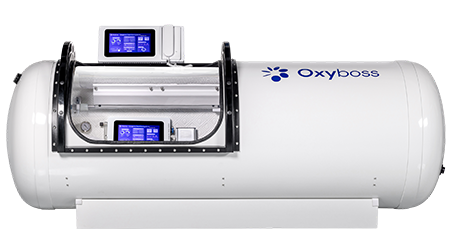
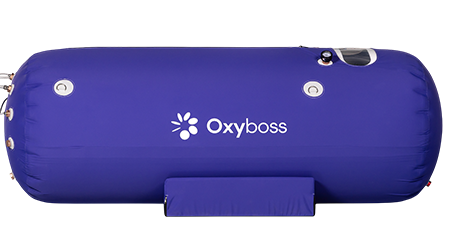
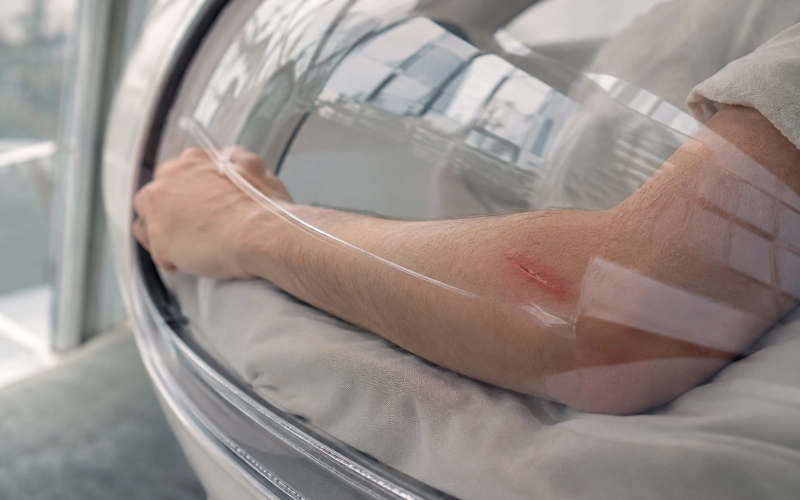
Skin is busy in ways we rarely notice. A shaving nick, a scraped knuckle, a spot rubbed raw by new shoes — most of the time the body closes those over without any input from us. So when people ask what a mild hyperbaric chamber has to do with skin, the honest starting point isn’t “it fixes things.” It’s a smaller, more interesting question: does spending time in a gently pressurized, oxygen-rich space give the body’s ordinary recovery work a slightly easier job?
This is a general wellness explainer. Nothing here is advice, a promise, or a claim about any condition. It’s just the plain mechanics of pressure, oxygen, and how skin looks after itself — written so you can tell the difference between what these chambers are and what they aren’t.
First, the distinction that matters most
There are two very different things sharing the same broad name, and confusing them is where most misunderstanding starts.
One is a clinical device found in hospitals, run by trained staff, operating at high pressure with concentrated oxygen. That world is medical, and it isn’t what this article — or a home wellness chamber — is about.
The other is a mild hyperbaric environment: a sealed, comfortable chamber that raises pressure only modestly above what you feel at sea level, paired with a higher-than-normal flow of oxygen. It sits firmly in the wellness and everyday-comfort space, not the clinical one.
Here’s the split, side by side, so there’s no blur:
| Clinical high-pressure chamber | Mild wellness chamber | |
|---|---|---|
| Typical pressure | Roughly 2.0–3.0 ATA | Roughly 1.3–1.5 ATA |
| Setting | Hospital or specialist facility | Home, spa, studio, personal use |
| Oxygen | High concentration, clinically supervised | Enriched flow, everyday use |
| Purpose | Medical, professionally directed | General wellness and comfort |
| Who runs it | Trained clinical staff | The individual user |
Everything below is about the right-hand column. When this article says “chamber,” it means the mild kind.
What “pressure plus oxygen” is really doing
At sea level you’re already under one atmosphere of pressure — you just don’t feel it because it’s all you’ve ever known. A mild chamber nudges that up a little, to around 1.3 to 1.5 times normal.
That small nudge matters more than it sounds. Under raised pressure, oxygen dissolves more readily into the liquid part of your blood, not only riding on red blood cells the way it usually does. It’s the same basic physics behind why a sealed fizzy drink holds its bubbles under pressure and releases them when you open it: raise the pressure on a gas sitting above a liquid, and more of that gas goes into solution.
So the pull-apart is worth saying clearly. Oxygen concentration is one lever. Pressure is a separate lever. The oxygen gives cells more of what they run on; the pressure changes how much of it can actually dissolve and travel. Mild chambers pull both gently, not dramatically.
Why skin recovery cares about oxygen at all
Everyday skin repair isn’t one moment — it’s a sequence. New surface cells form. The little scaffold underneath gets rebuilt. Fresh tissue needs a blood supply to reach it. Every one of those steps runs, in part, on oxygen.
Most of the time your circulation delivers plenty and you never think about it. But there are ordinary situations — being run-down, sitting too long, skin under constant friction, the slow pace of recovery as we age — where the busiest little repair sites are also the ones getting the least generous supply. That’s the everyday gap a mild oxygen-rich environment is aimed at: not rescuing anything, just supporting a normal process the body is already trying to run.
That framing is the honest one. The body knows how to look after skin. Oxygen is a raw material it uses to do that. A mild chamber is one way of making that raw material a little easier to come by, for a while.
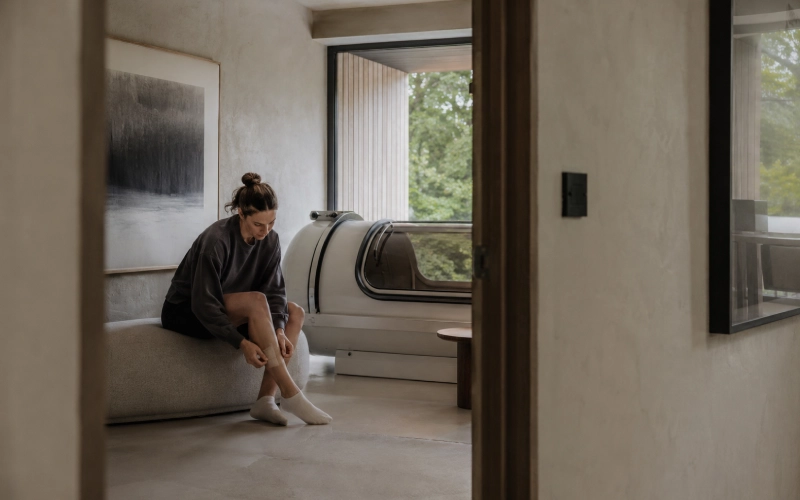
What a session actually feels like
Skip the sci-fi pod image. The reality is quieter than that.
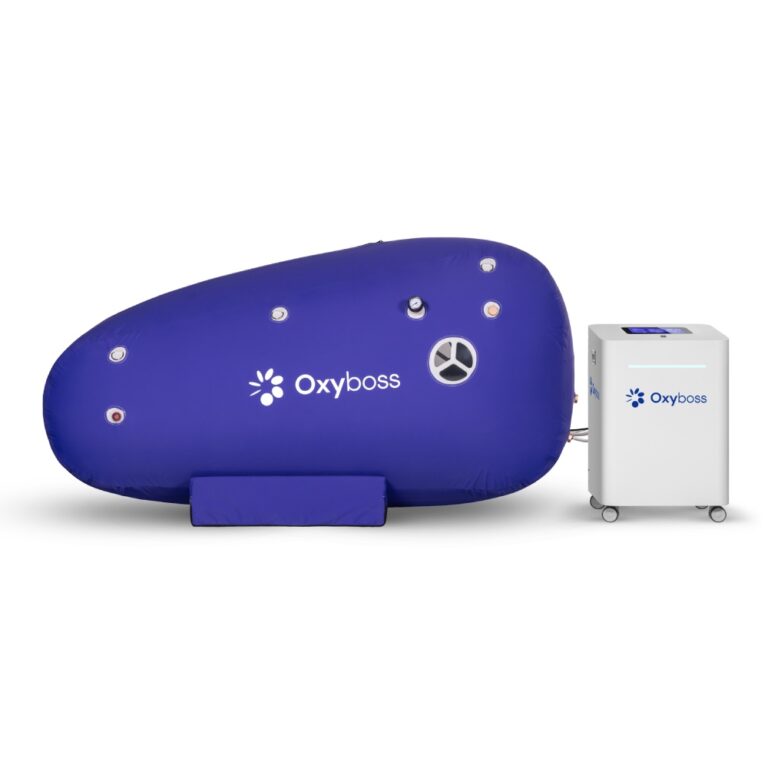
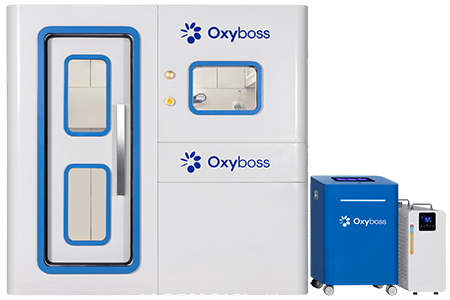
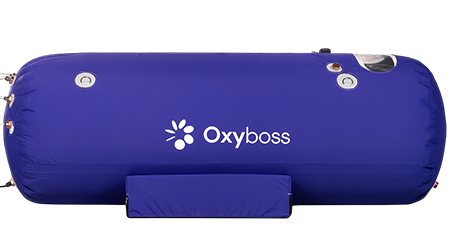
You settle into a sealed chamber — either a single-person clear enclosure or a small room-style unit — and it slowly rises to its gentle pressure while oxygen flows. Then you mostly just… sit there. People read, listen to something, or nap. Sessions usually run somewhere in the region of 60 to 90 minutes depending on the setup, though that varies.
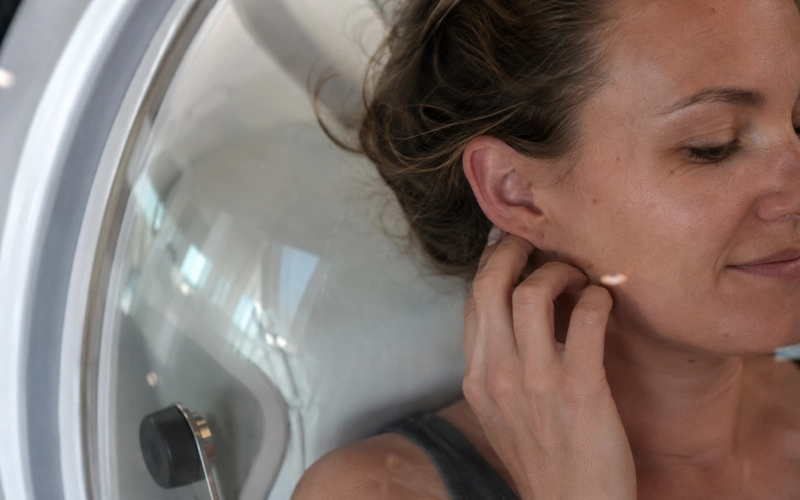
The one sensation nearly everyone mentions is the ears — a mild fullness, the same feeling as a plane descending or a lift dropping fast. A swallow or a yawn clears it. And a fair, practical heads-up: if snug spaces make you uneasy, a single-person enclosure for an hour-plus is worth thinking about before you commit. A room-style unit tends to feel roomier for people who’d rather not be boxed in.
None of it is dramatic. That’s rather the point — a mild environment is supposed to be mild.
Setting expectations honestly
I’d rather undersell this than oversell it.
A mild chamber is a wellness tool. It’s a comfortable, low-pressure, oxygen-rich pause in your day. It is not a substitute for anything medical, and it isn’t designed to address serious skin issues. Anything on the skin that’s slow to settle, looks concerning, or isn’t behaving the way an ordinary scrape should is a conversation for a qualified professional — not a chamber.
Kept in that lane, the appeal is simple and reasonable: a calm, controlled environment that supports your body’s own everyday recovery rhythm. Overstate it past that and you’ve left wellness and wandered somewhere the product was never meant to go.
Getting the most out of a mild chamber
A few plain, non-clinical habits people find useful:
- Consistency beats intensity. A gentle environment used regularly fits the wellness idea better than expecting a lot from a single long session.
- Hydrate normally. Ordinary good practice, nothing special to the chamber.
- Clear your ears early. Swallow or yawn as pressure rises rather than waiting for the fullness to build.
- Get comfortable first. Bring something to read or listen to. An hour is a long time to stare at a wall.
- Match the format to your temperament. Single-person units are compact and private; room-style units feel more open. Neither is “better” — it’s about what keeps you relaxed.
Frequently asked questions
Is a mild chamber the same as the ones in hospitals? No, and this is the key distinction. Clinical chambers run at high pressure under professional supervision for medical purposes. A mild wellness chamber operates at much lower pressure — roughly 1.3 to 1.5 ATA — for general everyday use. Same broad family, very different category.
Is the oxygen doing the work, or the pressure? Both, and separately. Enriched oxygen gives cells more of the raw material they use for ordinary repair. Raised pressure helps more of that oxygen dissolve into the blood so it travels more freely. Two levers, gently pulled.
How long is a typical session? Commonly somewhere around 60 to 90 minutes, though it depends on the specific setup. Most of it is simply relaxing while the chamber holds its gentle pressure.
Will it be uncomfortable? The main sensation reported is mild ear fullness, like a plane descending, which clears with a swallow or yawn. The other thing to weigh is enclosed space — if that bothers you, a roomier room-style unit is often the better fit.
Does one session do everything? That’s the wrong way to think about a wellness tool. The mild-chamber idea leans on gentle, regular use fitting into a routine, not on a single dramatic result.
Can it handle a serious skin problem? No — and please don’t treat it as if it could. A mild chamber sits in the wellness space. Anything on your skin that’s slow to settle, looks off, or worries you belongs with a qualified professional, full stop.
A closing thought that isn’t a grand finale
The genuinely interesting thing about a mild chamber isn’t the enclosure or the pressure gauge. It’s how unexotic the underlying idea is. Your body already runs its own skin-recovery process, quietly, all the time. Oxygen is one of the raw materials it uses. A gentle, oxygen-rich, slightly pressurized hour is simply a way of making that material a little more available while you rest — no more, and importantly, no less. Whether that fits your routine is a personal call, and it’s worth reading a bit more before you make it.
References
- Henry’s Law — dissolved gas and pressure relationship, LibreTexts Chemistry. https://chem.libretexts.org/Bookshelves/Physical_and_Theoretical_Chemistry_Textbook_Maps/Supplemental_Modules_(Physical_and_Theoretical_Chemistry)/Equilibria/Physical_Equilibria/Henry’s_Law
- Atmospheric pressure and the atmosphere (ATA) as a unit — National Oceanic and Atmospheric Administration. https://www.noaa.gov/jetstream/atmosphere/air-pressure
- How the body uses oxygen — general overview, MedlinePlus. https://medlineplus.gov/ency/anatomyvideos/000013.htm
- Equalizing ear pressure with changes in ambient pressure — general reference, MedlinePlus. https://medlineplus.gov/ency/article/007470.htm