The One-Line Answer
No. A home hyperbaric chamber has not been shown to treat, cure, shrink, or prevent cancer. The research most often quoted online was conducted with clinical hard chambers at 2.0–2.5 ATA under physician supervision — a different category of device from consumer soft-shell chambers operating at 1.3–1.5 ATA [1][2].
Evidence at a Glance
| Evidence Level | Device Used | Pressure | Strength of Finding | Applies to Home Chambers? |
| Human randomized trials | Clinical hard chamber | 2.0–2.5 ATA | Limited; benefit shown only for specific indications (e.g., head and neck with radiotherapy) [3] | No |
| Systematic reviews (2024–2026) | Clinical hard chamber | 2.0–2.5 ATA | “Heterogeneous and often limited”; role called “largely speculative” [4] | No |
| Animal studies | Laboratory hard chamber | 2.0–3.0 ATA | Consistent signal in mice; not extrapolable to humans [5] | No |
| Regulatory position | All device types | All pressures | FDA has issued explicit consumer warnings against cancer claims [1][2] | Yes |
| Direct data on home soft-shell chambers for cancer | Home soft-shell | 1.3–1.5 ATA | None exists | — |
The bottom row is the one marketing tends to skip. There is no published evidence base at all for home-use chambers and cancer. Everything being cited comes from a different machine doing a different job in a different setting.
Clinical Chambers vs. Home Chambers: The Category Distinction
This is the single most important thing to understand before reading any testimonial online.
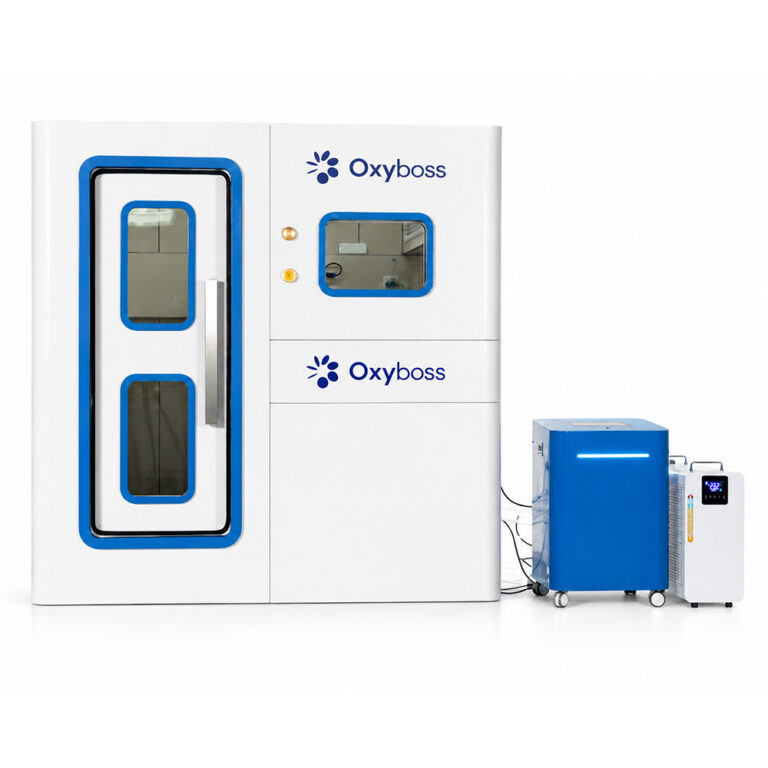
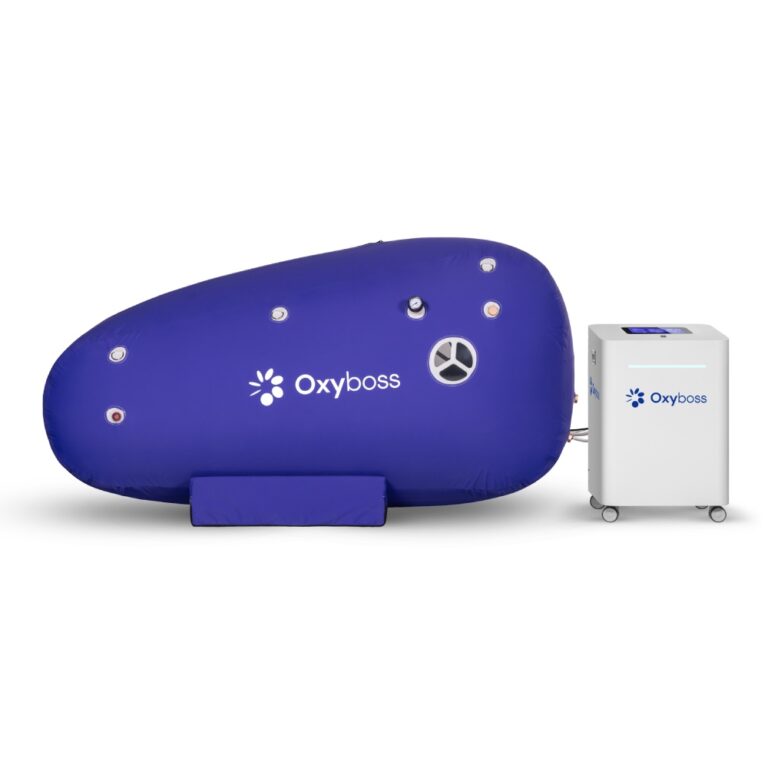
| Feature | Clinical Hard Chamber | Home Soft-Shell Chamber |
| Typical pressure | 2.0–3.0 ATA | 1.3–1.5 ATA |
| Oxygen source | 100% medical oxygen | Ambient air, often with a concentrator (~90–95%) |
| Regulatory pathway | FDA-cleared for 13 specific indications | Sold as general wellness product |
| Operator | Trained technician, physician oversight | User, at home |
| Research context for oncology | Where studies were conducted | Not studied for cancer |
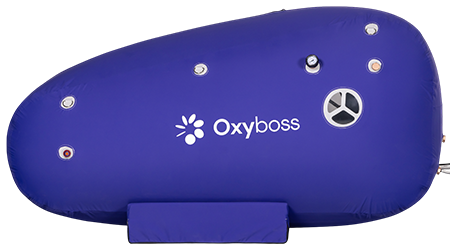
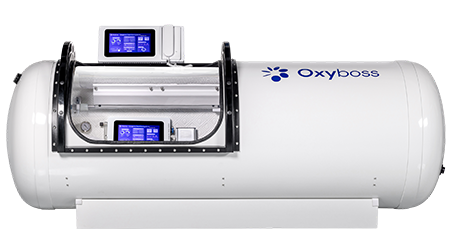
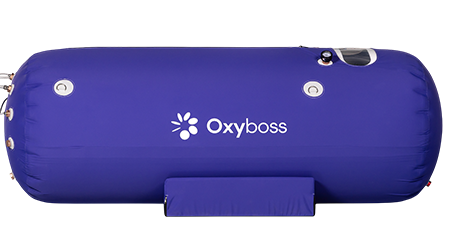
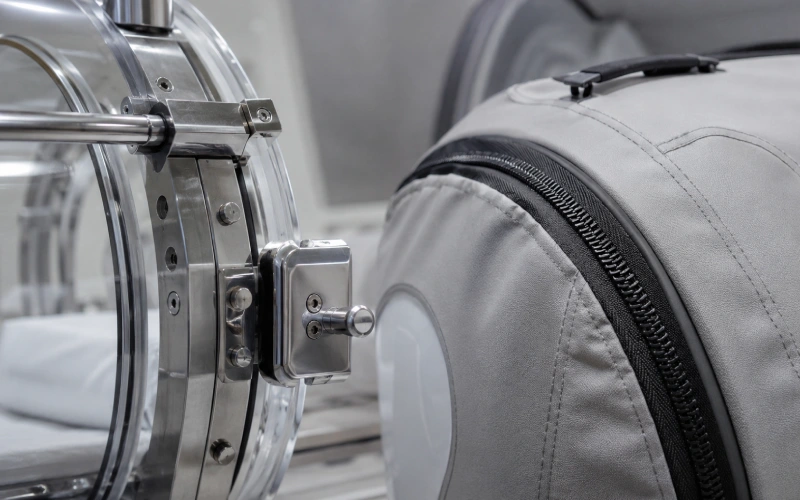
This is where much of the confusion starts. Two products get grouped under the same broad phrase — “hyperbaric chamber” — even though the pressure, oxygen delivery, regulatory category, and research setting are different.
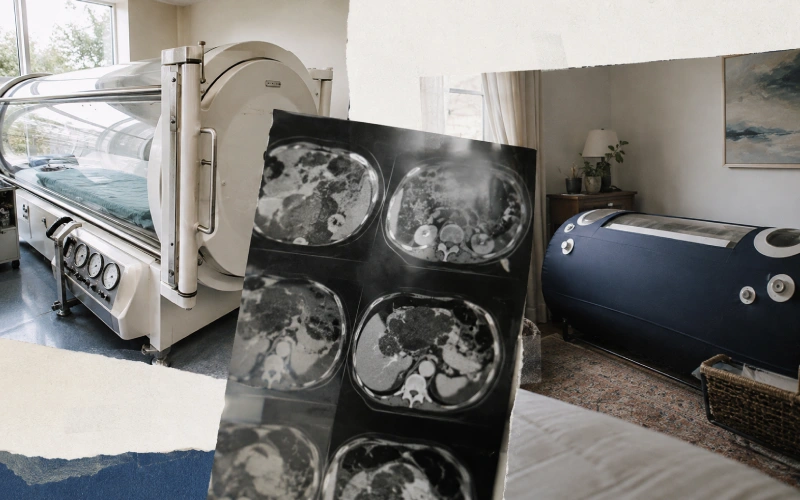
When a seller quotes oxygen-and-tumor research, they are describing what happens inside the left column and selling you something from the right column. The pressure gap alone is enough that findings from one setting cannot be carried over to the other.
What the Human Research Actually Shows
Three findings are worth stating plainly.
- The signal is narrow. A Cochrane review of 19 trials found a mortality benefit specifically for head and neck cancer when clinical hyperbaric oxygen was combined with radiotherapy — but also a higher rate of severe local radiation reactions, and no clear benefit for cervical or bladder cancer [3]. That is one indication out of many studied.
- The evidence is cautious. A 2026 systematic review in Supportive Care in Cancer analyzed 42 studies covering 2,785 participants and concluded that evidence is “heterogeneous and often limited,” with a role in sensitizing tumors that remains “largely speculative” [4].
- None of it involved home chambers. Every study in these reviews used clinical equipment at clinical pressures in clinical settings.
Animal research has shown more consistent signals, including a 2024 meta-analysis reporting longer survival in mice, particularly when chamber sessions were combined with other modalities [5]. Mice are not people, and 2–3 ATA is not 1.3 ATA.
The Regulatory Position
The U.S. Food and Drug Administration has stated since 2013 that hyperbaric oxygen has not been shown to be safe or effective for cancer, and that claims otherwise may cause consumers to delay established care [1]. That position has been reinforced through 2025 with additional safety communications following chamber-related fire incidents [2].
Thirteen conditions currently have FDA clearance for hyperbaric oxygen. Cancer is not among them.
The Delay Problem
This is the quiet risk, and it is worth naming directly. The concern here is not that a home chamber has been shown to worsen cancer by itself. The concern is substitution: people using an unproven option in place of treatment recommended by their oncology team.
A 2018 analysis in the Journal of the National Cancer Institute found that people who chose alternative therapies in place of conventional cancer care had significantly higher mortality across breast, lung, and colorectal cancers [6].
A chamber used alongside care that a physician has recommended, with that physician’s knowledge, is one situation. A chamber used instead of that care is a different situation entirely, even though the hardware is identical. The harm in the second case is usually not the chamber — it is the months that were spent elsewhere.
Safety Considerations Separate from Cancer
Independent of the cancer question, home chambers have real considerations:
- Fire risk in oxygen-enriched environments. The FDA has documented injuries and fatalities tied to chamber fires, including a 2025 incident [2]. Grounding procedures, cotton-only clothing, and strict exclusion of electronics with lithium batteries are not optional.
- Ear and sinus pressure. The most common discomfort; usually manageable with slow pressurization.
- Contraindications. Certain lung conditions, recent ear surgery, and untreated pneumothorax preclude use. A physician conversation before first use is the correct order of operations.

FAQ
Can a home hyperbaric chamber shrink a tumor?
No. There is no published evidence that home soft-shell chambers affect tumor size. The studies sometimes cited in marketing used clinical hard chambers at roughly double the pressure, under medical supervision [3][4].
Studies show hyperbaric oxygen killed cancer cells. Doesn’t that prove it works?
No. Cell-culture and animal studies show various effects [5][7]. They do not translate directly to humans, and they especially do not translate to the pressure range of a home chamber. Cells in a dish are not a human body, and a mouse at 2.5 ATA is not a person at 1.3 ATA.
Is it dangerous to use a home chamber with a cancer diagnosis?
The more important question is whether it is being used instead of recommended care. Any decision about use during cancer care belongs in a conversation with the treating oncologist — not with a seller, and not with a blog.
What about combining hyperbaric sessions with chemotherapy or radiation?
Some clinical research has examined combined protocols in hospital settings [3][4]. None involved home equipment. No one should start or stop anything based on this page.
Does a home chamber work for anything at all?
That is outside the scope of this article, which is specifically about the cancer question. The answer for cancer is clear: no evidence supports it, and regulatory authorities have warned against the claim [1][2].
Why do sellers still imply it helps with cancer?
Because the research on clinical hyperbaric oxygen is genuinely interesting, and the line between “researchers are studying this” and “this is a therapy you can buy” is easy to blur in a product description. The FDA warnings exist precisely because that blur has caused harm [1].
What This Means for a Consumer
Three points to carry away:
- The research being quoted online is real, but it is about a different machine at a different pressure in a different setting. It does not transfer to home equipment.
- Regulatory authorities have been explicit: hyperbaric oxygen is not an established option for cancer, and claims otherwise have caused documented harm [1][2].
- Any use of any chamber during cancer care is a conversation for an oncologist, not a purchase decision.
A home chamber is a wellness-category product, not oncology equipment. The cancer question has a clear answer, and that answer is no.
References
- U.S. Food and Drug Administration. Hyperbaric Oxygen Therapy: Don’t Be Misled. FDA Consumer Update. https://www.drugs.com/fda-consumer/hyperbaric-oxygen-therapy-don-t-be-misled-271.html
- U.S. Food and Drug Administration. Follow Instructions for Safe Use of Hyperbaric Oxygen Therapy Devices — Letter to Health Care Providers. August 25, 2025. https://www.fda.gov/medical-devices/letters-health-care-providers/follow-instructions-safe-use-hyperbaric-oxygen-therapy-devices-letter-health-care-providers
- Bennett MH, Feldmeier J, Smee R, Milross C. Hyperbaric oxygenation for tumour sensitisation to radiotherapy. Cochrane Database Syst Rev. 2018;4:CD005007. https://www.ncbi.nlm.nih.gov/pmc/articles/PMC6494427/
- Between hope and uncertainty: the elusive evidence on hyperbaric oxygen therapy and radiotherapy. Supportive Care in Cancer. 2026;34:157. https://link.springer.com/article/10.1007/s00520-026-10323-8
- Klement RJ, Eckert JM, Sweeney RA. Anti-cancer effects of hyperbaric oxygen therapy in mice: a meta-analysis. Oncologie. 2024;26(6):941–955. https://www.sciencedirect.com/org/science/article/pii/S1765283924000194
- Johnson SB, Park HS, Gross CP, Yu JB. Use of Alternative Medicine for Cancer and Its Impact on Survival. J Natl Cancer Inst. 2018;110(1):djx145. https://academic.oup.com/jnci/article/110/1/121/4064136
- Moen I, Stuhr LEB. Hyperbaric oxygen therapy and cancer—a review. Target Oncol. 2012;7(4):233–242. https://www.ncbi.nlm.nih.gov/pmc/articles/PMC3510426/