A practical, no-fluff guide for wellness center owners, spa operators, recovery studios, and anyone building a service line around pressurized oxygen environments.
Disclaimer: The statements in this article have not been evaluated by the FDA. The products discussed are not intended to diagnose, treat, cure, or prevent any disease. This content is for informational and business-planning purposes only.
A commercial hyperbaric chamber is a specialized pressure vessel designed for human occupancy, in which ambient pressure is increased above normal atmospheric levels (1.0 ATA) to allow the body to absorb a greater concentration of oxygen. In the wellness and recovery industry, these chambers are used in non-medical settings — such as spas, biohacking lounges, sports recovery studios, and longevity-focused membership clubs — as a service offering for clients seeking general well-being support.
Buying one for your business is not like buying a treadmill. Nobody accidentally buys a treadmill they can’t use. Chambers are different. Get the wrong one and you’ve got an expensive piece of hardware sitting in a room that’s too small, pulling too much power, underwhelming your clients, and bleeding money every month.
This guide exists because that happens more often than it should. And the people it happens to usually did their homework — they just asked the wrong questions, or they got dazzled by specifications that didn’t match the actual business they were building.
So let’s skip the theory and talk about what actually matters when you’re choosing a chamber for commercial use.
Why Your Business Model Should Come Before the Chamber
Here’s where most buyers go wrong: they start shopping for hardware before they’ve figured out what kind of business they’re running. A recovery-focused gym, a luxury wellness center, a biohacking lounge, and a longevity-focused membership club are four completely different operations. They attract different people. They charge different rates. They have different space constraints and throughput needs.
A chamber that’s perfect for a high-volume sports recovery studio — say, something compact that turns over quickly — might be totally wrong for a premium lounge experience where people expect space, quiet, and time.
Before looking at a single spec sheet, write down honest answers to these questions:
- Who is walking through your door? Athletes? Executives? General wellness seekers?
- How are you charging? Per session? Memberships? Bundled packages?
- How many sessions per day are realistic? Not aspirational. Realistic.
- What does your physical space actually look like? Measure it. Ceiling height matters more than people realize.
- What is your staffing situation? Some chambers require an operator present. Others don’t.
The answers shape everything downstream. If you skip this step, you’re guessing.

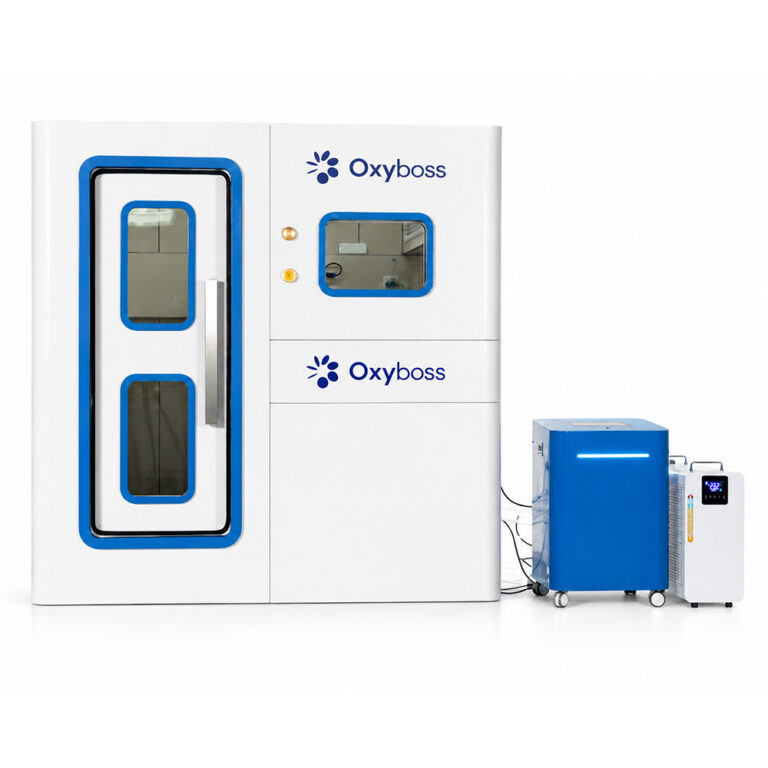
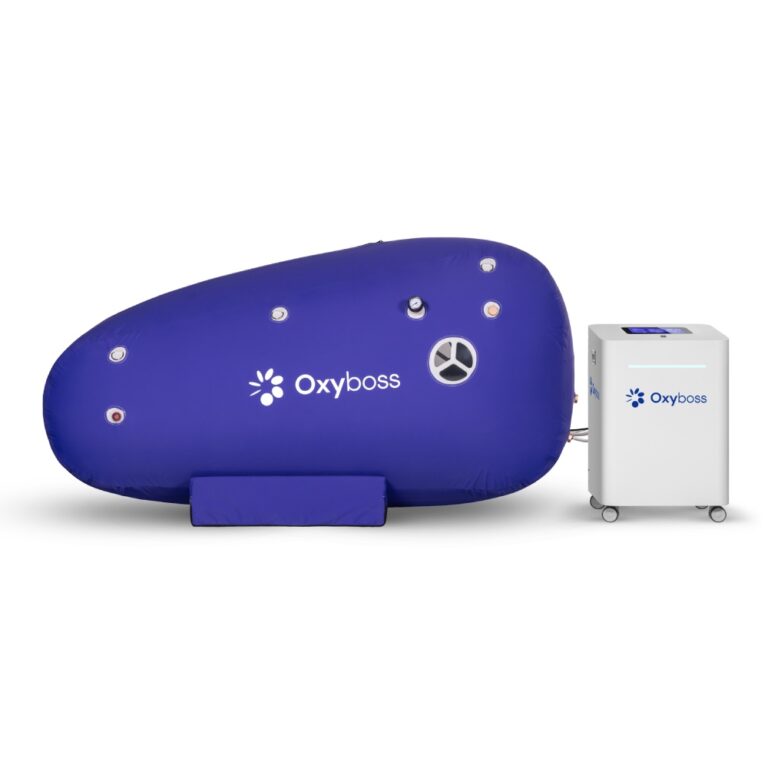
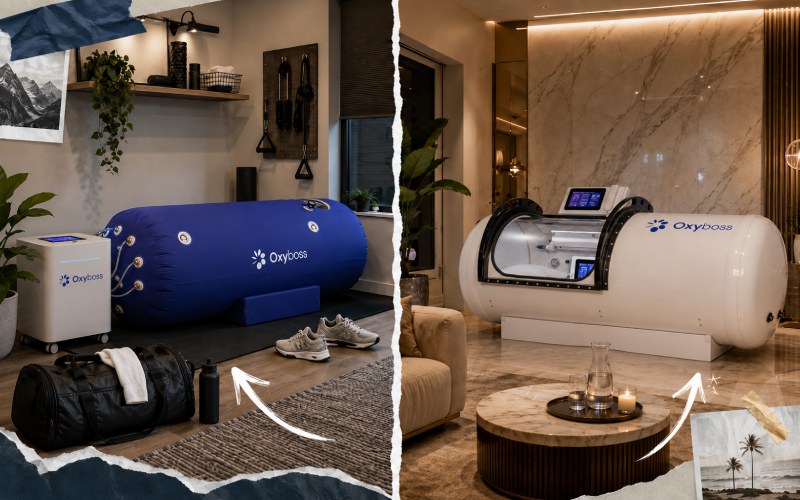
Hard Shell vs. Soft Shell Hyperbaric Chambers: Which Is Better for Business?
Every commercial buyer hits this decision first, and it’s worth spending real time on it. These are not minor variations of the same product. They are fundamentally different machines with different capabilities, different price points, and different implications for how your business looks and operates.
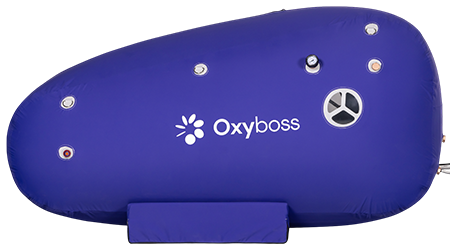
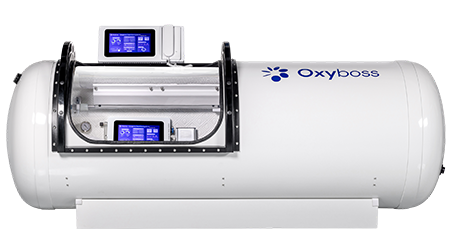
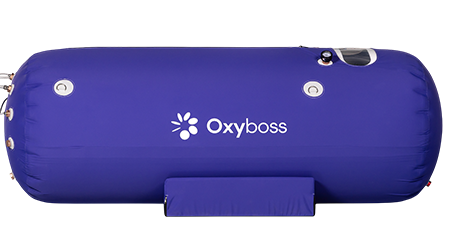
| Feature | Soft-Shell Chamber | Hard-Shell Chamber |
| Pressure Range | Typically 1.3–1.5 ATA | Up to 2.0–3.0 ATA |
| Construction Material | TPU, coated nylon, or PET polyester | Steel, aluminum, or acrylic |
| Typical Purchase Cost | $5,000–$25,000 | $20,000–$150,000+ |
| Portability | Lightweight, can be relocated easily | Heavy, often requires professional installation |
| Inflation/Setup Time | 5–15 minutes | Minimal (rigid structure stays assembled) |
| Perceived Premium by Clients | Moderate | High |
| Maintenance Complexity | Lower — zipper care, filter changes | Higher — seals, valves, mechanical systems |
| Space Requirement | Smaller footprint, flexible placement | Larger footprint, dedicated room usually needed |
| Session Pricing Potential (U.S. avg.) | $100–$180 per session | $250–$450 per session |
| Best Suited For | Entry-level studios, mobile setups, add-on service | Premium wellness centers, dedicated recovery facilities |
A few things worth saying plainly:
Soft-shell chambers are not toys. They operate at lower pressures, yes. But for many entry-level wellness business models, 1.3–1.5 ATA with supplemental oxygen delivered via mask is often the format operators look at first. The margins can still be strong if your volume is high enough, and the lower upfront cost means less financial risk during your first year.
Hard-shell chambers charge a premium because they look and feel like a premium. There’s a psychological component that business owners underestimate. When a client steps into a steel-and-acrylic capsule with digital controls and ambient lighting, they feel like they’re getting something serious. That perception can influence what you can charge per session and how sticky your membership model becomes.
⚠️ Regulatory Note: In the United States, hyperbaric chambers are FDA-regulated medical devices, and commercial operation can also implicate fire-code, facility, supervision, and manufacturer-instructions-for-use requirements. Those obligations do not map neatly to a single pressure cutoff. Before purchasing any chamber for a non-medical business — especially a hard-shell or higher-pressure system — consult with a regulatory compliance attorney, your insurer, and your local authority having jurisdiction. This is not a gray area you want to navigate after the equipment arrives. [2][4][5]
Neither option is universally better. The right pick depends on the business you wrote down in the previous section.
Hyperbaric Chamber Pressure Levels Explained: 1.3 ATA vs. 1.5 ATA vs. 2.0 ATA
Pressure inside a hyperbaric chamber is measured in ATA — atmospheres absolute. Normal sea-level pressure is 1.0 ATA. When you sit inside a pressurized chamber, the air pressure increases, and the body absorbs more oxygen as a result. The underlying physics follow Henry’s Law: the amount of gas dissolved in a liquid is proportional to the partial pressure of that gas above that liquid [1].
Here’s a quick breakdown of common pressure levels and where they typically sit in the commercial space:
- 1.3 ATA — Entry-level. Common in soft-shell chambers. Often paired with an oxygen concentrator delivering ~90–95% oxygen through a mask.
- 1.5 ATA — Mid-range. Still achievable in some soft-shell designs, though build quality matters a lot at this level. More noticeable sensation during pressurization. Frequently discussed in non-clinical settings, but operators should not assume that sub-1.5 ATA use is automatically exempt from local fire, building, insurance, or supervision requirements. [2][4][5]
- 2.0 ATA — The threshold many hard-shell commercial units target. Requires meaningfully heavier construction, redundant safety systems, and more precise pressure regulation. Higher-pressure, oxygen-enriched operation generally brings more demanding engineering, fire-safety, and operational controls. [3][4][5]
Do not chase the highest ATA number you can find. Higher pressure requires exponentially more engineering, more safety infrastructure, more maintenance, and more regulatory scrutiny. For many non-medical wellness applications, commercial operators find their sweet spot between 1.3 and 1.5 ATA. Going higher doesn’t automatically translate into higher client satisfaction or better business outcomes — it often translates into higher operating costs, more complex compliance requirements, and a narrower operating margin.
Monoplace vs. Multiplace Hyperbaric Chambers: Size, Capacity, and Throughput
Chambers come in two basic occupancy configurations:
Monoplace — one person at a time. Compact. Private. Easier to manage and clean between sessions. This is the workhorse for most wellness businesses because it simplifies scheduling and gives clients a sense of personal space.
Multiplace — accommodates two or more people simultaneously. Bigger footprint, bigger price, but potentially better economics if your throughput demands it. A multiplace unit running three sessions a day with two clients each generates more revenue per square foot than a monoplace running six solo sessions — assuming you can actually fill those slots.
Think about interior dimensions too. A chamber might be marketed as “full-size,” but if your client can’t sit up comfortably or has to scrunch their shoulders, the experience suffers. Measure shoulder width, height in a seated position, and total length while lying flat. Add a few inches to each dimension. Then compare against interior spec sheets — not marketing photos, which are always shot with the most compact-looking person available.
Commercial Hyperbaric Chamber Safety Standards and Certifications
This is the section people want to skim past. Don’t.
Pressurized environments carry inherent risks. Not dramatic, movie-style risks — but real engineering risks that require real standards. The two most relevant frameworks for commercial hyperbaric chambers are:
- ASME PVHO-1 — The Safety Standard for Pressure Vessels for Human Occupancy, published by the American Society of Mechanical Engineers. It covers design, fabrication, inspection, testing, and marking of any vessel that holds a person under pressure exceeding 2 psi differential [3]. If a chamber you’re considering doesn’t reference PVHO-1 where applicable, that’s a red flag worth investigating.
- NFPA 99, Chapter 14 — The National Fire Protection Association’s Health Care Facilities Code, which addresses fire safety in hyperbaric facilities [4]. Depending on the chamber type, oxygen configuration, and local enforcement, operators outside hospital settings can still find themselves answering to requirements shaped by this framework. Oxygen-enriched atmospheres behave differently in a fire — materials that wouldn’t normally ignite can become flammable. This is not theoretical. Over the past four decades, there has been approximately one hyperbaric chamber fire every two years globally, with fatalities in multiple incidents [6][7].
At minimum, any chamber you purchase should have:
- Pressure relief valves that activate automatically if internal pressure exceeds design limits
- Emergency depressurization controls accessible from both inside and outside
- Fire-resistant interior materials — no chamber should contain items or surfaces that could ignite in an oxygen-enriched environment
- An intercom or communication system — operators and occupants need a way to communicate during pressurized sessions
Ask the supplier directly: What standards does this chamber conform to? If the answer is vague, or they redirect to marketing language about “premium quality” without naming a specific code, walk away. This is one area where ambiguity is unacceptable.
The True Cost of Owning a Commercial Hyperbaric Chamber
A chamber’s purchase price is maybe 60% of what you’ll actually spend in the first three years. Here’s where the rest goes:
Installation and Room Preparation
Hard-shell chambers often need reinforced flooring, dedicated electrical circuits, proper ventilation, and sometimes structural modifications to get the unit into the room. Soft-shell units are simpler but still need a clean, climate-controlled space with adequate power for the compressor and oxygen concentrator.
Oxygen Supply
Most commercial chambers use oxygen concentrators that pull ambient air and filter it to deliver ~90–95% oxygen. These machines consume electricity and have filters that need regular replacement. Some operators use bottled oxygen instead, which means recurring supply deliveries and storage considerations.
Maintenance
Soft-shell chambers need regular zipper lubrication (the zipper is the single most common failure point), material inspections, and compressor servicing. Hard-shell units require periodic seal inspections, valve testing, and verification of pressure gauge accuracy. Budget $1,500–$4,000 annually for maintenance on a soft-shell setup; more for hard-shell systems with their greater mechanical complexity.
Warranty Coverage
Standard warranties in the industry tend to be 2 years on the chamber body and 1 year on compressors, concentrators, and accessories. Extended warranties of 3–5 years exist but cost extra — sometimes $2,000–$4,000 or more. Evaluate what the warranty actually covers. A warranty that excludes “normal wear and tear” on zippers and seals is covering the parts least likely to fail while leaving the parts most likely to fail exposed.
Insurance
Your existing business insurance may not cover a pressurized oxygen environment without a rider or policy update. Talk to your insurance provider before the chamber arrives. Not after.
Training
Your staff needs to understand pressurization protocols, safety procedures, emergency depressurization, and basic maintenance checks. Some suppliers include training. Others charge for it separately. Either way, untrained operators are a liability — both legally and practically. Manufacturer instructions, training, maintenance, and safety checks are not optional details in this category of equipment. [5]
Hyperbaric Chamber Supplier Evaluation Checklist
Not all suppliers are created equal, and the gap between good ones and bad ones is wide. Here’s a practical checklist:
- Do they offer on-site installation, or do they ship you a chamber with a YouTube link? On-site installation with a walkthrough matters, especially for hard-shell units.
- What does their after-sale support look like? Can you call someone who knows the product? Is there a technician network, or are you on your own once the invoice is paid?
- Will they let you see a unit in person before committing? Any supplier confident in their product should welcome a facility visit or demo.
- What certifications do they hold? ISO 9001 quality management is a good baseline. Ask for documentation, not just claims.
- What’s the lead time on replacement parts? A chamber that’s down for three weeks waiting on a compressor part is three weeks of lost revenue.
- Do they have a track record with commercial operators? Ask for references. Not testimonials on a website — actual contact information for existing business clients who run the same chamber you’re considering.
Lease vs. Buy: How Financing Changes Your Hyperbaric Chamber ROI
This is partly a financing decision, but financing also affects which chamber tier is realistically within reach.
Purchasing a chamber outright gives you an asset. Leasing preserves cash and offers flexibility. Neither is inherently smarter — it depends on your stage and confidence level.
Leasing makes sense when:
- You’re testing a new service line and aren’t sure about demand
- You want to preserve startup capital for marketing, staffing, and build-out
- You’d rather cap your downside risk during the first 12–18 months
Buying makes sense when:
- You have strong confidence in sustained utilization (70%+ of available session slots filled)
- Your cash position can absorb the upfront cost without starving other parts of the business
- You want the chamber as a depreciable asset on your balance sheet — consult a tax professional on Section 179 or standard depreciation schedules applicable to your situation
Some suppliers offer lease-to-own arrangements, which split the difference. Read the fine print. Understand total cost over the lease term compared to outright purchase price. Sometimes the premium for financing flexibility is worth it. Sometimes it’s not.
Common Mistakes When Buying a Commercial Hyperbaric Chamber
Buying based on specifications alone. A chamber with impressive specs that nobody in your market wants to pay for is a bad investment. Talk to your potential clients before you buy. Survey them. Run a pre-sale offer. Validate demand with actual behavior, not assumptions.
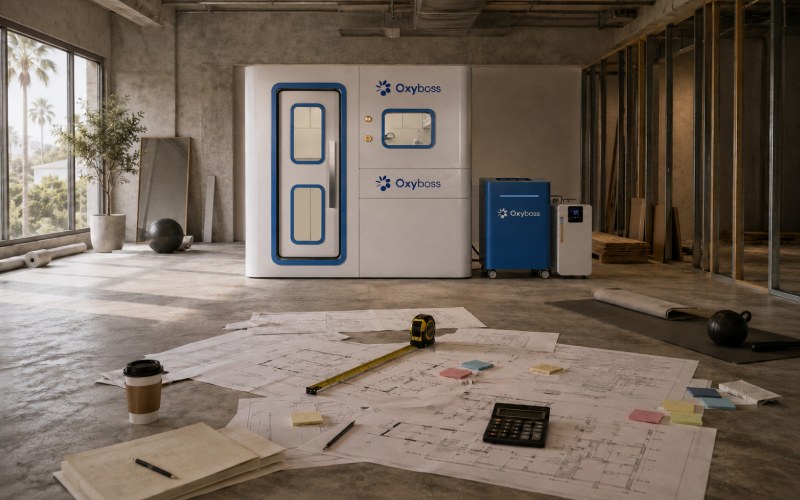
Underestimating space and infrastructure. Measure twice. Then measure again. Account for the chamber itself, the compressor, the concentrator, a comfortable waiting area for the next client, and room for staff to move around the unit during operation.
Skipping the insurance conversation. Pressurized oxygen environments have specific risk profiles. Your general liability policy probably doesn’t address them adequately without modification.
Ignoring noise. Compressors are not silent. They produce a steady hum that ranges from tolerable to genuinely annoying, depending on the model and how well the room is insulated. If your business sells relaxation and recovery, a loud compressor undermines the experience. Ask for decibel ratings. Better yet, listen to the compressor running before you commit.
Treating maintenance as optional. Chambers require routine care. Zippers degrade. Seals age. Filters clog. Pressure gauges drift. A maintenance schedule isn’t a nice-to-have — it’s the thing that keeps your equipment safe and your sessions consistent.
Overlooking regulatory obligations. This bears repeating: you cannot reduce compliance to a single ATA threshold. Device classification, intended use, oxygen configuration, fire safety, local inspection, insurance, and operator training can all matter. Get a compliance opinion in writing before you purchase. [2][4][5]
FAQ: Hyperbaric Chamber Business Questions Answered
Q: Do I need any special licenses or permits to operate a hyperbaric chamber in a wellness business?
It depends on your jurisdiction. Requirements vary significantly by state, county, and municipality. Some areas classify chambers as consumer wellness equipment with minimal oversight. Others apply fire safety codes (like NFPA 99 Chapter 14), building inspections, insurer requirements, or professional-supervision expectations. In the United States, hyperbaric chambers themselves are FDA-regulated devices, so do not assume a chamber used in a wellness setting falls outside scrutiny. Contact your local fire marshal, building department, insurer, and a regulatory attorney before committing to a purchase. [2][4][5]
Q: How long does a typical hyperbaric chamber session last?
Most commercial sessions run between 60 and 90 minutes at pressure, plus additional time for pressurization (5–15 minutes) and depressurization (5–10 minutes). Total client time from entry to exit is usually 75 to 120 minutes.
Q: How often does a commercial hyperbaric chamber need maintenance?
For soft-shell units, plan for weekly zipper lubrication and inspection, monthly compressor filter checks, and periodic concentrator service consistent with the manufacturer’s schedule. Hard-shell units need periodic seal inspections, pressure gauge calibration, and valve testing. Budget time and money for this — it’s not optional. [5]
Q: Can I operate a hyperbaric chamber without staff present?
Some chambers are designed for self-service operation with pre-programmed settings and automatic depressurization. However, having a trained operator present is strongly recommended for commercial environments, both for client safety and for liability protection.
Q: What is the lifespan of a commercial hyperbaric chamber?
It varies. Well-maintained soft-shell chambers from reputable manufacturers can last many years, though zippers and compressors will need replacement well before the shell itself. Hard-shell units with proper maintenance can operate for decades. The capsule itself is rarely the failure point — it’s the peripheral components (seals, valves, compressors, electronics) that wear first.
Q: Is there a meaningful difference between 1.3 ATA and 2.0 ATA for wellness applications?
Higher pressure means more dissolved oxygen in blood plasma — that’s physics [1]. But whether that difference translates into a noticeably different experience for a wellness client depends on the individual and how many other variables (session frequency, supplemental oxygen delivery, session duration) are in play. Many successful wellness businesses operate at 1.3–1.5 ATA and their clients report strong satisfaction. Going higher also introduces more engineering, safety, and compliance demands, which may or may not be justified by proportional business returns [3][4][5].
Q: How much electricity does a hyperbaric chamber use?
A soft-shell setup (chamber compressor + oxygen concentrator) typically draws 500–1,500 watts during operation. Hard-shell units with integrated cooling and more powerful compressors can draw 2,000–5,000+ watts. Check your facility’s electrical capacity before installation.
Q: What happens during a power outage in a hyperbaric chamber?
Many quality chambers have passive depressurization features — the chamber slowly loses pressure on its own if the compressor stops. Some higher-end hard-shell models include battery-backed emergency systems for controlled depressurization. Regardless, you should have a written protocol for power-loss scenarios, and your staff should practice it.
These statements have not been evaluated by the Food and Drug Administration. The products discussed in this article are not intended to diagnose, treat, cure, or prevent any disease. Regulatory requirements for hyperbaric chambers vary by jurisdiction. Consult with a qualified legal and regulatory professional before purchasing or operating hyperbaric equipment for commercial use.
References
- Britannica. (2024). Henry’s law — Chemistry & Gas Solubility. Encyclopedia Britannica. https://www.britannica.com/science/Henrys-law
- U.S. Food and Drug Administration. CBF — Chamber, Hyperbaric — Product Classification. https://www.accessdata.fda.gov/scripts/cdrh/cfdocs/cfpcd/classification.cfm?id=95
- American Society of Mechanical Engineers. (2023). PVHO-1 — Safety Standard for Pressure Vessels for Human Occupancy. https://www.asme.org/codes-standards/find-codes-standards/safety-standard-for-pressure-vessels-for-human-occupancy
- National Fire Protection Association. (2024). NFPA 99 — Health Care Facilities Code. Chapter 14: Hyperbaric Facilities. https://link.nfpa.org/all-publications/99/2024
- U.S. Food and Drug Administration. (2025, August 25). Follow Instructions for Safe Use of Hyperbaric Oxygen Therapy Devices — Letter to Health Care Providers. https://www.fda.gov/medical-devices/letters-health-care-providers/follow-instructions-safe-use-hyperbaric-oxygen-therapy-devices-letter-health-care-providers
- Undersea and Hyperbaric Medical Society. Safe Design and Operation of Hyperbaric Chambers. https://www.uhms.org/images/Safety-Articles/safe_design_and_operation_of.pdf
- Sheffield, P.J., & Desautels, D.A. (1997). Hyperbaric and hypobaric chamber fires: a 73-year analysis. Undersea & Hyperbaric Medicine, 24(3), 153–164. https://pubmed.ncbi.nlm.nih.gov/9308138/