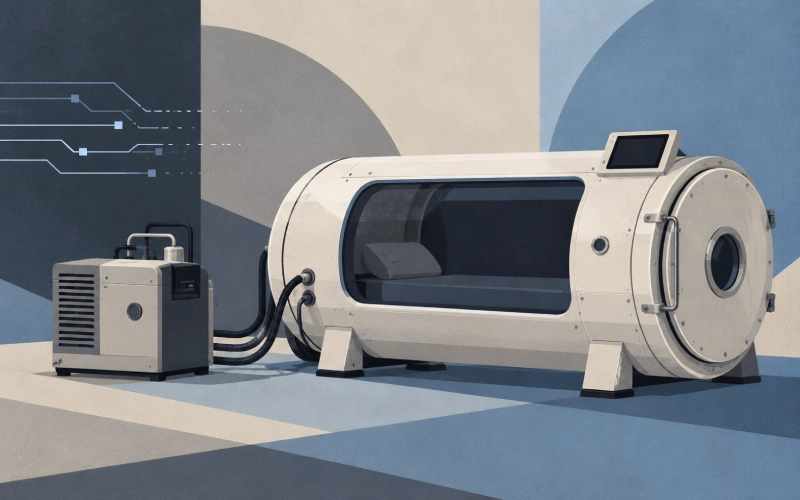
The lights go out. The hum stops. For a second, nothing else seems to move.
If you have ever sat in a hyperbaric chamber — or thought about it — that image probably came up the moment you read the title. It’s the one question nobody quite knows what to do with. So let me walk you through it, slowly, in plain English.
A few things up top:
- This is a plain-language walk-through of what physically happens when power is lost to a hyperbaric chamber during a session. It is not medical advice, and it is not a substitute for the operator’s manual of whatever chamber you own or use.
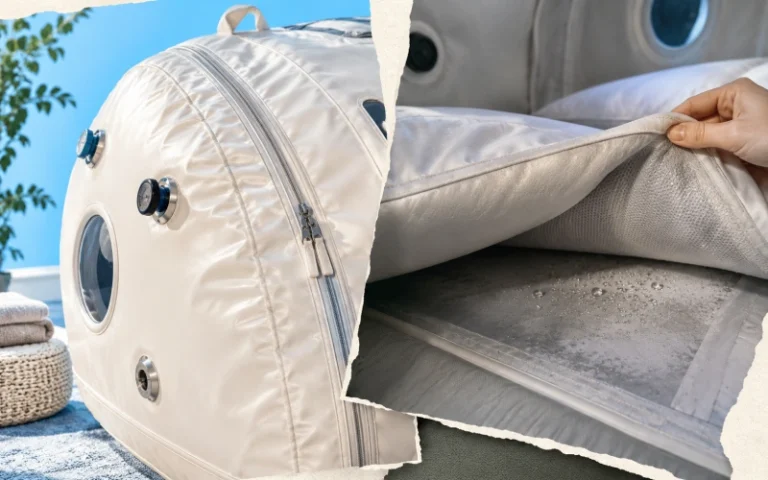
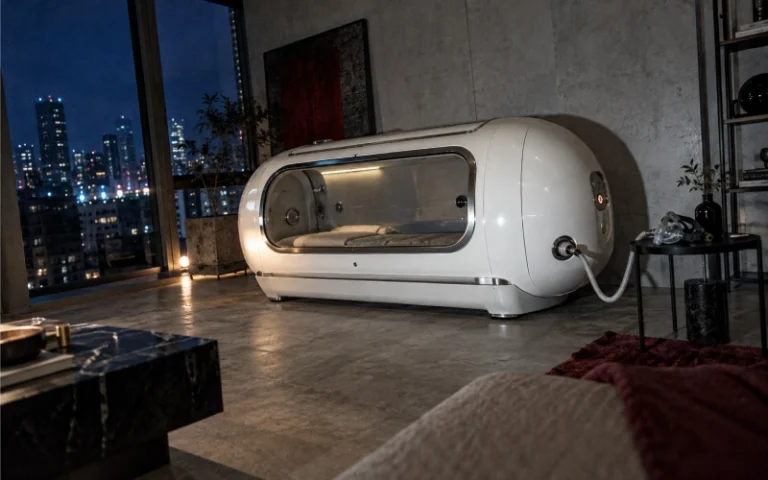
- “Hyperbaric chamber” is not one thing. It covers a wide range of devices — from thin, zip-up enclosures you can fold away in a closet, to multi-tonne steel vessels installed inside hospitals. What happens during power loss depends almost entirely on which kind you are in. So that distinction matters more than anything else in here.
- The most important sentence in this article is exactly this — read the operator’s manual for the specific unit you have. The single most dangerous thing any guide like this can do is make general statements about “specific device” behavior. So this article will not.
OK. Now to the actual question.
First, a clean split — because not all hyperbaric chambers are the same thing
If you have ever googled “hyperbaric chamber” you have probably noticed the results look like two completely different products glued together with the same screen. That’s because, for legal and regulatory purposes in the US, they are two different products — and the difference shows up exactly when the power goes out.
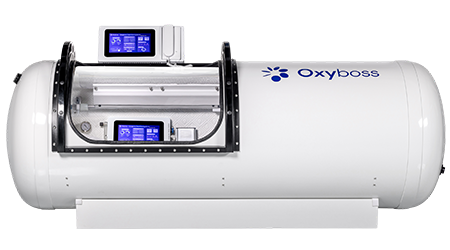
Clinical hyperbaric chambers are the ones you read about in hospitals. They run at 2.0 atmospheres absolute (ATA) or above, they’re filled with close to 100% oxygen, and they’re used for specific, listed conditions. The Undersea & Hyperbaric Medical Society (UHMS) accredits facilities that run them, and the devices follow the ASME PVHO-1 safety standard for pressure vessels for human occupancy [[4]][[10]]. They are medical devices. They have a separate, electrical supply, alarms, fire suppression, and — importantly — they have to, because that’s what the standard says they have to.
Non-medical or “mild” hyperbaric chambers are a different category. They typically operate at 1.3 to 1.5 ATA, often run on room air rather than pure oxygen, and they are sold for general wellness use rather than for treating anything. In that category, there’s an important further split:
- Some are sold as FDA-cleared 510(k) medical devices for a small set of specific indications. If you see one of these, the FDA’s database will say so.
- Some are sold for general “wellness” use and are not FDA-cleared for any condition. The FDA has put out consumer guidance that says, plainly, that “FDA-cleared medical hyperbaric chambers are limited to specific conditions” and warns consumers to check that distinction [[9]].
I bring it up because the failure modes are completely different. A clinical chamber has a multi-thousand-pound steel pressure vessel, an uninterruptible power supply, redundant oxygen lines, and operators standing outside the door. A mild chamber may have none of those things. What is true for one is not true for the other, and the rest of this article is going to keep that distinction in mind.
If you’re not sure which kind of chamber you’re reading about in any other article or video you find — that’s a signal to slow down, not speed up.
What physically happens in the seconds after power is lost
Let me describe what happens, second by second, in plain physical terms. The exact numbers vary by chamber, but the sequence is consistent.
The pressure does not vanish on its own
A hyperbaric chamber is a sealed pressure vessel — that is the entire point of the device. When you turn off the electric compressor, the air inside the chamber does not rush out. The door does not spring open. The chamber does not vent to atmosphere on its own. The pressure inside stays roughly where it was for a while. That is by design. The PVHO-1 standard, which is what serious pressure-vessel chambers are built to, requires the vessel to hold pressure even with the power off [[10]].
For a mild chamber, this is even more pronounced. At 1.3 ATA (about 4 psi above normal atmospheric pressure), the pressure differential is small enough that even with a slow leak, it can take many minutes for the chamber to come back down to atmosphere by itself.
This is one of the things people find reassuring and that experts want you to understand at the same time: the chamber does not turn into a vacuum cleaner the moment the lights go out. The pressure stays.
The active systems stop
What does stop, immediately, is anything that needed electricity to run. That’s roughly:
- Air circulation and ventilation. Most chambers have a small fan or blower that moves fresh air through the chamber so you don’t re-breathe your own exhaled CO₂. With power gone, that fan stops. In a small chamber, this is more of a problem than in a large one. Most chamber manufacturers specify a “session length” partly because that’s how long the built-in air supply is meant to keep you safe without external circulation. After that, CO₂ builds up and you’ll feel stuffy.
- Temperature control. Chambers heat up during compression and cool down during decompression. With the power going out, the heater or chiller stops. In a small chamber with a single person inside, this becomes noticeable fast — people report that it “gets quite cold” once power is lost, especially if the session has been running long.
- Lighting. You may be in the dark. Most chambers have a battery-powered emergency light, but not all.
- Monitoring. If the chamber has a pulse oximeter, an intercom, or a camera, those go off with the power.
- The compressor and any powered oxygen system. If you were breathing oxygen through a mask from a concentrator, that stops.
In a well-built clinical chamber, none of the above is allowed to last more than a few seconds. The UHMS accreditation standards and the NFPA 99 health care facilities code require the facility to have a backup power supply that picks up the critical loads (lighting, monitoring, alarms, communications) within roughly 10 seconds of mains failure, and to have a backup power source capable of running the chamber systems long enough for a safe session end [[7]][[8]][[6]]. That requirement exists precisely because of the failure mode we are talking about here.
In a mild chamber, the requirement is different. The electrical safety standards that apply to general consumer electronics still apply, but there is no NFPA-style “10-second restore” requirement for a non-medical device. So the gap between “well-built clinical chamber” and “well-built mild chamber” is, at the moment of power failure, much wider than people realize.
Decompression becomes the central question
If power stays off for long, you are going to want to get out. Two things matter here:
- Can the chamber be safely decompressed without power?
- How long does that take?
For a clinical chamber, the answer to the first one is: only by an outside operator, using a manual valve, and only at a controlled rate. The NFPA 99 standard, the UHMS accreditation manual, and the ASME PVHO-1 standard together specify a controlled decompression rate that takes minutes — not seconds. The reason is to let dissolved nitrogen in your body tissues come out of solution slowly, the way you would if you surfaced from a scuba dive. If you vent a clinical chamber to atmosphere in a few seconds, you can give yourself decompression sickness. The whole engineering of a clinical chamber is built around the rule: the operator controls decompression, the occupant does not. [[10]][[4]][[8]]
For a mild chamber, the rule is different. Because the operating pressure is low (1.3 to 1.5 ATA), the decompression risk is much smaller — there isn’t enough pressure differential to load your tissues with nitrogen in the first place. Slow release is still the right call, but the engineering reason for it is no longer about decompression sickness. In a mild chamber, slow release is about avoiding a pressure wave against your ears and giving the chamber structure time to equalize. The risk is not decompression sickness; the risk is discomfort and, in the worst case, ear or sinus barotrauma.
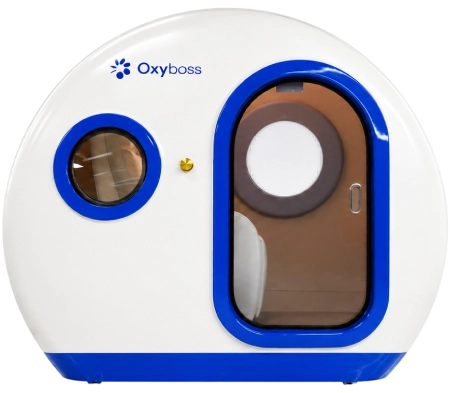
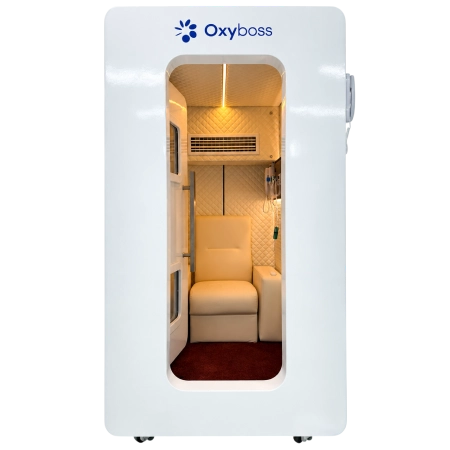
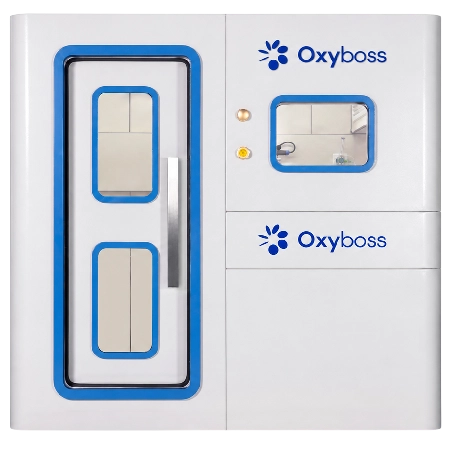
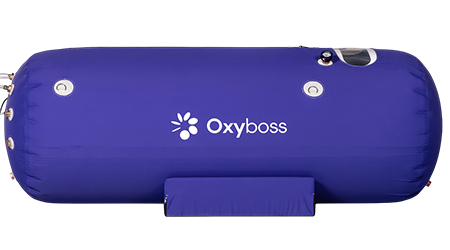
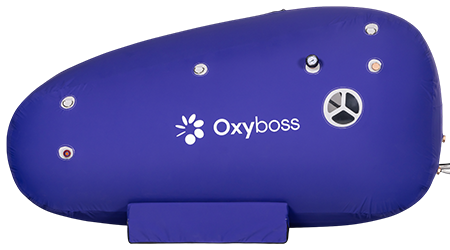
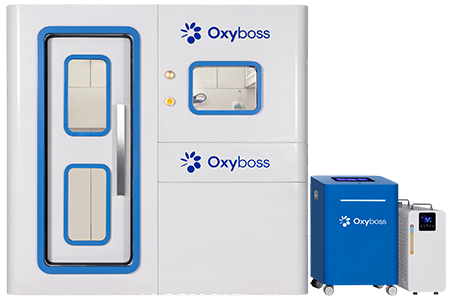
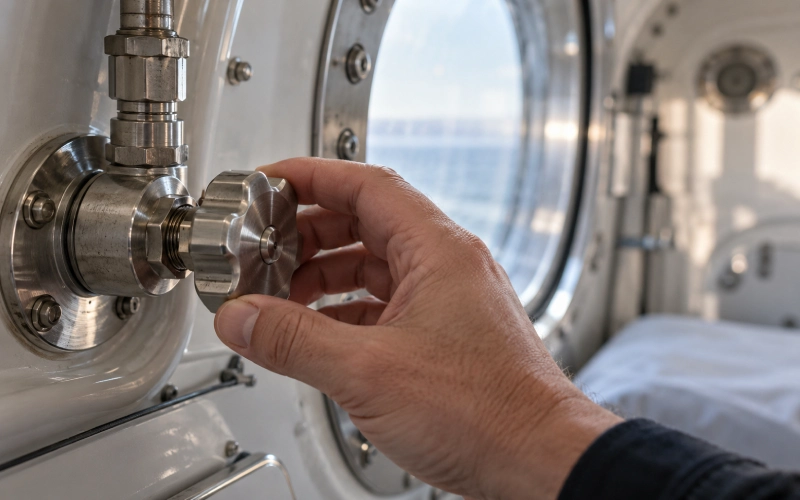
This is also where a well-built mild chamber’s design choices start to matter. Because the chamber is small and the pressure differential is low, a purely mechanical manual valve that does not require power is the natural design choice for emergency venting. To pick a concrete example — and only as an example, because chamber designs vary — Oxyboss hard-chamber models are specified to ship with a pure mechanical manual relief valve that can be operated from both inside and outside the chamber when power is off, alongside an automatic relief valve as a redundant backup. Soft-chamber models (1.5 ATA TPU) use a different venting approach because of the lower pressure class. If you are buying or using a chamber, this is exactly the design detail to verify in the manual or with the manufacturer before you take the first session.
So when people online say “the chamber will just slowly depressurize on its own” — that is roughly true for a mild chamber at 1.3 ATA, and it is not at all true for a clinical chamber at 2.0 ATA or higher. Anyone who tells you otherwise is talking about one type of chamber and you should ask which.
The question most people actually want answered: “Can I get out by myself?”
The honest answer is: it depends entirely on which kind of chamber you are in, and that distinction is the one nobody else bothers to explain.
In a clinical chamber, no
A clinical hyperbaric chamber, the kind that runs at 2.0 ATA or higher with close to 100% oxygen, is designed so that the occupant cannot open the door from the inside. The door is mechanically locked against the pressure differential — at 2.0 ATA, there is roughly one ton of force pressing out on every square foot of door surface. The external hatch won’t open at all unless the chamber is fully depressurized first. There is no internal escape hatch. There is no “emergency exit.” This is a deliberate engineering decision rooted in the PVHO-1 standard [[10]].
What you can do, from inside, is communicate — by intercom if the power is on a backup circuit, by hand signals, or by knocking. What you cannot do is exit on your own. If the power fails, you wait. The operator outside will eventually get the chamber safely depressurized using a manual valve, and then someone will open the door from the outside.
This is the design. It is not a flaw. It is what every accredited clinical facility is built to. The people outside the chamber are part of the safety system, the same way the pilots are part of an airplane’s safety system.
In a mild chamber, the answer depends on the specific unit
For a mild chamber at 1.3 to 1.5 ATA, the engineering is much more variable across manufacturers, and that variability is itself something worth being aware of. Some mild chambers are designed so the user can vent the chamber and get out of the chamber on their own, using a manual valve that does not require power. Some mild chambers are designed so that the venting is only possible from the outside, the same way a clinical chamber is. The user manual is what tells you which one you have.
This is where a real design philosophy shows up. In a clinical chamber, the user cannot get out on their own — that’s safety. In a well-designed mild chamber at 1.3 ATA, the user should be able to get out on their own, because at that pressure the risk profile is genuinely different. The mechanical manual valve on the inside of the chamber is the part that makes that possible. Once the chamber is fully depressurized, the door — and that part is true across most chamber types — should be openable from the inside as well as from the outside.
Concretely: a manufacturer like Oxyboss, just as one example from the market, ships hard-chamber models at 1.1–2.0 ATA with the dual mechanical manual relief valve I mentioned in the section above. That detail is not unique to any single brand — there are several serious mild-chamber manufacturers that follow the same approach — but it is the kind of design choice that separates a “wellness device that takes power loss seriously” from one that doesn’t. Ask your manufacturer. If the answer is vague, that’s information too.
What is true for all of them: at 1.3 ATA, decompression sickness is not a realistic risk during a single session. So the engineering reason for “no self-exit” disappears, but the engineering choice may still keep the door locked for other reasons — structural, safety against unauthorized use, or just because that manufacturer chose to.
This is one of those places where a generic article cannot help you do anything other than tell you to read the manual. The single best thing you can do is, before your first session, locate the manual, find the section titled “power loss” or “emergency exit,” and read it.
What the real risks are — and what they aren’t
Most of the panic around “power loss in a hyperbaric chamber” comes from one specific event that gets cited over and over: the 2017 death of a 5-year-old in a hyperbaric chamber in Troy, Michigan, which has been reported on by the UHMS, the FDA, and multiple medical reviews [[2]][[3]]. That incident gets mentioned every time anyone writes about chamber safety, so let me handle it directly.
That incident was not about “power loss.” It was about fire. The fire was caused by static electricity in an oxygen-enriched chamber where the facility had not followed the grounding and fire-prevention protocols that the FDA, the NFPA, and the UHMS all require. The FDA has, since, issued explicit safety guidance that says the exact same thing: fire is the dominant safety risk in an oxygen-enriched chamber, the cause is almost always static or electrical ignition, and the prevention is grounding, cotton-only clothing, and trained staff [[3]].
This matters because most “power failure” articles online treat “the chamber will explosively decompress” as the headline risk. It isn’t. The headline risk, in any chamber, has always been fire. That is true whether or not the power is on. Fire is what the NFPA 99 health care facilities code spends hundreds of pages on [[7]][[6]]. It is what the FDA’s safety communication on hyperbaric chamber fires spends paragraphs on [[3]]. And it is what an honest article on chamber safety should spend the most words on.
When power is lost, fire risk doesn’t go down. It may go up, briefly, because:
- Ventilation fans stop, so any small heat source has less cooling.
- The operator may be distracted, dealing with the power issue, and not watching the chamber.
- If the chamber has a battery backup that fails after a few minutes, monitoring may stop too.
So the actual safety advice for “what to do if power goes out” has less to do with decompression than most people think. It has more to do with:
- Staying still, not panicking, and not trying to force anything.
- If you have a fire extinguisher inside the chamber, knowing where it is and how to use it — most chambers put it within arm’s reach for this reason.
- Making sure you are not wearing anything that could create a spark. Cotton clothing only, no synthetic fabrics, no electronics. This rule applies at all times, not just on the floor.
- Knowing that the operator outside is part of the system — they are the safety net, not a flash.
This is also where the engineering details of the chamber you’re using matter, beyond just “it has a relief valve.” The way fire risk gets handled during a power loss is a different set of design choices. Three concrete design details that serious mild-chamber manufacturers tend to get right, and that you should look for:
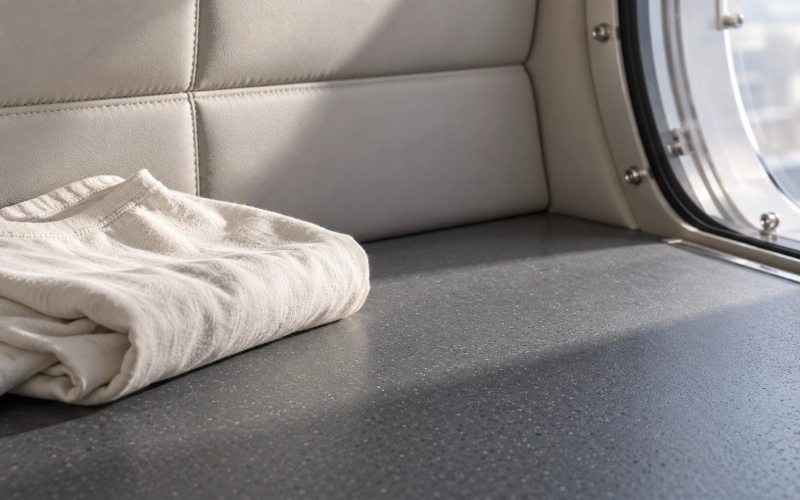
- Static-dissipative flooring and flame-retardant interior materials. The chamber is not just a metal box; the surfaces, the seating, the padding, all need to be specified to not build up a charge or ignite easily. A manufacturer like Oxyboss, to name one example, specifies interior materials to flame-retardant and anti-static requirements and a floor designed to dissipate static. Ask your manufacturer for the material spec. “It’s cotton-friendly” is not the answer you want; “the floor is anti-static dissipative to X standard” is closer.
- An oxygen-concentration alarm with an automatic cut-off. Once the ambient oxygen inside the chamber goes above roughly 23.5–25%, you are in a fire-prone environment. The chamber should monitor this, alarm, and (ideally) cut off the oxygen supply automatically. Oxyboss specifies a 24% alarm setpoint with automatic supply cut-off and continued air exchange. Find out what your chamber’s alarm setpoint is and what it does when triggered.
- Monitoring that runs on its own power. If the chamber has a backup battery for its monitoring system, you can find out you have a problem even when the main power is gone. If it doesn’t, that’s a finding.
If you remember nothing else from this article, remember this: the question is not “what does the chamber do?” — the question is “is there a fire source near me, and can I get away from it?” [[3]][[6]][[7]]
What the operator’s manual is doing, and why this article won’t replace it
Every hyperbaric chamber sold in the US has to come with an operator’s manual. The manual contains, somewhere, a section titled “power loss” or “emergency procedures” or “loss of electrical power.” That section is the only authoritative source for your specific chamber’s behavior. This article cannot be that, for two reasons:
- It doesn’t know which chamber you have.
- Even if it did, the manual is updated every time the manufacturer changes its hardware or its procedures, and this article is not.
If you have a chamber at home or work, do this: open the manual right now, find that section, and read it. If the manual doesn’t have that section, that itself is a finding about whether you should be using that chamber.
For clinical chambers, the same applies — but the relevant document is the UHMS Clinical Hyperbaric Facility Accreditation Manual [[4]], the NFPA 99 health care facilities code [[7]], and the ASME PVHO-1 standard [[10]]. The UHMS-published MEDFAQs page on Standards and Codes [[5]] is the easiest place to find a list. Any accredited facility should have all of these on file and should be able to show you the relevant section if you ask.
A short, plain checklist — the things you can verify before you ever need them
This is not a safety guarantee. It is a list of things you can check, in advance, that will make a real difference if anything ever goes wrong.
Before your first session:
- Find the operator’s manual for your specific chamber. Read the section on power loss or emergency procedures. If there isn’t one, ask the manufacturer. If they don’t answer, that’s your answer.
- Identify how the chamber is vented — from the inside, from the outside, or both. Identify what valve does it. Identify how long the process takes, in minutes. The manual will tell you. A serious mild-chamber manufacturer will tell you that the manual relief valve is mechanical, requires no power, and is operable from both inside and outside.
- Identify what backup power exists, if any. Is there a battery? An uninterruptible power supply? A separate circuit? Does the operator outside have one? The answer tells you how long the chamber will keep its last sensible state.
- Identify the communication method — intercom, microphone, hand signals, knocking. Test it once, in advance, with someone on the other end. Chambers like the Oxyboss line, for one example, ship with synchronized internal and external touchscreens, which means you can usually see what the operator is seeing (and vice versa) even when the main lighting is off.
- Identify the fire extinguisher inside the chamber. Know where it is. Know how to use it.
- Identify what clothing is OK — cotton only, no synthetics, no electronics with batteries that aren’t explicitly approved for the chamber. The 2017 Michigan incident was caused by a static electricity spark, in a room where cotton-only clothing wasn’t being enforced [[9]][[3]].
- Identify who is outside the chamber while you are inside — and that they know what to do in an emergency. If nobody is outside, the chamber is not being used safely, regardless of what kind it is.
- If you have any medical condition that affects pressure tolerance — sinus congestion, ear issues, recent surgery, lung conditions — talk to a licensed clinician before using any chamber. The chamber doesn’t know about your medical history. The manual doesn’t either. Only a clinician does.
The honest summary
The single most useful thing to know about power failure in a hyperbaric chamber is exactly this: most of what you’ve been told about it online is about one specific kind of chamber, and the chamber you’re thinking about may not be that kind. A clinical chamber and a mild chamber are different products, with different failure modes, different standards, and different safety expectations. An honest guide will make the distinction clear and will not tell you what to do in a chamber it has never seen.
The next most useful thing to know is that the actual dominant safety risk in any chamber, with or without power, has always been fire — and that risk is reduced by the boring things: grounding, cotton clothing, no electronics, and a trained person on the outside. The dramatic risks — explosive decompression, instant catastrophe — are not the ones that show up in the medical literature. Fire does.
The third most useful thing to know is that there is a specific document, written for the specific chamber you own or use, that has the answers to every question this article cannot answer. That document is the operator’s manual. Read it. Then read it again. Then put it back where you can find it in the dark.
References
- [[1]] Air or Gas Embolism — Undersea & Hyperbaric Medical Society. https://www.uhms.org/hbo-indications.html
- [[2]] Rare pulmonary barotrauma after explosive decompression: a case report. PubMed. https://pubmed.ncbi.nlm.nih.gov/33167973
- [[3]] Sudden death after oxygen toxicity seizure during hyperbaric oxygen therapy. PMC. https://pmc.ncbi.nlm.nih.gov/articles/PMC7481105/
- [[4]] Clinical Hyperbaric Facility Accreditation Manual (4th Edition). UHMS. https://uhms.org/images/Accreditation-Documents/Fourth_Edition_UHMS_Accreditation_Manual_Final.pdf
- [[5]] Standards and Codes — UHMS MEDFAQs. https://uhms.org/resources/featured-resources/medfaqs-frequently-asked-questions-faq/safety-technical/standards-and-codes.html
- [[6]] NFPA 99, NFPA Journal, Fall 2021. https://www.nfpa.org/news-blogs-and-articles/nfpa-journal/2021/08/23/nfpa-13-august
- [[7]] NFPA 99 in HBOT: What Hospitals Must Know for Compliance. https://www.sharedhealthservices.com/post/why-nfpa-99-compliance-is-essential-for-safe-hyperbaric-programs
- [[8]] NOAA Operating Standards for Hyperbaric Chambers. https://www.omao.noaa.gov/sites/default/files/documents/NOAA%20Operating%20Standards%20for%20Hyperbaric%20Chambers%20Final%2001-2017.pdf
- [[9]] Consumer Warning: The Dangers of Soft-Sided Bag Chambers. UHMS. https://uhms.org/pressure-other-articles/1542-consumer-warning.html
- [[10]] Safety Standard for Pressure Vessels for Human Occupancy (PVHO). ASME. https://www.asme.org/codes-standards/find-codes-standards/safety-standard-for-pressure-vessels-for-human-occupancy
- [[11]] NFPA 99 Technical Committee on Hyperbaric and Hypobaric Facilities. https://docinfofiles.nfpa.org/files/AboutTheCodes/99/99_2024_HEA_HYP_Log1735_tiaballot_pubcommcirc.pdf
- [[12]] NFPA 99 HEA-HYP Committee Memorandum (Final). https://docinfofiles.nfpa.org/files/AboutTheCodes/99/99_2024_HEA_HYP_Log1735_tiaballot_final.pdf
- [[13]] Principles of Safety and Performance for Medical Hyperbaric. ASME. https://www.asme.org/getmedia/3cb7dae5-ad84-40da-92ed-9308c35468b1/31938.pdf
- [[14]] Haw. Code R. § 12-224.1-6 — Installation of pressure vessels for human occupancy. https://www.law.cornell.edu/regulations/hawaii/Haw-Code-R-SS-12-224-1-6