
Short answer: Hyperbaric oxygen therapy (HBOT) is not an FDA-approved lung cancer treatment, and major cancer centers say there’s no strong evidence it cures cancer or works as a standard part of cancer care. That said, it’s being studied for helping repair tissue damage after radiation—but that’s a different conversation than fighting the cancer itself.
Let me break down what’s actually known, what’s still being researched, and what the safety risks really are—especially for people dealing with lung cancer.
What HBOT Actually Is (and Isn’t)
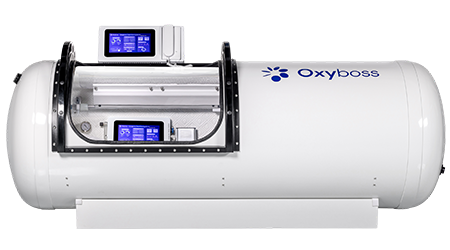
First, the basics. Hyperbaric oxygen therapy pumps you into a pressurized chamber where you breathe high-concentration oxygen—usually 100% pure oxygen at 2.0 to 2.5 times normal atmospheric pressure. The FDA approved it back in the 1980s for specific medical conditions: decompression sickness, carbon monoxide poisoning, severe wounds that won’t heal, certain bone infections, and radiation-related tissue damage.
Here’s the part everyone searches for: HBOT has never been approved by the FDA as a treatment for lung cancer itself. Not as a tumor fighter. Not as something that makes chemo or radiation work better. It’s not covered by Medicare for cancer treatment. City of Hope Cancer Center (one of the biggest cancer hospitals in the U.S.) is pretty direct: HBOT doesn’t kill cancer cells on its own, and it’s not a proven cancer cure. [1]
The FDA actually goes further. In fact, the FDA has a published list of things HBOT is NOT approved for—uses people keep trying to market it for. On that list: cancer, Lyme disease, autism, and Alzheimer’s. They put those together for a reason: because these are the conditions that get the most marketing hype, usually from places trying to sell hope. [3]
The Real Question Everyone Wants Answered: Will It Make My Cancer Worse?
This is the one that keeps people up at night. The thinking goes: oxygen helps cells, including cancer cells. Could high-pressure oxygen actually feed a tumor?
The honest answer: probably not, but it’s complicated.
The Undersea and Hyperbaric Medical Society (UHMS) reviewed the available evidence and concluded that HBOT doesn’t appear to accelerate cancer growth. A small 2025 study of 45 cancer patients found no correlation between the number of HBOT sessions and death or metastasis. [7] [17]
But here’s the thing: “doesn’t appear to make it worse” is not the same as “makes it better.” And it’s definitely not the same as it being safe for your specific cancer, with your specific treatment plan, at your specific stage.
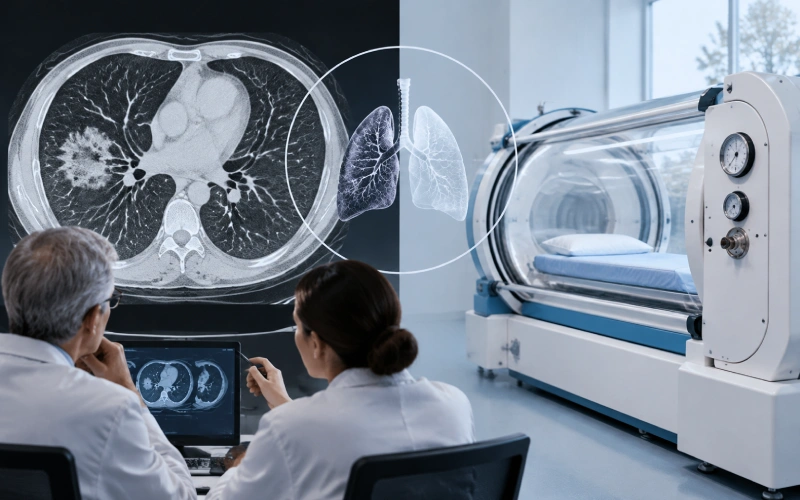
What Is HBOT Actually Used For in Cancer Patients?
This is where HBOT has real medical credibility.
If you’ve had radiation therapy for lung cancer—whether for the tumor itself or for a chest wall or esophageal problem—radiation can cause delayed damage months or even years later. Things like:
- Soft tissue that starts dying under the skin
- Bone damage (osteoradionecrosis)
- Wounds that won’t heal
- Surgical wounds that break down after reconstruction
For this kind of damage—strictly radiation-related, not the cancer itself—HBOT has solid evidence behind it. Medicare specifically covers osteoradionecrosis and soft-tissue radionecrosis when the right criteria are met. Mayo Clinic uses it for exactly this purpose. [4] [10]
Important: This is not the same as treating pneumonitis (inflammation in your lungs from radiation), shortness of breath, a cough, or fluid buildup. Those need different treatments—steroids, drainage, medication. HBOT won’t fix those. [12]
What the Research Actually Shows (and Doesn’t)
There are some studies using HBOT in laboratory lung cancer models. Researchers gave mice with human lung cancer xenografts 2.5 ATA HBOT for 90 minutes daily and saw reduced tumor growth in the lab. Another study looked at how HBOT might affect the metabolic pathways cancer cells use. [14] [15]
This is the stage where scientists say, “Interesting. Let’s study this more.” It’s not the stage where we say, “This works in people.”
Why? Because a mouse isn’t a person. The tumor being studied isn’t the same as your tumor. The pressure and timing in the lab isn’t the same as your treatment plan. And here’s the big one: a lab study showing something slows tumor growth has never automatically meant it works in actual patients.
In fact, the National Cancer Institute doesn’t list HBOT in the standard treatment guidelines for either non-small-cell or small-cell lung cancer. [18] [19]
The Safety Stuff You Actually Need to Know
HBOT comes with real side effects. Mayo Clinic lists:
- Ear and sinus pain, or eardrum rupture
- Temporary vision changes
- Fluid in the lungs or short-term breathing problems
- Rare lung collapse
- Oxygen-related seizures (very rare)
- Fire risk in an oxygen-rich environment
- Claustrophobia
[21]
For lung cancer patients specifically, there are extra considerations:
Pneumothorax (collapsed lung) is an absolute contraindication. That means you absolutely cannot have HBOT if you have untreated air in your chest cavity. For people with lung cancer, this risk is higher because of the disease itself or because of surgery. If you have bullous lung disease, emphysema, or COPD, your doctors need to screen carefully. [22]
The bleomycin issue: If you’re on certain chemo drugs—especially bleomycin—HBOT requires special coordination. Bleomycin is associated with lung toxicity, and the combination with high-pressure oxygen needs expert oversight from both your cancer doctor and a hyperbaric physician. This isn’t “don’t do it,” it’s “get both doctors in the room first.”
If you have diabetes and use insulin, HBOT can cause your blood sugar to drop.
Medical HBOT vs. “Mild” or Home Chambers: They’re Not the Same Thing
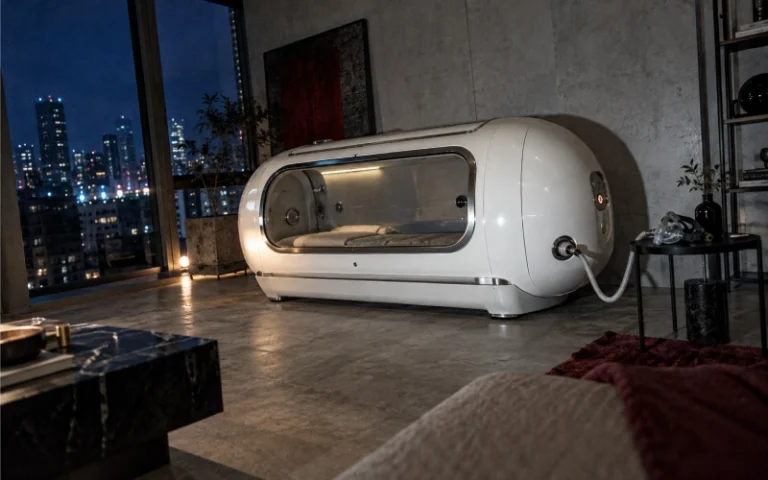
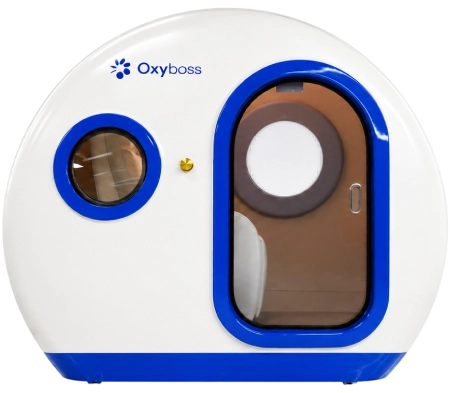
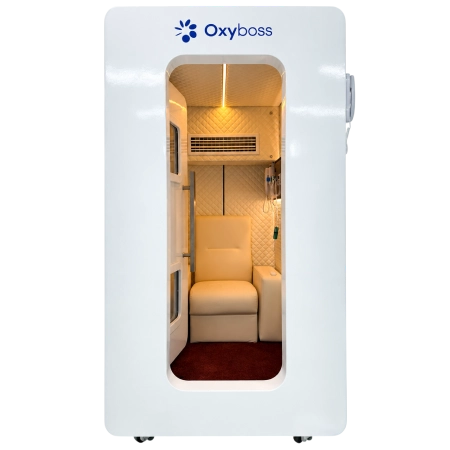
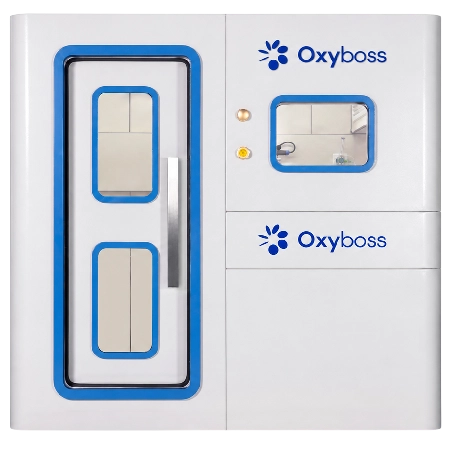
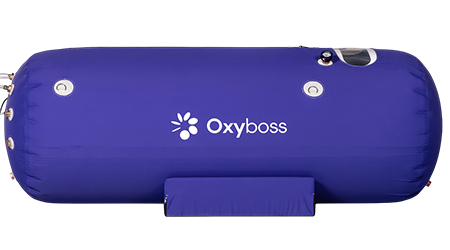
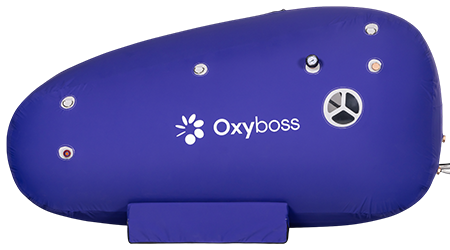
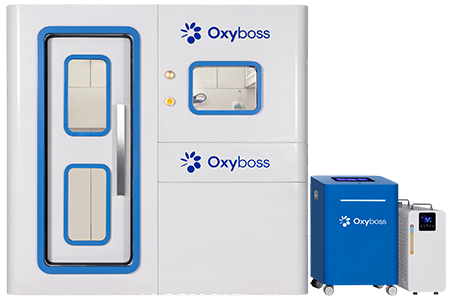
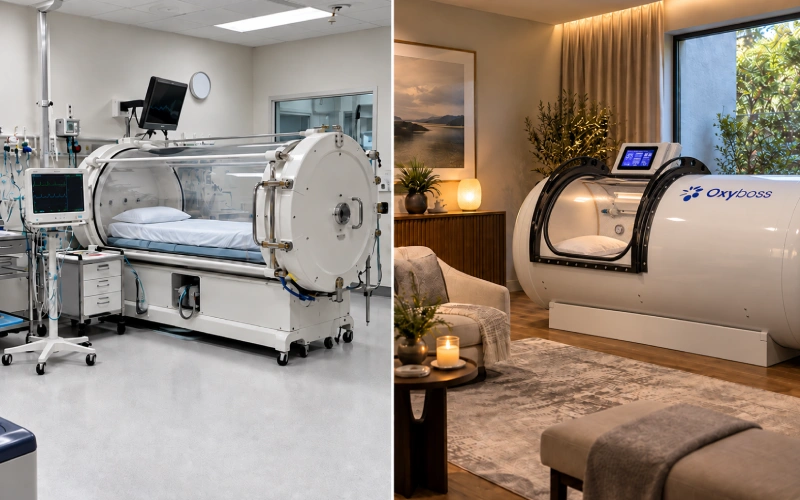
You’ve probably seen ads for “mild hyperbaric chambers” you can buy or use at a wellness center. 1.3 ATA. Regular air. At home.
Here’s what matters: those are not FDA-cleared medical devices. They’re consumer wellness products. The pressure is way lower (about half what medical HBOT uses). The oxygen is environmental air, not pure oxygen piped in. And there’s zero evidence any of that does anything for cancer.
If someone is selling you a home chamber or wellness-center time as a lung cancer treatment, they’re not operating on the same planet as the FDA or actual cancer centers. [2] [20]
What This Means for You: The Real Questions to Ask
If you’re considering HBOT, here’s what matters:
1. Is there a specific, documented condition HBOT would address?
Not “I have lung cancer.” Specifically: “I have radiation-related tissue damage that my cancer doctor and a hyperbaric specialist both think HBOT could help.” That’s the only conversation that makes medical sense.
2. Is it being done at a real medical facility?
Hospital-based or accredited by UHMS. With doctors in the room, not wellness staff. [2]
3. Have you talked to both your oncologist AND a hyperbaric doctor?
They need to coordinate, especially if you’re on chemo. This isn’t optional.
4. Has someone checked your lungs specifically?
Pneumothorax, bullae, lung function—all need screening first.
5. Does your insurance actually cover this?
Medicare covers it for defined radiation injuries, not as a standalone cancer treatment. Check your specific policy.
The Bottom Line
HBOT isn’t a lung cancer fighter. The science doesn’t support that, the FDA didn’t clear it for that, and major cancer centers don’t recommend it for that.
Where HBOT has real medical evidence is in treating radiation-related tissue damage—but that’s a specific thing, not a cancer treatment.
If you’re being told HBOT can help your lung cancer, ask: help how, exactly? And ask for the peer-reviewed evidence showing it works in actual lung cancer patients, not mouse models. If the answer is vague or relies on lab studies, that’s your signal that you’re in marketing territory, not medicine.
If your cancer team brings up HBOT for a specific radiation-injury complication, that’s a different conversation—and it’s worth having with a board-certified hyperbaric physician at an accredited facility.
Before you commit time and money to anything, bring this conversation to your oncology team. They know your case. They know your lungs. They know what actually might help and what would be a detour.
References
- City of Hope. “Hyperbaric Oxygen Therapy for Cancer: What Science Says” — Major U.S. cancer center on evidence gaps.
- Undersea and Hyperbaric Medical Society (UHMS). “FDA recommends UHMS-accredited hyperbaric facilities for treatment of specific illnesses” — FDA guidance on accredited facilities.
- FDA (via Drugs.com). “Hyperbaric Oxygen Therapy: Don’t Be Misled” — FDA consumer warning on false claims.
- U.S. Medicare. “Hyperbaric Oxygen Therapy Coverage” — Covered indications and criteria.
- Biology. “Hyperbaric Oxygen Therapy in Cancer: Friend, Foe, or Context-Dependent Modulator?” — Peer-reviewed review of evidence and gaps.
- Feldmeier, J. (UHMS). “Hyperbaric Oxygen and Malignancy” — Safety assessment from hyperbaric medicine society.
- Mayo Clinic. “Hyperbaric Oxygen Therapy” — Medical institution overview.
- National Cancer Institute. “Cardiopulmonary Syndromes” — NCI guidance on radiation injury management.
- Chen et al. “Hyperbaric oxygen suppressed tumor progression through the HIF-1α/PFKP signaling pathway in non-small cell lung cancer” — Laboratory study on lung cancer xenografts.
- Nature. “Hyperbaric oxygen suppressed tumor progression…” — Peer-reviewed preclinical findings.
- Demir et al. “Hyperbaric Oxygen Therapy for Managing Cancer Treatment Complications: A Safety Evaluation” — Small clinical safety study.
- National Cancer Institute. “Non-Small Cell Lung Cancer Treatment (PDQ®)” — Standard NSCLC treatment guidelines.
- National Cancer Institute. “Small Cell Lung Cancer Treatment (PDQ®)” — Standard SCLC treatment guidelines.
- Harvard Health. “Hyperbaric Oxygen Therapy: Evidence-Based Uses and Unproven Claims” — Academic medical perspective.
- Mayo Clinic. “Hyperbaric Oxygen Therapy—Risks” — Documented side effects and complications.
- UHMS. “MEDFAQs—Frequently Asked Questions” — Professional guidance on contraindications and drug interactions.
Disclosure
This content is for informational purposes only and is not medical advice. It does not replace consultation with your oncologist, pulmonologist, or hyperbaric medicine physician. All readers should verify current clinical guidelines and insurance coverage through their healthcare providers and Medicare/insurance directly. References reflect information available as of September 2026.